

 1789 Reads
 26 mins


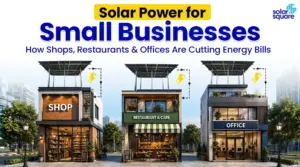
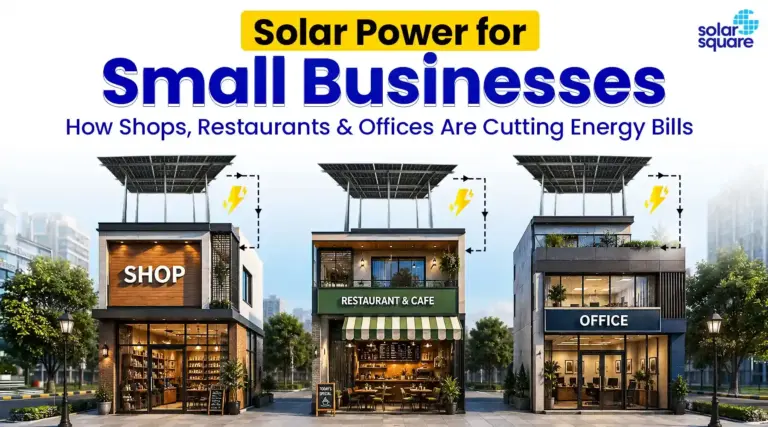
Commercial electricity in India already costs ~Rs. 10 per unit or more in most states, and these prices increase every year. For a retail shop, a restaurant, or an office running air conditioning throughout the day, the monthly bill is the second-highest expense, right after rent. Interestingly, a properly-sized rooftop solar system can flip that equation.
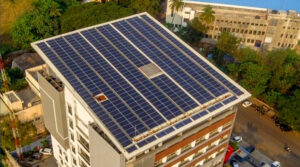
When you install a commercial rooftop solar system, you’re using solar power for small businesses instead of relying on expensive grid power. Clearly, the best solar system for small businesses turns a recurring cost you otherwise cannot control into a fixed asset that generates near-free power for 25 years and makes you eligible for 40% accelerated depreciation tax benefit.
The best part? Most small businesses recover the cost of office solar solutions in 2 to 5 years, depending on the actual system size.
This guide breaks down what solar power for small businesses actually costs, how much shops, restaurants, and offices can truly save by going solar, and how to finance office solar solutions through MSME solar financing in India.
Why are Small Businesses in India Switching to Solar Power in 2026?
Small business solar installation insulates shops, restaurants, and offices from rising electricity tariffs. That’s, however, just one benefit of business solar energy systems. Here’s a snapshot of all the reasons why so many small businesses are adopting solar energy in 2026:
- High tariffs for commercial grid power: Electricity departments in India follow a cross-subsidy model, meaning commercial and industrial users pay a higher per-unit rate to subsidize residential and rural consumers. A home might pay ~Rs. 7 per unit while a shop in the same locality pays ~Rs. 10 or more. Rooftop solar lets you generate that power yourself at a fraction of the cost of grid power.
- Rooftop Solar earns recognized green certifications: A small business solar installation makes it easier for businesses to qualify for India’s green building ratings, such as IGBC and GRIHA, which the Ministry of New and Renewable Energy backs, as well as the global LEED standard. Offices can also obtain a BEE Star Rating from the Bureau of Energy Efficiency or an ISO 14001 certification. Several states offer tax rebates for IGBC-certified buildings.
- Energy independence matters in areas with frequent power cuts: For businesses in semi-urban and rural locations where the grid is unreliable, a commercial rooftop solar system with battery backup keeps refrigeration, lighting, and security running during outages that would otherwise halt operations.
- Panel costs have fallen sharply over the last decade: The price of solar panels has dropped by more than half over the past 10 years, which has shortened payback periods and pushed returns higher. What was once a long-term gamble is now a smart investment.
- Government incentives have made solar adoption easier: Net metering is now a consumer right in India, permit processing has been cut from months to days, and GST on solar devices has come down, too.
How Solar Works for a Business?
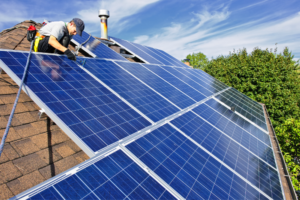
Rooftop solar for small businesses works using the same photovoltaic effect as residential solar.
Here’s a breakdown of how different components convert solar renewable energy into usable power for your business:
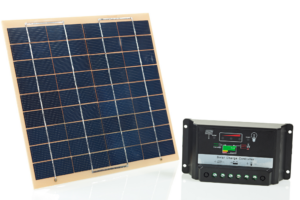
- Solar panels generate electricity: Mounted on your rooftop, the panels capture sunlight and convert it into direct current (DC) electricity during the day.
- Inverter for DC-to-AC conversion: The solar inverter converts direct current (DC) into the alternating current (AC) that your shop, kitchen, or office actually runs on.
- Grid connection: Your rooftop solar system stays connected to your existing grid supply. The business draws solar power first and pulls units from the grid only when it needs more than the panels produce.
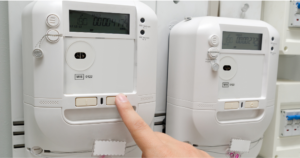
- Net metering: When your panels generate more power than you use, the surplus flows back to the grid, and your DISCOM credits those units against the grid power you draw at other times. You receive a single adjusted bill that reflects what your plant generated and what you used.
Which Type of System is Better for Small Businesses?
There are three main types of office solar solutions for small businesses, and the right one depends on when your business consumes the most power and how reliable your local grid is.
- On-grid solar systems: They work best when you have higher nighttime consumption or uneven usage across the year. They suit offices and coworking spaces on a stable urban grid because they need no batteries, keeping costs low. On-grid systems also fit small businesses with long downtime periods, such as schools that close for summer and winter vacations, because the extra power the plant makes during those months goes to the grid and lowers bills when you’re busy again.
- Off-grid solar systems: These are beneficial when consumption is high during the day, and you want full independence from the grid. Off-grid PV systems rely on battery storage and make the most sense for businesses in remote or rural locations where the grid supply is weak or unreliable.
- Hybrid solar systems: They make sense when power cuts are frequent and long. Since they combine grid connection with battery backup, you benefit from net metering while critical loads remain operational during outages, thanks to power stored in batteries. A small retail shop in an area where power cuts are common is the clearest fit.
Cost of Small Business Solar Installation vs Savings from Rooftop Solar Systems
Here’s a tabulated snapshot of the cost of business solar energy systems for small offices, shops, and restaurants:
| System Size | Cost of Installation* | Lifetime Savings* | Average Payback Period* |
| 50 kW | ~Rs. 25-35 lakhs | ~1-2 crores | 2-4 years |
| 100 kW | ~Rs. 40-50 lakhs | ~2-3 crores | 3-5 years |
*Please note, the prices/savings listed above are subject to change: The cost of solar installation and savings listed above are indicative, and not fixed. The final cost of industrial solar systems can vary based on the type of solar panels you use, the type of solar inverter you choose, the type of solar system, whether or not you use a battery energy storage system, mounting structure height, type of after-sales service, roof height, etc. The savings you receive depend upon your monthly consumption, commercial tariff in your city and how fast it rises, the share of power you use during daylight hours, net metering policy, and DISCOM rules in your city, the system size relative to your load, the long-term generation performance of the installed system, etc.
MSME Solar Financing and Tax Benefits
Many MSMEs (Micro, Small, and Medium Enterprises) in India say no to solar, thinking they’ll have to fund the entire cost upfront from their own pocket. That, however, is outdated information. Nowadays, there are many MSME solar financing models available, making solar power for small businesses extremely affordable.
Here are the different financing models small businesses can choose from:
- Upfront purchase: You pay the full cost at installation and own the system outright from day one. This route, also known as CAPEX, captures every rupee of savings and the full tax benefit, and delivers the fastest long-term returns for businesses with the capital available.
- Solar loans for MSMEs: Under the CAPEX model, several banks and NBFCs offer dedicated solar loans covering 70-90% of the project cost, with repayment spread over 3-7 years. Many businesses structure EMIs in such a way that the monthly electricity savings cover a large part of the repayment.
- RESCO and PPA models: Under a Renewable Energy Service Company or Power Purchase Agreement model, a developer funds, installs, and maintains the system at no upfront cost. You pay for the solar units you consume, usually at a rate below your grid tariff.
Need more details regarding the MSME solar financing schemes? You can discover key details in our blog post on RESCO vs CAPEX Solar: Which Model Makes More Sense for Your Businesses?
What are the Financial Benefits of Solar Power for Small Businesses?
Beyond the direct savings on your electricity bill, using solar power for restaurants, shops, and retail stores offers other financial advantages that every small business must know.
Here’s how small businesses can save with solar:
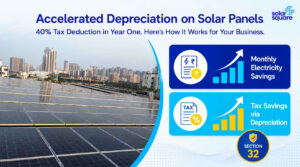
- Commercial accelerated depreciation: Indian businesses can claim an accelerated depreciation of up to 40% in the 1st year itself on solar assets under the Income Tax Act. It lets you write off a large share of the system cost in the first year and significantly reduce your taxable income.
- Green certifications and tradable credits: Installing solar makes it easier for your building to earn a green rating like IGBC, GRIHA, or LEED, and some states offer tax rebates for having one. On top of that, the clean power your panels make can earn you Renewable Energy Certificates. You can either keep these to prove your business runs on green power or sell them to others on the Indian Energy Exchange.
- Protection against rising commercial electricity tariffs: Once your system is installed, the cost of generating power is largely fixed for 25 years. While businesses around you absorb annual tariff hikes, you lock in your energy cost and protect your margins.
Choosing the Right Solar Setup for Your Business Type
A retail shop, a restaurant, and an office each use solar power differently. Meaning, the ideal system size and type change with the business. Therefore, we’ve created this section to target each business type specifically, starting with solar solutions for retail shops.
#1. Solar Solutions for Retail Shops and Small Stores
Retail shops are among the best candidates for rooftop solar because their consumption patterns align with solar generation in real time.
Here’s how solar solutions for retail stores help:
- Daytime usage matches solar generation: Shops mainly consume electricity during the day, exactly when the panels produce the most power. Lighting, fans, billing systems, and air conditioning dominate the load, and solar offsets these directly.
- Solar offsets peak commercial tariffs effectively: Because retail consumption peaks during the high-tariff daytime hours, every unit you self-generate replaces an expensive grid unit, which increases the savings.
- The right system size depends on your load and approved demand: The ideal amount of solar energy for shops you’ll need comes down to your daytime consumption, the split between normal and off-peak usage, and your contract demand, which is the approved load sanctioned by your DISCOM.
#2. Solar Power for Restaurants and Cafes
Restaurants carry a heavier, longer energy load than most small businesses, making the savings from solar power substantial.
Solar power for restaurants and cafes can be used for cold storage, heavy kitchen appliances, and exhaust systems, as they all draw significant power, and a restaurant kitchen runs hot well into the evening.
- What does it help with? The main benefit of using solar power for restaurants is a sharp cut on high electricity bills, which for a busy kitchen can be one of the largest monthly expenses after rent and raw materials.
- Restaurants may need larger systems: Given the load from refrigeration and cooking equipment, restaurants often require a bigger system than a comparable shop or office.
- Hybrid solar systems help during outages: A battery backup is useful for keeping refrigeration running, which protects perishable stock when the grid goes down.
#3. Office Solar Solutions for Commercial Spaces
Air conditioning is the most dominant load in offices, alongside computers, lighting, and shared equipment in coworking spaces. This usage is steady and predictable through the working day. Hence, rooftop solar is highly beneficial for offices and coworking setups.
- Generation aligns with office hours: Maximum solar generation occurs during the same daytime window when an office is fully occupied and drawing power, making office solar solutions highly efficient with little wasted output.
- Lower operating costs improve profitability: Electricity is one of the few fixed costs an office can actually reduce. Every rupee you stop paying the grid stays with the business, which makes a real difference for firms where rent and salaries are otherwise hard to cut.
If you run a shop, a small retail store, or an office, a free rooftop assessment is the quickest way to see your exact system size and savings. Book a free consultation with SolarSquare to get a personalized quote for your store.
Common Challenges Small Businesses Face with Solar Adoption
Upfront investment and rooftop space availability are the two most common challenges small businesses face while considering solar as an option.
Let’s find out the ins and outs of what these challenges are and how they can be tackled:
- Upfront investment: The initial cost can feel steep, but solar loans and RESCO models remove the need for a large outlay. With financing structured around your savings, the system can pay for much of itself from the electricity it produces.
- Roof space availability: Solar needs a shadow-free roof area. As a rule of thumb, a 50 kW commercial rooftop solar system requires a minimum of ~310 square metres of shadow-free space. If your roof is not that spacious, a proper site assessment will confirm what system size you can realistically fit and whether high-efficiency solar panels can help.
How to Get Started? A Step-by-Step Guide
Going solar follows a clear sequence, and a good installer handles most of it for you.
- Run an energy audit: Review your past electricity bills to understand your consumption pattern, peak load, and approved demand. This helps figure out the right system size based on your actual consumption.
- Get multiple vendor quotes: Compare proposals on scope, component quality, and service, not just the system installation price.
- Check your local net metering policy: Net metering rules and approvals vary by state and DISCOM. So, always confirm what applies in your area.
- Apply for incentives: Claim the tax benefits and any state-level incentives your business qualifies for.
- Installation and commissioning: Once the design and paperwork are in place, installation and grid connection follow, after which your system starts generating power from day one.
How Can a Small Business Find the Right Solar Vendor?
The solar system you install today will remain an asset for your business for 25 long years. Naturally, the vendor you choose decides whether your system performs as expected for those 25 years or becomes a maintenance headache.
Always weigh these factors before you commit to using solar power for small businesses:
- PAN-India presence: A vendor with a wide geographic reach can service your system reliably wherever you operate.
- Financial stability and credibility: A financially strong, established company will remain in business to honor warranties and service commitments decades after installation.
- Maintenance support: Look for proactive, regular maintenance through AMC plans rather than a one-time install, since steady performance depends on how well the system is maintained over its life.
- Strong OEM partnerships: Direct relationships with quality manufacturers mean better components and genuine warranty support.
- Strong financing options: A vendor that offers both CAPEX and OPEX financing options gives you the flexibility to pick the model that fits your business.
- High-quality and standardized components: Insist on certified, standardized material built to recognized safety standards.
SolarSquare, for example, adheres to the following safety standards across every commercial rooftop solar system we install.
| Standard | Component | Details |
| IEC 61215 | Solar panels | Checks that the solar panels are built to last and can handle years of sun, rain, and heat outdoors. |
| IEC 62109 | Inverters | Specifies safety requirements for power conversion equipment (PCE) used in photovoltaic (PV) systems. |
| IS 875-III | Mounting structures | Provides guidelines for wind loads on buildings and structures in India. |
| EN 50618 | DC cables | Specifies requirements for low-smoke halogen-free cables used in PV systems. |
| IS 3043 | Earthing or lightning arrestor | Covers the code of practice for earthing in electrical installations. |
| IEC 62446-I | Power plant | Specifies requirements for testing, documenting, and maintaining grid-connected PV systems. |
Conclusion
For shops, restaurants, and offices across India, solar has shifted from an environmental gesture to a straightforward financial decision. While commercial electricity tariffs keep climbing, panel costs have fallen, and net metering plus tax benefits have made the economics work in your favor.
With payback in just 3 to 5 years and decades of near-free power after that, a rooftop system protects your margins against every future tariff hike. The right move is to start with an energy audit and a free roof assessment, so you can see the exact system size you need, its cost, and the savings you can make before you commit.
FAQs
Is solar worth it for small businesses in 2026?
Yes, going solar is financially rewarding for small businesses. Commercial tariffs now run around Rs. 10 per unit or more, and with falling panel costs and tax benefits, most small businesses recover their investment in 3 to 5 years. After that, they enjoy decades of low-cost power.
Is solar worth it for a small shop with low electricity consumption?
It can be, though the payback is faster for shops with higher daytime usage. The deciding factors are your daytime consumption and your approved load from the DISCOM. A free site assessment will tell you whether the savings justify the system for your specific bill.
Can restaurants run fully on solar power?
Yes, a restaurant can run fully on solar, though it depends on factors like the shadow-free roof area available, your total consumption, and your operating hours. With enough space and the right system size, supported by battery storage for refrigeration and evening use, solar can cover a restaurant’s full requirements.
Are there government subsidies for MSME solar installation?
Commercial solar installations, no matter how small or big, do not receive subsidy benefits under the PM Surya Ghar Muft Bijli Yojana subsidy scheme. However, businesses benefit from accelerated depreciation, GST input advantages, and dedicated MSME solar loans, which together offer greater financial impact than a direct subsidy.
How much money can a business save by going solar?
A 50 kW system can save ~Rs. 1-2 crore* over its 25-year life, and a 100 kW system ~Rs. 2-3 crore*, depending on your tariff, consumption, and system performance.
*Please note, the savings listed above are subject to change: The actual savings you receive depend upon your monthly consumption, commercial tariff in your city and how fast it rises, the share of power you use during daylight hours, net metering policy and DISCOM rules in your city, the system size relative to your load, the long-term generation performance of the installed system, etc.
How long does solar panel installation take?
The full timeline of solar installation, including design, procurement, installation, DISCOM approvals, and commissioning, takes weeks to months, depending on the plant size and state-wise processes.


 Previous Article
 22 min