

 1503 Reads
 24 mins


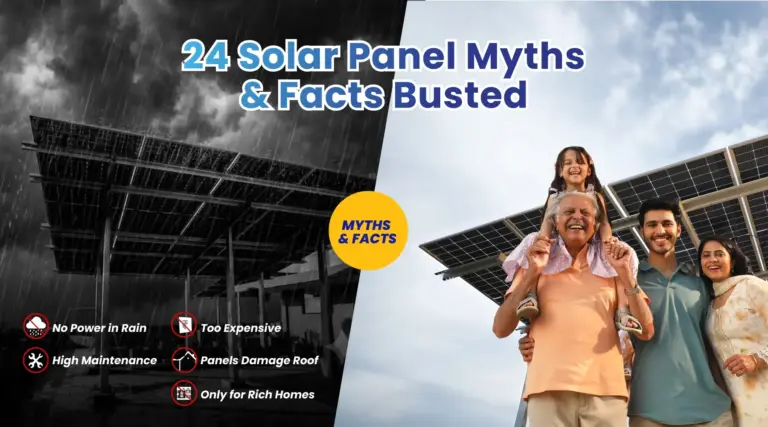
Electricity bills in India rise by 3-6% annually. Which means that if you pay Rs. 15 per unit today, it can increase up to Rs. 64 within the next 25 years. That would amount to lakhs of rupees spent just to keep your home running. Yet many homeowners still hesitate to switch to solar, which can lower electricity bills by at least 90%, because of some outdated solar panel myths.
The funny thing is that most of the myths about using solar energy for homes in India are quite old, since solar adoption for homes started 10 to 15 years ago.
- Some people still believe solar panels fail during monsoons and winters, need constant maintenance, and are financially sensible only for big homes.
- Others assume every solar company offers the same quality and after-installation support.
The truth, however, is very different.
This blog breaks down 24 common myths & facts of solar panel installation, so you can finally understand whether rooftop solar can truly power your entire home.
What are Solar Panel Myths and Why Do They Persist?
Solar myths are misconceptions about solar renewable energy that get passed around as facts. They are usually discussed in conversations with neighbors who installed solar a decade ago from some local company that never bothered to offer an after-sales maintenance plan and in old articles that never got updated.
Most of these age-old solar panel myths in India sound so believable because they were partly true at some point. The problem, however, is that the solar industry has changed over the last decade, but doubts about solar panels have not.
For instance:
- Solar panels are no longer as expensive as they were 15 years ago. The prices have dropped by more than 80% since 2010.
- High-efficiency solar panels by elite panel manufacturers such as Premier Energies last 25+ years, and work reliably across every Indian climate condition.
Below, we bust 24 common solar panel myths in India with current 2026 solar panel facts.
Myth 1: Solar Panels Don’t Work on Cloudy or Rainy Days
This is one of the most widespread myths about solar panels in India, especially in monsoon-heavy regions like Maharashtra. The reality is that solar panels use light, not heat, to generate power. Even on overcast days, diffused light keeps your system generating power.
Here are the solar panel facts that bust this myth completely:
- Diffused light still produces electricity: Panels capture photons that pass through cloud cover, generating useful output even when the sky is grey.
- Output reduces but does not stop: Expect up to a 40% drop during a heavy downpour or under cloud cover.
- India has the climate advantage: With more than 300 sunny days annually, solar power generation during the summers easily compensates for the 3-4 monsoon months in your yearly yield calculation.
Myth 2: Solar Panels are Too Expensive
This myth was true 10 years ago when a 3 kW system would cost upwards of Rs. 10 lakh. Today, prices have crashed, the government offers financial assistance through the subsidy under PM Surya Ghar Muft Bijli Yojana, and solar loans and EMI options have made rooftop solar extremely affordable for middle-class Indian families.
Here are the solar panel facts that bust this myth completely:
- The subsidy under PM Surya Ghar Muft Bijli Yojana significantly reduces upfront costs: Eligible homeowners receive a subsidy of Rs. 78,000 for systems with a capacity of 3 kW or higher.
- Solar loans are available: Many banks and NBFCs offer solar loans to homeowners.
- 0-cost EMI options reduce the upfront burden further: SolarSquare offers its customers 0-cost EMI plans for up to 6 months, allowing homeowners to install rooftop solar without making a large upfront payment.
Myth 3: Solar Panels Require Constant and High cost Maintenance
This is one of the most prevalent solar panel misconceptions that has stopped way too many homeowners from going solar. Many people still believe that solar panels need weekend cleaning and frequent repairs. This is incorrect. In reality, rooftop solar systems for homes are among the lowest-maintenance investments you can make for your home.
Here are the solar panel facts that bust this myth completely:
- Minimal maintenance needed: Solar panel cleaning can be done once every month.
- No moving parts means very low wear and tear: Unlike a diesel generator, solar panels have no rotating components that can break down.
- SolarSquare offers a 5-year AMC: It includes professional cleaning, performance checks, and component inspections that are handled end-to-end.
Myth 4: Solar Panels Don’t Last Long
Some people believe solar panels stop working after 5-10 years. This myth stems from old, low-quality installations done by local installers who used cheap solar components and never offered AMC services. Modern TOPCon and mono-PERC half-cut solar panels installed today are built to last 25+ years.
Here are the solar panel facts that bust this myth completely:
- High-quality panels last 25 years and continue to generate output at 80% efficiency thereafter.
- The solar panel degradation rate for modern panels is only ~0.5-0.8% per year.
- Most reputed brands offer a 25-year performance warranty and a 10-15-year product warranty on panels.
Myth 5: Solar Panels Can’t Power ACs or Heavy Appliances
This is one of the most condescending myths about solar power that downplays how reliable solar energy is. In reality, a properly sized solar system can power your entire home, including heavy appliances, without compromise.
Here are the solar panel facts that bust this myth completely:
- A correctly sized system can easily run ACs, geysers, and refrigerators: System sizing accounts for the wattage of all your appliances. As a rule of thumb, a 3 kW solar system can power multiple home appliances, including 1 – 1.5-ton AC.
- System sizing is based on actual consumption: Nothing is off-limits when your system is designed to match your real energy needs.
Myth 6: Solar Panels Damage Your Roof
Homeowners worry about leakage, structural stress, and roof damage that can occur from drilling mounting structures on the roof. However, when done right, solar installation actually protects your roof from rain and UV damage. The problem happens when unqualified installers perform solar installation. So, the choice of installer matters here more than anything else.
Here are the solar panel facts that bust this myth completely:
- Poor installation by untrained installers is the real risk: This is why choosing a certified installer is critical to long-term system safety.
- IIT Bombay-approved mounting structures cause zero structural damage: Load distribution is engineered to handle Indian weather conditions. In fact, SolarSquare is one such company that offers a Rs. 1 lakh water-leakage warranty for 1 year.
Myth 7: Solar Energy for Homes isn’t Reliable — What About Nights & Power Cuts?
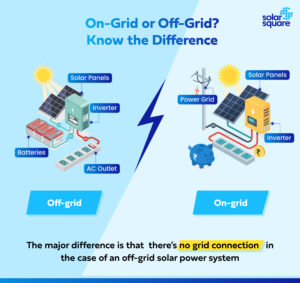
This is probably one of the few myths about solar energy that stems from a valid concern: sunlight is not available at night, and on-grid solar systems without battery backup do not supply power during an outage for safety reasons. But the solution for this issue exists. It’s using battery backup to store solar energy for later use at night or during a power cut.
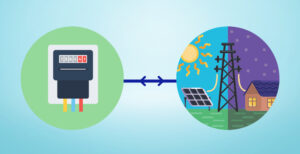
- On-grid solar systems use net metering to send excess daytime units to the grid: You export surplus power to the grid and pull from it at night, paying only the net difference.
- Battery + solar setup (a hybrid solar system) provides power during outages and at night: A hybrid PV system provides uninterrupted power for essential loads.
Myth 8: Solar Panels Lose Efficiency in High Heat
Although this isn’t a blatant lie, the way in which it is presented makes it one of the most dangerous solar panel myths. Because of misinformation, many people truly believe that solar panels stop generating electricity during the summer. While extreme heat can reduce solar panel efficiency, the impact is minimal in modern TOPCon solar panels, which have a low temperature coefficient.
Here are the solar panel facts that bust this myth completely:
- The Indian climate is highly favorable for solar generation: India’s annual yield is among the highest globally due to consistent year-round sunshine.
- Quality panels have a low temperature coefficient: Modern N-type TOPCon panels significantly minimize heat-related losses.
Myth 9: Getting a Government Subsidy is Too Complicated
It’s one of the most common myths about solar panels in India that was once true when different states had different subsidy schemes. Now, there’s a single PM Surya Ghar central subsidy in most states.
Here are the solar panel facts that bust this myth completely:
- Subsidy process under PM Surya Ghar Muft Bijli Yojana is digitized: The PM Surya Ghar portal which is National Portal for rooftop solar handles registration, vendor selection, and tracking.
- Trusted solar companies such as SolarSquare handle the entire paperwork: From application to commissioning to subsidy disbursal, it all gets managed for you.
- Subsidy of up to Rs. 78,000 is available for eligible homeowners: This is a direct bank transfer post-installation, with no middlemen involved.
Myth 10: All Solar Companies and Panels are the Same
Homeowners often compare quotes purely on price and assume one solar installer is as good as another. This is the most expensive mistake you can make. Only reputable installers care enough to use premium components and follow safe installation practices to ensure you get maximum returns from solar over 25 years.
Here are the solar panel facts that bust this myth completely:
- There is a massive quality gap between DISCOM-approved and local installers: Component quality, mounting, wiring, and after-sales support vary dramatically.
- Key differences include panel brand, mounting structure, warranty, and after-sales service: Cheaper components are of low quality. When local installers use such low-quality components and fail to follow standard installation practices like choosing the right tilt angle and direction or using strong mounts, that’s when your rooftop solar system fails within 5-7 years.
Myth 11: Solar Panels are Only for Big Homes or Bungalows
This myth assumes you need lots of rooftop space to make solar worthwhile. The reality is that solar systems start at 1 kW and can be tailored for even small flats.
Here are the solar panel facts that bust this myth completely:
- Systems start at 1 kW: This is suitable for very small homes and apartments with limited rooftop access. Most Indian homes need a 2 kW solar system, which requires ~160 sq ft of shadow-free roof space.
- Housing societies can go solar: Common-area loads such as lifts, water pumps, and corridor lights can run on solar.
- Roof space as small as 80-100 sq ft is enough for every kilowatt: A 1 kW system needs ~100 sq ft of shadow-free space.
Myth 12: Once Installed, You’re on Your Own
This is one of those solar panel myths that stems from past trauma, where local installers never bothered to offer their customers after-sales support. As a result, the fear of being abandoned after installation still keeps many homeowners away from using solar energy for homes.
The good news is that reputable installers such as SolarSquare offer long-term service contracts, performance monitoring, and savings guarantees.
Here are the solar panel facts that bust this myth completely:
- Reputed installers offer long-term AMC and performance monitoring: This ensures your system performs at peak capacity for years.
- SolarSquare’s GoodZero plan includes savings guarantee and repairs: You get assured savings, with system repairs covered end to end.
- Real-time app monitoring lets you track output anytime: Daily and monthly generation data is available right on your phone.
Myth 13: Solar Panels Will Increase Property Taxes / Home Valuation Complications
Some homeowners worry that adding solar will trigger higher property taxes or complicate future property transactions. Neither concern is actually true. On the contrary, Solar increases the sales value of your property.
Here are the solar panel facts that bust this myth completely:
- Solar adds to property value, not liability: Homes with solar sell for higher prices and faster than those without. This is because buyers are usually aware that they won’t have to pay hefty electricity bills for decades.
- No additional property tax is levied on rooftop solar in India: Most state municipal corporations exempt residential rooftop systems from extra taxation.
Myth 14: Solar Only Makes Sense in Sunny States like Rajasthan
Many people in Maharashtra, West Bengal, and northeastern states automatically assume solar will not work for them. However, solar irradiance is more than adequate across all of India. Even in less sunny regions, you can achieve strong financial returns by installing the right system capacity for your home based on your annual energy needs.
Here are the solar panel facts that bust this myth completely:
- Solar works well across all Indian states: Every state has enough solar potential for residential installations to be profitable.
- Even low-irradiance regions generate high savings: Higher local electricity tariffs in some states actually improve solar payback periods. For instance, the ROI from rooftop solar in Maharashtra is very high because electricity tariffs here are higher than in most other states.
Myth 15: You Need to Own the Roof to Go Solar
This is one of the biggest solar panel myths that stops many apartment owners and tenants from exploring solar. The reality is that several solar adoption models now exist for tenants, apartment owners, and housing society members.
Here are the solar panel facts that bust this myth completely:
- Housing society members can go solar collectively: Group net metering enables shared rooftop installations to benefit all flat owners.
- Landlord-tenant solar models are emerging: Long-term lease arrangements let tenants benefit from solar with landlord approval.
- Some states allow balcony or terrace solar for renters: Plug-and-play balcony solar kits work without modifying the existing structure.
Myth 16: Solar Panels Are an Eyesore
Aesthetic concerns are common, especially among homeowners who have invested heavily in their home’s exterior design. But this myth that solar panels ruin your home’s aesthetics is far from true. Modern solar panels are sleek, low-profile, and designed to integrate cleanly with rooftop aesthetics.
Here are the solar panel facts that bust this myth completely:
- Modern panels are sleek and blend well with rooftops: Black-on-black designs look minimalist and contemporary.
- All-black monocrystalline panels are aesthetically clean: They appear uniform and far less obtrusive than older blue polycrystalline panels.
- Proper mounting by professionals looks neat and organized: A good installer plans the layout to look intentional and well-integrated.
Myth 17: Net Metering Means the DISCOM Will Pay me Cash
It’s one of those myths about solar power that sets unrealistic expectations for homeowners. As a result of this misinformation, some homeowners end up installing oversized solar systems, expecting cash payouts from the DISCOM for surplus generation. In reality, net metering does not work this way.
Solar net metering is meant to offset your bill, not generate income.
Here are the solar panel facts that bust this myth completely:
- Net metering offsets your bill because it’s a credit, not a cash payment: Surplus units reduce your future electricity charges. They do not increase your bank balance.
- Excess units roll over to the next billing cycle: Most states allow rollover up to an annual settlement period.
- It is important to right-size your system to avoid excess generation going to waste: Oversizing offers diminishing returns once your bill is fully offset.
Myth 18: Solar Panels are Harmful to the Environment to Manufacture
The argument that solar panel manufacturing emits more carbon than the solar panels offset during their operational life is purely a myth. Solar pays back its carbon debt early and continues generating clean energy for decades.
- The energy payback period is just 3-5 years, while panels last 25+ years: Your system offsets its manufacturing footprint many times over its lifetime.
- Net carbon offset over 25 years is massive: Even a 1 kW solar system offsets ~26,000 kg of carbon dioxide over 25 years, which is equivalent to planting 39 full-grown trees.
Myth 19: I Need to Replace My Entire Electrical System to Go Solar
Even the idea of rewiring the entire home and replacing the existing electrical panels is scary. However, the reality is that rooftop solar integrates seamlessly with your existing wiring. The only meter-level change happens at the DISCOM end, not inside your home.
- Rooftop solar integrates with your existing wiring via an inverter: The inverter sits between your panels and the existing distribution board, with no rewiring of your internal circuits required.
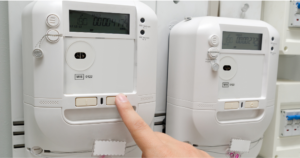
- Your existing meter is replaced with a bidirectional net meter: The DISCOM installs a new two-way meter that tracks both the units you import from the grid and the units your solar system exports.
- If you already have a smart meter, no replacement is needed: The DISCOM simply enables the export feature on your existing smart meter, which then functions as a bidirectional meter automatically.
Myth 20: Bigger System is Always Better
Some homeowners assume the bigger the solar system, the higher the savings. This is not true. Oversizing wastes money on hardware that generates power you cannot use. Right-sizing is the smarter approach.
Here are the solar panel facts that bust this myth completely:
- Oversizing leads to excess generation that goes underutilized: Once your bill is fully offset, additional units only add to surplus rollover. Even if reimbursed, they are purchased by the DISCOM at very low rates, not the standard tariff in your city.
- Right-sizing based on actual consumption is the correct approach: System size should match your monthly electricity usage and load profile.
Myth 21: Solar Inverters Fail Frequently
This is one of those solar panel myths that stops many homeowners from going solar. Inverters are the most critical components of any solar system, and homeowners, obviously, worry about them breaking down. In reality, modern inverters are far more reliable than their predecessors, with extensive warranties and built-in remote diagnostics.
Here are the solar panel facts that bust this myth completely:
- Reputed brands offer 5-10-year warranties: Premium string and microinverters from reputable brands offer a warranty of up to 10 years.
- Remote monitoring allows early fault detection: Issues are flagged via app alerts before they become major problems.
Myth 22: Solar Doesn’t Work in North India Winters
Foggy mornings and shorter days make some North Indian homeowners doubt the relevance of solar. The reality is that winter actually improves panel efficiency.
- Winter sunlight hours are reduced, but panels still generate well: Clear afternoons compensate for foggy mornings in North India.
- Slightly colder temperatures improve panel efficiency: Lower ambient temperatures reduce resistance inside solar cells, boosting output.
- Delhi, Lucknow, and Jaipur customers see strong year-round ROI: Annual generation in North India remains comparable to other regions.
Myth 23: You Can Go Completely Off-Grid Easily
Energy independence sounds attractive, but going fully off-grid is far more expensive and complex than most homeowners realize. For most Indian households, grid-tied solar is the smarter financial choice.
Here are the solar panel facts that bust this myth completely:
- Off-grid solar needs large battery storage, which is expensive and complex: Battery costs alone can double or triple your overall system investment.
- For most urban homes, grid-tied solar with net metering is far more practical: You get a solar subsidy and don’t have to bear the cost of battery installation and replacement.
- Off-grid is best suited for remote locations without grid access: Farms, hill stations, and rural areas with poor grid connectivity are the right use cases.
Myth 24: Solar Panels Can’t Withstand Storms or Strong Winds
This is one of those doubts about solar panels that stem from news reports that hit the market almost every year, claiming that solar panels are dismounted from roofs and cause substantial property damage during cyclones and monsoons. However, what people do not realize is that solar panels installed by expert installers are put together in a way that allows them to withstand high cyclonic winds.
Here are the solar panel facts that bust this myth completely:
- The choice of solar company or installer is critical for storm safety: SolarSquare, for instance, has a 99.91% storm-safety record over the past two years. The WindPro Mount™ 2.0 mounting structures we use for solar panels are approved by IIT Bombay and designed to withstand cyclonic winds of up to 170 km/hr.
- Poor installations by local installers are the ones that fail: Most reported failures during storms involve cheap mounting and substandard hardware.
Is it Worth Switching to the Use of Solar Energy for Homes?
Switching to solar energy for homes is a single solution to combat pollution and rising electricity bills, right from your rooftop. The benefits of going solar become even more evident now that we’ve cleared all the solar panel misconceptions that keep homeowners second-guessing whether solar will offer financial returns.
Here’s a snapshot of the key reasons why installing a rooftop solar panel system for homes is so beneficial:
- Savings of tens of lakhs over 25 years: The money you invested in paying hefty bills before going solar will be saved throughout the system’s life. Over 25 years, that saving is in tens of lakhs of rupees. You can also check solar savings in your city through SolarSquare’s free solar savings calculator.
- CO2 emissions offset substantially: Even a 1 kW rooftop solar system offsets ~26,000 kg of CO2 over 25 years, making your home a net positive contributor to the environment.
- Breakeven happens in 3-5 years: Post-subsidy payback periods have dropped sharply, leaving 20+ years of free electricity.
- It makes your home energy independent: You take control of your power consumption and insulate yourself from future tariff hikes.
Calculate your savings

Forecast your savings with solar on your investment on the SolarSquare’s plant
Conclusion
The 24 myths & facts of solar panel systems covered in this guide show one thing clearly. Most of what people fear about solar is rooted in outdated information or anecdotes from poorly executed installations. In 2026, solar in India is cheaper, more reliable, and more accessible than ever. The question is no longer whether solar makes sense, but how soon you can start saving.
If you are ready to evaluate solar for your home, book a free solar consultation call with SolarSquare. Our team handles everything from system design to subsidy paperwork to long-term maintenance.
FAQs
What did Elon Musk say about solar power?
Elon Musk has repeatedly called solar the most viable long-term energy source for the planet, often pairing it with battery storage. His statement from the 2017 National Governors Association Summer Meeting says, “People talk about fusion and all that. But the sun is a giant fusion reactor in the sky. It’s really reliable. It comes up every day. If it doesn’t, we’ve got bigger problems.”
Is solar power an unreliable source of energy?
Not at all. Solar power is highly reliable when paired with net metering or battery backup. Grid-tied systems use the grid to balance daytime generation with nighttime usage, ensuring an uninterrupted supply for your home throughout the year.
Do solar panels affect human health?
No. Solar panels emit electromagnetic fields at levels lower than common household appliances like refrigerators or televisions. Even the World Health Organization has confirmed there’s no documented health risks from low-frequency EMF exposure.
Is it safe to live next to a solar panel field?
Yes, it’s absolutely safe. Large solar farms are silent, emit no harmful radiation, and produce no air or water pollution. They are among the safest forms of power generation to live near, far safer than coal or gas plants.
Can solar panels still charge without direct sunlight?
Yes. Solar panels work on diffused light, which passes through clouds and fog. The output may drop by up to 40% on heavily overcast or rainy days, but the system continues to generate useful power throughout daylight hours.
Can solar panels power AC for homes?
Yes, rooftop solar of the right size can easily power air conditioners. You will need a 3 kW solar system for 1 1.5-ton AC and a 5 kW solar system for 2 1.5-ton ACs.
Is solar energy available 24/7?
Solar generates power only during daylight hours. However, with net metering, your daytime surplus offsets nighttime grid usage. For full 24/7 solar power, a hybrid solar system with battery storage is the right choice.


 Previous Article
 9 min
9 min