
 2444 Reads
 44 mins


Solar generation, also known as solar panel output, is the amount of electricity your solar system produces when sunlight hits the panels. Tracking your solar panel expected output helps you understand whether your rooftop solar system is performing as promised.
A drop in solar output is usually the first sign that something might not be working as it should. It could be something as simple as dust accumulation or as serious as an inverter fault or internal panel damage.
Before you judge your system’s performance, it’s important to understand what affects solar generation in the first place. Several factors influence how much electricity your panels produce:
- Panel type and efficiency: High-efficiency solar panels, such as TOPCon and Mono-PERC, generate more power than polycrystalline panels of the same capacity.
- Sunlight exposure: The amount of direct solar radiation your rooftop receives throughout the day plays a major role in determining solar panel generation.
- System design and orientation: Panel tilt, direction, and shading from nearby structures can significantly impact solar array output.
- Inverter performance: The inverter converts DC power into usable AC electricity, and any inefficiency here can reduce overall solar system output.
- Maintenance and cleanliness: Dust, dirt, and bird droppings can block sunlight and lower solar panel daily output if not cleaned regularly.
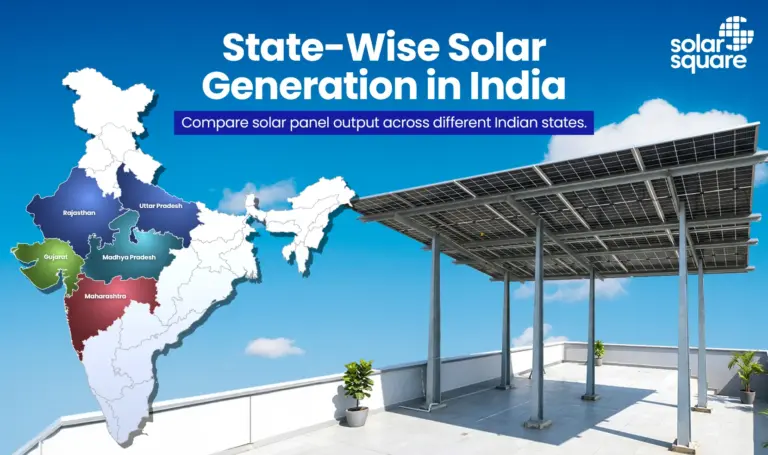
Let’s give you a clear example of how greatly solar generation can vary across states. A 3 kW solar system that generates ~4,680* units in Rajasthan in a year will produce ~3,990* units in Delhi and ~4,290* units in Madhya Pradesh.
*DISCLAIMER: The above-mentioned annual solar panel expected output figures are indicative estimates derived from data for specific cities within each state and should not be interpreted as uniform statewide averages. Actual solar system output from a 3 kW solar system can vary significantly not only between states but also between cities, towns, and even individual installations within the same locality. These variations depend on several factors, including but not limited to local solar irradiance levels, weather patterns, seasonal variations, air pollution and dust levels, system orientation and tilt angle, shading from nearby structures, quality, efficiency and type of solar panels and inverters, installation practices, maintenance frequency, and rooftop conditions.
Another important point to keep in mind is that solar generation varies not only across states and cities but also from one day to another. Seasonal patterns have a strong influence:
- Summer months: Higher sunlight levels result in peak solar generation.
- Monsoons: Cloud cover and rain lead to a noticeable drop in solar panel output.
- Winter months: Shorter days and lower sun angles reduce overall generation compared to summer.
Because of these variations, relying on solar panel daily output alone can give a very misleading picture. In reality, a single low-generation day does not mean your rooftop solar system is underperforming. What matters is how your system performs over longer periods and how it compares with expected benchmarks for your location.
In this blog, we will walk you through the expected solar generation benchmarks across major Indian states for different-capacity solar panel systems for homes, signs that indicate whether the solar panels are truly producing lower than expected solar output, month-by-month solar panel output across different cities, how to calculate the expected solar panel generation, and how Assure by SolarSquare can help you maximize solar generation.
TL;DR Summary Box: Is Solar Generation AC or DC?
Solar panels generate electricity in the form of DC (direct current) power. However, homes and appliances run on AC (alternating current). This is why a solar inverter is essential, as it converts the DC power produced by the panels into usable AC electricity for your home.
Here are the main topics covered in this blog in detail:
| Main Topics | Key Takeaways |
| What is solar generation? | Solar generation is the electricity your solar system produces, measured in units or kWh. |
| State-wise solar generation in India for different-capacity solar systems | Solar output varies by state, city, season, and system size, so the same-capacity system does not generate the same everywhere.
Details of solar generation across multiple states have been explained in the blog. |
| Which states in India offer the maximum solar generation? | Rajasthan and Gujarat offer the highest solar panel generation due to high solar irradiance, longer sunlight hours, and drier climatic conditions. |
| Top factors that affect the solar panel expected output in India | Solar array output depends on sunlight, temperature, climate, pollution, shading, panel type, inverter efficiency, and maintenance. |
| Types of solar panels that offer maximum solar generation in India | TOPCon and mono-PERC panels deliver the highest solar output because they are more efficient than older polycrystalline panels. |
| How to calculate the expected solar panel output for your solar system? | Expected solar generation = system size in kW × monthly yield from a 1 kW system in your location. |
| Why could your solar panel generation be low? | Dust, bird droppings, shade, wrong tilt, loose wiring, inverter issues, or panel defects can cause low output. |
| How can homeowners improve solar generation? | Regular cleaning, monthly tracking, shade checks, and preventive maintenance help keep solar generation at optimal levels. |
Why Knowing Your Solar Generation Benchmark Matters?
Solar generation benchmarks give a realistic reference point based on your location, system size, and seasonal conditions, helping you truly understand whether, and when, the solar output has dropped beyond normal and needs inspection and maintenance.
Without knowing what normal solar panel output looks like, it becomes easy to miss clear signs of underperformance. Even small drops in generation can add up over time, reducing savings on electricity bills and lowering the overall value you’re supposed to get from a solar system.
Here’s what happens when you do not have a solar output benchmark to compare against:
- Undetected performance drop: A gradual decline in solar array output may go unnoticed, especially when there is no reference to compare expected vs actual generation.
- Delayed maintenance and repairs: Issues like dust buildup, inverter inefficiency, or wiring faults may persist longer because there is no clear signal that something is wrong.
- Incorrect expectations from the system: Without benchmarks, you may either overestimate or underestimate what your solar system should generate.
- Financial losses over time: Lower-than-expected solar generation directly impacts savings on electricity bills, reducing the return on investment.
What is Solar Generation?
Solar generation refers to the amount of solar electricity produced by a solar system over a given period. It is measured in units or kilowatt-hours (kWh) and showcases how effectively your system converts solar energy into usable AC electricity.
Interestingly, this solar panel output is not fixed. It changes based on factors such as sunlight availability, system efficiency, and seasonal conditions. For example, a 1 kW solar system in one city may generate more electricity than the same system in another city within the same state due to differences in solar irradiance and weather patterns.
How Do Solar Panels Generate Electricity?
Solar panels use the photovoltaic effect to convert sunlight into electricity. Direct sunlight striking the panels is absorbed by solar cells and converted into DC power.
Let’s have a look at the simple steps that change sunlight into DC power:
- Sunlight falls on solar panels: Solar cells absorb photons from sunlight, which carry energy.
- Photons excite electrons in solar cells: The energy from photons frees electrons from their atomic bonds and causes them to move.
- An electron-hole pair is formed: When an electron leaves its position, it creates a hole with a positive charge. The internal electric field at the p-n junction separates these charges.
- Electrons flow in one direction: The movement of electrons in a single direction creates direct current (DC) electricity.
- Current flows through the circuit: Metal contacts on the solar cell collect the flowing electrons and transfer the current through wires.
- Inverter converts DC to AC: The generated DC electricity is converted into alternating current (AC) by the solar inverter, making it usable for homes and appliances.
State-Wise Solar Generation in India for Different Capacity Solar Systems
India is blessed with 300-330 days of uninterrupted sunlight, amounting to 5,300 trillion kWh of solar irradiance. This results in high solar potential nationwide, especially during the summer months when solar generation peaks. However, solar output is not uniform across all regions.
Different states receive varying levels of solar irradiance, which directly impacts how much electricity a solar system can generate. Along with sunlight availability, factors such as air pollution, local weather patterns, and atmospheric conditions also influence how much sunlight actually reaches the panels.
These variations can be so significant that even systems with the same capacity installed in the same neighborhood can produce different levels of solar panel output, depending on their exact conditions.
In the following sections, you will see how solar generation varies across major Indian states for different system sizes, along with month-by-month solar panel output data for selected cities.
State-Wise Solar Generation from a 1 kW Solar System
Here’s the annual solar system output from a 1 kW solar system across major Indian states in 2026:
| State | Annual Solar Generation (Read the Full Disclaimer Below)* |
| Maharashtra | ~1,440 units |
| Rajasthan | ~1,560 units |
| Gujarat | ~1,514 units |
| Karnataka | ~1,430 units |
| Delhi | ~1,330 units |
| Tamil Nadu | ~1,410 units |
| Uttar Pradesh | ~1,310 units |
| Madhya Pradesh | ~1,430 units |
*DISCLAIMER: The above-mentioned annual solar panel expected output figures are indicative estimates derived from data for specific cities within each state and should not be interpreted as uniform statewide averages. Actual solar system output from a 1 kW solar system can vary significantly not only between states but also between cities, towns, and even individual installations within the same locality. These variations depend on several factors, including but not limited to local solar irradiance levels, weather patterns, seasonal variations, air pollution and dust levels, system orientation and tilt angle, shading from nearby structures, quality, efficiency and type of solar panels and inverters, installation practices, maintenance frequency, and rooftop conditions.
City-Level Solar Panel Output from a 1 kW Solar System in Mumbai
The table below shows the month-by-month solar panel output from a 1 kW solar system in Mumbai, highlighting how generation drops during monsoons and peaks in summer.
| Month | Monthly Solar Array Output in Mumbai from a 1 kW PV System |
| January | 121.7 units |
| February | 126.2 units |
| March | 153.9 units |
| April | 154 units |
| May | 153.1 units |
| June | 105.2 units |
| July | 81.9 units |
| August | 92.5 units |
| September | 102.3 units |
| October | 121.8 units |
| November | 115.1 units |
| December | 112.4 units |
| Total annual units | 1,440 |
State-Wise Solar Generation from a 2 kW Solar System
Here’s the annual solar system output from a 2 kW solar system across major Indian states in 2026:
| State | Annual Solar Generation (Read the Full Disclaimer Below)* |
| Maharashtra | ~2,280 units |
| Rajasthan | ~3,120 units |
| Gujarat | ~3,028 units |
| Karnataka | ~2,860 units |
| Delhi | ~2,660 units |
| Tamil Nadu | ~2,820 units |
| Uttar Pradesh | ~2,620 units |
| Madhya Pradesh | ~2,860 units |
*DISCLAIMER: The above-mentioned annual solar panel expected output figures are indicative estimates derived from data for specific cities within each state and should not be interpreted as uniform statewide averages. Actual solar system output from a 2 kW solar system can vary significantly not only between states but also between cities, towns, and even individual installations within the same locality. These variations depend on several factors, including but not limited to local solar irradiance levels, weather patterns, seasonal variations, air pollution and dust levels, system orientation and tilt angle, shading from nearby structures, quality, efficiency and type of solar panels and inverters, installation practices, maintenance frequency, and rooftop conditions.
City-Level Solar Panel Output from a 2 kW Solar System in Jodhpur
The table below shows the month-by-month solar panel output from a 2 kW solar system in Jodhpur, Rajasthan, highlighting how generation drops during monsoons and peaks in summer.
| Month | Solar Panel Output in Jodhpur From a 2 kW Solar System |
| January | 219.6 units |
| February | 237.6 units |
| March | 300.4 units |
| April | 316.6 units |
| May | 323.8 units |
| June | 289.4 units |
| July | 243 units |
| August | 237.6 units |
| September | 256.6 units |
| October | 267.2 units |
| November | 216.8 units |
| December | 211.4 units |
| Total annual units | 3,120 units |
State-Wise Solar Output from a 3 kW Solar System
Here’s the annual solar system output from a 3 kW solar system across major Indian states in 2026:
| State | Annual Solar Generation (Read the Full Disclaimer Below)* |
| Maharashtra | ~4,320 units |
| Rajasthan | ~4,680 units |
| Gujarat | ~4,542 units |
| Karnataka | ~4,290 units |
| Delhi | ~3,990 units |
| Tamil Nadu | ~4,230 units |
| Uttar Pradesh | ~3,930 units |
| Madhya Pradesh | ~4,290 units |
*DISCLAIMER: The above-mentioned annual solar panel expected output figures are indicative estimates derived from data for specific cities within each state and should not be interpreted as uniform statewide averages. Actual solar system output from a 3 kW solar system can vary significantly not only between states but also between cities, towns, and even individual installations within the same locality. These variations depend on several factors, including but not limited to local solar irradiance levels, weather patterns, seasonal variations, air pollution and dust levels, system orientation and tilt angle, shading from nearby structures, quality, efficiency and type of solar panels and inverters, installation practices, maintenance frequency, and rooftop conditions.
City-Level Solar Panel Output from a 3 kW Solar System in Gandhinagar
The table below shows the month-by-month solar panel output from a 3 kW solar system in Gandhinagar, Gujarat, highlighting how generation drops during monsoons and peaks in summer.
| Month | Solar System Output in Gandhinagar from a 3 kW PV System |
| January | 347.7 units |
| February | 370.8 units |
| March | 465.6 units |
| April | 483.3 units |
| May | 493.8 units |
| June | 396 units |
| July | 286.5 units |
| August | 282.6 units |
| September | 335.4 units |
| October | 407.4 units |
| November | 342.9 units |
| December | 328.2 units |
| Total annual units | 4,542 units |
State-Wise Solar System Output from a 4 kW Solar System
Here’s the annual solar system output from a 4 kW solar system across major Indian states in 2026:
| State | Annual Solar Generation (Read the Full Disclaimer Below)* |
| Maharashtra | ~5,760 units |
| Rajasthan | ~6,240 units |
| Gujarat | ~6,056 units |
| Karnataka | ~5,720 units |
| Delhi | ~5,320 units |
| Tamil Nadu | ~5,640 units |
| Uttar Pradesh | ~5,240 units |
| Madhya Pradesh | ~5,720 units |
*DISCLAIMER: The above-mentioned annual solar panel expected output figures are indicative estimates derived from data for specific cities within each state and should not be interpreted as uniform statewide averages. Actual solar system output from a 4 kW solar system can vary significantly not only between states but also between cities, towns, and even individual installations within the same locality. These variations depend on several factors, including but not limited to local solar irradiance levels, weather patterns, seasonal variations, air pollution and dust levels, system orientation and tilt angle, shading from nearby structures, quality, efficiency and type of solar panels and inverters, installation practices, maintenance frequency, and rooftop conditions.
City-Level Solar Panel Output from a 4 kW Solar System in Bangalore
The table below shows the month-by-month solar panel output from a 4 kW solar system in Bangalore, Karnataka, highlighting how generation drops during monsoons and peaks in summer.
| Month | Solar Panel Expected Output in Bangalore from a 4 kW PV System |
| January | 524.4 units |
| February | 535.2 units |
| March | 594.4 units |
| April | 550 units |
| May | 508 units |
| June | 431.6 units |
| July | 400 units |
| August | 412.8 units |
| September | 441.6 units |
| October | 462.4 units |
| November | 411.6 units |
| December | 450.8 units |
| Total annual units | 5,720 units |
State-Wise Solar Generation from a 5 kW Solar System
Here’s the annual solar system output from a 5 kW solar system across major Indian states in 2026:
| State | Annual Solar Generation (Read the Full Disclaimer Below)* |
| Maharashtra | ~7,200 units |
| Rajasthan | ~7,800 units |
| Gujarat | ~7,570 units |
| Karnataka | ~7,150 units |
| Delhi | ~6,650 units |
| Tamil Nadu | ~7,050 units |
| Uttar Pradesh | ~6,550 units |
| Madhya Pradesh | ~7,150 units |
*DISCLAIMER: The above-mentioned annual solar panel expected output figures are indicative estimates derived from data for specific cities within each state and should not be interpreted as uniform statewide averages. Actual solar system output from a 5 kW solar system can vary significantly not only between states but also between cities, towns, and even individual installations within the same locality. These variations depend on several factors, including but not limited to local solar irradiance levels, weather patterns, seasonal variations, air pollution and dust levels, system orientation and tilt angle, shading from nearby structures, quality, efficiency and type of solar panels and inverters, installation practices, maintenance frequency, and rooftop conditions.
Month-by-Month Solar Panel Output from a 5 kW Solar System in Delhi
The table below shows the month-by-month solar panel output from a 5 kW solar system in Delhi, highlighting how generation drops during monsoons and peaks in summer.
| Month | Solar Array Output in Delhi from a 5 kW Solar System |
| January | 367 units |
| February | 478 units |
| March | 667.5 units |
| April | 732.5 units |
| May | 744 units |
| June | 652 units |
| July | 531 units |
| August | 538 units |
| September | 561.5 units |
| October | 561 units |
| November | 430 units |
| December | 387.5 units |
| Total annual units | 6650 units |
State-Wise Solar Generation from a 10 kW Solar System
Here’s the annual solar system output from a 10 kW solar system across major Indian states in 2026:
| State | Annual Solar Generation (Read the Full Disclaimer Below)* |
| Maharashtra | ~14,400 units |
| Rajasthan | ~15,600 units |
| Gujarat | ~15,140 units |
| Karnataka | ~14,300 units |
| Delhi | ~13,300 units |
| Tamil Nadu | ~14,100 units |
| Uttar Pradesh | ~13,100 units |
| Madhya Pradesh | ~14,300 units |
*DISCLAIMER: The above-mentioned annual solar panel expected output figures are indicative estimates derived from data for specific cities within each state and should not be interpreted as uniform statewide averages. Actual solar system output from a 10 kW solar system can vary significantly not only between states but also between cities, towns, and even individual installations within the same locality. These variations depend on several factors, including but not limited to local solar irradiance levels, weather patterns, seasonal variations, air pollution and dust levels, system orientation and tilt angle, shading from nearby structures, quality, efficiency and type of solar panels and inverters, installation practices, maintenance frequency, and rooftop conditions.
City-Level Solar Panel Output from a 10 kW Solar System in Chennai
The table below shows the month-by-month solar panel output from a 10 kW solar system in Chennai, Tamil Nadu, highlighting how generation drops during monsoons and peaks in summer.
| Month | Solar Panel Generation in Chennai from a 10 kW Solar System |
| January | 1,231 units |
| February | 1,277 units |
| March | 1,482 units |
| April | 1,410 units |
| May | 1,281 units |
| June | 1,093 units |
| July | 1,056 units |
| August | 1,077 units |
| September | 1,087 units |
| October | 1,110 units |
| November | 952 units |
| December | 1,045 units |
| Total annual units | 14,100 units |
Which States in India Offer the Maximum Solar Panel Generation?
Rajasthan and Gujarat are the two Indian states that generate the highest solar panel output because they receive some of the highest levels of solar irradiance in the country. These regions also experience longer hours of direct sunlight, lower cloud cover, drier climatic conditions, lower levels of atmospheric moisture, a shorter monsoon season, and lower levels of pollution.
- Solar irradiance in Rajasthan: The state is blessed with more than 325 sunny days in a year. From April to May, eastern Rajasthan alone receives 10 to 10.5 hours of direct sunlight daily.
- Solar irradiance in Gujarat: The state is blessed with more than 300 sunny days in a year, which translates to 5.6 -6.0 kWh/m2 solar radiation per day.
Why Solar Panel Generation Changes by State? Top Factors that Affect Solar Panel Generation in India
Solar generation across India varies, not just at the state level but also at the city level. Multiple factors are behind this variation, including, but not limited to, the type and efficiency of solar panels and inverters, irradiance received, temperature, and climatic zone.
Let’s have a look at all the factors that affect solar panel generation in India in detail:
- Sunlight availability: Regions with higher solar irradiance and longer sunny days generate more electricity than regions with frequent cloud cover.
- Temperature: Higher temperatures can reduce panel efficiency, leading to slight losses in solar output even when sunlight is strong.
- Climatic zone: Dry, arid regions perform better than humid or coastal areas, where cloud cover and moisture are higher.
- Air pollution and dust levels: Pollution, haze, and dust in the atmosphere can block or scatter sunlight before it reaches the panels.
- Seasonal variations: Monsoon reduces solar generation due to cloud cover, while summers usually result in peak output.
- Panel orientation and tilt: The angle and direction of panel installation affect how much sunlight they receive throughout the day.
- Shading from surroundings: Nearby buildings and trees can block sunlight, reducing solar panel output.
- Type and efficiency of solar panels: High-efficiency panels, such as TOPCon or Mono-PERC, generate more power under similar conditions.
- Inverter efficiency: The performance of the inverter impacts how much of the generated DC power is converted into usable AC electricity.
- System maintenance and cleanliness: Dust, dirt, and bird droppings on panels can reduce generation if not cleaned regularly.
Types of Solar Panels that Offer the Maximum Solar Generation
Modern solar installations in India use advanced cell technologies like mono-PERC and TOPCon. These have replaced older polycrystalline panels due to their higher efficiency, better performance in low-light and partial shading, and improved output stability over time. They also offer better temperature performance and a higher energy yield per square meter, making them more suitable for residential rooftops with limited space.
Here’s a closer look at both mono-PERC and TOPCon panels:
- Mono-PERC panels: Mono-PERC (Passivated Emitter and Rear Cell) panels are an improved version of traditional monocrystalline panels. They include an additional reflective layer at the back, which allows them to capture more sunlight and convert it into electricity. This results in higher efficiency of up to 22% and better performance in low-light conditions such as early mornings, evenings, and cloudy days.
- TOPCon panels: TOPCon (Tunnel Oxide Passivated Contact) panels are a newer, more advanced technology that further improves efficiency by reducing energy losses within the cell. They offer a higher solar output of up to 26%, better performance at elevated temperatures, and a longer lifespan.
Here’s a tabulated snapshot of how both these panels compare with each other across multiple parameters:
| Feature | Mono-PERC Solar Panel | TOPCon Solar Panel |
| Material used | P-type monocrystalline silicon | N-type silicon |
| How does it work? | It has a rear passivation layer that reflects unused sunlight back into the cell. This reduces electron recombination and improves the module’s efficiency. | It features an ultra-thin tunnel oxide layer and a polysilicon layer on the rear side. This enhanced passivation makes TOPCon more efficient than Mono-PERC panels. |
| Bifacial gain | ~70% | ~85% |
| Efficiency | 20-22% | 25-26% |
| High temperature performance | Good | Exceptional |
| Plant degradation rate |
|
|
| Technology level | Mature and widely used | New and advanced |
How to Calculate Expected Solar Generation for Your System?
Checking solar panel output might seem tricky at first, but you can use this simple formula to calculate it:
| Expected solar generation = system size in kW × monthly yield in your location |
Here, monthly yield refers to the average number of units (kWh) a 1 kW solar system generates in your location in a month.
It’s also worth noting that to determine whether your system is performing correctly, you first need to know how much electricity it should ideally generate.
Now, let’s understand the calculation through a very simple example explained in the next section.
Sample Calculation for a 3 kW Solar System
A 1 kW solar system in Gandhinagar generates 164.6 units of electricity in May. So, for that particular month, the solar generation, based on the formula above, will be 493.8 units (3 x 164.6 units).
Now, based on the same formula, let’s check out the expected solar generation from a 3 kW solar system in Gandhinagar throughout the year, month by month:
| Month | Monthly Solar Panel Output from a 1 kW Solar System in Gandhinagar | Monthly Solar Panel Generation in Gandhinagar from a 3 kW PV System |
| January | 115.9 units | 115.9 x 3 = 347.7 units |
| February | 123.6 units | 123.6 x 3 = 370.8 units |
| March | 155.2 units | 155.2 x 3 = 465.6 units |
| April | 161.1 units | 161.1 x 3 = 483.3 units |
| May | 162.6 units | 164.6 x 3 = 493.8 units |
| June | 132 units | 132 x 3 = 396 units |
| July | 95.5 units | 95.5 x 3 = 286.5 units |
| August | 94.2 units | 94.2 x 3 = 282.6 units |
| September | 111.8 units | 111.8 x 3 = 335.4 units |
| October | 135.8 units | 135.8 x 3 = 407.4 units |
| November | 114.3 units | 114.3 x 3 = 342.9 units |
| December | 109.4 units | 109.4 x 3 = 328.2 units |
Why Actual Generation/Power and Rated Generation/Power May Not Match Exactly?
The power rating of a solar panel is based on ideal test conditions. However, in real-world installations, these conditions are not met, which is why actual solar generation differs from the rated solar output.
The key reasons for this difference are:
- Standard Test Conditions (STC): Solar panels are rated under laboratory conditions known as STC, which assume a cell temperature of 25°C, specific sunlight intensity of 1,000 W/m², and clear skies. These conditions are almost never present in real installations. Thus, actual solar generation tends to vary from the rated one.
- Temperature-related losses: While higher sunlight increases generation, it also raises the panel temperature. Solar panels lose about 0.3% to 0.4% of their efficiency for every degree Celsius above 25°C, reducing overall solar output during hot conditions.
Why Your Solar Generation May Be Low?
A drop in solar panel generation does not always mean something is wrong, but it should never be ignored. If your solar system is producing less electricity than expected, the cause could range from simple maintenance issues to technical faults within the system.
The most common reasons for low solar system output are:
- Dusty panels: Dust, dirt, and pollution accumulate, blocking sunlight from reaching the solar cells and reducing overall energy production. A solar panel that hasn’t been cleaned for 3 months can reduce output by 10-18%.
- Bird droppings: Even small patches of bird droppings can block entire sections of a panel, leading to noticeable drops in output and hotspots if left unchecked.
- Shadows due to poor design: Shadows from nearby buildings or trees can significantly reduce solar generation, especially if the system is not designed to handle shading effectively.
- Incorrect panel orientation and tilt: Panels that are not positioned at the appropriate tilt angle facing south may not receive maximum sunlight throughout the day.
- Loose electrical connections: Faulty or loose wiring can interrupt the flow of electricity, reducing the system’s output.
- Incorrect inverter configuration: If the inverter is not properly configured, it may not convert power efficiently, leading to lower usable output.
- Panel defects like hotspots and microcracks: Manufacturing defects or aging can create hotspots or microcracks, reducing solar panel efficiency and long-term performance.
To understand whether low solar generation is a concern, it’s important to evaluate it in the right context rather than reacting to short-term changes.
Here’s how you can interpret a drop in solar output:
- When low generation is completely normal: Seasonal changes, cloudy days, monsoon periods, or temporary shading naturally reduce solar output without indicating any system issue.
- When low generation is a warning sign: A consistent drop compared to past performance or expected benchmarks for your location may indicate problems such as dirt buildup, inverter faults, or system damage.
- How much drop should concern you: A drop of up to 10-15% can occur due to seasonal change, but anything beyond this range over a sustained period should be investigated.
How to Compare Your Actual Solar Generation the Right Way?
Comparing your solar generation correctly is just as important as tracking it. Looking at the wrong data can lead to incorrect conclusions about your system’s performance. Instead of focusing on short-term daily fluctuations, you should evaluate your solar output using consistent and reliable benchmarks.
The right ways to compare your solar generation are:
- Compare generation with the same month from last year: Solar generation varies by season, so comparing June with May or December with April will not give accurate insights. Always compare the same month year-on-year to account for seasonal patterns.
- Compare generation with your city benchmark: Use standard solar generation benchmarks for your location to check whether your system is producing the expected solar output for its capacity.
- Check irradiance levels in your city: Use tools like the NASA POWER Data Access Viewer to verify how much sunlight your area received during a given period. Lower irradiance naturally results in lower solar generation, even if your system is working perfectly.
How Much Solar Generation Should You Expect in Different Seasons?
Solar generation in India varies with the seasons due to changes in sunlight availability, cloud cover, and day length. Understanding these seasonal patterns sets realistic expectations and avoids misinterpreting normal fluctuations as system issues.
Here’s what these variations look like:
- Summer-to-winter solar generation sees a 30-50% drop: Solar systems produce the highest output during summer, when days are longer, and sunlight is stronger. As you move into winter, shorter days and lower sun angles reduce generation, leading to a 30-50% drop.
- Monsoon solar generation can witness more than 40% drop: During the monsoon season, heavy cloud cover and frequent rainfall reduce sunlight reaching the panels. This can cause solar output to drop by more than 40% compared to summer levels, even if the system is functioning perfectly.
- Winter-to-summer solar generation sees a 30-50% increase: As the season shifts from winter to summer, longer daylight hours and higher sunlight intensity lead to a 30-50% increase in solar generation. This is when systems gradually return to peak performance.
How Can Homeowners Improve Solar Generation?
Solar generation is so critical because it directly affects the long-term savings you are supposed to receive. If your system consistently underperforms over its lifespan, you will not be able to save as much on electricity bills, lowering the ROI solar can offer.
In order to ensure this does not happen, you must take certain necessary precautions and preventions, listed below:
- Hire professionals to keep panels clean and free from obstructions: Regular solar panel cleaning removes dust, dirt, and bird droppings that block sunlight. Professional inspections also help detect hidden issues such as wiring faults or inverter inefficiencies. Assure by SolarSquare, for instance, offers 1-, 2-, and 5-year AMC plans with scheduled visits that include panel cleaning and comprehensive system health checks to ensure your solar output remains optimal.
- Track generation month by month: Monitoring your system’s solar output regularly helps you identify unusual drops early and compare performance against expected benchmarks for your location.
- Check for new shade sources around your roof: Over time, new buildings and trees can cast shadows on your panels, reducing solar array output without you realizing it.
- Schedule periodic system health checks: Preventive maintenance (PM) helps catch issues early and ensures your PV system continues to operate efficiently without long-term losses.
How Can Assure by SolarSquare Improve Your Solar Panel Output?
Assure by SolarSquare provides professional solar panel cleaning, maintenance, and inspection services for homeowners who may not have ongoing support from their original installer. With operations in cities such as Bhopal, Nagpur, Delhi, and Lucknow (and expanding across India), Assure has already supported 1,000+ customers.
Here’s a list of our Preventive Maintenance (PM) services that help improve your system’s performance and reliability:
- Warranty-safe panel cleaning: Our trained technicians clean your panels using only manufacturer-approved methods. Soft-bristle equipment protects the anti-reflective coating and glass. Every visit includes documentation of before-and-after photos and compliance logs. As a result, your warranty stays intact if you ever need to raise a claim.
- Automated maintenance schedule: We build a cleaning and maintenance calendar around your specific site conditions, dust load, and system size. You get WhatsApp, SMS, and email reminders before every visit. Your full service history, including technician notes, is available for download at any time.
- Performance diagnostics and reporting: We compare your system’s actual power generation with the expected output and review your inverter data. If we detect any drop in performance, we identify the cause and provide you with a clear action plan to recover lost power.
- Electrical and safety check: Trained technicians inspect the wiring, earthing, connectors, and safety devices in your system. They fix loose connections and overheating points on the spot. Each visit also includes checks for DC and AC cables, MCBs and surge protectors, proper tightening of terminals, and seals that keep moisture out.
- Thermal health scan: We use an infrared camera to scan your solar panels and detect issues like hotspots, faulty cells, or shading that you cannot see with the naked eye. Each problem is identified for the exact panel and shared with you as clear images along with a simple list of what needs attention first.
Assure also provides Corrective Maintenance (CM) services when your solar system needs emergency repairs.
- Problem identification: If a panel cracks, the inverter fails, wiring gets damaged, or a protection device stops working, our trained technicians diagnose the issue and clearly explain what went wrong.
- Best fix recommendation: Our team helps you understand the best course of action before arranging the required parts and repairs.
- Repair or replacement services: Once approved, the team fixes the problem and restores your system’s performance.
Conclusion
Solar generation in India varies widely across states and cities. That is why homeowners need to know whether their system is producing the output it is actually expected to deliver. If you are unable to spot signs of low solar generation that go beyond normal seasonal or weather-related changes, your system may keep underperforming for years.
Over time, this can lead to a significant loss in electricity bill savings across the 25-year life of the system.
Always opt for professional diagnostics and maintenance if you notice signs such as consistently low solar output despite good sunlight, visible dust and dirt buildup, frequent inverter tripping, error codes on the inverter, or any burning smell. These are clear indicators of underlying issues that can reduce your solar panel output and require immediate professional attention.
For any further queries regarding solar maintenance and cleaning, you can get in touch with Assure’s team for free.
If you’re looking to install rooftop solar at your home, you can book a free solar consultation call with SolarSquare. It’s a no-obligation call, meaning you don’t have to buy from us. You buy only if you are convinced.
FAQs
What should a 4 kW solar panel generate per day?
In a year, in India, a 4kW solar can produce an average of 5,600 units to 5,800 units. This varies from city to city depending on factors explained in the note below. When averaged over an year, the solar panel daily output from a 4 kW solar system depends on the season:
- Summer: ~16* to 22* units per day
- Winter: ~8* to 14* units per day
- Monsoon: ~4* to 16* units per day
These values are derived from the average generation of a 1 kW system, which can produce 4* to 5.5* units in summer, 2* to 3.5* units in winter, and 1* to 4* units during the rainy season.
*IMPORTANT (PLEASE NOTE): The above-mentioned solar panel daily output is an indicative estimate derived from data for specific cities within each state and should not be interpreted as uniform. Actual solar output from a 4 kW PV system can vary not only between states but also between cities, towns, and even individual installations within the same locality. These variations depend on several factors, including but not limited to local solar irradiance levels, weather patterns, seasonal variations, air pollution and dust levels, system orientation and tilt angle, shading from nearby structures, quality, efficiency and type of solar panels and inverters, installation practices, maintenance frequency, and rooftop conditions.
Which type of solar panel gives the best generation?
TOPCon and mono-PERC solar panels are the best modules in India, offering better performance under shade and a consistent output even at high temperatures.
Does it need to be sunny for solar panels to work?
While solar panels generate maximum power output during sunny days, they do not completely shut off power generation during rainy days. The output drops, but panels still produce electricity when it’s cloudy or raining.
Why is my solar generation low even in summer?
It could be due to multiple reasons, ranging from dusty panels to bird droppings, shade from nearby structures on panels during peak hours, inverter issues, and wiring issues.
How much can dust or shade affect solar generation?
Dust and dirt buildup can reduce solar generation by up to 45-50% if panels are not cleaned regularly. Shading, on the other hand, can even bring down the generation of an entire panel string.


 Previous Article

 43 min










![10 kW Solar Panel Price in India [With and Without a Subsidy]](https://cdn.solarsquare.in/blog/wp-content/uploads/2025/07/18165650/10-KW-solar-panel-300x167.webp)