
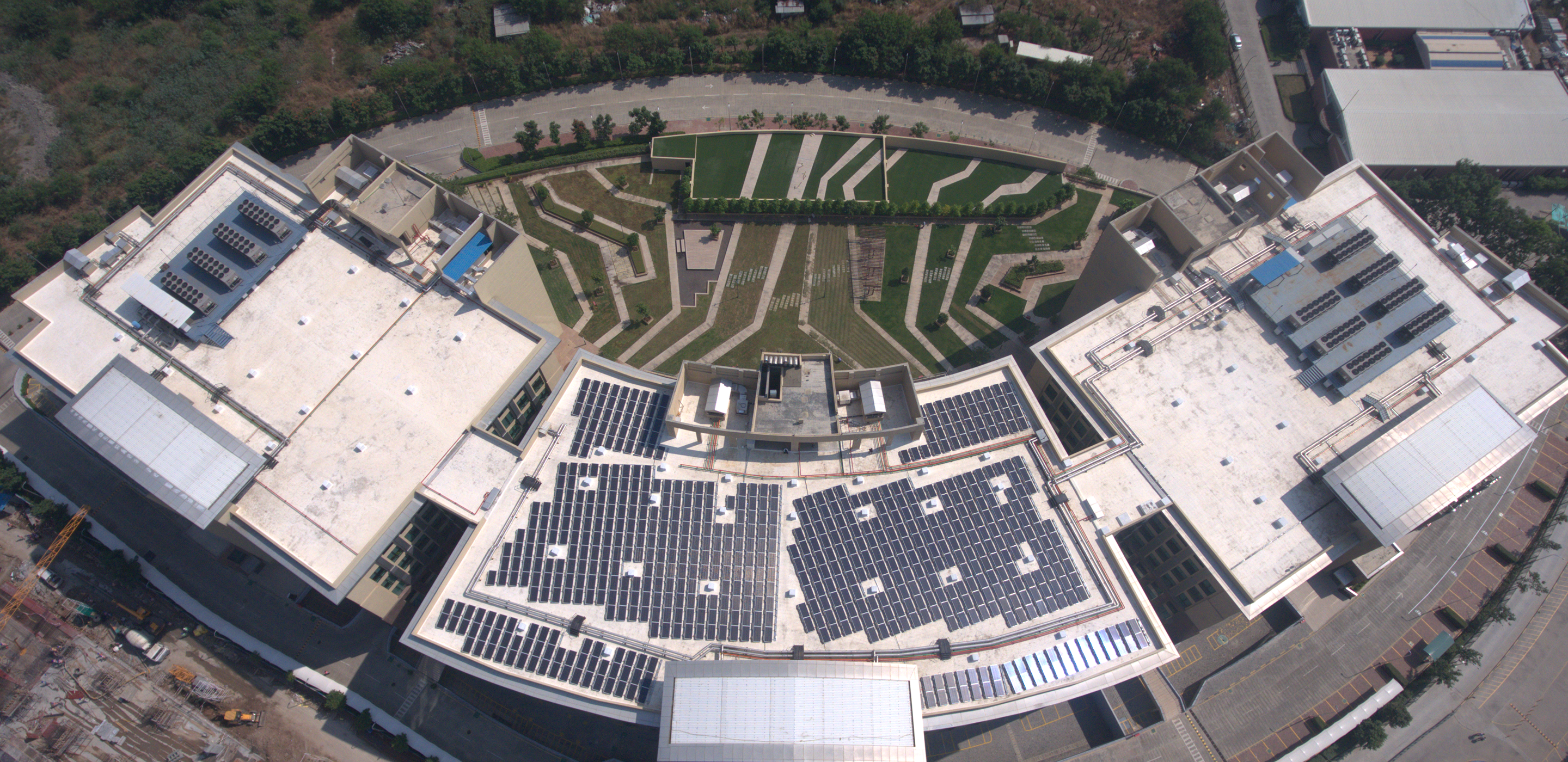
India’s top companies choose SolarSquare.

The solar installation by SolarSquare is one of those rare projects, where I have not had to get involved during the execution phase.


Submit a
solar project enquiry
Our solar experts will guide you in your solar journey.
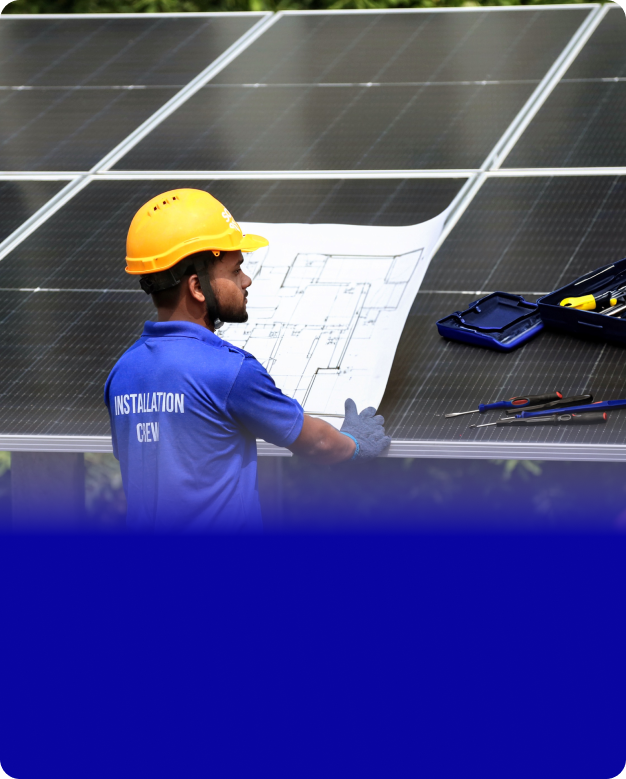
Hassle-free, professional and friendly installation experience – we are committed to making your solar journey easy
Best price challenge
We create premium solar systems using top-quality components, all at competitive prices, to guarantee a lifetime of high performance and savings.

Great solar starts with precision designs
We survey your roof, take measurements, and conduct shadow analysis in our softwares to come up with precise 3D design for your rooftop solar. We consult with you and take approvals on the design before installation.


0+
commercial projects

0+
years

0+ MWp
installation experience

0+ Cr
saving annually

Exceptional quality. End-to-end service. Delighted customers.
The SolarSquare team was very professional and had excellent interpersonal relations. Asbestos to GI roof sheet replacement and 2MW Solar Project was completed within 3 months time without escalations. During project execution, even a single drop of rain would have ruined our operations. No doubt it was a good job done.
C K Tharad, Senior VP, LNJ Bhilwara Group
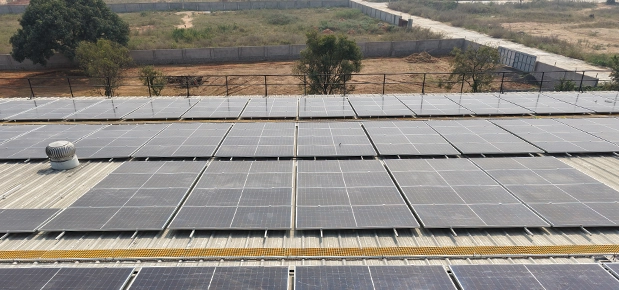
I am happy to acknowledge that SolarSquare has met the strictest Quality & Safety norms dictated by the Global Standards of Johnson & Johnson.
Anish Sengupta, EHS & S, Johnson & Johnson
Blogs
Commercial Solar Panels and Rooftop Systems for Businesses and Industries
Commercial photovoltaic panels, also known as industrial solar panels, are the most visible parts of commercial solar electric systems. Combined with other commercial solar products (mounting structures, a solar inverter, and solar accessories), they make what we call a commercial solar system. The commercial solar PV panels capture sunlight and convert it into direct current (DC) electricity, which is then fed to a solar inverter for conversion to alternating current (AC) power.
When sized to a building’s energy consumption, a commercial solar panel for offices can significantly reduce reliance on grid electricity, which is not only expensive but also polluting. The commercial solar installation cost in India ranges from Rs. 30,000* per kW to Rs. 50,000* per kW. Because grid electricity is expensive, using solar power for commercial businesses is highly beneficial, as it offers energy independence and reduces electricity bills.
*Please note that prices are subject to change. The above-mentioned commercial solar panel cost is indicative, and not fixed. The final commercial solar panel price can vary based on the type of solar panels you use (imported and DCR solar panels have a cost variation of ~15%), type of solar inverter you choose (string inverters and optimizers have a cost variation of ~10-15%), type of solar system, whether or not you use a battery energy storage system (BESS increases the final cost by almost 30%), mounting structure height, type of after-sales service, roof height, etc.
Two main types of commercial photovoltaic panels used widely in industries and commercial buildings in India are DCR panels and imported TOPCon modules.
- DCR solar panels: These panels are manufactured in India, as per MNRE’s Domestic Content Requirement norms. They are mandatory for commercial rooftop systems that use solar net metering, which is the setup that lets you export excess power to the grid. DCR panels are necessary when your solar industrial system is likely to generate more electricity than you consume on-site.
- Imported TOPCon solar panels: Behind-the-meter solar systems are widely used by industries in India because they allow the use of imported TOPCon solar panels. These commercial solar power panels are more affordable and offer higher efficiency, making them ideal when all generated power is consumed on-site and no electricity is left to be exported to the grid.
To fully benefit from industrial solar panels, choosing an experienced solar installation company matters. A provider with a long operating history is more likely to support your system over its full lifespan. This is critical because commercial rooftop solar systems can last for 25 years or more, provided they receive regular maintenance.
For example, SolarSquare has installed rooftop solar industrial systems across India for over a decade. We offer a multi-year comprehensive after-sales support, and our mounting structures are designed to withstand cyclonic wind speeds of up to 170 km/hr.
Read on to discover the types of commercial PV panels, the cost of installing commercial solar electric systems, and the benefits of using solar for industrial operations.
What is the Commercial Solar Installation Cost in India in 2026?
The commercial solar panel cost in India ranges between ~Rs. 30,000* per kW and ~Rs. 50,000* per kW, depending on system size, site conditions, and project specifications.
Based on these details, let’s check out the estimated cost of installing a commercial solar plant in India based on the system capacity:
| Size of Industrial Solar Energy Systems | Estimated Cost of Commercial Solar Power Plants in India in 2026* |
| 50 kW | ~Rs. 15 lakh to ~Rs. 25 lakh |
| 100 kW | ~Rs. 30 lakh to ~Rs. 50 lakh |
| 200 kW | ~Rs. 60 lakh to ~Rs. 1 crore |
| 300 kW | ~Rs. 90 lakh to ~Rs. 1.50 crore |
| 500 kW | ~Rs. 1.50 crore to ~Rs. 2.50 crore |
| 1 MW | ~Rs. 3 crore to ~Rs. 5 crore |
*Please note that prices are subject to change. The above-mentioned commercial solar installation cost is indicative, and not fixed. The final commercial solar panel cost can vary based on the type of solar panels you use (imported and DCR solar panels have a cost variation of ~15%), type of solar inverter you choose (string inverters and optimizers have a cost variation of ~10-15%), type of solar industrial system, whether or not you use a battery energy storage system (it increases the final cost by almost 30%), mounting structure height, type of after-sales service, roof height, etc.
Solar Industrial Projects Executed by SolarSquare
Installing solar panels for industrial use can reduce dependence on diesel backup and make energy costs easier to predict over the long run. Businesses can also claim accelerated depreciation on solar assets, which helps cash flow in the early years, and save further by shifting heavy operations to daytime hours when Time-of-Day tariffs are cheaper.
Here’s a snapshot of the solar industrial projects executed by SolarSquare, where customers are enjoying the multiple benefits of using a solar panel for factory year after year:
| Name of the Commercial Establishment | Capacity of Industrial Solar Systems Installed | When was the Solar Panel for Factory Commissioned? |
| Force Motors in Pithampur, Pune, and Chennai | Project capacity: 11.11 MW |
|
| D’decor in Mumbai, Maharashtra | Project Capacity: 8 MW |
|
| Premier Energies in Hyderabad, Telangana | 5.01 MW | June 2025 |
| NMIMS in Nashik, Maharashtra | 1 MW | September 2018 |
| Pondicherry University in Pondicherry | 2.4 MW | August 2021 |
Case Studies that Demonstrate the Real Impact of Installing a Solar Panel for Commercial Use
Solar for factories in India runs on different load patterns, roof conditions, and energy goals. Thus, the way industrial solar performs varies from one site to another. The two solar industrial projects listed below, one a textile manufacturing unit and one a university campus, show how solar fits into very different commercial environments and what kind of generation and impact it delivers in each.
- D’Decor Home Fabrics and Exports (8 MW system): D’Decor is a global leader in premium furnishings, and SolarSquare installed 8 MW of rooftop solar capacity across its Home Fabrics and Exports division. The plant generates over 1.06 crore units of renewable electricity each year, offsetting more than 8,700 metric tonnes of CO2. It helps the brand cut its environmental footprint and move closer to its sustainability goals.
- NMIMS Shirpur Campus (1 MW system): NMIMS is a large educational institution with high daily power consumption, and SolarSquare installed a 1 MW rooftop solar plant on campus. This project is one of the most advanced rooftop installations in India, with the country’s first deployment of Hanwha’s MonoPERC half-cut cell modules and SolarEdge’s 55 kW Synergy inverter system with module-level power optimizers. The plant generates around 14.4 lakh units of electricity every year, offsetting 1,200 tonnes of CO2, equivalent to planting 4,000 trees.
What are the Types of Commercial Photovoltaic Panels?
Commercial rooftop solar systems in India mainly use two types of solar panels, based on how they are sourced and how power is consumed: DCR solar panels and imported TOPCon solar panels. Understanding this distinction is essential before comparing panel technologies or choosing a system design.
- DCR commercial solar modules: These are made in India. The technology used inside these panels can vary, but the defining factor is domestic assembly. These panels are mandatory for commercial or industrial consumers who opt for net metering.
- Imported TOPCon solar panels: They’re brought into the country as fully manufactured modules. There is no requirement for local assembly or component sourcing. Because of this, they are more affordable and deliver higher efficiencies, which is why they dominate industrial and commercial rooftop installations where net metering is not involved.
Here’s how these commercial PV panels differ from each other:
| Feature | DCR Commercial Photovoltaic Panels | Imported Commercial Photovoltaic Panels |
| Assembly requirement | Must be made in India | Fully manufactured and imported |
| Where they are used | A commercial solar plant with net metering | Behind-the-meter commercial solar systems |
| Panel technologies available | Mono-PERC and TOPCon | Mono-PERC and TOPCon |
| Ideal use case | When electricity consumption is uncertain and surplus export may occur | When electricity demand is predictable and fully self-consumed |
| Cost | Higher due to net metering and domestic assembly | More cost-effective without net metering |
| Handling surplus power | Excess solar electricity is exported to the grid | There won’t be excess power because of predictable consumption. And if there is any excess power, consumers can use a battery energy storage system (BESS). However, installing a BESS can increase the overall cost of the solar system by 30%. |
In simple terms, DCR commercial photovoltaic panels are selected when exporting power to the grid is necessary. When consumption patterns are stable, imported panels paired with behind-the-meter systems offer better economics.
Solar Cell Technologies Used in Commercial Photovoltaic Panels
Commercial PV panels also differ based on the cell technology used. Today, industrial solar energy systems rely on Mono-PERC and TOPCon technologies.
- Mono-PERC panels: They use p-type monocrystalline silicon and deliver efficiencies in the 20-22% range.
- TOPCon panels: They use n-type silicon and achieve significantly higher efficiencies, often between 25% and 26%.
In recent years, imported TOPCon panels from manufacturers such as Jinko and Longi have become the preferred choice for commercial solar electric systems. Their higher efficiency, stronger performance in high temperatures, and lower degradation rates have made them more attractive than Mono-PERC panels in industrial settings.
Here’s a clear comparison of the two technologies from a commercial rooftop perspective:
| Feature | Mono-PERC Solar Panels | Imported TOPCon Commercial Solar PV Panels |
| Silicon type | P-type monocrystalline silicon | N-type |
| Cell design | Rear passivation layer to reduce recombination | Tunnel oxide and polysilicon layers for enhanced passivation |
| Bifacial gain | ~70% | ~85% |
| Module efficiency | 20-22% | 25-26% |
| Commercial solar panel price | Higher for DCR solar panels that require net metering. | Lower for imported solar panels for behind-the-meter installations. |
| Performance in high heat | Stable | Superior |
| Commercial solar plant degradation rate |
|
|
| Top manufacturers | For DCR modules: Premier Energies and Rayzon | For imported modules: Jinko and Longi |
Please note: Even though Mono-PERC panels are simpler to manufacture, imported TOPCon panels cost less than DCR Mono-PERC modules once net metering requirements are considered. This pricing advantage, combined with higher efficiency, has made TOPCon commercial PV panels extremely popular for commercial rooftop solar system installations. As a result, most industries in India opt for imported TOPCon panels unless net metering is required.
What are the Types of Commercial Photovoltaic Systems?
There are three main types of commercial solar power systems in India: on-grid, off-grid, and hybrid.
- On-grid commercial solar power systems: These systems connect directly to the electricity grid through a net meter or smart meter. When solar energy generation exceeds the on-site consumption, surplus units flow back to the grid. On-grid commercial solar electric systems do not include lead-acid or lithium battery storage.
- Off-grid commercial solar power systems: Off-grid rooftop solar systems operate independently of the grid and rely on a lead-acid or lithium battery bank for energy storage. Any excess electricity produced by the commercial photovoltaic panels is used to charge the batteries via a solar charge controller, which may be integrated into the inverter or installed as a separate unit.
- Hybrid commercial solar systems: Hybrid PV systems combine a grid connection with lithium battery storage. Hence, they offer both backup and grid interaction.
Here’s a snapshot of how the three commercial solar systems differ from each other:
| Feature | On-Grid Commercial Solar Electric Systems | Off-Grid Commercial Solar Electric Systems | Hybrid Commercial Solar Electric Systems |
| Are they connected to the grid? | Yes | No | Yes |
| Do they need a battery bank to store solar energy for later use? | No | Yes | Yes |
| Are they eligible for the PM Surya Ghar Muft Bijli Yojana subsidy scheme? | No | No | No |
| How do they work? | Commercial PV panels produce electricity during the day.
| The electricity generated by the commercial solar modules during the day is used in two ways:
Electricity stored in the battery bank keeps the load running at night. | Commercial solar PV panels generate electricity during the day.
During power outages or at night, electricity is supplied from the battery bank. If both solar and battery power are insufficient, the system draws electricity from the grid. |
Now, let’s understand how each commercial solar plant works.
How do On-Grid Industrial Solar Energy Systems Work?
An on-grid commercial solar plant converts solar radiation into electricity via the photovoltaic effect.
Here’s a step-by-step working process that also describes the role of different commercial solar products that make up a solar system:
- Commercial solar modules turn sunlight into direct current electricity: Photons in sunlight excite electrons within the solar cells that solar panels are made of. Energized electrons leave their bonds and move in a single direction, resulting in the formation of direct current (DC) electricity.
- A solar inverter converts DC power to AC power: This DC-to-AC conversion is essential because DC power can’t be supplied directly to run loads in India, as DC can be lethal. Hence, a solar inverter converts DC to AC for safety.
- Energy exchange between the grid and the commercial solar plant: Any excess energy not used in real time is sent to the grid. During nighttime or low-solar-generation periods, electricity is drawn directly from the grid.
How do Off-Grid Commercial Solar Plants Work?
An off-grid solar system, also known as a standalone solar system, is not connected to the grid.
Let’s understand how these systems work in simple steps:
- Commercial photovoltaic panels convert sunlight into DC power: This step is the same as in on-grid commercial solar electric systems.
- The generated energy is used in two ways: The solar inverter converts DC to AC to keep the load running. Any DC power not used in real time is used to charge the battery bank. This stored power is used at night or whenever needed to run the load.
How do Hybrid Commercial Solar Power Plants Work?
Now, let’s check out how a hybrid solar system works in simple steps:
- Commercial solar modules convert solar renewable energy into DC electricity: This conversion occurs in the same way as in on-grid and off-grid commercial solar power systems.
- Smart energy distribution: The generated DC power first meets on-site electricity demand after conversion to AC by the hybrid solar inverter. Excess energy is stored in the battery bank, and any remaining surplus is fed into the grid.
- Power supply during outages and at night: When solar generation stops or a grid outage occurs, stored battery energy provides electricity. If battery capacity is exhausted, the system automatically switches to grid power.
What are the Benefits of Commercial Solar Electric Systems?
Industrial solar energy systems help factories control energy costs by reducing dependence on grid power. With modern high-efficiency solar panels, industries generate more electricity from the same rooftop area and maintain stable output even during extreme heat.
Below are the key benefits of adopting solar for industrial operations in India.
- Lower operating costs and reduced diesel usage: By producing electricity on-site, industries reduce monthly power bills and limit the need for diesel backup during outages. Over time, this improves energy cost stability and reduces exposure to rising fuel prices, making commercial solar power costs easier to predict and manage.
- Tax benefits and depreciation incentives: Businesses installing commercial rooftop solar systems can claim accelerated depreciation on solar assets. This improves cash flow during the early years of the project.
- Additional savings under Time-of-Day tariffs: In states where discoms apply Time-of-Day pricing, daytime electricity is cheaper while evening usage attracts higher charges. By shifting energy-intensive operations between 9 AM and 5 PM, companies and industries can let solar power cover most of the load and avoid peak tariffs.
- Reliable performance under high-temperature conditions: N-type TOPCon solar panels are designed to withstand extreme heat. With temperature coefficients around −0.29%/°C or lower, power loss remains minimal even when rooftop temperatures rise sharply during summer heatwaves.
- Improved thermal comfort for top-floor spaces: Commercial PV panels act as a protective layer over the roof, reducing direct heat absorption. It lowers roof temperatures, helping offices, workspaces, and HVAC systems operate more efficiently.
- Reduction in carbon emissions: Commercial solar systems significantly cut carbon emissions by replacing grid electricity with clean energy. The environmental impact is often compared to planting many trees over the system’s lifetime, contributing to cleaner air and lower pollution levels.
Here’s a tabulated snapshot of how much carbon commercial solar electric systems can offset in their lifespan of 25 years:
| Commercial Solar Plant Size | Equivalent to How Many Full-Grown Trees? | Carbon it offsets in 25 Years |
| 100 kW | 3,920 full-grown trees | 25,87,200 kg |
| 200 kW | 7,840 full-grown trees | 51,74,400 kg |
| 300 kW | 11,760 full-grown trees | 77,61,600 kg |
| 400 kW | 15,680 full-grown trees | 1,03,48,800 kg |
| 500 kW | 19,600 full-grown trees | 1,29,36,000 kg |
Why choose SolarSquare to install Commercial Rooftop Solar Systems?
SolarSquare is a DISCOM-approved solar company in India with more than a decade of experience installing rooftop solar systems nationwide. We serve across 23+ states and union territories in India and have installed rooftop solar industrial systems worth 800+ crores nationwide over the past decade.
- As of April 2026, we have installed 250+ MW of solar capacity in India across 263 industries and commercial establishments.
- Our commercial solar electricity systems collectively offset ~1.9-2 lakh tonnes of carbon emissions every year.
- We are a UL, TUV, and CII certified brand, which means our systems are tested and verified for electrical safety, product quality, and installation performance by both global safety bodies and India’s leading industry council.
Here’s why industries and commercial offices across the entire country choose us for rooftop solar installation:
- Our IIT Bombay-approved solar mounting structures feature an 80-micron HDGI coating and can withstand cyclonic winds up to 170 km/hr.
- We use HILTI airtight chemical anchoring to ensure no water leakage occurs post-installation.
- We offer an exhaustive multi-year solar maintenance plan with monthly visits to ensure the solar system we install operates at peak efficiency post-installation.
- We support multiple financing options, including Capex, Leasing, and PPA, to help customers choose the model that fits their needs and budget.
Conclusion
Commercial solar electric systems in India are highly relevant for industries and businesses looking to reduce their carbon footprint and save on energy costs, as electricity tariffs continue to rise each year. Adopting solar for industrial operations is the best way to harness solar energy and generate free electricity for your facility.
Most industries that don’t require net metering use imported TOPCon commercial photovoltaic panels because they’re cheaper and more efficient. Although there’s no subsidy on commercial solar PV panels, a commercial solar plant is still a worthwhile investment because it offers free solar electricity for 25 years or more. For any further queries about industrial solar installations, you can book a free solar consultation call with SolarSquare.
Frequently Asked Questions
What is a commercial solar panel?
A commercial solar panel or an industrial solar panel is the most visible part of a solar system. It captures and converts sunlight into direct current (DC) electricity.
Which solar panel is best for commercial use?
Imported TOPCon solar panels are considered the best for industries and factories because they’re cheaper and highly efficient even at high temperatures. However, when net metering is required, DCR modules are recommended.
What is the cost of commercial solar panels in India?
Commercial solar PV panels in India can cost somewhere between ~Rs. 30,000* per kW and ~Rs. 50,000* per kW.
*Please note: The above-mentioned commercial solar installation cost is indicative, and not fixed. The final commercial solar panel price can vary based on the type of solar panels you use (imported and DCR solar panels have a cost variation of ~15%), type of solar inverter you choose (string inverters and optimizers have a cost variation of ~10-15%), type of solar system, whether or not you use a battery energy storage system (it increases the final cost by almost 30%), mounting structure height, type of after-sales service, roof height, etc. Prices are subject to change.
How many solar panels are needed for installing a commercial solar system?
You can use this simple formula to calculate the number of solar panels needed to build a commercial solar plant:
Number of solar panels = system size (W) ÷ panel wattage
Based on the formula above, we have given two example calculations:
- If you use 580-watt TOPCon modules: You will need ~1,725 panels to install a 1 MW solar system.
- If you use 545-watt TOPCon modules: You will need ~1,835 panels to install a 1 MW solar system.
What is the lifespan of a commercial solar panel?
With proper and periodic professional maintenance, a commercial solar plant can last for 25 years, and continue generating power at 80% efficiency thereafter.