
 894 Reads
 27 mins


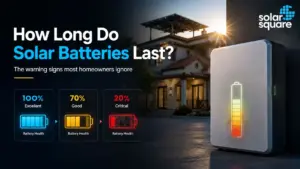
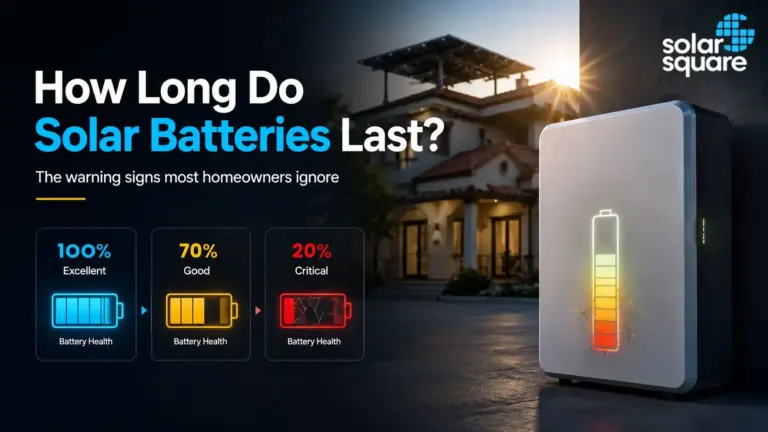
Hybrid and off-grid solar systems can power your entire home, even during outages, and offer complete independence from hefty electricity bills that otherwise inflate by 3-6% every year. But their performance depends heavily on one component, which is the battery. Therefore, if you’re planning to install a battery-based rooftop solar panel system for homes, understanding the lifespan of solar batteries becomes essential.
The average life of solar batteries can range from 2 to 15 years, depending on the type of battery you choose.
- Lithium-ion solar battery lifespan: It’s the most recommended option for rooftop solar systems, requires minimal maintenance, and lasts 10 to 15 years.
- Lead-acid solar battery lifespan: It lasts around 2 to 3 years and needs rigorous maintenance to last its entire lifespan.
This difference between the lifespan of solar batteries, and the fact that lead-acid needs much more maintenance, is why lithium-ion batteries are recommended for hybrid and off-grid solar systems. They require minimal maintenance and last longer. Hence, the long-term ROI of lithium batteries is much higher than that of lead-acid batteries, despite their initial cost per kWh being 1.5 to 2 times higher.
Another type of solar battery you might come across is a solar gel battery. While longer than the lifespan of a lead-acid battery, the solar gel batteries lifespan is shorter than that of a lithium-ion battery. They last up to 6 years, and with proper maintenance, their lifespan can be extended to 8 years.
In this blog, we’ll break down the average life of solar batteries, the multiple reasons lithium-ion solar batteries are the best option for battery-based solar systems, factors that affect the lifespan of solar batteries, tips to extend the life of solar panel batteries, and top signs that your batteries need replacement.
TL;DR Summary Box: How Long Do Solar Batteries Last?
Solar batteries last between 2 and 15 years, depending on the battery type and usage conditions. The lifespan of a lithium-ion solar battery is the longest, 10 to 15 years or around 3,000 to 5,000 charge cycles. In comparison, the lead-acid solar battery lifespan is just 2 to 3 years, or fewer than 1,000 charge cycles.
Here are the main topics covered in this blog in detail:
| Main Topics | Key Takeaways |
| What is the lithium-ion solar battery lifespan? | 10-15 years or 3,000 to 5,000 charge cycles |
| What is the lead-acid solar battery lifespan? | 2-3 years or fewer than 1,000 charge cycles |
| Solar gel batteries lifespan | 6-8 years |
| Top factors that affect the solar battery lifespan | The most critical factors include battery chemistry, depth of discharge, number of charge cycles, high temperature, charging/discharging rate, overcharging or undercharging, inverter/charge-controller compatibility, ventilation, and maintenance quality. |
| Signs your solar battery is past its lifespan | The clearest signs are reduced backup time, not holding charge overnight, slow or incomplete charging, frequent low-battery warnings or inverter trips, unstable power output, swelling or leakage, and excessive heat or burning smell. |
| How to extend the solar panel battery lifespan? | The best ways are to avoid excessive deep discharge, keep the battery cool and ventilated, use the correct inverter/charge controller settings, avoid overcharge and undercharge, size the battery correctly, limit stress from heavy loads, and follow maintenance for lead-acid batteries.
For lithium-ion batteries, an in-built BMS helps by managing charge/discharge and safety limits automatically. |
| Solar system lifespan vs solar panel battery lifespan: what’s the difference? | A rooftop solar system can last 25 years or more, and solar panels themselves have a lifespan of 25-30 years. Batteries do not last that long. Most home solar batteries last about 2-15 years, so they usually need replacement during the life of the solar system. |
What is the Average Life of Solar Batteries?
The average life of solar batteries in India depends on the battery type, usage patterns, and maintenance practices. In most cases, solar batteries last between 2 and 15 years, with lithium solar batteries lifespan being the longest and lead-acid batteries wearing out faster.
However, in reality, the lifespan of a solar battery can vary significantly. Factors such as excessive depth of discharge (DoD), high operating temperatures, and poor maintenance can significantly reduce the life expectancy of solar batteries. For example, regularly discharging a battery beyond its recommended limits can shorten its lifespan by several years.
Now, let’s check the solar battery lifetime for different types of solar rechargeable batteries in India.
- Lithium-ion solar battery lifespan: 10-15 years
- Lead-acid solar battery lifespan: 2-3 years
- Solar gel batteries lifespan: 6-8 years
- Solar AGM battery life expectancy: 3-7 years
What are the Top Factors that Affect the Lifespan of Solar Batteries?
The life expectancy of solar batteries is not fixed, even if the manufacturer mentions a specific number of years or cycles. In real-world conditions, battery life varies based on how it is used daily. Factors such as heat exposure, charging patterns, and the extent of battery discharge can shorten its lifespan. This means that two identical batteries can age very differently depending on usage, maintenance, and environmental factors.
Here are the key factors that directly influence the lifespan of solar batteries:
- Battery type: The type of battery you choose has the biggest impact on lifespan. Lithium-ion batteries last the longest, followed by gel batteries and then lead-acid batteries. Each type has different durability, cycle life, and maintenance needs.
- Depth of Discharge (DoD): The depth of discharge is the percentage of the battery’s stored energy you can use before recharging. Different battery types are designed to handle different levels of discharge. Lead-acid batteries work best when you use only about 50-60% of their capacity before recharging. Lithium-ion batteries, on the other hand, can safely handle a deeper discharge rate of 90-95%. If you regularly exceed these recommended limits, the battery experiences greater stress during each cycle. Over time, this leads to faster chemical degradation, reduced capacity, and a shorter overall lifespan.
- Number of charge cycles: Every battery has a limited number of charge and discharge cycles. For lead-acid, it’s less than 1,000 cycles, and for lithium-ion, it’s 3,000 to 5,000 cycles. Once the cycle limit is reached, the battery begins to lose capacity.
- Operating temperature: High temperatures can significantly reduce solar battery lifetime. Excessive heat speeds up internal chemical reactions, leading to faster degradation.
- Charging and discharging speed: Charging the battery too quickly or drawing power too fast can strain the battery. Stable, controlled charging is important for maintaining battery health.
- Maintenance practices: Some solar batteries, especially lead-acid types, require regular maintenance like water topping and terminal cleaning. Poor maintenance can lead to early failure.
- Battery quality and brand: Not all batteries are built the same. Higher-quality solar batteries from reliable brands are the best as they last longer because they use better materials and safety systems.
- Inverter compatibility: Using a battery with an incompatible inverter can lead to improper charging and discharging. This mismatch can shorten battery life over time.
- Installation location: Solar batteries installed in hot, poorly ventilated areas are most likely to degrade faster. Keeping them in a shaded, well-ventilated space helps extend their lifespan.
- Usage patterns: Frequent power cuts or heavy night-time usage can increase the load on the battery. The more the battery is used, the faster it reaches its cycle limit.
- Overcharging and undercharging: Consistently overcharging or not fully charging the battery can damage it. A good solar charge controller or inverter helps prevent this issue.
- Battery sizing: An undersized battery gets overused daily, while an oversized battery may not charge efficiently. Hence, proper sizing by professionals is critical as it ensures balanced usage and longer solar battery life.
Signs that Indicate Your Solar Battery is Past its Lifespan and Needs Replacement
It’s extremely rare that solar batteries will stop working all at once. Instead, their performance declines gradually, which makes it easy to overlook early warning signs. You might still get backup power, or the backup may start behaving inconsistently. Recognizing these changes early can help you avoid sudden power failures and plan a timely replacement.
Here are the most common signs that indicate your solar battery is nearing the end of its lifespan:
- Reduced backup time: If your battery used to power your home for several hours but now runs out much faster, it is a clear sign of capacity loss. This happens as the battery ages and can no longer store the same amount of solar energy.
- Battery not holding charge overnight: A healthy, properly sized battery should be able to store enough charge to last through the night for essential loads. If it drains completely before morning despite normal usage, the battery’s storage capacity has degraded.
- Strange sounds from the battery: If you hear hissing or buzzing while the battery is operating, it’s an indication of a serious failure, such as internal leakage. Do not ignore such sounds, as they can pose safety issues.
- Slow or incomplete charging: If the battery takes longer than usual to charge or never reaches full charge, it indicates internal wear. This is common in older batteries that have gone through many charge cycles.
- Frequent low-battery warnings: If your hybrid solar inverter starts throwing low-battery alerts frequently even when solar radiation and usage patterns have not changed, it suggests the battery is no longer performing efficiently. In fact, frequent inverter tripping is also a clear sign of a solar battery nearing the end of its lifespan.
- Sudden drops in power supply: If lights flicker or your appliances shut off unexpectedly, even when the battery shows some charge, it could mean the battery cannot deliver a stable output.
- Physical swelling or leakage: Any visible swelling, bulging, or fluid leakage is a serious sign of battery damage. This is more common in lead-acid batteries and requires immediate replacement for safety reasons.
- Unusual heat or burning smell: If the battery becomes excessively hot during operation or emits a burning or chemical smell, it indicates an internal failure. This should not be ignored, as it can also result in a fire.
- Increased maintenance needs: If you find yourself frequently topping up water in lead-acid batteries or dealing with recurring issues, it may be a sign that the battery is nearing the end of its life.
- Age of the battery: Even if there are no obvious issues, batteries have a limited lifespan. If your battery has already exceeded its expected lifespan, such as 2-3 years for lead-acid and 10-15 years for lithium-ion, replacement is important.
How to Extend the Lifespan of a Solar Battery?
Tier-1 solar batteries that have gone through rigorous testing rarely fail due to manufacturing defects. The major factor that shortens the lifespan of solar batteries is how they are used daily. Habits like frequent deep discharge, poor installation location, or irregular maintenance can reduce a solar panel battery lifespan by years.
However, the good news is that most modern lithium-ion batteries automatically manage charging levels, depth of discharge, and overall battery safety through an in-built BMS, which is one of the key reasons behind their longer lifespan.
That said, the below-listed practices must be followed to get the most out of your battery and ensure they last their entire lifespan:
- Avoid deep discharge: Do not drain your battery beyond its recommended limits. For lead-acid batteries, keep discharge within 50-60%, while lithium-ion batteries can safely go up to 90-95%. Staying within these limits reduces stress and extends battery life.
- Install in a cool, well-ventilated area: High temperatures accelerate battery degradation. So, place the battery in a shaded, well-ventilated space, away from direct sunlight or enclosed hot rooms.
- Use a compatible inverter and charge controller: A properly matched inverter ensures correct charging and discharging cycles. Mismatched components can lead to overcharging or undercharging, both of which harm the battery.
- Avoid overcharging and undercharging: Overcharging or leaving the battery partially charged for long periods can damage it. Modern inverters help regulate this, but correct settings are equally important.
- Follow regular maintenance for lead-acid batteries: Check water levels, clean terminals, and ensure proper connections. Neglecting maintenance can lead to early failure.
- Right battery sizing: Let professionals choose a battery that matches your energy consumption. An undersized battery gets overused daily, while an oversized one may not charge properly. Both scenarios reduce the average life of solar batteries.
- Monitor battery performance: Keep an eye on charging patterns, backup time, and system alerts. Early detection of issues helps prevent long-term damage.
- Use high-quality batteries and components: Investing in a reliable battery brand and high-quality components, such as the inverter, charge controller, and wiring, ensures proper charging, stable performance, and built-in safety protections.
- Keep terminals clean and tight: Loose or corroded connections can cause energy loss and overheating, which can negatively affect battery performance.
Solar System Lifespan vs Solar Panel Battery Lifespan: What’s the Difference?
When you hear the term solar system lifespan, it refers to how long a rooftop solar system will last. This includes solar panels, inverters, batteries, and other solar components. A well-maintained, tier-1 rooftop solar system in India can last 25 years or more, with solar panels performing at 80% of their initial efficiency even beyond that.
In contrast, solar battery lifespan, or the battery life of solar panels, refers specifically to how long the battery can last and deliver energy before it needs replacement. Unlike solar panels, batteries have a shorter lifespan and need to be replaced multiple times over the system’s lifespan.
Here’s a snapshot comparing the lifespans of different components in an off-grid and a hybrid solar system.
| Component | Average Lifespan | Role in a Solar System | Replacement Frequency |
| Lithium-ion solar batteries | 10-15 years | They store solar energy for usage at night, during power outages, and during periods of low solar generation. | Once every 10-15 years |
| Lead-acid solar batteries | 2-3 years | They store solar energy for usage at night, during power outages, and during periods of low solar generation. | Once every 2-3 years over the 25-year lifespan of the solar system. |
| Solar inverter | 5-10 years | They convert DC power to AC power. | Once every 5-10 years |
| Solar panels | 25-30 years | They convert sunlight into DC electricity. | When maintained well, they last their entire lifespan without needing replacement for more than 2 decades. |
Why Choose SolarSquare to Install Rooftop Solar at Your Home?
Kyunki, mehangi bijli se muft bijli tak ka safar aasaan banaata hai SolarSquare!
SolarSquare is India’s #1 home solar company, and the only solar company nationwide to offer a savings guarantee with a money-back promise. If your system generation falls short of what we promised at the time of installation, we compensate for the shortfall at Rs. 8 per unit.
Here are the many reasons why 12,000+ customers have rated us 4.8 on Google:
- Over a decade of hands-on solar expertise: For more than 10 years, SolarSquare has designed and installed residential solar systems built to handle cyclonic winds of up to 170 km/hr.
- Storm-safety record of 99.91%: Thanks to our IIT-Bombay-approved solar mounting structures, our solar installations have maintained a safety record of 99.91% over the last two years, even during cyclonic winds of up to 170 km/hr.
- Guaranteed solar savings with a money-back promise: We are India’s first and only solar company that offers a money-back promise if the generation falls short of what we predicted. For every unit short, we compensate the customer at Rs. 8 per unit.
- 36,000 homes powered by SolarSquare: More than 36,000 nationwide have already trusted SolarSquare for smooth installation, stable performance, and predictable generation year after year.
- More than Rs. 100 crore in verified customer savings: These savings come from real systems producing electricity month after month. Each installation contributes to long-term bill reduction.
- More than Rs. 220 crore disbursed in subsidy: We have helped our customers receive over Rs. 220 crore in solar subsidies.
- A 5-year after-sales maintenance plan: We offer a 5-year AMC plan with scheduled monthly visits to take care of the structural, electrical, and mechanical health of your solar system.
Conclusion
The average lifespan of solar batteries in India can range from 2 to 15 years, depending on the type of battery and its maintenance. If you charge and discharge the batteries beyond their permissible depth of discharge (DoD) or store them in a hot, humid room with poor ventilation, their lifespan will be dramatically reduced.
While most lithium-ion solar batteries come with an in-built Battery Management System (BMS) whose main job is to protect the battery from overcharging and undercharging, the battery should still be stored in a ventilated room and sized by professionals based on your home energy needs. These are some of the best ways to extend the lifespan of solar batteries.
For any further queries related to rooftop solar installation, you can book a free solar consultation call with SolarSquare.
FAQs
What’s the Tesla solar battery life expectancy?
The Tesla solar battery life expectancy is 10 to 15 years under normal conditions. They are designed for 4,000-5,000 charge cycles and come with a 10-year company warranty that guarantees at least 70% capacity retention.
What’s the Powerwall 2 lifespan?
The Tesla Powerwall 2 lifespan is 10 to 15 years. It comes with a 10-year manufacturer’s warranty. But its actual lifespan depends heavily on usage patterns, temperature, and charging behavior.
Do solar batteries last as long as solar panels?
No, solar batteries, even the best lithium-ion types, can last for 10-15 years with proper maintenance and usage. On the contrary, modern solar panels can last for 25-30 years.
How long do solar batteries store electricity?
This is highly subjective and depends on the type of solar system concerned.
For instance, in a hybrid PV system, solar batteries are meant to store enough electricity to last the entire power outage. Based on that, professionals suggest an ideal battery capacity to ensure storage lasts several hours, up to about one night, depending on load and battery capacity.
An off-grid solar system is an entirely different story because it must be designed with complete autonomy in mind. The battery bank and solar panels are sized for autonomy, meaning the home should be able to run on stored battery power for at least 2 days, even in the complete absence of solar generation.
Can a solar battery last 20 years?
In most cases, no. Even the best solar batteries, when used properly, can last 15 years.
How long does a solar battery last at night?
A solar battery can last 8 to 12 hours overnight, depending on:
- Battery capacity (kWh)
- Power consumption of appliances
- Number of connected loads
For example, if you use a 2.5 kWh battery, it can provide backup for only 1 hour. So, how long the battery lasts depends on its capacity.


 Previous Article
 22 min





![10 kW Solar Panel Price in India [With and Without a Subsidy]](https://cdn.solarsquare.in/blog/wp-content/uploads/2025/07/18165650/10-KW-solar-panel-300x167.webp)