
 28 Reads
 13 mins


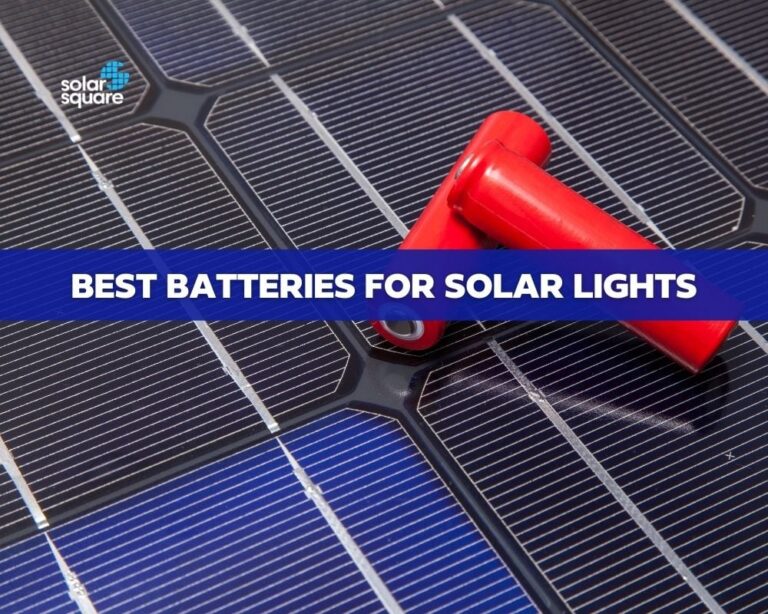
Solar lights are designed to collect energy during the day and use it after dark. The solar panel generates electricity, but the rechargeable battery stores that energy for nighttime use.
That is why a solar light can gradually become dimmer, run for fewer hours, or stop working even when its solar panel still looks perfectly fine. In many cases, the battery has simply reached the end of its useful life. If your solar garden light worked beautifully last summer and barely glows now, don’t blame the sun.
The reassuring part is that fixing it is usually a ₹100-₹300 job, not a full replacement. The tricky part is that solar lights don’t run on the AA batteries sitting in your kitchen drawer; they need a rechargeable battery with the right chemistry, voltage, and capacity (mAh, or milliampere-hour rating). Get any of those wrong, and you can damage the light’s charging circuit entirely.
This guide walks through the battery types solar lights actually use, how to read a mAh rating, whether you can use a “regular” rechargeable battery (spoiler: often yes), and exactly how to replace one.
What Kind of Batteries Do Solar Lights Use?
Solar lights never run on disposable alkaline batteries, not even ones labelled “heavy duty” or “long life.” Alkaline cells aren’t built to accept the slow, uneven trickle charge that a small solar panel delivers, and forcing them to charge can cause leaking or swelling.
Instead, solar lights use one of four rechargeable battery chemistries, each suited to a different type of fixture:
| Chemistry | Full Form | Voltage per Cell | Common Sizes |
| NiMH | Nickel-Metal Hydride | 1.2V | AA, AAA |
| NiCd | Nickel-Cadmium | 1.2V | AA, AAA |
| Li-ion | Lithium-ion | 3.7V | 14500 (AA-sized), 18650 |
| LiFePO₄ | Lithium Iron Phosphate | 3.2V | 14500, 18650, custom |
Do solar path lights need batteries? Yes, always; even models with no visible battery compartment have a sealed internal cell. The panel charges the battery during the day; the battery powers the LED at night.
The 4 Types of Batteries for Solar Lights, Compared
Different battery chemistries offer different combinations of capacity, cycle life, temperature performance, and cost. The right option depends primarily on what the manufacturer designed the light to use.
1. NiMH (Nickel-Metal Hydride): A Common Choice for Garden and Pathway Lights
NiMH is the battery you’ll find in the vast majority of everyday solar lights, garden stakes, walkway lights, fences, and lawn edging. It strikes the best balance of cost, capacity, and eco-friendliness, and unlike older chemistries, it has no meaningful memory effect, so it can be topped up at any charge level without losing capacity.
- Roughly 500-1,000 charge cycles, depending on quality
- 1.2V nominal matches the vast majority of factory-fitted batteries
- Self-discharges 20-30% a month in storage, faster in premium “low self-discharge” (LSD) variants that hold charge for years
- Loses charging efficiency below roughly 0-4°C
2. NiCd (Nickel-Cadmium): Mostly Relevant to Older Solar Lights
Nickel-Cadmium (NiCd) batteries also have a nominal voltage of 1.2V and have historically been used in outdoor lighting.
However, cadmium is a toxic heavy metal, and NiCd batteries are subject to environmental restrictions in various applications and markets.
If your old solar light specifically uses NiCd, check the manufacturer’s instructions before replacing it with NiMH. The voltage may be the same, but the charging characteristics of the two chemistries are not identical.
For a new replacement, don’t assume that any 1.2V rechargeable battery is automatically compatible.
3. Li-ion (Lithium-ion): For Higher-Power Solar Lights
Lithium-ion (Li-ion) batteries have a higher energy density than many conventional rechargeable battery chemistries. They are commonly found in applications that require more stored energy in a relatively compact package.
You may encounter Li-ion batteries in:
- Solar security lights
- Solar floodlights
- Motion-sensor lights
- Portable solar lighting
The biggest warning is voltage.
A 14500 Li-ion battery may physically fit into a compartment designed for an AA cell, but a typical Li-ion cell has a nominal voltage of about 3.7V. A NiMH AA cell has a nominal voltage of 1.2V.
Do not replace a 1.2V NiMH battery with a 3.7V Li-ion battery simply because both are labelled as AA-sized.
4. LiFePO₄ Batteries: Long-Life Lithium Chemistry
Lithium Iron Phosphate (LiFePO₄) is another lithium-based chemistry used in energy-storage applications.
It has a nominal cell voltage of around 3.2V and is known for its thermal stability and long cycle life in appropriately designed systems.
However, it is not a drop-in replacement for either a 1.2V NiMH cell or a 3.7V Li-ion cell.
If a solar light was designed specifically around LiFePO₄ chemistry, use the manufacturer’s specified replacement.
Best Batteries for Solar Lights: Quick Comparison
There is no single battery that is best for every solar light. The comparison below is more useful than choosing a battery solely by its brand or capacity.
| Parameter | NiMH | NiCd | Li-ion | LiFePO₄ |
| Nominal Voltage | 1.2V | 1.2V | 3.7V | 3.2V |
| Charge Cycles | 500-1,000 | 300-500 | 800-1,000 | 2,000-3,000 |
| Memory Effect | Minimal | Yes | No | No |
| Cold-Weather Performance | Moderate | Good | Good | Excellent |
| Toxic Materials | None | Cadmium | None | None |
| Best For | Garden, path, lawn lights | Legacy fixtures only | Flood, security lights | Premium/high-heat installs |
| Main consideration | Match the original specification | Legacy compatibility | Voltage and protection | Dedicated charging system |
What is the Best mAh Battery for Solar Lights?
Milliampere-hour (mAh) is a measure of a battery’s charge capacity.
In simple terms, a higher mAh rating generally means the battery can store more charge. But that does not mean the highest-mAh battery is automatically the best battery for a solar light.
For example, if your light originally uses a 1.2V 800 mAh NiMH AA battery, moving to a 1.2V 2,000 mAh NiMH AA battery may increase the amount of energy available when fully charged.
However, there is an important trade-off: the solar panel and charging circuit also need to be capable of charging the larger battery adequately.
Can I Use a Higher mAh Battery in My Solar Light?
Potentially, yes; but only when the replacement matches the required chemistry, voltage, size and charging specifications.
Consider this example:
- Original: 1.2V NiMH, 800 mAh
- Replacement: 1.2V NiMH, 1,900 mAh
The voltage and chemistry match, so the replacement is much more plausible than using a 3.7V Li-ion cell.
However, the larger battery does not automatically mean the light will charge fully every day. The charging time depends on the solar panel’s output, sunlight availability, charging circuit and battery condition.
So, don’t use mAh alone to choose a replacement.
Can You Use Regular Rechargeable Batteries in Solar Lights?
This is the question most people actually have when a light dies: can I just grab the AAs from my remote control drawer?
If your light takes NiMH or NiCd cells (1.2V), yes; the charging circuit only reads voltage and chemistry, not brand. That means widely available rechargeables from mainstream battery brands work fine, provided they’re NiMH or NiCd and 1.2V.
The brand does not have to be the same as the original battery.
What matters is:
- Chemistry
- Voltage
- Physical size
- Capacity
- Charging compatibility
Do not assume that every rechargeable battery is suitable.
For example, a lithium-ion 14500 cell should not be inserted into a light designed for a 1.2V NiMH AA cell simply because it has a similar physical shape.
Can I Use Energizer Rechargeable Batteries for Solar Lights?
Yes, as long as you choose Energizer’s NiMH rechargeable AA batteries rather than non-rechargeable lithium batteries. Standard rechargeable AAs are typically 1.2V with around 2,000 mAh capacity, offering more capacity than the 600-800 mAh cells found in many budget solar lights. They may take slightly longer to charge but can provide longer runtime.
What NOT to Use
- Alkaline batteries (including ones marketed as “rechargeable alkaline”), can’t accept solar trickle-charging and risk leaking or swelling
- Lithium primary (non-rechargeable) cells, same charging incompatibility
- Li-ion 14500 cells in a NiMH-designed light: 3.7V into a 1.2V circuit will damage the charge controller
*Do not confuse Energizer’s rechargeable products with its Ultimate Lithium primary batteries. Primary lithium batteries are not the same as rechargeable Li-ion cells and should not be treated as interchangeable.
Best Rechargeable AA Batteries for Solar Lights
If you’re buying fresh rather than raiding a drawer, these are the categories worth knowing:
- Low self-discharge (LSD) NiMH: Brands like Panasonic Eneloop are built to retain charge for months in storage, with a rated capacity around 2,000 mAh and roughly 2,100 charge cycles, and are well suited to seasonal or decorative lights that sit unused part of the year.
- Standard NiMH AA, 800–1,200 mAh: The right call for everyday garden and pathway lights with small panels; budget rechargeable AA lines in this range from most major battery brands work well.
- Higher-capacity NiMH, 1,500–2,500 mAh: Better suited to larger lights with bigger panels that can actually complete a full charge in a day.
How to Choose the Best Rechargeable Battery for Solar Lights
Before buying a replacement, check the old battery and the light itself.
1. Check the Battery Chemistry
Look for markings such as:
- NiMH
- NiCd
- Li-ion
- LiFePO₄
Replacing like-for-like is the safest starting point.
2. Match the Voltage
Voltage is one of the most important specifications.
A common example is:
- NiMH: 1.2V per cell
- NiCd: 1.2V per cell
- Li-ion: around 3.7V nominal per cell
- LiFePO₄: around 3.2V nominal per cell
Never choose a replacement solely because it fits physically.
3. Check the mAh Rating
Look at the original battery’s capacity.
A replacement with the same capacity is the simplest choice. A somewhat higher-capacity battery may work when the chemistry and voltage match, but it can take longer to recharge if the solar panel is small.
4. Check the Physical Size
AA and AAA are common in smaller solar lights. Some higher-powered products use cylindrical lithium cells such as 14500 or 18650.
The physical format needs to match the light’s battery compartment and terminals.
5. Consider the Operating Environment
Outdoor solar lights are exposed to:
- Heat
- Rain and humidity
- Dust
- Direct sunlight
- Seasonal temperature changes
The battery and charging circuit should therefore be designed for the environment in which the light operates.
6. Look for Appropriate Safety Information
For rechargeable batteries, safety specifications matter.
In India, the Bureau of Indian Standards (BIS) lists IS 16046 standards covering safety requirements for sealed secondary cells and batteries containing alkaline or other non-acid electrolytes. The standard includes separate parts covering nickel systems and lithium systems.
When purchasing batteries, use established manufacturers and check the product’s safety and technical documentation rather than relying only on marketing claims.
When and How to Replace a Solar Light Battery
A solar light that no longer stays bright through the night may simply need a battery replacement. Before buying a new one, look for a few signs of battery degradation and check the specifications of the existing battery. Once you have the right replacement, swapping it is usually a simple process.
Signs it’s time:
- Light dims sharply within an hour or two of dark
- Light doesn’t turn on at all after a full sunny day
- Noticeably dimmer than when new
- Battery is roughly 2-3 years old (NiMH) or older for Li-ion/LiFePO₄
Replacement steps:
- Open the battery compartment, usually on the underside of the light head
- Note the chemistry, voltage, and mAh printed on the old battery
- Buy a replacement matching the same chemistry and voltage — mAh can be equal or slightly higher
- Insert with correct polarity and close the compartment
- Leave the light in full sun for 1–2 days before first use so the new battery reaches a full charge
- Wipe the solar panel with a damp cloth while you’re at it — dust buildup alone can cut charging efficiency significantly
How to Make Solar Light Batteries Last Longer
A few simple practices can help extend battery life:
- Keep the solar panel clean.
- Avoid installing the light where buildings, trees or walls shade the panel for much of the day.
- Use the battery chemistry specified by the manufacturer.
- Do not mix different battery chemistries or incompatible cells.
- Replace batteries showing leakage or physical damage.
- Avoid exposing batteries to unnecessary extreme heat.
- Follow the manufacturer’s charging and replacement instructions.
Panasonic, for example, advises avoiding prolonged high-temperature exposure and over-discharge for its rechargeable NiMH batteries.
How Should You Dispose of Old Solar Light Batteries?
Don’t throw used rechargeable batteries into regular household waste.
India’s Battery Waste Management Rules, 2022 cover portable batteries and other battery categories and establish Extended Producer Responsibility (EPR) requirements for producers, including collection and recycling/refurbishment obligations.
For consumers, the practical takeaway is simple: hand over used batteries to an appropriate battery collection or recycling channel rather than putting them in general waste.
Best Battery for Solar Lights
For most small solar garden and pathway lights, a quality rechargeable NiMH battery that matches the original voltage and size is a sensible replacement.
But there is no universal “best battery for solar lights.”
Use this checklist before buying:
Same chemistry → same voltage → correct physical size → suitable capacity → compatible charging system.
If your light uses a 1.2V NiMH AA battery, look for another compatible 1.2V NiMH AA rechargeable battery. If it uses Li-ion or LiFePO₄, replace it with the chemistry and voltage specified by the manufacturer.
The biggest mistake is choosing a battery because it has a higher mAh rating or because it physically fits. Compatibility comes first; capacity comes second.
Frequently Asked Questions
Can I replace a 1.2V battery with a 3.7V battery in a solar light?
No, not unless the light was specifically designed for the higher voltage. A 3.7V lithium-ion cell is not a direct replacement for a 1.2V NiMH or NiCd cell. A voltage mismatch can damage the light’s charging electronics.
Which battery type lasts the longest in solar lights?
Cycle life varies by battery chemistry, product design, and operating conditions. LiFePO₄ batteries can offer long cycle life, but they operate at a different voltage from NiMH and standard Li-ion cells. Therefore, the longest-lasting chemistry is not necessarily the right replacement for your particular solar light.
Why do my solar light batteries keep dying quickly?
Possible causes include an ageing battery, insufficient sunlight, a dirty or shaded solar panel, poor electrical contacts, extreme temperatures, or an incompatible replacement battery. Check the panel and battery specifications before replacing components.
Do you need special batteries for solar lights?
You need a rechargeable battery compatible with the light’s charging system. It does not necessarily have to be marketed specifically as a “solar battery.” The chemistry, voltage, physical size, and capacity should match the manufacturer’s requirements.
Can I use a higher capacity battery in solar lights?
You may be able to use a higher mAh battery in solar lights when the chemistry, voltage, and physical format match and the charging system supports it. A higher capacity can increase runtime after a full charge, but it can also require more charging time.
Are batteries important for solar lights?
Yes, batteries are quite crucial for solar lights. Without them, solar lights will not function. The solar lights are off-grid, so the batteries enable them to operate for hours.


 Previous Article
 17 min