
 1043 Reads
 39 mins


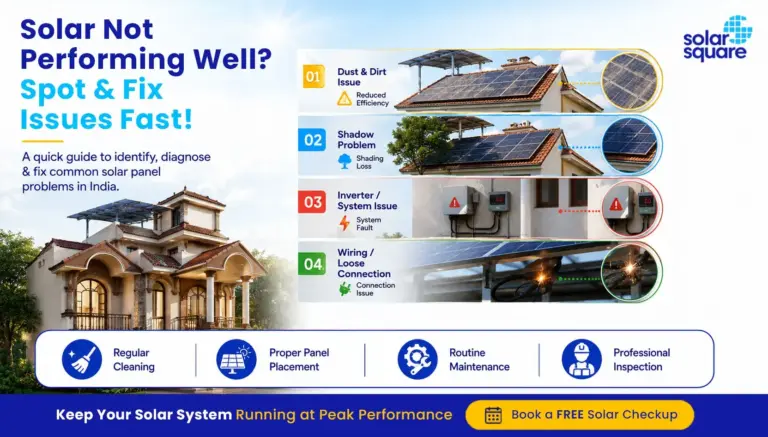
Solar panels in India are built to last 25 years or more, even in harsh outdoor conditions. However, performance issues can arise at any time due to manufacturing defects, environmental exposure, or improper installation. When left unchecked, these solar panel problems can reduce generation and directly impact your expected lifelong solar savings.
Most common solar panel problems fall into two broad categories:
- Manufacturing defects: These include microcracks, delamination, soldering failures, and snail trails that originate during the production process or appear later due to internal stress in the module.
- External and operational factors: Dirt on solar panels, bird droppings, debris accumulation, shading, poor installation, and lack of proper maintenance gradually reduce panel performance.
Many homeowners with rooftop solar systems are never informed about the importance of regular maintenance or annual maintenance contracts. Without an AMC or proper upkeep, your panels won’t generate maximum solar electricity. That means your savings take a hit, year after year.
The worst of all? After installation, local vendors become difficult to reach when solar panel issues arise.
Without periodic inspections, even minor problems can develop into major solar panel defects that can also lead to complete solar panel failures.
- DIY solar panel cleaning, aka solar panel cleaning on your own without hiring professionals, physical damage during handling, or unauthorized repairs by local electricians, can void the manufacturer’s warranty.
- Electrical faults caused by poor maintenance can increase the risk of overheating, arcing, or even fire.
Always keep an eye on these critical signs that indicate you have damaged solar panels that need professional intervention:
- The modules are generating less power than usual.
- You notice visible dirt buildup, hotspots, or discoloration.
- You smell smoke or see sparks.
This guide explains the most common solar panel issues in India, how to identify early warning signs, how professionals diagnose solar panel defects, why DIY repairs (ones you perform on your own instead of hiring professionals) are risky, and when expert maintenance services from Assure by SolarSquare become necessary.
TL;DR Summary Box: How Long Do Solar Panels Last?
With professional maintenance and inspections carried out throughout their operating life, tier-1 high-efficiency solar panels can last for 25 years. Every panel loses efficiency over time. That’s physics. But with regular cleaning and maintenance, your panels can operate at ~80% efficiency even after a quarter of a century.
Here are the main topics covered in this blog in detail:
| Main Topics | Key Takeaways |
| Why do solar panel problems happen? | Solar panel problems can arise from a range of issues, including manufacturing defects, poor installation practices, dust and debris buildup, and lack of maintenance. |
| What are the most common solar panel problems in India? | The most common solar panel problems in India include dirt buildup, hotspots, cracks, manufacturing defects, and wiring faults, which reduce efficiency and increase safety risks. |
| How to diagnose solar panel issues? | Check your monitoring app for generation drops, perform a safe visual inspection, look for shading issues, and call a technician if you notice burn marks, cracked panels, or repeated inverter shutdowns. |
| How to fix defects in solar panels? | Solar panel defects should be diagnosed and repaired only by trained professionals using proper testing equipment. |
| Why are DIY solar panel repairs (the repairs you do on your own instead of hiring professionals) risky? | Solar panels produce high DC voltage, and unauthorized repairs without the right knowledge, tools, and skills can cause electric shock, fire hazards, and warranty cancellation. |
| What preventive measures can you take to prevent solar panel failures? | Regular cleaning, annual professional inspections, and consistent performance monitoring can help prevent solar panel damage and efficiency loss. |
| When do you need professional help with solar panel problems? | Immediate professional help is required if you notice smoke, sudden drops in generation, cracked glass, burnt connectors, or wiring damage. |
Why Do Solar Panel Problems Happen?
Although built to generate electricity from solar energy for 25 years, the performance of solar panels depends on how they are manufactured, installed, and maintained.
In most cases, solar panel problems originate at one of three stages: during manufacturing, during installation, or during long-term exposure to environmental and operational conditions.
When any of these stages are compromised, performance declines and solar panel defects begin to appear over time.
- Manufacturing defects: Solar panel issues can occur during production. Improper lamination, soldering errors, or internal stress during assembly can lead to defects such as microcracks, delamination, and snail trails. These solar panel problems may not be immediately visible, but can reduce solar panel efficiency over time.
- External and operational factors: Solar panels remain exposed to dust, pollution, bird droppings, falling debris, heavy rainfall, and temperature fluctuations throughout their life. In reality, all these environmental factors, if not tackled through regular professional cleaning, reduce sunlight absorption.
- Poor installation by unqualified and untrained people: Incorrect mounting angles, loose wiring, weak structural support, improper earthing, or poor cable management can create hotspots in solar panels. It can also lead to fire risks. Sadly, installation-related errors surface months after commissioning and are frequently mistaken for panel defects.
Normal Wear-and-tear vs Actual Solar Panel Defects
The performance of every solar panel gradually declines. However, there is a clear difference between natural aging and actual solar panel defects that require professional intervention.
Let’s understand them properly so you don’t miss spotting serious solar panel problems that need professional help.
| Category | What it Means | What it Includes |
| Normal wear-and-tear | It’s the expected aging of panels over 25 years. These issues are usually not considered to be damage. |
|
| Manufacturing defects | These are internal solar panel defects that occur during panel production. They reduce performance over time. |
|
| Defects that happen during operation | These are issues that develop after installation due to electrical stress or environmental exposure. They almost always require professional diagnosis. |
|
Which are the Most Common Solar Panel Problems?
Solar panel problems in India are rarely random. In both residential and commercial rooftop systems, solar panel issues you face today almost always trace back to dust accumulation, thermal stress, physical damage, internal manufacturing flaws, or wiring failures.
- Some solar panel problems reduce power generation gradually and go unnoticed for months.
- Others create immediate safety risks, such as overheating or electrical arcing.
Identifying common solar panel problems early helps prevent long-term efficiency loss, protects your warranty, and reduces the risk of expensive component failure.
The sections below break down the most frequently observed solar panel problems, how they develop, and why they require attention.
#1. Dirt on Solar Panels
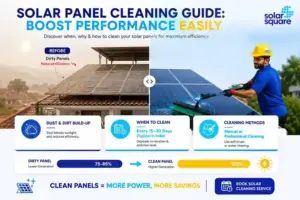
Dirt and dust accumulation is the most common solar panel problem in India. In cities such as Delhi, Rajasthan, and Lucknow, airborne dust, pollution, bird droppings, and construction activity settle on panel surfaces within days.
When left unchecked, this layer blocks solar radiation from reaching the solar cells. The result? Massive drop in electricity production.
Unlike technical solar panel defects, dirt-related issues develop gradually. A lot of homeowners only realize the problem when their monthly electricity savings drop.
Why does it happen so frequently in India?
- High dust levels and air pollution
- Bird droppings and nesting activity
- Fallen leaves and debris collection left unchecked
- Infrequent or improper cleaning
- Long dry seasons without rainfall
How does it affect performance?
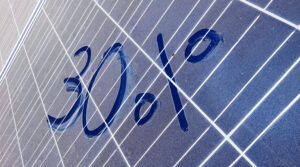
Did you know that solar panels that are not cleaned start generating 30% less power by the end of year 2? Clearly, even a thin layer of dust can sharply reduce output. And heavy, unchecked dirt accumulation over 2 years can cause up to 30% of the power loss to become irreversible.
Bird droppings, in general, are more damaging because they create localized shading that can lead to hotspots in solar panels if left untreated.
#2. Hotspots in Solar Panels
A hotspot is a small area on a solar panel that becomes much hotter than the rest of the surface. This usually happens when a part of the panel is shaded, dirty, cracked, or internally damaged. Because that section cannot pass electricity properly, heat builds up in that spot.
Hotspots in solar panels are usually not visible to the naked eye and go unnoticed until performance drops or visible damage appears.
Why are hotspots dangerous?
- They permanently damage solar cells
- They reduce the entire string performance
- They increase the risk of backsheet burning
- In extreme cases, they create potential fire hazards
Hotspots in solar panels require professional diagnosis and should never be ignored, especially in high-temperature regions.
How do hotspots affect performance?
Hotspots in solar panels reduce overall panel efficiency and stress surrounding cells. Over time, repeated overheating can cause permanent cell damage, backsheet burning, or fire hazards.
Do not ever ignore these signs, as they could be an indication that your panels might have a hotspot:
- Sudden drop in generation from one panel or string.
- Burn marks or discoloration on the backsheet.
- One panel is producing significantly less power than the others.
#3. Cracks on Solar Panels and Physical Damage
Cracks on solar panels occur when modules are subjected to physical stress or impact. These cracks may affect the glass surface or the internal solar cells. Even small cracks can disrupt the flow of electricity through the panel, reducing its performance over time. Moreover, cracked panels are a safety risk as they generate DC power.
Usually, cracks fall into two categories:
- Microcracks: Microcracks are tiny fractures within the solar cells that are not visible to the naked eye. They usually occur due to impact during transportation, improper handling during installation, thermal expansion in extreme weather, or mechanical stress from poor mounting.
- Visible cracks: Visible cracks appear on the glass surface of the panel. They are caused by falling objects, hail, stepping on panels during maintenance, or structural stress. Once the protective glass is damaged, moisture can enter the module, increasing safety risks.
Both microcracks and visible cracks are serious. Microcracks cause slow and unnoticed performance loss. Visible cracks, on the other hand, pose immediate structural and electrical risks. In either case, the affected panel should be inspected by a professional to prevent further damage.
#4. Solar Panel Manufacturing Defects
Some defects in solar panels originate during the panel manufacturing process. Even with quality checks, production inconsistencies can result in internal defects that appear months or years after installation.
These solar panel issues are not caused by dust or poor maintenance. Instead, they are built into the module itself and gradually affect performance.
- Delamination: A solar panel is made of multiple layers. The top layer is protective glass, the solar cells sit in the middle, and a protective backsheet seals the module from moisture. These layers are bonded together during manufacturing to make the panel weatherproof. If the lamination process is misaligned, the layers may begin to separate over time. This allows moisture to enter and reduces insulation strength.
- Soldering failures: Solar cells inside the panel are connected using thin soldered ribbons. If these connections are weak or poorly done during manufacturing, they may loosen over time. This disrupts current flow, reduces power output, and, in some cases, can also cause hotspots in solar panels.
- Snail trails: Snail trails are thin, dark, wavy lines that appear on the surface of a solar panel. They are called snail trails because the marks resemble the slimy trail left behind by a snail. These lines can occur when microcracks are present in the solar cells, allowing moisture to enter those tiny fractures. While they may appear cosmetic, snail trails indicate cell damage.
- Bypass diode failure: Bypass diodes are safety components that protect panels from overheating when partial shading occurs. If a bypass diode fails due to manufacturing defects, current cannot be redirected properly. This can lead to severe overheating, performance loss, and increased fire risk.
#5. Solar Panel Failure Due to Wiring Defects
Not all solar panel problems are present inside the module. In some cases, the issue lies in the wiring that connects panels to each other and to the inverter. Faulty connections, poor cable management, or degraded components can interrupt current flow and create dangerous electrical conditions.
Here are some common wiring-related solar panel problems that need immediate professional attention:
- Loose connectors: Solar panels are connected using DC connectors. If these MC4 connectors are not properly crimped, they can get loose due to heat expansion and weather exposure. It results in increased electrical resistance, reduced output, and can generate excessive heat.
- Corroded cables: Exposure to moisture, poor insulation, or substandard cable quality can cause corrosion in solar wiring. Corroded cables restrict current flow, leading to voltage drops. Over time, this increases the risk of electrical failure.
- Burnt junction boxes: The junction box located at the back of the panel contains electrical connections and bypass diodes. If connections inside the junction box overheat due to poor installation or component failure, burn marks or melting may occur. This is a serious defect that requires immediate professional attention.
Wiring faults are among the leading causes of solar-related fire incidents. Loose or damaged connections can cause DC arcing, where electricity jumps across gaps, producing intense heat. Arcing significantly increases fire risk in high-temperature areas.
Any signs of burning smell, melted insulation, or repeated inverter tripping should be treated as urgent warning signals.
How To Diagnose Solar Panel Issues?
A drop in power generation, unusual inverter alerts, or visible surface damage are the first signs that something could be wrong. However, before assuming there’s a major defect, follow the steps below, then decide at the end whether you need to call professionals.
- Step 1 – Check your solar monitoring app: Open your monitoring dashboard or inverter display and review recent generation data. Compare daily output with previous days that had similar weather. Look for sudden drops or indications that one string is producing less power than the others.
- Step 2 – Perform a safe visual inspection: Inspect the panels for heavy dust buildup, bird droppings, cracks, discoloration, loose wiring, or burn marks. Avoid climbing onto the panel and never open electrical components.
- Step 3 – Look for shading or obstructions: Check if shadows are falling on the panels during peak sunshine hours. Trees, new nearby construction, satellite dishes, or debris accumulation can partially block sunlight and reduce output.
- Step 4 – Compare seasonal generation trends: Solar power generation fluctuates across seasons. However, if the current output is significantly lower than expected for the time of year, the issue may be soiling, wiring defects, or internal damage. Reviewing last year’s data for the same period can help identify abnormal drops.
If you observe any or all of the below-listed solar panel problems after carrying out a survey, immediately call a qualified technician who is licensed to carry out solar inspection and repair:
- Burn marks or melted connectors
- Cracked glass panels
- Repeated inverter shutdowns
- Loose wiring or suspected cable damage
- Smell of burning wire or smoke
DISCLAIMER: Solar photovoltaic systems operate at a high DC voltage. Attempting to open junction boxes, replace connectors, or repair panels without training increases the risk of electric shock, fire, and warranty cancellation. Panel and inverter issues almost always require professional intervention. These conditions involve electrical risk and require proper diagnostic equipment. Do not attempt DIY troubleshooting techniques (trying to troubleshoot problems on your own) at home.
How to Fix Defects in Solar Panels?
Fixing solar panel defects needs skills, tools, and license. Trained technicians, such as those from Assure by SolarSquare, use specialized tools and testing procedures to identify the root cause accurately.
The solution truly depends on the type of defect detected.
These are some common diagnostic and repair methods that Assure’s professionals use to identify and fix solar panel defects:
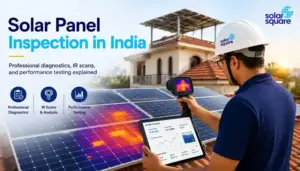
- Thermal imaging for hotspot detection: Infrared cameras detect temperature variations across panels to identify hotspots and abnormal heating.
- IV curve testing: This test checks how much power the panel actually produces compared to the amount it should produce. It helps technicians identify whether the panel is underperforming due to hidden internal damage.
- Insulation resistance testing: This test checks whether electricity is leaking due to moisture, damaged wiring, or internal faults.
- Safe replacement of damaged panels: Panels with severe cracks, internal defects, or significant performance issues are carefully disconnected and replaced following proper safety procedures.
- Proper re-termination of wiring and connectors: Loose, burnt, or corroded cables are safely removed and reconnected or replaced to restore proper current flow and eliminate fire risk.
Why Are DIY Solar Panel Repairs (Trying to Repair Solar Panels on Your Own) Not Recommended?
Solar panels produce DC electricity, which can be lethal. Handling such high-voltage DC electricity requires technical know-how. Attempting repairs without proper training and safety equipment can create serious safety and financial risks.
Here’s why DIY solar panel repairs or trying to repair solar panels on your own without professional help are strongly discouraged:
- High-voltage safety risks: Solar panels generate DC electricity when sunlight falls on them. Even with the inverter off, DC may still be present in the wiring. Handling connectors, opening junction boxes, or touching damaged cables can result in electric shock, burns, or arc faults.
- Risk of voiding the manufacturer’s warranty: Most solar panel manufacturers clearly state that unauthorized repairs or tampering void the product warranty. If internal components are opened or altered without approved service support, future warranty claims may be rejected.
- Hidden internal damage that isn’t visible: Many serious solar panel problems, such as microcracks or diode failure, are not visible on the surface. Attempting to fix what appears to be a minor issue may leave the actual root cause unresolved.
- Improper repairs can reduce system lifespan: Incorrect reconnections, poor cable handling, or mismatched components can create hotspots and stress the system over time. What begins as a small issue can escalate into solar system problems that pose safety hazards.
Common Inverter Problems Often Misdiagnosed as Solar Panel Problems
A drop in solar generation does not always mean the panels are defective. Even the solar inverter could be the source of the issue. Since the inverter converts DC electricity from the panels into usable AC power, any malfunction can affect the overall output.
Here are common inverter-related problems that are often mistaken for solar panel failure:
- Inverter not turning on: If the inverter display is blank, the issue may be related to power supply, internal component failure, or protection shutdown. This does not automatically mean the panels are damaged.
- Frequent tripping or shutdown: Solar inverters are designed with built-in safety protections. They may shut down due to voltage fluctuations, grid instability, overheating, or wiring faults. Repeated tripping can reduce generation but may not be caused by the panels themselves.
Accurate diagnosis of inverter problems can prevent unnecessary panel replacement and ensure the real issue is addressed efficiently. A professional inspection is highly recommended in the following scenarios:
- The inverter repeatedly shuts down without a clear reason.
- You notice a burning smell, unusual noise, or overheating.
- Generation drops significantly despite clear sunlight.
What Preventive Measures Can You Take to Prevent Solar Panel Failures?
Solar panels remain outdoors for decades, which makes regular inspection and maintenance essential. Dust accumulation, weather exposure, wiring stress, and bird droppings can affect both performance and safety.
However, there are some preventive measures that, if taken proactively, can maintain steady generation, protect warranties, and reduce the likelihood of unexpected repairs.
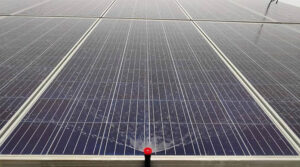
- Follow a recommended cleaning schedule: In high-dust regions, panels should be cleaned every fortnight. In areas with very low pollution levels, quarterly or monthly professional solar panel cleaning may be sufficient. Regular cleaning prevents sunlight from being blocked and reduces the risk of partial shading.
- Schedule annual professional maintenance: A yearly technical inspection helps identify loose connections, insulation weaknesses, diode issues, or early hotspot formation.
- Protect modules against birds and animals: Bird nesting under panels and rodent activity around cables can cause damage to wiring. Installing bird mesh and ensuring secure cable management helps prevent chewing, corrosion, and short circuits.
- Always monitor for early warning signs: Review generation data through your monitoring app. Sudden drops or uneven string performance signal the need for inspection.
- Avoid untrained handling or DIY repairs (repairing on your own without professional help): Without proper knowledge and equipment, do not open junction boxes, adjust connectors, or attempt electrical repairs. Unauthorized handling increases safety risks and can void manufacturer warranties.
When Do You Need Professional Help With Solar Panel Problems?
Electrical faults, internal defects, and safety risks are some solar panel issues that require trained technicians with proper tools, experience, and training in safety protocols. Delaying professional inspection can increase damage, reduce system life, and create fire hazards.
If you observe any or all of these signs, call emergency solar repair services such as those from Assure by SolarSquare immediately:
- Burn marks, melted connectors, or the smell of burnt wire
- Cracked glass panels or visible structural damage
- A sudden and unexplained drop in generation
- Repeated inverter shutdowns
- Snail trails spreading across multiple panels
- Wiring damage caused by rodents or corrosion
- One string consistently underperforming compared to others
How Can Assure by SolarSquare Help with Solar System Problems and Maintenance?
Assure by SolarSquare provides professional solar panel cleaning and maintenance services for homeowners who may not have ongoing support from their original installer. With operations in cities such as Bhopal, Nagpur, Delhi, and Lucknow (and expanding across India), Assure has already supported 1,000+ customers.
Here’s a list of our Preventive Maintenance (PM) services that help improve your system’s performance and reliability:
- Warranty-safe panel cleaning: Our trained technicians clean your panels using only manufacturer-approved methods. Soft-bristle equipment protects the anti-reflective coating and glass. Every visit includes documentation of before-and-after photos and compliance logs. As a result, your warranty stays intact if you ever need to raise a claim.
- Automated maintenance schedule: We build a cleaning and maintenance calendar around your specific site conditions, dust load, and system size. You get WhatsApp, SMS, and email reminders before every visit. Your full service history, including technician notes, is available for download at any time.
- Performance diagnostics and reporting: We compare your system’s actual power generation with the expected output and review your inverter data. If we detect any drop in performance, we identify the cause and provide you with a clear action plan to recover lost power.
- Electrical and safety check: Trained technicians inspect the wiring, earthing, connectors, and safety devices in your system. They fix loose connections and overheating points on the spot. Each visit also includes checks for DC and AC cables, MCBs and surge protectors, proper tightening of terminals, and seals that keep moisture out.
- Thermal health scan: We use an infrared camera to scan your solar panels and detect issues like hotspots, faulty cells, or shading that you cannot see with the naked eye. Each problem is identified for the exact panel and shared with you as clear images along with a simple list of what needs attention first.
Assure also provides corrective maintenance services when your solar system needs repairs.
- Problem identification: If a panel cracks, the inverter fails, wiring gets damaged, or a protection device stops working, our trained technicians diagnose the issue and clearly explain what went wrong.
- Best fix recommendation: Our team helps you understand the best course of action before arranging the required parts and repairs.
- Repair or replacement services: Once approved, the team fixes the problem and restores your system’s performance.
With Assure by SolarSquare, you do not have to deal with multiple vendors or troubleshoot the issue yourself. One call and the team takes care of everything.
Conclusion
Solar panels are built for long-term performance in rugged weather, but their efficiency depends on proper installation, regular monitoring, and timely maintenance. Dust accumulation, cracks, hotspots, wiring faults, and manufacturing defects can all reduce output if ignored.
Understanding the most common solar panel problems helps you take action early. Reviewing generation data, identifying visible warning signs, and avoiding DIY cleaning (cleaning panels on your own) and repair protects both warranty and safety.
With the right preventive measures and expert support from Assure by SolarSquare when needed, your solar panels can continue delivering maximum electricity and savings throughout their 25-year lifespan. For solar panel damage repair and maintenance concerns, you can get in touch with Assure’s team for free.
If you’re looking to install rooftop solar at your home, you can book a free solar consultation call with SolarSquare. It’s a no-obligation call, meaning you don’t have to buy from us. You buy only if you are convinced.
FAQs
Are solar panel defects covered under warranty?
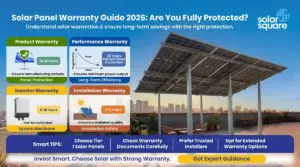
Yes, most solar panels come with a performance warranty of 25 years. It guarantees that the panel will maintain a certain percentage of its rated output over 25 years, which is usually 80% to 85% by the end of the term.
However, damage caused by improper installation, unauthorized repairs, physical impact, or poor maintenance is not covered under the manufacturer’s warranty.
Why is my solar panel generation low?
Low solar generation can happen due to multiple factors, including, but not limited to, dust buildup, bird droppings, debris blocking sunlight from reaching the panels, shading from trees or nearby buildings, manufacturing-related issues such as hotspots or internal cell damage, wiring faults, loose electrical connections, inverter issues, and seasonal variations in sunlight.
What is the warranty on solar panels?
Most solar panels in India come with a 25-year performance warranty that ensures gradual, limited efficiency degradation. Always verify the exact terms provided by your manufacturer, as warranty conditions vary by brand.
Can a cracked solar panel still work?
Although it does generate power, a cracked solar panel is a serious safety hazard. Since it will continue generating electricity even with a crack, it increases the risk of contact with lethal DC power. Therefore, a cracked panel must be tackled professionally on an emergency basis.
Can I clean solar panels myself?
Although it’s not illegal to clean solar panels the DIY way (cleaning them on your own instead of hiring professionals), it’s not recommended to do so. Using harsh chemicals, abrasive tools, or high-pressure water jets can damage panel surfaces and void the manufacturer’s warranty.


 Previous Article

 44 min