
 25 Reads
 13 mins


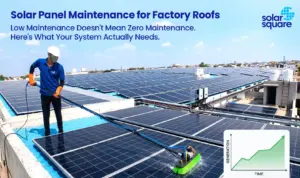
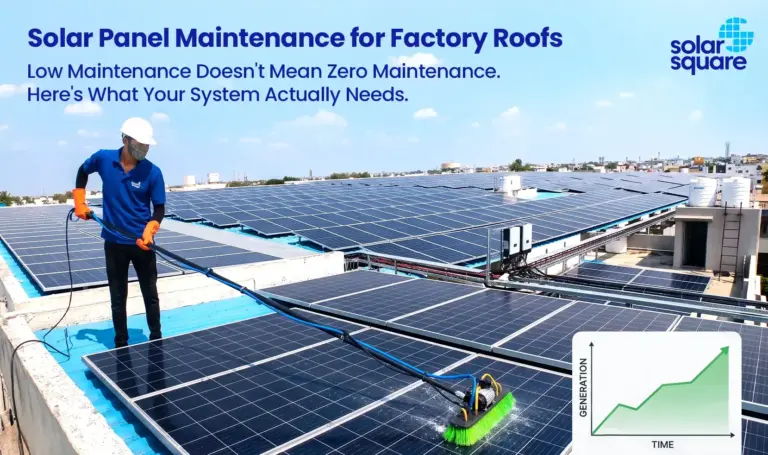
Do solar panels need maintenance or professional servicing? Your factory’s solar system doesn’t just need maintenance; it needs professional servicing, and the two are not the same thing. Maintenance is the basic, routine upkeep: cleaning panels, checking cables, keeping an eye on generation. Professional servicing goes further: trained technicians auditing your inverters, thermal scanning for hotspots, checking earthing and connections, and catching faults before they turn into losses. Skip the second one, and even a “well-maintained” system can silently underperform.
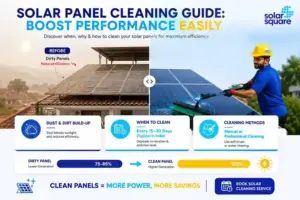
Here’s the honest answer nobody tells you upfront: yes, but far less than you’d expect, and far more than the “zero maintenance and servicing” pitch some installers use to close a deal. A commercial solar system can lose 10-15% of its power generation after just 3 months without cleaning. Leave the panels uncleaned for 6 months, and the generation loss can reach 25-35%. After a year, losses can rise to 40-50%. Factory solar panels need cleaning twice monthly and professional servicing quarterly.
For a factory rooftop with a 500 kW or 1 MW+ solar system, these are not small efficiency losses. They can translate into a substantial amount of generation going unused, reducing electricity savings and extending the system’s payback period.
| Time Without Panel Cleaning | Indicative Drop in Power Generation |
| 3 months | 10-15% |
| 6 months | 25-35% |
| 1 year | 40-50% |
In this guide, we explain how often commercial solar panel maintenance is needed, what C&I (Commercial and Industrial) solar O&M (Operations and Maintenance) typically includes, how much poor solar panel maintenance and service can affect generation, and what factory and industrial plant owners should monitor to protect their solar investment.
Types of Rooftop Solar Servicing
Rooftop solar servicing falls into two broad categories: preventive and corrective service.
Preventive Service
This is planned, routine service carried out to prevent faults and maintain system performance. It typically includes module cleaning, visual inspections, checking electrical connections, monitoring generation, and inspecting inverters and mounting structures.
For a rooftop solar system in India, preventive services may include:
- Module cleaning: Removing dust, bird droppings, and other soiling that can reduce generation, particularly in dusty or high-pollution locations.
- Visual inspection: Checking modules, cables, connectors, mounting structures, and junction boxes for visible damage, corrosion, loose connections, or signs of overheating.
- Electrical checks: Inspecting connections, earthing, protection devices, and other electrical components as per the system’s O&M requirements.
- Inverter inspection: Checking inverter performance, error logs, ventilation, and operating conditions.
- Generation monitoring: Reviewing plant performance to identify unusual drops in generation or deviations from expected output.
- Vegetation and rooftop checks: Ensuring surrounding vegetation, debris, or new rooftop installations do not cause shading or obstruct access to the system.
Corrective Service
This is repair work carried out after a fault or issue is detected. It may involve replacing damaged modules, cables, connectors, inverters, or other faulty components to restore normal system operation.
Common corrective service activities include:
- Replacing damaged solar modules, cables, connectors, or junction boxes
- Repairing or replacing faulty inverters and protection equipment
- Fixing loose or damaged electrical connections
- Addressing earthing or insulation faults
- Repairing damaged mounting structures or components
- Troubleshooting repeated inverter alarms or generation losses
- Restoring communication and monitoring systems when plant data is unavailable
What Services are Required for Solar Panels on a Factory Roof?
Poor solar panel maintenance and servicing can translate into significant financial losses for a factory. For example, if a 100 kW commercial solar system loses 10-15% of its generation, the resulting loss in electricity savings can run into thousands of rupees every month. You can imagine what this loss will amount to over a full year and over the system’s 25-year lifespan if left unaddressed.
In order to ensure this doesn’t happen with your installation, professional service becomes critical. The following are some other things that can increase your factory rooftop solar performance:
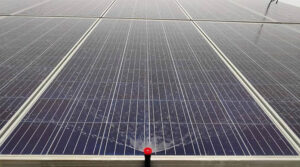
- Panel cleaning: For commercial and large industrial plants, solar panels should ideally be cleaned twice a month to prevent dust buildup. In highly dusty or polluted environments, such as MIDCs, cleaning frequency should be increased to 2-3 cycles per month.
- Once-a-month preventive maintenance (PM): This includes visual inspections of electrical terminals, cables, and connections, along with parameter checks at each termination point to ensure the system is operating within expected limits.
- Quarterly preventive maintenance (PM): This involves more in-depth technical checks, such as inspecting cooling fans, verifying termination tightness, using thermal imaging to detect hotspots, and EL imaging to detect early-stage microcracks that may not be visible during routine inspections.
How Many Services Do Solar Panels Actually Need?
The amount of services a commercial solar system needs depends heavily on its location, dust load, industrial environment, and cleaning frequency. Based on SolarSquare’s field experience, generation losses can become significant when commercial panels are left uncleaned for extended periods: around 10-15% after 3 months, 25-35% after 6 months, and 40-50% after a year. In highly dusty environments, such as areas near cement factories and industrial zones, losses can exceed 50%.
For this reason, SolarSquare recommends professional solar panel servicing twice a month for commercial systems, with 2-3 cleaning cycles per month for highly dusty or polluted industrial locations. The exact frequency should be adjusted based on site conditions and dust accumulation.
| Factory Environment | Recommended Professional Cleaning Frequency |
| Standard manufacturing, lower dust load | Twice a month |
| High-dust industrial locations / MIDCs | 2–3 times a month |
| Heavy industrial environments, such as cement or metal-processing facilities | 2-3 times a month, with frequency reviewed based on site conditions |
| Coastal or high-humidity locations | Twice a month, with additional cleaning or specialised treatment where deposits require it |
Important: Cleaning frequency should not be treated as a fixed rule for every factory. Dust intensity, industrial emissions, rainfall, roof conditions, and the nature of deposits on the panels can all change the solar panel maintenance requirement. A professional O&M provider can assess the site and set the appropriate cleaning schedule.
If your panels are generating 15% less than expected and they haven’t been cleaned in six weeks, ask your O&M provider to inspect and clean the system first, then investigate other potential causes of underperformance.
What Is the Solar Panel Service Cost at Factory Scale?
For a standard 5 kW residential system, annual maintenance of solar panels on the roof runs ~Rs.6,000-Rs.8,000. That’s the baseline.
At factory scale, the pricing model changes. Annual services are typically structured per kW per year, not as a flat fee. The following prices exclude GST (18% GST to be added):
| System Size in kW | Cost Per Visit* | Price (1 Year)* |
| 10-15 kW | ~Rs. 1,479 | ~Rs. 29,570 |
| 15-30 kW | ~Rs. 2,382 | ~Rs. 47,630 |
| 30-50 kW | ~Rs. 3,417 | ~Rs. 68,346 |
| 50-100 kW | ~Rs. 5,550 | ~Rs. 1,11,004 |
| 100-200 kW | ~Rs. 9,703 | ~Rs. 1,94,054 |
| 200-400 kW | ~Rs. 17,094 | ~Rs. 3,41,886 |
| 400-600 kW | ~Rs. 25,238 | ~Rs. 5,04,757 |
| 600-1000 kW | ~Rs. 41,795 | ~Rs. 8,35,900 |
*Please note: These prices are subject to your system size and the city you are in. Please check with our solar experts to know the exact servicing prices for your factory solar system.
For a 500 kW factory system, that translates to ~Rs. 4-5 lakh per year depending on the tier. The cheapest option is rarely the best one; basic maintenance routinely skips string-level performance checks and inverter preventive maintenance, which is precisely where expensive problems incubate.
At SolarSquare, we provide 20 cycles of servicing. This includes preventive, corrective, and cleaning services for solar panels on the roof.
Manual, AMC, or Robotic Cleaning – What’s Right for Your Factory?
For most factories, professional AMC-based service is the practical option because it combines scheduled cleaning with system inspections and performance monitoring. Manual cleaning is not recommended for even smaller installations, while larger or more complex factory systems benefit from a structured O&M approach.
| Approach | Best For | Trade-Off |
| Manual cleaning by in-house staff | Small installations with suitable roof access | Lower direct cost, but requires trained personnel and may not cover electrical or system-level checks |
| Solar AMC | Most commercial and industrial rooftop systems | Recurring service cost, but provides scheduled cleaning, inspections, and preventive maintenance |
| Portable mechanised cleaning | Large, accessible industrial rooftops where faster cleaning is required | Can improve cleaning efficiency, but equipment suitability depends on roof layout and panel configuration |
| Robotic/waterless cleaning | Specialised large-scale installations with specific site requirements | Higher investment and not necessary for every factory; availability and suitability depend on the site |
The right servicing plan should cover cleaning at a frequency suited to the site’s dust and pollution levels, along with routine inspections and generation-performance checks. This also means the factory’s internal team does not have to take on rooftop maintenance and electrical inspection themselves.
Red Flags: When Your Factory Solar System Needs Immediate Attention
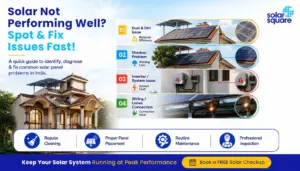
A factory solar system needs immediate attention when generation drops persistently, panels show mineral deposits, inverters display faults, roof leaks appear, or vegetation and debris cause shading.
- Generation drop of 10-15% on the monitoring dashboard sustained over 2-3 weeks; check soiling first, then strings.
- Visible mineral spots (white scaling) on panels; hard-water deposits require chemical descaling, not just a rinse.
- Inverter fault codes or unusual fan noise: don’t wait for the next quarterly visit.
- Water stains on the factory ceiling near mounting points: address waterproofing failures immediately; production downtime from a roof leak costs far more than a maintenance call.
- Vegetation or debris at roof edges causing partial shading on perimeter panels.
Solar Panel Service Checklist for Factory Roofs
Use this checklist to define and review the scope of work covered by your solar O&M service. The technical inspections and service should be carried out by qualified solar professionals.
Monthly
- O&M team should clean panels using appropriate soft cleaning equipment and demineralised water where required.
- Inspect panels for bird droppings, moss, cracks, or other visible damage.
- Check for mineral scaling or industrial residue that may require specialised cleaning.
- Review generation data and compare output trends with previous periods.
Quarterly
- Inspect inverter displays for fault codes, alarms, or warning indicators.
- Check inverter cooling fans and airflow for signs of abnormal operation.
- Inspect DC (Direct Current)/AC (Alternating Current) cable connections for corrosion, looseness, or heat damage.
- Clean inverter air filters, where applicable.
- Verify the condition and continuity of earth bonding connections.
Bi-Annual
- Measure Voc and Isc for individual strings and investigate significant deviations from expected performance.
- Inspect junction boxes for moisture ingress, corrosion, or burnt contacts.
- Review generation trends to identify gradual or recurring underperformance.
Annual
- Inspect mounting structures for corrosion, rust, damaged components, or loose fasteners.
- Check waterproofing around roof penetration points and mounting locations.
- Remove vegetation, debris, and bird nests that could cause shading or obstruct panel gaps.
- Consider thermal imaging to identify hotspots and other issues that may not be visible during a routine inspection.
- Review the service plan scope and service performance and upgrade the maintenance package if important checks are not covered.
Year 10–15
- Assess inverter condition and plan for potential replacement based on equipment health and manufacturer recommendations.
- Commission a comprehensive system performance audit against the original design and historical operating data.
- Assess solar panel degradation against the manufacturer’s warranty and performance specifications.
Pro tip for factory managers: Treat this as a service review checklist rather than a DIY maintenance guide. Your O&M provider should document the relevant inspections, findings, corrective actions, and test results at the agreed frequency.
Conclusion
Solar panels are genuinely low-maintenance, but “low” is not “zero,” and at factory scale, the gap between a managed system and a neglected one compounds into serious money. A well-structured service plan, the right cleaning cadence for your environment, and bi-annual string checks are the three things that protect your investment. Everything else is optional. Your factory rooftop solar does not need maintenance only; it requires professional servicing that includes preventive and corrective services.
If you’re evaluating solar for your factory or want to understand how much you could save on electricity costs, SolarSquare can help. Get a free solar consultation and customised quote based on your factory’s electricity consumption, roof area, and energy requirements.
Frequently Asked Questions
Do I need professional service for a factory solar system, or can I manage maintenance in-house?
For systems above 50 kW, professional maintenance is often more cost-effective than in-house management; not because the tasks are highly complex, but because consistency matters. In-house maintenance typically involves basic cleaning without specialised equipment or technical checks. Professional services, on the other hand, include thorough panel cleaning, along with inspections of wiring, mounting structures, and other system components. Regular professional maintenance helps keep the system performing efficiently and reduces the risk of issues going unnoticed.
Does rain clean solar panels sufficiently?
Partially, and only for loose surface dust. Rain can wash away light debris, but it cannot remove bird droppings, hard-water mineral deposits, industrial soot, or oily particulates common near factories. Relying solely on rain is not recommended for optimal production; it can extend intervals between manual cleans, but it doesn’t replace them.
What happens if you don’t clean solar panels for months?
Output drops, silently and progressively. Research on Indian PV installations shows that dust and soiling can cause significant generation losses, with the impact varying widely by location, season, and cleaning frequency. Studies in India have recorded daily soiling losses of around 0.3–0.6% in some conditions and monthly losses exceeding 20% when panels remain heavily soiled.
Source: Assessment of soiling impacts and cleaning frequencies of a rooftop BAPV system in composite climates of India,” Solar Energy, 2022- Indian rooftop field study
Can I use tap water to clean solar panels?
Not advisable, especially at factory scale. Tap water contains dissolved minerals (calcium, magnesium) that leave white residue on the glass surface after the water evaporates. Over multiple cleaning cycles, this mineral scaling builds up and becomes a persistent barrier to sunlight, one that a regular rinse won’t remove. DM (demineralised) water is the correct choice for panel cleaning.
How long do solar panels last, and does maintenance extend their lifespan?
Most quality solar panels carry a 25-30 year performance warranty, with output typically guaranteed at 80-85% of rated capacity at the end of that period. Maintenance does not significantly change the panel’s natural degradation rate, which mainly depends on the materials used. However, regular maintenance prevents avoidable power losses from dust and dirt and helps protect the inverter and mounting structure, which typically last 10-15 years and 25+ years, respectively, when properly maintained.
How much does it cost to maintain a 500 kW solar system in India?
The annual maintenance cost of a 500 kW solar system in India depends on factors such as site location, system design, cleaning frequency, vegetation, equipment condition, and the scope of the O&M contract. A typical O&M contract may cover module cleaning, preventive inspections, inverter checks, monitoring, and minor corrective work. For an accurate estimate, the system size alone is not enough; the site and required service scope should also be considered.
What direction should factory solar panels face?
In India, factory solar panels are generally oriented towards the south to maximise annual solar generation, as India is in the Northern Hemisphere. However, the ideal orientation depends on the factory’s location, roof structure, available space, shading, and whether the system uses a fixed or adjustable mounting structure. On a factory roof, a slightly different orientation may sometimes be more practical if it allows better roof utilisation without significantly affecting generation.
Can I lose my solar panel warranty due to poor maintenance?
Poor maintenance of solar panels on a roof does not automatically void a solar panel warranty. However, manufacturers’ warranty terms may exclude damage or performance issues caused by neglect, improper cleaning, unauthorised modifications, physical damage, or failure to follow specified installation and maintenance requirements. It is therefore important to follow the panel manufacturer’s warranty conditions and maintain records of inspections, cleaning, and any repairs carried out on the system.


 Previous Article
 44 min