

 760 Reads
 29 mins


Considering the rising rates of petrol and diesel, you have finally switched to an electric vehicle. But now you are struggling with electricity rates rising due to overnight charging. Ideally, you have just switched the supplier.
There is a solution nobody talks about: installing a rooftop solar panel and connecting it to your EV (Electric Vehicle) charger. Now your whole EV expense depends on the solar intensity. The same roof above your head becomes the fuel station for your vehicle. A petrol car costs roughly ~₹6- ₹7 per km to run. An EV charged from the grid brings that down to ~₹1-₹1.5 per km. But an EV charged from rooftop solar, once the system pays for itself, costs ₹ 0 per km, as sunlight is free.
A 3 kW rooftop solar system generates ~360-450 units of electricity per month, which is enough to cover 40-50 km of daily driving for most electric cars. With the PM Surya Ghar Muft Bijli Yojana subsidy cutting the upfront cost nearly in half, the system pays for itself in about three to four years. After that, you’re essentially driving on free fuel for the next few decades.
This guide is for homeowners, flat owners with parking, and business owners who want to understand exactly how to set this up, what it costs, what the government will pay for, and what mistakes to avoid.
Why Solar + EV Is the Smartest Combination Right Now?
Most people think that solar and EVs are two separate ways of going green. They are effective individually to some extent, but far more powerful together.
When you own only an EV, you’re still dependent on the grid, which is still largely powered by coal. You’ve reduced your tailpipe emissions, but your electricity comes from a power plant somewhere burning fossil fuel.
When you add rooftop solar, that changes completely. Your car now runs on energy your own roof generates. Zero emissions from fuel. Zero dependence on a power company. Zero per-kilometre cost after payback.
Let’s put the numbers on the table.
A petrol car costs roughly ~₹7 per km to run. An EV charged from the grid costs ~₹1-1.5 per km. An EV charged from rooftop solar, once the system is paid off, costs effectively ₹ 0 per km because sunlight is free.
In India, solar installation costs have dropped significantly over the last decade; the government is actively subsidising rooftop solar through PM Surya Ghar Muft Bijli Yojana, and EV adoption is growing fast across cities and towns. The timing could not be better.
A case study says residential solar EV charging can lead to a ~50% reduction in electricity costs and allow households to go up to 67% energy self-consumption. In Indian conditions with high electricity tariffs, extreme sun intensity, and generous subsidies, those numbers hold up well.
How Solar EV Charging Actually Works?
Your solar panels soak up sunlight and turn it into electricity during the day. That power either charges your EV straight away or gets stored in a battery for later, like at night or during a power cut. Basically, instead of pulling from the grid, your car runs on sunshine you made yourself.
Most people think you can plug solar panels directly into your EVs. This is not how it works. Let’s deep dive into this:
- Your rooftop solar panels receive sunlight and generate DC (Direct Current) electricity. But most of the appliances, including fans, AC, refrigerator, and even EV chargers, run on AC (Alternating Current). To convert this, we use an inverter, which converts DC into AC.
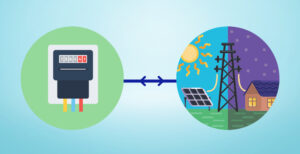
- While using on-grid solar systems, the surplus power produced gets transferred to the grid through your electricity meter (net metering), running it backwards and building up credits.
- At night, when you plug in your EV, you draw power from the grid. But you’re not paying for it; you’re using up the credits your panels earned during the day. Your billing meter subtracts the units you banked during the day from what you drew at night.
- If you’re home during the day and plug in your EV, it charges directly from your solar panels, the most efficient way to do it, because the power goes straight from your roof to your car without any grid involvement at all. Whatever solar power your panels produce gets consumed by your home and your EV first. Only the leftover surplus gets exported to the grid as credits.
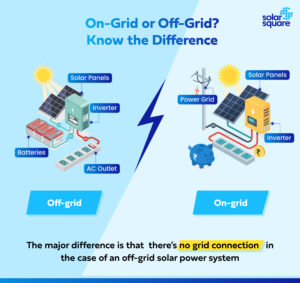
- If you want to go completely off-grid or need to charge your EV even during power cuts, you need a hybrid solar system with battery storage. The batteries will store the surplus power that you can use at night without using the grid power.
How Much Load Does an EV Take?
Most homeowners skip one of the most important things while installing solar panels. They either choose a plant based on their home needs or EV consumption.
They calculate the total unit required for the EV, and install the system according to that, then think why their electricity bill is still high. The only reason is that they forgot their home. Before installation, you must be aware of the entire consumption, including home appliances and the car/ two wheeler.
How Much Load Does an EV Scooter Take?
Let’s take an example. Say you own a TVS iQube S electric scooter, and it goes about ~145 km on a single full charge. If you’re riding around ~1,000 km a month, you’d need to fully charge it roughly 7 times a month. Each full charge uses about 3.5 units of electricity. So over a month, charging your scooter 7 times works out to roughly 24.5 units of power. If your solar panels generate that extra 24.5 units a month, your scooter is basically running on sunlight, at zero cost. You can find the table below for estimated load:
| Detail | Value |
| Range per full charge (as per TVS motors) | ~145 km |
| Monthly riding distance | ~1,000 km |
| Charges needed per month | ~7 |
| Electricity per charge | 3.5 units |
| Total monthly consumption | 24.5 units* |
*Disclaimer: Please note that the total monthly consumption mentioned above is an average estimate based on the range given on the official TVS page and generic riding distance. These calculations are average estimates; do not consider them as an actual yearly consumption. Your actual load requirement depends on your scooter’s battery health, efficiency loss, and charging efficiency.
How Much Load Does an EV Car Take?
Now let’s talk about EV cars. Taking an example of the Tata Nexon EV, long-range version. It has a 45 kWh battery, so a full charge uses ~45 units of electricity. If you’re driving around 1,000 km a month, and the car covers about ~489 km on a single charge, you have to charge it roughly 2 times a month.
| Detail | Value |
| Battery capacity (As per TATA) | 45 kWh |
| Range per full charge | ~489 km |
| Monthly driving distance | 1,000 km |
| Charges needed per month | ~2 |
| Electricity per charge | 45 units |
| Monthly consumption | ~90 units |
| Yearly consumption | ~1,080 units* |
*Disclaimer: Please note that the total yearly consumption mentioned above is an average estimate based on the TATA Nexon specification and generic riding distance. These calculations are average estimates; do not consider it as an actual yearly consumption. Your actual load requirement depends on the car’s model, battery condition, and driving habits.
Home Setup: Step-by-Step Guide to Solar EV Charging
People think installing an EV charger at home could be a complex process. But once your solar system is installed along with the EV connection, you will realise how easy the process was. The steps to install EV charging at home are given below:
Step 1: Know Your Need:
Before anything goes on your roof, start with your car. Factors like how you drive daily, where your parking is (covered, open, basement, or driveway), and whether you have an existing power outlet.
These answers give an idea about how large a charger you need, where it gets mounted, and how much solar capacity is required to power it. A person driving 30 km a day needs a very different setup than someone doing 80 km across a large city.
Step 2: Choose the Right EV Charger for Your Home
This is the decision most people rush past, and it’s one of the most important ones.
Level 1 charger (Deliver ~1.2 kW-2.4 kW power*)
These are the basic cable that comes with most EVs and plugs into a standard 5-amp socket. It is not suitable as your primary home charger. It adds roughly 8-10 km of range per hour. Charging a mid-size EV from 20% to full can take 15-18 hours. It works in an emergency, not as a daily habit.
Level 2 AC charger (Delivers ~3.3- 22 kW power*)
It is what you actually want. It adds 40-60 km of range per hour, meaning a typical EV is fully charged in 4-6 hours overnight. You plug in after dinner and wake up to a full battery. It requires a dedicated 32 to 40 amp circuit with proper earthing, but that’s a one-time setup cost, and it transforms the daily charging experience entirely.
If you drive a high-range EV and regularly need a fast top-up during the day, some homeowners opt for an 11 kW three-phase charger, though this requires a three-phase electricity connection at home, which not all residential properties have.
*Disclaimer: Please note that the delivered power mentioned above for level 1 and 2 AC chargers is based on the market price available in India. Do not consider it as an actual range, and do check the specifications before purchasing. Also, SolarSquare do not sell, endorse or get any commission for EV chargers in India.
Step 3: Get the Charger Wired and Mounted Properly
The charger needs a dedicated MCB (Miniature Circuit Breaker) on your distribution board, proper copper wiring of the correct gauge, and solid earthing. For all this, we need a certified electrician.
The mounting location matters too. Ideally, the charger goes on a wall closest to where your car parks, at a height that keeps the cable off the ground but is easy to reach. If your parking is outdoors, make sure the charger has an IP65 or higher weatherproof rating. All cables should be run through conduit pipes to protect against weather, rodents, and accidental damage.
Step 4: Size Your Solar System Around the Charger
Once we become aware of the charger’s power requirements and the total daily driving distance, we can ask the installer to resize the system correctly. The key number is your total daily consumption, including home appliances and EV charging.
A Level 2 charger running for 5-6 hours a night adds roughly 35-45 units to your monthly consumption. This is huge. A solar system that was sized only for your home appliances before you got the EV will not be enough. In this case, we can upsize or accept a partial electricity bill.
Step 5: Set Up Net Metering So Your Daytime Generation Pays for Nighttime Charging
The sun’s intensity is at maximum between 9 AM and 4 PM, when our car or any EV is parked at an office or somewhere. In this case, the panels generating surplus power should be utilized.
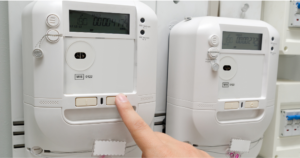
With net metering, we can take the credits to our account for each surplus unit generated by panels. When you plug in your EV at night and draw from the grid, those credits offset the consumption. If done perfectly, we can effectively charge EVs for free. Your installer handles the net metering application with your local DISCOM (Distribution Company). It takes 2-6 weeks to get approved and the bi-directional meter installed.
Step 6: Use Your EV’s Built-In Charging Scheduler
This is a free feature almost every EV owner ignores, and it makes a real difference.
Most modern EVs, including Tata Nexon EV, MG ZS EV, Hyundai Ioniq 5, and others, have a feature to set a charging schedule directly from the car’s screen or companion app. You can programme it to start charging at a specific time, stop at a target percentage, and even pre-condition the cabin temperature before you leave.
Once your solar and net metering setup is running, schedule your car to charge between 11 PM and 5 AM (the lowest grid demand period) with lower per-unit rates even on the small portion you might owe. Or if you’re home during the day with ample solar generation, charge directly from your panels between 10 AM and 2 PM for the most efficient, zero-cost charge possible.
Step 7: Monitor, Optimise, and Forget
After everything is installed and running, your job becomes very simple. Check your solar monitoring app once in a while to make sure generation is on track, glance at your EV’s range before long trips, and clean your panels every few months.
Within the first billing cycle, you’ll see the difference in your electricity bill. Within the first year, the routine becomes second nature: park the car, plug it in, walk away. The sun handles the rest.
On-Grid vs Hybrid: Which System Should You Choose?
For people who have an EV or are planning to purchase one, one decision that must be made wisely is choosing between an on-grid and a hybrid system. It can affect the solar panel installation cost, daily convenience, and your long-term savings.
An on-grid system is when solar panels are directly connected to the grid through a net meter and have no battery, which is quite cheaper compared to a hybrid.
This single decision affects your upfront cost, your daily convenience, and your long-term savings. Here’s how to think about it clearly. The system has full government subsidy and is simple to maintain. The only limitation is that if the grid goes down, your solar system will get shut off too. In case of a power cut, your EV does not charge from solar.
A hybrid system is a system that has batteries with the grid. The surplus power charges the batteries during the day. At night or during a power cut, your home and EV take power from the batteries. Batteries with a grid system can cost you an extra ₹ 50,000-1.5 lakh on top of the cost. You should choose a hybrid if you want to charge during power cuts or your area doesn’t support net metering.
If you’re in a city or town where the grid is reliable for 20+ hours a day, start with on-grid. The payback is faster, the subsidy is full, and the net metering system handles your EV charging efficiently. If you’re in an area with 4-6 hours of daily load shedding, invest in hybrid from day one.
Cost of Setting Up Solar EV Charging in India
If you install an on-grid setup for home and EV charging, you must know how we can calculate the estimated overall cost. For example, if you are installing a 2 kW on-grid system and a level 2 EV charger, this will cost you between ~₹2.13 and ₹3.14 lakhs before subsidy. Let’s calculate the estimated cost below:
| Component | Cost (Before Subsidy)* |
| 2 kW on-grid solar system | ~₹1.85 – 2.24 lakh* |
| Level 2 AC EV charger + installation | ~₹25,000 – ₹80,000 |
| Net metering + DISCOM charges | ~₹3,000 – ₹10,000 |
| Total | ~₹2.13 – 3.14 lakh |
If you drive 40 km per day, you save roughly ₹60,000 per year in fuel and electricity costs. The payback period works out to approximately 3.5 years. After that, you enjoy 20+ years of free driving.
For commercial setups, costs include battery systems at ~₹15,000-₹25,000 per kWh, civil and electrical infrastructure at ~₹2-5 lakh depending on site conditions, and software and management systems at ~₹ 20,000-₹1 lakh per site.
*Disclaimer: Please note that the cost of setting up solar EV charging in India mentioned above is indicative estimates based on publicly available market data as of 2026. Actual EV charging setup prices can vary significantly based on the charger type, electrical upgrades, site and civil work, scale, and location. These rates are intended for general informational purposes only and should not be treated as an official quotation or offer. SolarSquare does not manufacture, sell, or install solar EV charging setups. We do not earn commission or revenue from any solar EV charging setup vendors, nor do we endorse any specific brand.
*Please note that the cost of a solar system mentioned above is applicable for a 2 kW system before subsidy. This price range is indicative as of 1st August 2026 for the SolarSquare Blue 6ft variant. The final solar panel installation cost in India depends on your city, DISCOM charges, product variant chosen, panel type, inverter type, mounting structure height, type of after-sales service, savings guarantee, roof height, etc.
Government Subsidies and Net Metering You Must Know About
The government is supporting by paying subsidies to go solar now. Under PM Surya Ghar Muft Bijli Yojana, subsidies are structured as:
| System Size | Central Subsidy as per PMSGMBY |
| 1kW | ₹ 30,000 |
| 2kW | ₹ 60,000 |
| 3kW or above | ₹ 78,000 (capped) |
The government also offers a subsidy up to ₹18,000 per kW for installations up to 500 kW for common facilities and EV charging in housing societies.
The scheme also offers collateral-free loans up to ₹ 2 lakh at a subsidised interest rate of 6.75% through 12 public sector banks. This is available for individual households for residential setups up to 3 kW. Several states offer additional top-up subsidies in addition to the central government amount.
Net metering is a mechanism that helps you to pay only for the power you actually draw from the grid. The extra solar power you generate gives you bill credits. You can still access grid power whenever your system isn’t generating enough, and it all works automatically once your system is commissioned.
Your home uses the solar electricity generated first, and any extra power is sent to the grid. The net meter tracks the difference, and your bill reflects only what you owe after credit.
Common Mistakes to Avoid before Installing solar and EV charging
Sometimes saving through investing in cheap services and skipping paperwork can cost you even more than the present requirement. Some common mistakes you must avoid while installing a solar system or EV charging system are given below:
Sizing Only for the Car
Always size the system for home and car together. A system built only for the EV will leave your electricity bill unchanged.
Choosing the Cheapest Installer
Poor installation can lead to loose wiring, bad earthing, and cheap inverters. Your system may fail within 2-3 years. Choosing a certified installer with solid reviews and a proper AMC (Annual Maintenance Contract) can save you from getting trapped by local vendors.
At SolarSquare, we offer a 5-year after-sales maintenance plan, where we provide a 5*-year AMC plan with scheduled monthly visits to take care of the structural, electrical, and mechanical health of your solar system. To know more, you can book a free solar consultation with SolarSquare now!
*Please note that since June 2026, we offer only TopCon panels in Uttar Pradesh and Nagpur, backed by a 4-Year Good Zero Savings Guarantee with a money-back promise. All other terms and benefits of the GoodZero plan remain the same. For all other states except Uttar Pradesh and Nagpur, our 5-Year Good Zero Savings Guarantee with money-Back promise continues to be available as of now.
Skipping Net Metering
Some homeowners install solar and never apply for net metering because it involves paperwork. Without it, you get zero credit for the power you export. You are essentially giving it away for free to the grid. It’s worth the few weeks of waiting.
Installing a Level 1 Charger to Save Money
A standard 5-amp plug charger is too slow for daily use; it can take 15-20 hours to charge a mid-size EV. A Level 2 AC charger (7.4 kW) charges the same car in 4-6 hours. It’s a one-time investment that changes how practical home charging actually feels.
Final Word
Solar EV charging is not a premium upgrade for early adopters anymore. It’s a financially sound decision that tens of thousands of Indian households have already made, and the window to get maximum benefit from government subsidies is wide open right now.
Your roof, your car, and the Indian sun are a combination that makes complete sense. Set it up right, and in four years you’ll barely remember what a fuel bill felt like.
Frequently Asked Questions
Can I charge my EV directly from solar panels?
Yes, you can charge your EV directly from solar panels or through the grid. During the day, you can charge your EV directly from your solar panels. This is the most efficient way of using solar, as the power goes straight from the roof to the car, without any grid involvement at all. On the other hand, during the night, when we plug in the EV, we draw power from the grid. In the case of a hybrid, we can take power from the batteries, especially in case of power cuts.
What is the cost of a solar EV charging system?
A solar EV charging system in India typically costs between ₹ 2 lakh and ₹ 6 lakh, depending on your EV’s battery capacity, charger type, and system size. For example, we are installing a 2 kW on-grid system and a Level 2 EV charger, which will cost you between ₹2 lakh and ₹ 3 lakh before subsidy. A Level 2 AC EV charger along with the installation can cost between ₹ 25,000 – ₹80,000. The basic net metering and DISCOM charge is between ₹3,000 and ₹10,000. You can also avail a subsidy of ₹60,000, applicable for a 2 kW system under PM Surya Ghar Muft Bijli Yojana.
What is the 80% rule for EV?
The 80% rule for EV is nothing but preventing your battery degradation through overcharging. If you charge your EV on a daily basis, you put unnecessary stress on the battery, which can slowly affect capacity over time. Save the full 100% charge for long trips. For everyday commutes, stopping at 80% keeps your battery healthier for longer.
Can a solar system on a home fully charge an electric vehicle without using any electricity from the grid?
Yes, you can fully charge an electric vehicle with a solar system at home without using any electricity from the grid. But your solar system needs to be sized correctly. A 5kW to 10kW rooftop setup paired with a battery storage unit can fully charge most EVs using stored solar energy alone. The right size depends on your EV model and how many kilometres you drive daily.
Which type of charger is better for electric vehicles integrated with the solar system?
An AC level 2 charger is a better option for electrical vehicle integrated with the solar system for home use. It charges efficiently, works with most Indian EVs, and pairs smoothly with hybrid inverters. If you need faster charging for commercial use, a DC fast charger works too. Ultimately, the best charger depends on your EV model, daily usage, and your solar system’s capacity.
Can I charge my EV during a power cut?
No, you won’t be able to charge an EV during a power cut. A normal home EV charger runs off grid power, so when the power goes out, charging stops too. The only way around this is if you’ve got a solar setup with battery backup; then your battery can keep feeding the charger even when the grid is down. Without storage, you’re stuck waiting for the power to come back.
Which EVs support solar charging?
Honestly, almost any EV can be “solar charged”; there’s no special compatibility needed. Your solar panels feed a battery or your home’s electrical system, and from there it charges your EV through a regular charger.


 Previous Article
 9 min
9 min