

Every homeowner in India who uses grid electricity pays an electricity bill every single month. These bills increase by 3-6% annually, and compound to tens of lakhs of rupees over 2-3 decades. And yet, very few people know how to calculate electricity bills.
It’s important to understand how to estimate electric bills because once you break the bill down, you will see exactly what inflates the costs. The final bill you pay is not limited to just the units you consume at your home. There’s a lot more that contributes to the final bill that you pay, such as:
- Slab rates
- Fixed charges
- Time-of-day tariffs
- Fuel adjustment charges (FAC)
- Even surcharges
When you understand the multiple components of power bills by learning how to calculate light bills, you can shift high-usage activities to off-peak hours, stay within lower slabs, choose energy-efficient appliances that consume less power, and reduce unnecessary standby consumption from devices like TVs and mobile chargers. Even small changes like these can lower your monthly electricity bill.
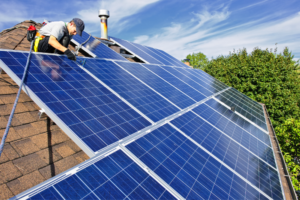
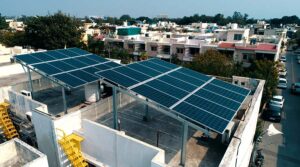
In this blog, we’ve broken down every component of your electricity bill, teaching you how to calculate electricity bill from meter reading. It will show you exactly where your money goes each month. You’ll also get insights into how you can lower your electricity bills by 90% or more with an on-grid rooftop solar panel system for homes, the ROI it can offer, and whether installing a rooftop solar system in India is worth it.
Whether you call it a light bill, power bill, bijli bill, energy bill, or EB bill, the calculation process is the same across India.
TL;DR Summary Box: What Is a Unit of Electricity and How Is It Measured?
Before you can learn how electricity bill is calculated in India, you need to understand what you are being charged for.
- EB unit consumption or Electricity Board unit consumption in India is measured in kilowatt-hours (kWh).
- One kilowatt-hour is equal to one unit.
It means that if you run a 1,000-watt appliance for one hour, you consume exactly 1 unit of electricity.
For those of you wondering how to calculate EB unit consumption, the formula is straightforward:
Units (kWh) = Power (Watts) x Time (Hours) / 1,000.
This is the same formula you would use if you want to know how to calculate units in electricity bill statements.
Here are the main topics covered in this blog in detail:
| Main Topics | Key Takeaways |
| How to calculate electricity bill from meter? | Subtract previous reading from current to get units, apply slab-wise rates, then add fixed charges, FAC, taxes, and subtract subsidies. |
| Why is it important to understand tariff slabs in India? | Slabs determine how much you pay per unit. |
| What do the different charges in your electricity bill mean? | Bills include energy charges (usage), fixed charges (load-based), FAC (fuel cost), electricity duty (tax), and other minor fees. |
| How to calculate electricity bill using appliance wattage when moving into a new home? | Estimate units using this formula: (Wattage × hours × 30) ÷ 1000. Then, apply tariff rates and additional charges. |
| Is it worth installing a rooftop solar system in India to reduce hefty electricity bills? | Yes, a properly-sized rooftop solar system can lower electricity bills by 90% or more, saving tens of lakhs of rupees you will otherwise spend on paying for electricity for 25-30 years, which is also the operational life of a solar energy system. |
| Common mistakes people make while calculating their electricity bills | Applying one slab rate to all units, ignoring fixed/FAC charges, and underestimating standby power consumption. |
| Practices that can lower electricity bills in India | Installing a rooftop solar system, using energy-efficient appliances, LEDs, BLDC and fans, optimizing AC usage, avoiding standby losses, and shifting usage to off-peak hours. |
How to Read Your Electricity Meter?
Learning how to calculate electric meter reading properly begins with understanding your electricity meter. In order to make any calculations, you must first be able to read your electricity meter.
In India, the two types of energy meters most commonly used in homes are digital and smart meters.
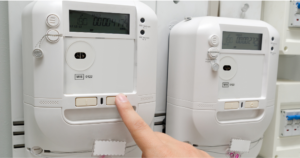
- Digital meters: They display unit consumption directly on an LCD screen as a numeric value. Simply read the numbers from left to right and ignore any digits after the decimal point. Some digital meters cycle through multiple screens showing import, export, and demand readings. Wait for the screen that displays the total kWh consumed. That’s the reading that matters when you’re learning how to calculate energy meter readings.
- Smart meters: They automatically transmit meter readings to your DISCOM. You can still view the display on the unit itself, but these meters also let you track consumption in real time via your DISCOM’s app or portal.
Now that you know how to read your electricity meter, let’s explain, step-by-step, how do you calculate the electricity bills in India.
How to Calculate an Electricity Bill from Meter Reading? Step-by-Step Guide
If you want to know how to calculate energy meter reading for your monthly consumption, here are the two readings you need:
- The current month’s reading
- The previous month’s reading
The previous reading is always printed on your last electricity bill.
Let’s break down the entire process into simple steps.
Step 1: Note the Current and Previous Meter Readings
Check your electricity meter and note the number displayed. Then, check your last bill for the previous reading.
Example: Current reading = 4,850 kWh. Previous reading = 4,600 kWh.
Step 2: Calculate Units Consumed
Subtract the previous reading from the current reading.
Units Consumed = Current Reading – Previous Reading
In our example: 4,850 – 4,600 = 250 units consumed in this billing period.
Step 3: Apply Tariff Slab Rates
This is where most people get confused. In most states in India, electricity is charged on a slab system, meaning different rates apply to different consumption ranges. The price per unit increases as you consume more.
Let’s use the MSEDCL (Maharashtra State Electricity Distribution Company) domestic tariff in 2026 as an example:
| Slab | Rates per unit* |
| 0 to 100 units | Rs. 7.31 |
| 101 to 300 units | Rs. 13.17 |
| 301 to 500 units | Rs. 17.56 |
| Above 500 units | Rs. 19.15 |
*DISCLAIMER: The rates shown are approximate and based on the MERC tariff order revised in June 2025. Your actual bill may differ depending on your sanctioned load, connection type, and the monthly Fuel Adjustment Charge, which changes with coal and fuel prices. Maharashtra applies a 16% electricity duty on energy charges, one of the highest in India, which significantly impacts your final bill. For exact rates, visit the MSEDCL official website or check your latest bill.
So, for 250 units consumed from our previous example, here’s how the energy charge can be calculated slab by slab:
| Slab | Calculation | Amount | |
| First 100 units | 100 x Rs. 7.31 | Rs. 731.00 | |
| Remaining 150 units (101-250) | 150 x Rs. 13.17 | Rs. 1,975.50 | |
| Total Energy Charge | Rs. 2,706.50 | ||
A common and expensive mistake many homeowners commit is applying the highest applicable slab rate to all units consumed. In our example of 250 units consumed, that would give you 250 x Rs. 13.17 = Rs. 3,292.50, which is Rs. 586 more than the actual charge. The slab system operates in tiers, and each tier applies only to units within that range.
Step 4: Add Fixed Charges
Understanding how to calculate fixed charges in electricity bills is important because they are a flat monthly fee that you pay regardless of how much electricity you consume. It is calculated based on your sanctioned load and connection type.
For MSEDCL domestic consumers, the fixed charges are Rs. 130 per month. The exact amount depends on your sanctioned load and whether you have a single-phase or three-phase meter connection.
Step 5: Add Fuel Adjustment Charge (FAC/FPPCA)
The Fuel and Power Purchase Cost Adjustment (FPPCA) is a charge that fluctuates every month. Power generation companies use coal and natural gas to produce electricity, and the cost of these fuels fluctuates with supply and demand.
This charge is collected on a per-unit basis. For MSEDCL consumers, the FAC ranges from ~Rs. 0.10 to ~Rs. 0.30 per unit.
For our example, let us assume an FAC of Rs. 0.20 per unit: 250 x Rs. 0.20 = Rs. 50.
Step 6: Add Electricity Duty and Government Taxes
State governments collect an electricity duty on consumption. In Maharashtra, the electricity duty for residential consumers is 16% on the total energy charges.
For our example, the electricity duty on the energy charge is 16%. So, the calculation would be, Rs. 2,706.50 × 16% = Rs. 433.04.
Step 7: Deduct Subsidies (If Applicable)
Several Indian states offer electricity subsidies to domestic consumers. However, Maharashtra does not currently offer a blanket consumption-based subsidy for domestic consumers above the poverty line.
So, the final formula for electricity bills calculation is:
Total bill = energy charges (slab-wise) + fixed charges + FAC/FPPCA + electricity duty + other charges – subsidy (if applicable).
Here’s a snapshot calculation for our MSEDCL calculation example based on the formula above:
| Components of the Electricity Bill | Amount |
| Energy charges (slab-wise) | Rs. 2,706.50 |
| Fixed charges | Rs. 130 |
| FAC (Rs. 0.20 x 250 units) | Rs. 50 |
| Electricity duty (16%) | Rs. 433.04 |
| Total energy bills to be paid by the consumer | Rs. 3,319.54* |
*Please note: This bill calculation amount is for illustration purposes only. The final number will also be affected by whether and how much you have to pay in meter and customer charges to your specific DISCOM.
Why is it Important to Understand Tariff Slabs in India?
Tariff slabs vary significantly from state to state because each state has its own State Electricity Regulatory Commission (SERC) that sets rates independently.
If you want to know how to check per unit rate in electricity bills, here is the process you can follow:
- Visit your DISCOM’s official website.
- Look for the Tariff or Tariff Order section.
- Identify your consumer category.
- Note the slab-wise rates, fixed charges, and applicable duties.
Alternatively, you can check the per-unit rate on your bill. Look for the Billing Details or Energy Charges section. Divide the total energy charge amount by total units consumed to get your effective per-unit rate.
State-Wise Electricity Rates in India: 2026 Snapshot
Karnataka is one state that has recently removed the slab tariff system. Instead, it now has a single tariff slab.
Let’s have a look at the slab tariffs for some major Indian states.
#1. For Karnataka
The state does not follow a tiered tariff slab. Instead, there’s a single slab for residential customers.
Here’s an example of the BESCOM electricity tariff in 2026:
- Fixed charges (per KW / month of sanctioned load): Rs. 145
- Energy charges (per kWh): 580 paise
DISCLAIMER: The rates shown are approximate and based on the KERC tariff order dated March 2025, effective from April 2025. An important change to note is that KERC has moved domestic consumers from the older multi-slab system to a simplified flat rate with a fixed charge of Rs. 145 per kW per month.
#2. For Delhi
Here are the slab tariff details in Delhi for BSES:
| State | DISCOM | 0-200 Units (Rs. per unit | 201-400 Units (Rs. per unit | 401-800 Units (Rs. per unit | 801-1,200 Units (Rs. per unit | More than 1,200 Units (Rs. per unit |
| Delhi | BSES | Rs. 3.00 | Rs. 4.50 | Rs. 6.50 | Rs. 6.50 | Rs. 8 |
DISCLAIMER: The rates shown are approximate. A key factor that can change your bill significantly is the PPAC (Power Purchase Adjustment Cost), a surcharge that ranges from 7% to 19% depending on which of Delhi’s three DISCOMs serves your area and the quarter. This surcharge is added to the slab rates and is revised every few months, so your bill can vary even if your consumption stays the same.
#3. For Maharashtra
Here are the slab tariff details in Maharashtra for MSEDCL:
| State | DISCOM | 0-100 Units (Rs. per unit | 101-300 Units (Rs. per unit | 301-500 Units (Rs. per unit | More than 500 Units (Rs. per unit |
| Maharashtra | MSEDCL | Rs. 7.31 | Rs. 13.17 | Rs. 17.56 | Rs. 19.15 |
DISCLAIMER: The rates shown are approximate and based on the MERC tariff order revised in June 2025. Your actual bill may differ depending on your sanctioned load, connection type, and the monthly Fuel Adjustment Charge, which changes with coal and fuel prices. Maharashtra applies a 16% electricity duty on energy charges, one of the highest in India, which significantly impacts your final bill.
#4. For Uttar Pradesh (UP)
Here are the slab tariff details in UP for UPPCL:
| State | DISCOM | Up to 100 Units (Rs. per unit | 101-150 Units (Rs. per unit | 151-300 Units (Rs. per unit | More than 300 Units (Rs. per unit |
| UP | UPPCL | Rs. 3.35 | Rs. 3.55 | Rs. 5 | Rs. 5.50 |
DISCLAIMER: The rates shown are approximate and based on the UPERC tariff order for FY 2025-26. Your actual bill depends heavily on whether your connection is rural or urban, since both have different fixed charges and subsidy levels. UP also has a separate lifeline category for BPL households with a load of up to 1 kW and consumption under 100 units. Moreover, UP has five DISCOMs that follow the same tariff but may apply slightly different surcharges.
What Do the Different Charges in Your Electricity Bill Mean?
As you know by now, a power bill includes many more charges besides just unit consumption. This section gives a clear breakdown of what each of those charges means. Have a look.
- Energy charge: It is calculated by multiplying units consumed in each slab by the applicable slab rate and is the largest component of your bill.
- Fixed charge: It is a flat monthly fee based on your sanctioned load (in kW or kVA). You pay this even if you consume zero units in a month.
- FPPCA / FAC / FCA: These stand for Fuel and Power Purchase Cost Adjustment. This is a per-unit variable charge that changes monthly based on the fluctuations in coal and fuel prices.
- Electricity duty: It is a state government tax collected as a specific percentage of your energy charges.
- Meter rent: It is a small monthly fee charged for the electricity meter installed at your premises.
- Customer/service charge: This is a flat monthly administrative fee charged by some DISCOMs.
- Arrears: These are unpaid balances from previous billing cycles that are added to your current bill.
- Late payment surcharge: It is a penalty of 1% to 2% per month applied to your bill when you miss the payment due date.
How to Calculate Electricity Bills Using Appliance Wattage When Moving into a New Home?
For those of you who have moved into a new house and are wondering how to calculate an electricity bill without a meter reading, this appliance-based method can help you figure out your electric bill from scratch.
Here’s a simple formula that you can use:
Monthly Units = (Wattage x hours used per day x 30) / 1,000
This approach also helps you understand how to calculate energy bill costs for individual rooms or specific appliances.
Here’s a sample consumption estimate for a 2-3 BHK Indian household:
| Appliance | Wattage | Daily Hours | Monthly Units |
| Ceiling Fan (x4) | 50W each | 12 hours | 72 |
| LED Bulbs (x8) | 10W each | 6 hours | 14.4 |
| Refrigerator | 150W | 8 hours | 36 |
| LED TV | 80W | 5 hours | 12 |
| Washing machine | 500W | 1 hour on alternate days | 7.5 |
| 1.5-ton AC | 1,400W | 8 hours | 336 |
| Geyser | 2,000W | 0.5 hours | 30 |
| Iron | 1,200W | 0.25 hrs | 9 |
| Mixer grinder | 750W | 0.25 hrs | 5.6 |
| Wi-Fi router | 15W | 24 hours | 10.8 |
| Phone chargers (x3) | 15W each | 3 hours | 4 |
| Total units consumed without an AC | ~201 units | ||
| Total units consumed with an AC | ~537 units | ||
Once you find the approximate units used by the appliances based on how we have shown above, apply your state’s slab rates using the step-by-step method explained earlier in this article to calculate your approximate bill.
From the table above, it should also be clear why summer electricity bills are 2x to 3x higher than winter bills for most Indian homes. That’s because the air conditioner alone consumes over 300 units per month during the summer when used for 8 hours daily.
Another factor many people overlook is standby power, which is also known as vampire power. Devices like TVs, set-top boxes, microwave ovens, and chargers continue to draw small amounts of power even when switched off but plugged in. This standby or vampire consumption can hike your monthly bills by 5% to 10%.
Is it Worth Installing a Rooftop Solar System in India to Get Rid of Hefty Electricity Bills?
Many households in India pay Rs. ~3,000 to Rs. ~5,000 per month on their electricity bills. And power tariffs do not remain constant. They increase by 3-6% every year. What feels like a manageable Rs. 3,000 to Rs. 5,000 monthly bill today can add up to ~Rs. 13 lakh to ~Rs. 33 lakh over the next 25 years, once you factor in annual tariff hikes.
Now, would you pay ~Rs. 13 lakh to ~Rs. 33 lakh on electricity for the next 25 years, or install a rooftop solar system that can meet your energy needs and save all this money? A 5 kW on-grid solar system in a city like Pune that costs ~Rs. 2.45 lakh* with a subsidy can offer a saving of ~Rs. 33.46* lakh over its 25-year lifespan. That’s an ROI of ~12.6x.
*Please note prices are subject to change.: The above-mentioned cost of solar panels for homes in Pune with subsidy for on-grid solar systems is indicative as of 11th June 2026 for the SolarSquare Blue 6ft variant. The final cost of rooftop solar depends on your DISCOM charges, city, product variant opted for, panel type, inverter type, mounting structure height, type of after-sales service, savings guarantee, roof height, etc. Also, while calculating savings from on-grid solar in Pune, we have considered an annual tariff escalation of 3% and an annual plant degradation rate of 1%. The actual final savings from a rooftop solar system for homes depend on the types of solar panels you’ve installed and their efficiency, intensity of sunlight your rooftop receives, orientation of the panels and tilt angle, the pollution level and weather conditions in your city, the temperature, shadow on the roof, impact of dirt/dust, and how well you maintain your panels after installation.
No other investment can offer such high returns and hefty savings as an on-grid rooftop solar system for homes.
First, let’s take you through the cost of installing an on-grid rooftop solar system in India with the PM Surya Ghar subsidy in 2026 for different-capacity solar systems:
| Solar System Size | Cost of Rooftop Solar in India for Homes with Subsidy (Starting Price – Indicative for Base Variant) as of 18th April 2026* |
| 2 kW solar system | Ranges between ~Rs. 0.93 lakh in Lucknow, ~Rs. 1.20 lakh in Ahmedabad, ~Rs. 1.23 lakh in Pune, and ~Rs. 1.53 lakh in Bangalore |
| 3 kW solar system | Ranges between ~Rs. 1.05 lakh in Lucknow, ~Rs. 1.32 lakh in Ahmedabad, ~Rs. 1.37 lakh in Pune, and ~Rs. 1.69 lakh in Bangalore |
| 4 kW solar system | Ranges between ~Rs. 1.62 lakh in Lucknow, ~Rs. 1.75 lakh in Ahmedabad, ~Rs. 1.82 lakh in Pune, and ~Rs. 2.15 lakh in Bangalore |
| 5 kW solar system | Ranges between ~Rs. 2.19 lakh in Lucknow, ~Rs. 2.32 lakh in Ahmedabad, ~Rs. 2.45 lakh in Pune, and ~Rs. 3.05 lakh in Bangalore |
| 10 kW solar system | Ranges between ~Rs. 4.72 lakh in Lucknow, ~Rs. 4.95 lakh in Ahmedabad, ~Rs. 5.05 lakh in Pune, and ~Rs. 5.72 lakh in Bangalore |
*Please note prices are subject to change without prior notice. The solar panel price for on-grid solar systems with subsidy listed in the section above is indicative as of 11th June 2026 for SolarSquare Blue 6ft variant. The final cost of solar panels for homes in India depends on your city, DISCOM charges, product variant opted for, panel type, inverter type, mounting structure height, type of after-sales service, savings guarantee, roof height, etc.
Now, let’s take you through how much money you can save over 25 years with a rooftop solar system in a city like Pune:
| Solar System Size | Cost of Rooftop Solar for Homes in Pune with Subsidy (Starting Price – Indicative for Base Variant) as of 18th April 2026* | Savings From Rooftop Solar In Pune Over 25 Years* | Return on Investment (ROI) |
| 2 kW | ~Rs. 1.23 lakh | ~Rs. 10.74 lakh | ~7.8x |
| 3 kW | ~Rs. 1.37 lakh | ~Rs. 16.11 lakh | ~10.7x |
| 4 kW | ~Rs. 1.82 lakh | ~Rs. 21.48 lakh | ~10.8x |
| 5 kW | ~Rs. 2.45 lakh | ~Rs. 33.46 lakh | ~12.6x |
| 10 kW | ~Rs. 5.05 lakh | ~Rs. 66.92 lakh | ~12.3x |
*Please note prices are subject to change. The above-mentioned cost of solar panels for homes in Pune with subsidy for on-grid solar systems is indicative as of 11th June 2026 for the SolarSquare Blue 6ft variant. The final solar panel cost for homes in Pune depends on your DISCOM charges, product variant opted for, panel type, inverter type, mounting structure height, type of after-sales service, savings guarantee, roof height, etc. Also, while calculating savings from solar in Pune, we have considered an annual tariff escalation of 3% and an annual plant degradation rate of 1%. The actual final savings from a solar panel system for homes depend on the types of solar panels you’ve installed and their efficiency, intensity of sunlight your rooftop receives, orientation of the panels and tilt angle, the pollution level and weather conditions in your city, the temperature, shadow on the roof, impact of dirt/dust, and how well you maintain your panels after installation.
You can use SolarSquare’s free solar panel calculator to calculate solar savings and ROI expected from on-grid solar in your city.
Forecast your savings with solar on your investment on the SolarSquare’s plant
Calculate your savings
How to Calculate Power Bills Using Online Electricity Bill Calculators?
If manual calculation feels like a herculean task, several online calculators can help you calculate electricity bills instantly. These calculators are also useful if you want to know how to calculate bijli bills for any region in India. The most reliable calculators are available on DISCOMs’ official websites.
To learn how to figure electric bill using these calculators, you need to input just three main things:
- Total units consumed from your meter reading
- Your state/DISCOM
- Your connection type (domestic or commercial).
What are the Most Common Mistakes People Make While Calculating Their Electricity Bills?
Although we’ve already explained how to calculate current bills using your meter readings, it’s always a great practice to be aware of the common mistakes that many people still make. These mistakes can make your bills appear much lower or higher than they should be.
Have a look at all the mistakes you must avoid while calculating your power bills in India:
- Applying the highest slab rate to all units: If you consume 300 units, you do not pay the same slab rate for all 300 units. The slab rates apply progressively in most states.
- Ignoring fixed charges: Fixed charges are payable every month regardless of consumption. Even if your meter shows zero units consumed, you still owe the fixed charge.
- Forgetting FPPCA/FAC: The fuel adjustment charge adds some extra amount per unit on top of the base slab rate.
- Assuming standby appliances use no power: A TV, a set-top box, and even mobile chargers draw power even when they’re not in use. Across a dozen appliances, standby consumption can hike your bills by 5-10% per month.
- Confusing sanctioned load with connected load: Fixed charges are based on sanctioned load, and exceeding it can trigger penalties.
8 Practices to Lower Your Electricity Bills in India
If rising bills have been a constant bother in your life, you’re not alone. Most homeowners look for ways to lower their bills. This section offers the most practical tips to address the problem of inflated bills in India.
- Install an on-grid rooftop solar system: Since it uses only solar radiation to generate solar electricity for your home, you won’t have to pay for grid electricity. A properly-sized rooftop solar system can lower electricity bills by 90% or more.
- Switch to a 5-star BEE-rated refrigerator: A 5-star refrigerator consumes 50% less electricity than an unrated or 1-star model.
- Replace all lighting with LEDs: LED bulbs use 75% less energy and last 25 times longer.
- Install BLDC fans instead of regular ceiling fans: A standard induction motor fan consumes ~75 watts. On the other hand, a BLDC fan consumes only ~30 watts.
- Set your AC to 24°C: Every degree below 24°C increases AC power consumption by ~6%. Instead, pair the AC with a ceiling fan to distribute cool air more efficiently.
- Unplug devices when not in use: Standby power accounts for 5% to 10% of household electricity consumption. Using a power strip with an on/off switch makes it easy to cut power to multiple devices at once.
- Run heavy appliances during off-peak hours: Some states offer Time-of-Day tariffs that make electricity cheaper during off-peak hours. Switch to using high-load devices during the off-peak window to lower your bills.
- Monitor consumption with smart plugs: Smart plugs with energy monitoring show you exactly how many units each appliance consumes, helping you take targeted action.
Conclusion
Learning how to find electricity bill amounts through your meter is a great first step towards lowering your power bills in India. That’s mainly because when you learn how to calculate electricity bills, you learn about the multiple components of the bill, such as time-of-day tariffs. With this knowledge, you can shift the use of high-load appliances to off-peak hours when electricity tariffs are lower.
Another way to avoid paying for electricity is to install the right-sized on-grid rooftop solar system in India. If you have any questions regarding that, you can book a free, no-obligation call with SolarSquare. It means that just because you book a call with us doesn’t mean you also have to buy from us. You buy only if you are convinced.
FAQs
How can we calculate electricity bills without a meter reading?
You can calculate electricity bills by listing all your appliances with their wattage, estimating daily hours of use, and applying the formula below:
Monthly Units = (Watts x Hours x 30) / 1,000.
Add up units from all appliances, then apply your state’s slab rates, fixed charges, and taxes.
How do you calculate the electricity bill for a specific appliance?
Multiply the appliance’s wattage by the number of hours you use it daily, then divide by 1,000 to get daily kWh. Multiply by 30 for monthly units. For example, a 1,500-watt AC running 8 hours daily consumes 360 units per month. Then, apply your state’s slab rates, fixed charges, and taxes.
What is the formula for calculating electricity bills?
You can use this formula to calculate your electricity bills:
Total Bill = Energy Charges (slab-wise) + Fixed Charges + FAC/FPPCA + Electricity Duty + Other Charges – Subsidy
How to check per unit rate in electricity bill?
Look for the Billing Details or Energy Charges section on your bill. Divide the total energy charge by total units consumed to get your effective per-unit rate.
Why does my electricity bill change every month, even with similar consumption?
The most common reason is the Fuel and Power Purchase Cost Adjustment (FPPCA), which fluctuates monthly based on coal and fuel prices. Billing cycle variations and adjustments from previous months can also contribute to minuscule changes.