

 3962 Reads
 13 mins


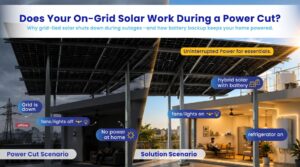
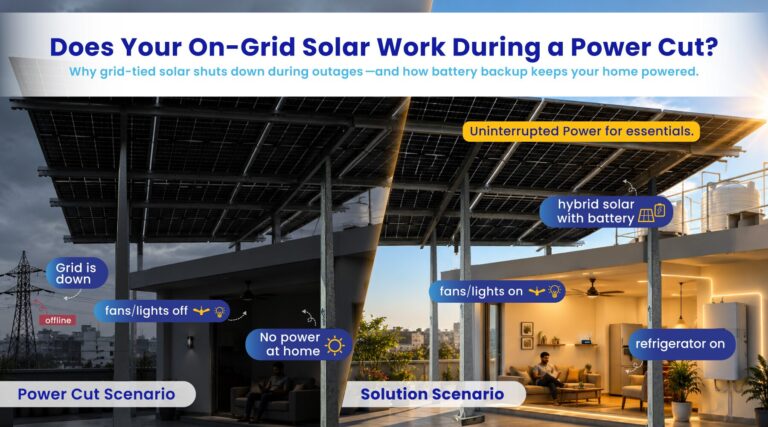
Homeowners install on-grid rooftop solar systems, hoping the sun will power their homes without interruption. But, as soon as the grid goes down, the home slips into complete darkness. The fans stop working, the lights go off, and you’re left wondering why a rooftop full of solar panels can’t power a single bulb anymore.
This is the most shocking scenario homeowners face, almost unprepared, because not many installers explain the concept of on-grid solar power cuts.
A standalone on-grid solar plant is designed to stop working the minute the grid fails. If you’re thinking it’s a design glitch, it’s not. Surprised? Why would a grid-tied solar system designed to reduce reliance on the grid act that way the minute a power cut happens? And how to ensure your home gets power from on-grid solar during outage? This guide has all the answers.
It explains why on-grid solar power cuts happen, how to get power for your home from on-grid solar during power outages, and how to decide whether you need solar with battery backup in the first place.
What Happens to On-Grid Solar Panels During a Power Cut?
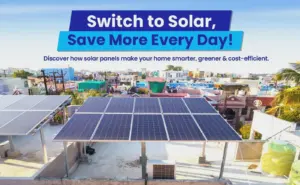
When the grid is working normally, your solar panels convert solar radiation into DC electricity. This DC power is fed to the solar inverter, which converts it to AC electricity.
- Your home uses the AC power first.
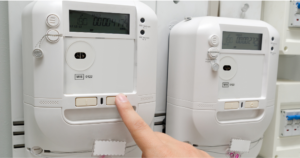
- Any surplus flows to the grid through a bi-directional meter.
- When needed, such as at night or on a cloudy day, the system pulls electricity from the grid.
However, the moment a power cut hits, the script flips completely. Here’s how the system behaves during a grid-tied solar power outage:
- The inverter detects the loss of grid voltage within milliseconds: It constantly monitors the grid for stable voltage and frequency. So, it registers a failure almost instantly.
- AC output stops within ~2 seconds: Once the inverter confirms the grid is gone, it cuts off its AC supply.
- Panels keep producing DC, but the inverter blocks the output: Your modules are still generating electricity from sunlight. That energy has nowhere to go because the inverter refuses to push it forward.
- Your home goes dark even though the sun is shining: With the inverter offline, no solar power reaches your appliances.
- The system remains in standby until the grid is restored: it will not generate usable power again until the grid returns and remains stable for a short verification period.
Why Does the On-Grid Solar System Shut Down During an Outage?
Now, the bigger question is why does grid-tied solar power outage happen? And the answer is anti-islanding protection (a mandatory safety feature for every grid-tied solar inverter in India).
An island is a dangerous situation where your rooftop solar system keeps sending power to the power lines during an outage. When the grid fails, utility line workers usually go out to repair those faulty lines.
- If your solar inverter kept sending electricity into the grid during that time, those power lines would be live.
- A worker touching a live wire would get an electric shock. In case of harmful shocks, the person can also get electrocuted.
- Back-fed power can cause voltage and frequency swings that damage appliances in your home.
To prevent all this, the Central Electricity Authority has made it mandatory that every on-grid inverter in India must detect a grid failure and disconnect itself automatically.
How to Get Energy From an On-Grid Solar Power System During a Blackout?
An on-grid solar system will not power a home during a power outage because of its anti-islanding feature. To keep your home running during that time, you have three options.
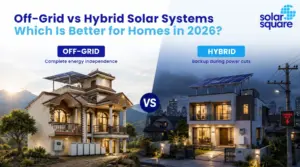
- Option A – Install solar with battery backup: This is a hybrid solar system that uses a battery bank and a hybrid solar inverter. When the grid fails, the hybrid inverter isolates your home from the grid. Then, it supplies power to essential appliances from the battery and the ongoing solar generation. When the grid returns, it reconnects automatically and resumes net metering.
- Option B – Use on-grid solar along with a home UPS/inverter: An on-grid solar plant handles bill savings when the grid is up, and a separate battery-based home UPS provides backup when the grid is down. These two systems work independently.
- Option C – Install an off-grid solar system: An off-grid solar system runs entirely on solar panels and batteries, with no grid connection. It keeps generating and supplying power during outages because it does not depend on the grid for a reference signal. However, off-grid solar is extremely expensive. So, it makes sense only in rural areas without grid power or in remote locations where grid power is available for only 2-3 hours.
How to Decide If You Need a Battery Backup?
Adding a battery backup, whether by going off-grid or installing a hybrid solar system, incurs additional cost. Plus, batteries have to be replaced from time to time, making it a recurring expense. Therefore, you must carefully decide whether you need a battery backup at all.
Here’s how you can evaluate your situation:
- Look at the power outage pattern: If your area experiences occasional, very short power outages, an on-grid system is the smarter choice. However, if you face daily cuts, lasting 2-3 hours, especially during the summer, a battery backup is a smart investment.
- Identify critical loads: A work-from-home setup, a refrigerator, and internet connectivity can make even short outages costly. If you have loads that genuinely cannot go down, backup is not optional.
- Be realistic about what you want to run: Backing up an entire house, including air conditioners, requires a large and expensive battery. On the other hand, backing up only essential circuits, such as lights, fans, and a few sockets, is far more affordable and is what most homes actually need.
- Weigh the lifetime cost: A battery is not a one-time expense. It will need to be replaced every 5 to 10 years. Therefore, size the battery to your real outage pattern rather than a generic specification.
Conclusion
On-grid solar power cuts occur for safety reasons. Anti-islanding is built into the genetics of every grid-tied solar system, so no linemen are exposed to risk. In most urban areas where the grid is reliable, power cuts are very infrequent. In those cases, an on-grid solar system is the best option, as it’s highly affordable and gives a stellar ROI.
You can use SolarSquare’s free solar panel savings calculator to check the savings and ROI from an on-grid rooftop solar system in your city.
Calculate your savings

Forecast your savings with solar on your investment on the SolarSquare’s plant
However, if you face frequent outages, a hybrid solar system with a correctly sized battery backup is the solution, and it is worth doing right. For any further information, you can also book a free solar consultation call with SolarSquare.
FAQs
What are the most common mistakes homeowners make while going solar?
The biggest mistake is assuming an on-grid rooftop solar plant will automatically keep the lights on during a power cut. Other common errors include buying an expensive off-grid system in a city with a stable grid, undersizing the battery and being disappointed by short backup, and trying to back up the entire house instead of just essential circuits.
How long do Indian homes actually lose power?
This varies significantly by the location:
- Tier-1 metro cities have a pretty stable grid, with very infrequent power cuts.
- Semi-urban areas can experience power cuts lasting 2-3 hours or longer, especially during the summer.
Does an on-grid solar system work during a power cut?
No, an on-grid solar system does not work during a power cut. The inverter detects the loss of grid power and shuts down automatically within ~2 seconds to comply with safety regulations. To get solar power during an outage, you need a hybrid system with a battery, a separate home UPS, or an off-grid setup.
How on-grid solar systems handle power cuts?
They handle power cuts by shutting down. The instant the grid fails, the inverter stops converting solar power and disconnects, even though the panels are still producing DC electricity in the sunlight. This is a deliberate safety response called anti-islanding protection, which prevents the system from energizing power lines that utility workers may be repairing.
What happens when the grid power returns after a power cut?
The inverter does not restart instantly. It waits for the grid to remain stable for a few minutes before reconnecting and resuming normal operation and net metering.


 Previous Article
 20 min