
 1477 Reads
 46 mins


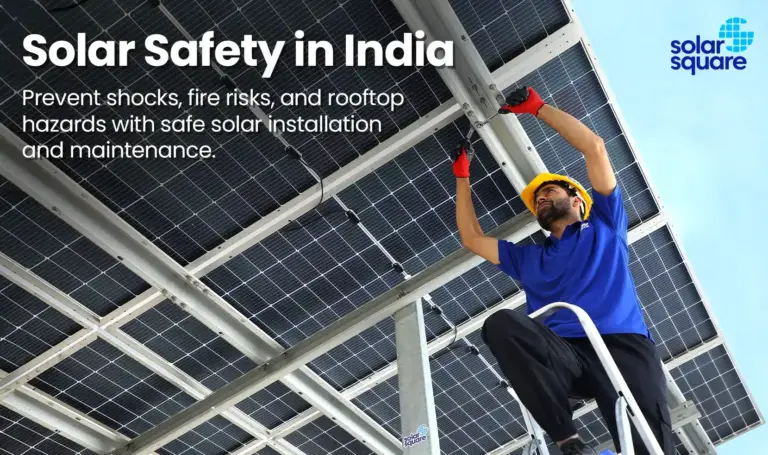
Solar panels generate high-voltage DC power, which must be handled with care because direct current is lethal. Although a solar inverter converts DC to AC before supplying it to your home, handling rooftop solar safely while installation and maintenance is necessary. Solar safety is so critical because PV panels start producing DC electricity the moment sunlight hits them.
Moreover, several components in a rooftop solar system, such as panels, cables, connectors, inverters, and mounting structures, must work together without faults to generate solar electricity as expected. This is why DIY handling of solar systems (handling solar systems on your own instead of hiring professionals) is not recommended. Even a small wiring mistake, loose connector, or improper grounding can create serious safety risks.
If solar plant safety is ignored, even minor risks can quickly turn into safety hazards for both the system and the people around it. Some of the most common problems include:
- Electrical shocks from live DC cables or exposed connectors
- Fire risks caused by loose connections, damaged cables, or arc faults
- Lightning or surge damage when the earthing and protection devices are faulty
- Structural damage when panels or mounting structures are not secured properly
- Accidents while working on rooftops without proper fall protection equipment
- System failures caused by poor cable routing or improper inverter configuration
DIY installation or maintenance (installation and maintenance on your own instead of hiring professionals) increases the likelihood of these risks. Rooftop solar systems involve live electrical components, specialized MC4 connectors, earthing systems, and protection devices such as MCBs and surge protection devices (SPDs). Handling these components without proper training can result in electric shock, equipment damage, or even fire.
Maintenance activities, such as solar panel cleaning or cable inspection, also require safety gear, insulated tools, and trained technicians who know how to shut down and isolate the system safely. Since homeowners aren’t equipped with the right safety tools, attempting solar installation or maintenance at home can damage the equipment and pose a serious risk to life and property.
Read on to understand the most important aspects of solar safety for rooftop systems in India, including major risks associated with solar plants, the safety regulations followed by solar professionals in India, a practical checklist for solar panel installation safety, emergency safety steps, simple solar panel care practices, and the solar panel safety precautions required during installation and maintenance.
TL;DR Summary Box: Why Solar Safety Matters So Much?
Solar safety matters because rooftop solar systems generate high-voltage DC electricity that remains active whenever solar radiation is present.
As a result, various components of the system are live even when the grid is off. If any of these components are handled without proper safety gear and knowledge, it can result in electrical shock, fire risks from arc faults or loose connections, lightning damage during storms, and physical damage to rooftop structures, such as loose mounting frames, unstable panels, or panels shifting during strong winds.
Since solar plants remain outdoors for more than 25 years and face intense heat, humidity, monsoon rain, and lightning, proper grounding, surge protection, safe cable routing, and regular solar inspections are necessary to keep the system safe.
Here are the main topics covered in this blog in detail:
| Main Topics | Key Takeaways |
| What are the main risks that can make a solar system dangerous? | Electrical shock, DC arc faults, fire, lightning damage, corrosion during monsoon, structural damage, and fall hazards during rooftop work are the biggest solar system safety risks. |
| What are the top solar safety regulations and standards in India? | The main solar safety standards include CEA electrical safety regulations, ISO 45001, ISO 14001, ISO 9001, BIS/IS standards, NFPA fire safety guidance, and PFPE/PFAS rules for working at height. |
| Top solar safety precautions to follow during installation | Before installation, the roof must be assessed properly, certified components should be used, voltage limits must be planned carefully, earthing and protection devices should be installed, and cable routing must be done safely by trained professionals. |
| Top solar system safety precautions to follow during maintenance | During maintenance, the system should be shut down safely, panels should be cleaned using proper methods, cables and connectors should be inspected regularly, inverter warnings should be monitored, and earthing and lightning protection should be checked periodically. Maintenance should always be done by trained professionals only. Any negligence can lead to serious life and material hazard. |
| Essential gear needed for solar safety | Solar technicians need ladders, helmets, safety shoes, harnesses, insulated gloves, calibrated insulated tools, and electrical PPE to work safely on rooftops and live solar equipment. |
| Things professionals do to maintain solar panel installation safety | Professionals inspect the roof, design the system within safe voltage limits, route DC and AC cables correctly, install proper earthing, and add MCBs and surge protection devices to reduce safety risks. |
| Fire safety checklist for solar systems | Fire risk can be reduced by regularly checking cables and connectors, keeping the inverter ventilated, tightening MC4 connectors, ensuring proper earthing and lightning protection, and replacing damaged parts promptly. |
| Checklist for solar panel safety in monsoon | Before and after the monsoon, technicians should inspect cables, clamps, welded joints, lightning arrestors, earthing, for rusting and nearby loose objects that may damage the solar plant during storms. |
| What are the top emergency solar panel safety precautions you should follow? | If you notice smoke, sparks, a burning smell, loose wiring, or overheating, turn off the main power if it’s safe, keep people away, avoid touching any components, and call the fire brigade immediately in case of an active fire. |
Understanding Main Solar Safety Concerns: How Solar Systems Can Become Dangerous?
When installed and maintained by trained solar professionals, rooftop solar systems are extremely safe, as they comply with all Indian electrical and fire safety standards. However, several technical and environmental factors can turn a solar installation into a safety risk if it is not maintained by professionals on a periodic basis.
High-voltage DC electricity, outdoor exposure to weather, rooftop work conditions, and multiple electrical connections mean that faults can create dangerous situations, such as fires, electrical shocks, and complete equipment damage, resulting in loss of savings and even loss of life.
Here’s an overview of how rooftop solar can become dangerous when handled by people not trained to work with solar energy systems:
- Electrical shock risks in solar installations: All types of solar panels generate DC electricity whenever sunlight falls on them. This means DC cables, connectors, and panels may remain live during the day even if the grid supply is turned off. Electrical shocks can occur when exposed wires, damaged cables, or loose MC4 connectors allow contact with live DC circuits.
- DC arc faults and solar fire hazards: A DC arc fault occurs when electricity jumps across a gap between damaged or loose electrical connections. This can happen if MC4 connectors are not properly locked, cables are cut or worn out, or wiring joints are loose. Unlike AC arcs, DC arcs can sustain longer because DC current flows continuously. This can generate intense heat, melt insulation, and ignite nearby materials, leading to fires.
- Lightning and surge risks for rooftop solar: Solar panels are installed on rooftops and are the highest metal structures on a building. During thunderstorms, lightning strikes or voltage surges can travel through solar panels, mounting structures, or connected cables. Without proper earthing, lightning arrestors, and surge protection devices, these surges can damage inverters, cables, and electrical appliances connected to the system.
- Monsoon, humidity, and corrosion risks in India: Solar systems in India operate through extreme weather conditions, including heavy rain, humidity, and heat. Moisture can enter connectors if they are not sealed properly, leading to leakage current or short circuits. Humidity and rain can also cause corrosion of mounting structures, bolts, and cable joints. Over time, rusted structures or degraded wiring can increase safety risks.
- Working-at-height hazards during installation and maintenance: Installing and maintaining rooftop solar requires technicians to work at height. Accidents can occur if untrained people climb rooftops without proper ladders, harnesses, helmets, and fall protection systems. Slippery roofs, uneven surfaces, and strong winds can increase the risk of falls. This is why trained technicians use safety belts, fall arrest systems, and proper access equipment while working on solar installations.
- Risk to human life: Solar installations involve working with live electrical systems and performing tasks on rooftops. Accidents can occur if untrained people work without insulated tools, electrical gloves, or other protective gear. Failure to follow solar plant safety protocols during installation or maintenance can result in electrocution and carries the risk of falling from height.
What are the Top Solar Safety Regulations and Standards in India?
Solar safety in India is regulated and maintained by a combination of electrical safety rules, international safety standards, equipment standards, and workplace safety practices.
These solar system safety regulations ensure that solar plants are designed, installed, and maintained in a way that protects technicians, homeowners, and the electrical system. They also ensure that equipment, wiring, and installation practices meet minimum safety requirements before a solar plant becomes operational.
Here’s a tabulated snapshot of the most important solar safety regulations and standards followed in India:
| Solar Safety Regulation/Standard | What it Covers | Why it Matters |
| CEA electrical safety regulations | Electrical design, earthing, protection devices, safe operation of electrical assets | Prevents electrocution, equipment damage, and electrical fires |
| ISO 45001 | Occupational health and safety management | Protects workers during installation and maintenance |
| ISO 14001 | Environmental management practices | Ensures solar operations follow safe environmental practices |
| ISO 9001 | Quality management systems | Ensures reliable processes and consistent installation quality |
| BIS / IS standards | Safety tools, PPE, and equipment standards | Reduces injury risk and ensures certified safety equipment is used |
| NFPA fire safety guidance | Electrical fire protection and emergency response | Helps manage fire risks in rooftop solar systems in housing societies and commercial buildings |
| PFPE / PFAS safety systems | Fall protection equipment and fall arrest systems | Prevents accidents during rooftop installation and maintenance |
Now, let’s understand each of these solar system safety standards in detail:
- CEA safety regulations for electrical installations: The Central Electricity Authority (CEA) publishes safety regulations governing electrical installations across India. These rules focus on the safe design, installation, operation, and maintenance of electrical systems. For solar plants, CEA regulations require proper earthing, protection devices, isolation mechanisms, and safe electrical connections to prevent electrocution, equipment damage, and fire.
- ISO Integrated Management System (IMS) standards: Tier-1 professional solar companies follow an Integrated Management System that combines three ISO standards. ISO 45001 ensures workers follow safe procedures while installing or maintaining solar systems. ISO 14001 ensures solar operations minimize environmental impact, including waste handling and site management. ISO 9001 ensures proper documentation and reliable system performance.
- Inspection and commissioning requirements for rooftop solar: Before a rooftop solar system begins operation, installers conduct inspection and commissioning checks. These checks confirm that all electrical connections are secure, cables are routed correctly, protection devices are functioning, and earthing systems are working properly.
- BIS (Bureau of Indian Standards) safety standards for tools and PPE: BIS develops Indian Standards (IS standards) for equipment, safety tools, and personal protective equipment used in solar work. These standards define solar safety requirements for items such as insulated gloves, safety shoes, helmets, ladders, and electrical tools. Using BIS-certified equipment reduces the risk of electrical shock, injuries, and equipment damage during installation and maintenance.
- Building and fire safety considerations for rooftop solar plants: Solar plants installed on buildings must comply with fire safety guidelines to prevent fire hazards. Industry practices point to standards from the National Fire Protection Association (NFPA), which provide guidance on electrical fire safety, system layout, and fire protection measures. For commercial rooftop systems, fire extinguishers are installed near the inverter or electrical control area. Carbon dioxide fire extinguishers are preferred for electrical fires, while ABC fire extinguishers are used when CO2 extinguishers are unavailable.
- Working-at-height safety standards (PFPE and PFAS): Rooftop solar installation requires technicians to work several meters above ground level. To prevent falls, workers use Personal Fall Protection Equipment (PFPE) such as harnesses, helmets, safety belts, and anchor systems. A Personal Fall Arrest System (PFAS) includes harnesses, connectors, and anchor points that stop a fall safely. These systems are critical when technicians install panels, inspect structures, or perform rooftop maintenance.
Top Solar Safety Precautions You Must Follow
Most safety incidents in rooftop solar systems happen because basic precautions are ignored during installation or maintenance. Loose connectors, improper earthing, damaged cables, poorly routed wiring, or unstable mounting structures can turn a solar plant into a safety hazard.
Following the right precautions helps prevent electrical shocks, arc faults, fire hazards, equipment failure, and rooftop accidents.
For clarity, we’ve divided solar panel safety precautions into two parts: installation precautions and maintenance precautions.
What are the Top Solar Safety Precautions to Follow Before Installation?
Solar installation mistakes such as poor system design, incorrect wiring, or weak mounting structures can lead to electrical hazards, equipment failure, or rooftop damage later.
Here are the key solar panel safety precautions to prevent issues after installation.
- Conducting a proper roof safety survey and structural assessment: Before installing solar panels, technicians check whether the roof can safely support the weight of the solar system. They inspect the roof condition, slope, load-bearing capacity, and available space.
- Using certified solar components only: Solar panels, inverters, cables, solar connectors, and mounting structures should come from certified manufacturers that meet BIS standards. Certified components are tested for electrical safety as well as durability. Using uncertified or low-quality components increases the risk of electrical faults, overheating, or premature equipment failure.
- Planning system layout and panel connections to keep voltage within safe limits: Solar panels generate DC electricity, and multiple panels are connected together to form a string. When panels are connected in series, the voltage increases. If too many panels are connected in one string, the voltage can exceed the safe input limit of the solar inverter. In rooftop solar panel systems for homes, installers must keep the DC voltage below 800 volts and choose inverters that can safely handle up to 1,000 volts. Proper system design is critical to ensure the voltage remains within safe limits and prevents electrical faults.
- Installing proper earthing and grounding: Solar panels start generating electricity immediately upon exposure to sunlight, making proper grounding essential. Earthing provides a safe path for fault currents and helps protect the system from electrical shocks and lightning damage. Without proper grounding, fault currents may pass through equipment or structures, creating dangerous conditions.
- Installing proper isolation and protection devices: Solar systems require electrical protection devices to isolate the system when necessary. Isolation devices such as MCBs help disconnect parts of the system during faults or maintenance. Surge protection devices, or SPDs, protect the system from sudden voltage spikes caused by lightning or grid disturbances.
- Installing cables properly and routing them safely to prevent damage: Solar installations use DC cables that carry electricity from the panels to the inverter. These cables must be routed carefully to avoid sharp bends, exposure to mechanical stress, or contact with sharp surfaces. Poor cable routing can lead to insulation damage, exposed wiring, or electrical faults.
- Using only trained installers with proper safety gear: Solar installation requires technicians who understand electrical systems, rooftop safety, and installation standards like the back of their hands. Trained solar professionals use safety gear such as helmets, harnesses, insulated gloves, and safety shoes while working on rooftops. Proper training and equipment help prevent accidents and ensure the solar system is installed correctly.
What are the Top Solar Plant Safety Precautions to Follow During Maintenance?
Once a grid-tied solar system becomes operational, regular maintenance is necessary to keep it safe and functioning properly.
Maintenance activities such as panel cleaning, cable inspection, or equipment checks must be carried out only by trained professionals wearing protective gear, as parts of the system may have DC power when exposed to sunlight, even if the grid has been shut down.
Following the proper safety procedures listed below helps prevent electrical hazards, equipment damage during maintenance, and solar safety concerns.
- Always shut down the system before maintenance: Before any inspection or repair work begins, the solar system must be safely shut down using the appropriate isolation switches. This helps prevent contact with live electrical circuits and reduces the risk of electric shock while technicians handle cables, connectors, or electrical components.
- Follow safe solar panel cleaning practices: Solar panels require periodic cleaning to maintain performance, but cleaning should be done using the right tools and methods. Technicians use proper ladders, safety gear, and appropriate cleaning equipment. Panels should not be cleaned with excessive pressure or unsafe methods that could damage the modules, void the warranty, or create electrical hazards.
- Inspect cables and connectors regularly: DC cables and connectors, such as MC4 connectors, should be checked for damage, loose connections, or wear. Damaged insulation, exposed wiring, or poorly connected cables can cause electrical faults, overheating, or arc faults if left unattended.
- Monitor inverter warnings and system performance: The inverter continuously monitors the health of the solar system. Warning messages, fault codes, or unusual drops in solar output indicate wiring issues, grounding problems, or component faults. Regular monitoring helps identify problems early, before they become solar safety risks.
- Check mounting structures and panel stability: The mounting structure holds solar panels securely on the roof. Technicians inspect clamps, nuts, bolts, and frames to ensure the panels remain firmly secured. Loose mounting hardware can allow panels to shift during strong winds or storms.
- Inspect earthing and lightning protection periodically: Earthing systems and lightning protection devices help protect the solar plant from electrical faults and lightning strikes. A regular solar inspection ensures that grounding is proper and that lightning arrestors and surge protection devices are functioning properly.
- Keep the rooftop area safe and accessible: The area around the PV system should remain clear and free of obstructions for maintenance work. Walkways should not be blocked, tools or debris should not be left near cables or panels, and a proper parapet wall should surround the roof. An organized rooftop reduces the risk of accidental damage or worker injury during maintenance activities.
Essential Gear Needed for Solar Safety
Trained technicians must always carry safety gear and equipment, such as insulated gloves, PPE, and a safety harness, to protect themselves from solar safety risks, such as electrical shocks and falls.
Here’s a snapshot of different electrical and fall safety tools and gear that trained technicians must have to work safely:
- Gear required for working at height: A ladder for safe roof access, a helmet for head protection, safety shoes with anti-slip soles, safety belts or harnesses to prevent falls, and cotton gloves for handling panels and mounting structures.
- Gear required for electrical work: Insulated gloves to prevent shock, calibrated tools for working on electrical connections, safety shoes for protection and insulation, and electrical PPE used during solar installation and maintenance.
Things that Professionals Do Differently for Solar Panel Installation Safety
Professionals follow various safety procedures before and during installation to ensure the system operates safely for many years. These steps include checking the roof condition, designing the system within safe voltage limits, properly routing cables, installing proper earthing, and adding protection devices to prevent electrical faults and fire hazards.
Let’s explore everything that solar professionals follow to make sure that the solar system is safe for you and generates maximum possible power to maximize your solar savings:
- Pre-installation safety checks and site assessment: Installers inspect the roof condition, available space, structural strength, and surrounding environment before installing panels. This helps ensure the roof can safely support the weight of the solar system.
- Safe system design and component selection: Installers determine how many panels will be connected in each string so that the DC voltage remains within the inverter’s safe input range. They also choose the best solar inverters, DC cables, connectors, and mounting structures that are certified and suitable for the system capacity. This prevents inverter overloading, cable overheating, and electrical faults.
- Proper DC and AC cable routing: DC cables from the panels to the inverter and AC cables from the inverter to the home supply must be routed safely. Installers secure cables properly, avoid sharp bends, and protect them from physical damage to prevent electrical faults.
- Earthing requirements for solar systems: Proper earthing ensures that fault currents or lightning surges have a safe path to the ground. Installers connect panels, mounting structures, and electrical components to the ground to reduce the risk of electric shock and equipment damage.
- Isolation and protection devices in solar installations: Professionals install isolation switches, MCBs, and surge protection devices to help disconnect the system during faults and protect equipment from voltage spikes or electrical disturbances.
Checklist to Follow for Solar System Safety in India in 2026
Maintaining rooftop solar system safety requires regular checks and a few simple solar safety precautions. For example, electrical connections should remain tight, cables should not be damaged or exposed, the inverter should be placed in a well-ventilated area, and earthing and lightning protection should function properly at all times.
For clarity, the safety checklist below is divided into two areas: fire safety checks and monsoon and extreme weather protection. Each checklist includes practical steps to help you maintain solar system safety throughout the year.
Fire Safety Checklist in Solar Systems
Most fire incidents in solar systems happen due to loose MC4 connectors, damaged DC cables, improper wiring joints, overloaded inverters, faulty components, or poor earthing. These issues can cause overheating or arc faults, leading to fires. Needless to say, preventive checks can help identify these issues before they become dangerous.
The following checklist highlights key precautions to prevent a fire from breaking out near or around a solar system.
- Perform regular electrical inspections to ensure cables, connectors, and wiring joints are tight and undamaged.
- Conduct mechanical checks to confirm panels, clamps, and mounting structures remain secure.
- Monitor plant generation and inverter alerts to detect abnormal system behavior early.
- Install the inverter in a well-ventilated location to prevent overheating.
- Ensure MC4 connectors are properly locked and tightened to avoid loose electrical connections.
- Use proper lugs for wiring connections so electrical joints remain secure.
- Do not pour water on a broken solar module during the day, as it may still be generating electricity.
- Check that the lightning arrestor and earthing system are functioning properly.
- Replace damaged cables, connectors, or modules immediately instead of continuing to operate the system.
- Conduct periodic maintenance inspections to identify potential fire hazards early.
Checklist for Solar Safety in Monsoon and Extreme Weather
Rooftop solar systems in India face relentless rain, humidity, strong winds, and lightning during the monsoon season every year. These conditions can loosen mounting structures, damage cables, cause corrosion in metal parts, and increase the risk of lightning-related electrical faults.
Without proper inspection before and after the monsoon, these issues can affect both system safety and performance.
The following checklist highlights the key checks that professionals must carry out to help keep solar systems safe during monsoon and extreme weather conditions.
- Conduct electrical inspections before the monsoon to ensure cables, connectors, and protection devices are functioning properly.
- Check that modules, mounting structures, and clamps are tightly secured.
- Inspect lightning arrestors and ensure they are functioning properly.
- Verify that MCBs and other protection devices are in proper working condition.
- Ensure there are no loose objects around the rooftop that could hit the solar panels during storms.
- Check welded joints and mounting frames for structural strength.
- Inspect mounting structures for rust and apply zinc spray if corrosion is visible.
- Perform a full inspection of the system after the monsoon season to identify any damage caused by weather.
- Ensure earthing connections remain intact and capable of handling lightning surges.
Solar Panel Care with a Safety-first Approach
Solar panels need regular cleaning and inspection to maintain their performance, but these activities must be carried out safely. Safe solar panel cleaning practices involve using proper equipment, appropriate tools, and trained personnel who understand how to identify electrical or structural hazards before starting work.
The following practices help ensure solar panel care is carried out safely.
- Only trained professionals should carry out cleaning and solar inspection
- Use of the right tools and equipment for the specific task
- Ability to identify unsafe conditions such as unstable ladders or slippery surfaces
- Proper reporting of any site issues or damage observed during inspection
Because solar systems involve electrical components and rooftop work, installation and maintenance should never be attempted without proper training. The following risks explain why DIY solar work (fixing issues on your own instead of hiring professionals) is unsafe.
- Electrical shock risk: Solar panels produce DC electricity as soon as they receive sunlight. Handling cables, connectors, or electrical equipment without proper isolation gear can expose you to live circuits.
- Fall hazards during rooftop work: Solar panels are installed on rooftops, and cleaning or repairs require working at height. Without ladders, harnesses, and fall protection systems, the risk of falling from the roof increases.
- Improper handling of electrical components: Connectors, DC cables, and inverters require correct tools and working knowledge. Improper handling can damage equipment or create loose electrical connections that may lead to fire hazards.
- Inability to detect system faults: Trained technicians can identify early signs of problems such as damaged connectors, cable wear, or inverter warnings. Homeowners may miss these issues, allowing them to develop into serious solar plant safety risks.
Emergency Solar Panel Safety Precautions When Something Goes Wrong
Some solar system faults require immediate attention because they can quickly become dangerous. Warning signs of an unsafe solar plant include a burning smell from electrical components, visible smoke or sparking near cables or connectors, loose or exposed wiring, malfunctioning electrical equipment, unusual heating of the inverter, repeated inverter tripping, or sudden system shutdown.
If any of these signs appear, you should take immediate precautions, listed below, to reduce the risk of fire, electric shock, or equipment damage.
- Turn off the main power supply: If it is safe to do so, switch off the home’s main MCB from the distribution board to disconnect the system from the electrical supply.
- Keep people away from the system: Restrict access to the rooftop area, inverter location, and electrical panels until the issue is professionally inspected.
- Leave the area if there are signs of fire or smoke: Smoke, sparking, or a burning smell can indicate an electrical fault. Moving away from the area helps prevent injury.
- Avoid touching solar components or wiring: Do not handle panels, cables, connectors, or inverter equipment during an emergency because the system may still be generating electricity.
- Contact emergency services if fire is present: If you notice flames or rapid overheating near the solar installation, call the fire brigade immediately.
You should contact a professional solar repair company, such as Assure by SolarSquare, whenever the system shows signs of electrical failure or physical damage. Situations such as inverter breakdown, repeated tripping, exposed wiring, damaged panels, or lightning-related faults require trained technicians who can safely isolate the system and perform repairs.
How to Choose the Right Service Providers to Maintain Solar Panels Safely?
Solar systems require specialized knowledge to inspect and repair safely. Hiring the wrong technician can lead to incorrect wiring, poor system checks, or unsafe handling of electrical components. Choosing a qualified solar service provider helps ensure that maintenance work is carried out properly and that potential faults are identified before they turn into safety hazards.
Before selecting a company to maintain or repair your solar system, it is important to evaluate a few key factors.
- Licensing and certification: Choose a provider that employs trained solar technicians who understand solar electrical systems, rooftop safety, and Indian installation regulations and standards.
- Emergency response capability: A reliable service provider should be able to respond quickly when an emergency occurs.
- Experience with solar systems: Solar plants require specialized knowledge. Technicians should have experience working specifically with solar installations rather than general electrical systems.
- Reputation and customer feedback: Reviews and customer ratings can provide insight into the company’s service quality, reliability, and response time.
- Trained workforce and safety practices: Ensure technicians follow proper safety procedures and use appropriate solar safety equipment during inspections.
Why Choose Assure by SolarSquare to Clean and Maintain Your Solar Panel Systems?
Assure by SolarSquare provides professional solar maintenance and inspection services for homeowners who may not have ongoing support from their original installer. With operations in cities such as Bhopal, Nagpur, Delhi, and Lucknow (and expanding across India), Assure has already supported 1,000+ customers.
Here’s a list of our Preventive Maintenance (PM) services that help improve your system’s performance and reliability:
- Warranty-safe panel cleaning: Our trained technicians clean your panels using only manufacturer-approved methods. Soft-bristle equipment protects the anti-reflective coating and glass. Every visit includes documentation of before-and-after photos and compliance logs. As a result, your warranty stays intact if you ever need to raise a claim.
- Automated maintenance schedule: We build a cleaning and maintenance calendar around your specific site conditions, dust load, and system size. You get WhatsApp, SMS, and email reminders before every visit. Your full service history, including technician notes, is available for download at any time.
- Performance diagnostics and reporting: We compare your system’s actual power generation with the expected output and review your inverter data. If we detect any drop in performance, we identify the cause and provide you with a clear action plan to recover lost power.
- Electrical and safety check: Trained technicians inspect the wiring, earthing, connectors, and safety devices in your system. They fix loose connections and overheating points on the spot. Each visit also includes checks for DC and AC cables, MCBs and surge protectors, proper tightening of terminals, and seals that keep moisture out.
- Thermal health scan: We use an infrared camera to scan your solar panels and detect issues like hotspots, faulty cells, or shading that you cannot see with the naked eye. Each problem is identified for the exact panel and shared with you as clear images along with a simple list of what needs attention first.
Assure also provides Corrective Maintenance (CM) services when your solar system needs emergency repairs.
- Problem identification: If a panel cracks, the inverter fails, wiring gets damaged, or a protection device stops working, our trained technicians diagnose the issue and clearly explain what went wrong.
- Best fix recommendation: Our team helps you understand the best course of action before arranging the required parts and repairs.
- Repair or replacement services: Once approved, the team fixes the problem and restores your system’s performance.
With Assure by SolarSquare, you do not have to deal with multiple vendors or troubleshoot the issue yourself. One call and the team takes care of everything.
Conclusion
Maintaining solar safety during installation and maintenance is the need of the hour, as more and more people are exploring DIY practices, trying to handle solar installation and repair on their own instead of hiring professionals for the same. In reality, DIY solar installation or maintenance puts you in the line of serious falls and electrical shocks that can lead to loss of life, damage equipment, and render the manufacturer’s warranty void.
Trained solar technicians, on the other hand, follow the solar panel safety precautions and standards set by Indian authorities to ensure electrical safety while working with solar PV systems. With the right tools and protective gear, solar professionals can identify and fix issues before they become serious solar system safety risks.
If you have any further questions about solar maintenance and cleaning, you can get in touch with Assure’s team for free.
If you’re looking to install rooftop solar at your home, you can book a free solar consultation call with SolarSquare. It’s a no-obligation call, meaning you don’t have to buy from us. You buy only if you are convinced.
FAQs
Are rooftop solar panels safe for homes in India?
Yes, rooftop solar panels are safe for homes when they are designed, installed, and maintained according to proper safety standards. Trained solar professionals use correct wiring, earthing, protection devices, and mounting structures to ensure the system operates safely. Regular inspection and maintenance reduce the risk of electrical faults or equipment damage.
Can solar panels cause electrical fires?
Yes, electrical faults in the panels and nearby components can create fire risks. Loose connectors, damaged cables, improper wiring joints, or faulty components can produce heat or arc faults. However, following proper installation practices and conducting regular maintenance checks helps prevent such issues.
Why do solar inverters trip during rain or storms?
Inverters trip during rain or storms due to earthing faults or leakage current in the system. This can happen when cables are damaged and come into contact with metal structures, when moisture enters MC4 connectors, or when cable routing is not done properly. These conditions allow current to leak, which triggers the inverter’s protection mechanism.
What is a DC isolator, and why is it important?
A DC isolator is a switch used to disconnect the DC power coming from the solar panels. It acts as a protection device that allows technicians to safely isolate the solar panels from the rest of the system during maintenance or emergencies.
Are solar panels live even when grid power is off?
Yes, solar panels generate electricity whenever sunlight falls on them. Even if the grid supply is turned off, the panels can still produce DC power during the day. This is why proper isolation and safety procedures are required before handling solar equipment.


 Previous Article

 43 min




![10 kW Solar Panel Price in India [With and Without a Subsidy]](https://cdn.solarsquare.in/blog/wp-content/uploads/2025/07/18165650/10-KW-solar-panel-300x167.webp)