

 9385 Reads
 22 mins


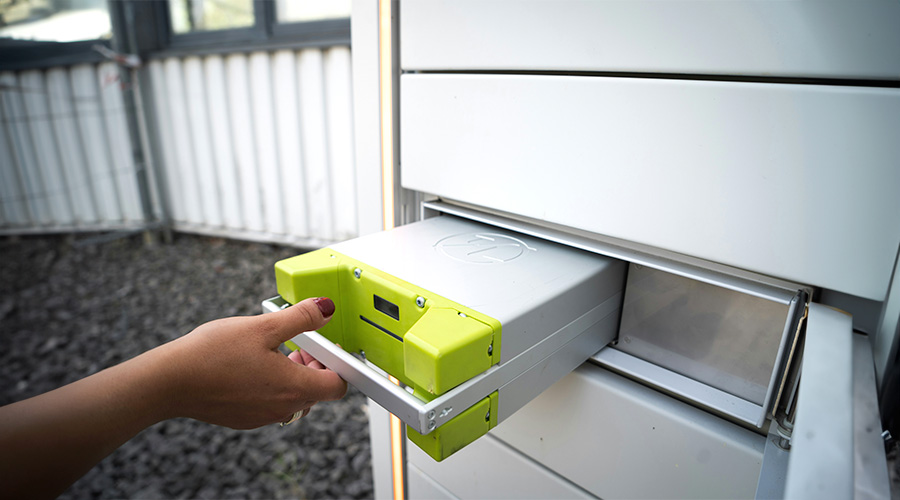
The 100Ah solar battery price in India in 2025 is influenced by the battery chemistry. For instance, the 12V 100Ah lead-acid battery price in India can range between ~Rs. 7,000* and ~Rs. 20,000*, but the 100 amp solar battery price for lithium-phosphate batteries falls between ~Rs. 25,000* to ~Rs. 30,000*. While lithium batteries can cost 2-3 times as much as lead-acid batteries, they last much longer and deliver better performance.
*Please note: The above-mentioned 100Ah solar battery price range is based on standard market research. The actual 12V 100Ah battery price can vary significantly from this given range. The final 100Ah battery price in India depends on the type of battery (lead-acid or lithium batteries), brand, warranty, taxes, and the manufacturer’s discount. SolarSquare does not manufacture solar rechargeable batteries. We install on-grid rooftop solar panel systems for homes, housing societies, and commercial buildings, as well as hybrid solar systems in select cities using high-efficiency solar panels.
A 100Ah solar battery is an energy storage device rated to deliver 100 amperes for 1 hour or 10 amperes for 10 hours. Theoretically, these batteries can store 1,200 watt-hours of energy (12V × 100Ah).
While a 100Ah solar battery is great to store solar energy being generated by a solar panel for charging phones, laptops, and even lights and fans in an RV while you’re off the grid, it’s usually not an ideal size to pair up with a hybrid or off-grid solar system for homes. It usually requires a higher-capacity battery to provide enough backup to keep an entire household with multiple high-load devices running.
Besides the battery chemistry, the 100Ah solar battery price is also influenced by brand reputation, warranty longevity, whether the battery is imported or made in India, and raw material cost.
In this blog, we’ve explained the ins and outs of the 100 amp solar battery price, including the top factors that affect the cost and why branded batteries tend to cost more than unbranded ones. We will also walk you through the different types of 100Ah solar batteries, how to calculate backup time, the number of panels needed to charge a 100Ah solar battery fully, and the primary features you should look for when buying one.
TL;DR Summary Box: How Many Hours Will a 100Ah Solar Battery Last?
The 100Ah solar battery runtime, i.e. for how many hours it will supply energy, varies significantly depending on the connected load. Light loads can provide 15-20 hours backup, while high-consumption appliances might limit runtime to 4-6 hours.
You can use this simple formula to figure out the estimated runtime of a 100Ah solar battery based on the load you’re connecting to it:
| Backup Time = (Battery Capacity × Battery Voltage × Efficiency) ÷ Connected Load |
Suppose you’ve connected a 12V lithium battery with 95% efficiency to power a total load of 200 watts. Considering ~90% depth of discharge (DoD) limit for lithium batteries, the battery will last for ~5.1 hours in this scenario.
Please note: The above-mentioned backup time for a 100Ah solar battery is a very simplified calculation. Actual backup times will vary based on battery condition, ambient temperature, load variations, inverter efficiency, battery age, and actual vs rated capacity. Real-world performance is typically 10-20% lower than calculated values.
Here are the main topics covered in this blog in detail:
| Main Topics | Key Takeaways |
| What is the 100Ah solar battery price in India in 2025?* |
|
| Top factors that affect the final 100Ah battery price in India | The 100 amp solar battery price varies by battery chemistry, brand, warranty, origin (imported vs made in India), raw material trends, and build quality. |
| Why is there a cost difference between branded and unbranded solar batteries? | Branded batteries use better cells, stronger QC, safer electronics, and offer longer warranties with reliable service. |
| What is a 100Ah solar battery? | A 100 Ah battery can supply 100 A for 1 hour, or an equivalent combination. At 12V, that’s theoretically 1.2 kWh of energy. |
| What are the main types of a 100Ah solar battery? | Lead-acid and lithium batteries are the two main types. |
| What is the backup time for a 100Ah solar battery? | It can be calculated using this formula:
Backup Time = (Battery Capacity × Battery Voltage × Efficiency) ÷ Connected Load |
| How many solar panels are required to fully charge a 100Ah solar battery? | Number of Panels Needed = (Battery Ah × Voltage × 1.3) ÷ (Panel Wattage × Peak Sun Hours) |
| Is 100Ah enough for a house? | While it’s suitable for running essentials like lights, fans, Wi-Fi, and a TV for a few hours, it isn’t sized to power an entire home with high-load appliances. |
| Key features to consider when purchasing a 100Ah solar battery | Check cycle life, DoD, warranty, BMS and safety, charging efficiency, brand support, and build quality. |
| Do on-grid solar systems require a solar battery? | No. On-grid systems draw energy from the grid at night and export surplus power to the grid during the day. Batteries are optional and usually not needed where the grid is reliable. |
*Please note: The above-mentioned 100Ah solar battery price range is based on standard market research. The actual 12V 100Ah battery price can vary significantly from this given range. The final 100Ah battery price in India depends on the battery type (lead-acid or lithium), brand, warranty, taxes, and the manufacturer’s discount. SolarSquare does not manufacture batteries. We install on-grid residential and commercial rooftop systems as well as hybrid solar systems in select cities using high-efficiency half-cut solar panels.
What is the 100Ah Solar Battery Price in India in 2025?
The 100Ah battery price in India in 2025 can range between ~Rs. 7,000* and ~Rs. 30,000*, depending on whether it’s a lead-acid solar tubular battery or a lithium phosphate battery. Lithium batteries are more expensive because, unlike lead-acid batteries, which last 4-6 years, lithium batteries have a lifespan of 10-15 years.
*Please note: The above-mentioned 100Ah solar battery price range is based on standard market research. The actual 12V 100Ah battery price can vary significantly from this given range. The final 100Ah battery price in India depends on the battery type (lead-acid or lithium), brand, warranty, taxes, and the manufacturer’s discount.
Let’s check out the 100Ah solar battery price in India in 2025 for the two main battery types you’ll come across in the market:
| Battery Category | 100Ah Solar Battery Price in India in 2025* |
| 12V 100Ah lead-acid battery price in India | ~Rs. 7,000 to ~Rs. 20,000 |
| 12V 100Ah battery price range for lithium batteries | ~Rs. 25,000 to ~Rs. 30,000 |
*Please note: The above-mentioned 100Ah solar battery price range is based on standard market research. The actual 12V 100Ah battery price can vary significantly from this given range. The final 100Ah battery price in India depends on the battery type (lead-acid or lithium), brand, warranty, taxes, and the manufacturer’s discount. SolarSquare does not manufacture solar batteries. We install on-grid rooftop solar systems for housing societies, homes, and commercial buildings, as well as hybrid solar systems in a select few cities using high-efficiency solar panels.
Top Factors that Affect the 100Ah Battery Price
The 100Ah solar battery price in India is greatly influenced by the type of battery (battery chemistry), reputation of the brand, the longevity of the warranty offered, and whether the battery is imported or made in India. But these are not the only factors that influence the 100 amp solar battery price in India. There are many other factors, all of which have been discussed below.
- Material costs: The cost of raw materials such as lithium, lead, nickel, and cobalt directly affects the 100Ah battery price. When the global prices of these metals rise, manufacturers have no option but to adjust their product prices. Even small shifts in commodity markets can change battery prices in India almost overnight.
- Manufacturing complexity: Advanced solar batteries require careful assembly and rigorous testing. Lithium-based batteries involve more complex processes than basic lead-acid batteries, which increases their production cost. However, these same processes also ensure longer life and better safety.
- Research investment: Leading brands continuously invest in R&D to improve charge cycles, temperature tolerance, and safety. That investment shows up in the final 100Ah solar battery price. However, it also gives you a more reliable battery that performs better and lasts longer than cheaper and untested alternatives.
- Safety features: Premium solar batteries include multiple protection layers, such as overcharge and short-circuit management systems. These built-in safety features increase the 100 amp solar battery price, but they also prevent failures and fire hazards, making the battery far more dependable.
- Brand reputation: Trusted brands charge a premium price for their products because they use verified components, follow stringent quality checks, and offer reliable after-sales service.
- Battery chemistry: The type of chemistry plays a major role in the 100Ah solar battery price. Lead-acid batteries are the most affordable but need regular maintenance. On the contrary, Lithium-phosphate batteries are costlier upfront but offer faster charging, higher efficiency, and a longer lifespan.
- Imported vs made-in-India batteries: Imported batteries often cost more due to logistics, customs duties, and forex fluctuations. Indian-made batteries, on the other hand, are cheaper because there’s no import duty taxed on them.
- Warranty longevity: A longer warranty indicates the manufacturer is confident in their product, and that confidence is reflected in a slightly higher price. A 10-year warranty battery usually costs more than a 5-year one, but it can save you from expensive replacements later.
- Manufacturing scale: Large-scale manufacturers produce thousands of units per month, lowering their per-unit cost. Smaller brands or niche producers, on the other hand, charge higher prices due to limited production volumes.
Why is there a Difference Between the Cost of Branded and Unbranded Solar Batteries?
The 100Ah solar battery price from a reputable manufacturer will usually be higher than that of a battery of the same capacity from a local company. Branded batteries tend to cost more because they’re made using advanced technologies, rigorously tested to ensure they’ll perform at their best, have advanced safety features, last longer, and are made using the highest quality components.
Let’s check out in detail why reputable solar battery manufacturers in India price their products on the higher side:
- They build their products using the most advanced technologies: Reputable manufacturers use advanced cell designs, optimized BMS (Battery Management Systems), and carefully balanced electrolyte compositions. These details make the batteries more stable, durable, and efficient, all of which add to the cost but also extend the battery’s lifespan.
- Their products meet strict quality and safety benchmarks: Reputable manufacturers obtain national and international certifications that verify their products have been tested for reliability, consistency, and safety. These audits and compliance checks cost money, but they also ensure that every battery leaving the factory meets global benchmarks.
- They’re not hesitant to offer longer warranties: Their longer, hassle-free warranty coverage and genuine replacement support push the initial cost higher, but they save you from major repair or replacement expenses later.
What is a 100Ah Solar Battery?
A 100Ah solar battery is a device that can deliver 100 amperes of current for 1 hour, or equivalent combinations, such as 10 amperes for 10 hours or 1 ampere for 100 hours. It’s an excellent option for storing solar electricity generated by a solar panel, which can be used to charge low-energy appliances like phones, laptops, lights, and fans in RVs and boats.
The 100Ah lithium batteries are lightweight, making them portable. So, you can carry them while hiking or camping in off-grid locations to supply emergency power backup. However, they are not sufficient to provide backup for an entire home. The backup they provide is too short to support the energy needs of an entire household.
Here are a couple of key specifications of a 100Ah solar battery you should keep in mind:
- Nominal voltage: It’s 12V for residential applications and 24V for commercial setups.
- Energy capacity: Theoretically, these batteries can store 1,200 watt-hours (12V × 100Ah calculation) of energy. The actual usable energy is lower, depending on depth of discharge, which is usually ~90% for lithium batteries and ~50% for lead-acid batteries.
What are the Types of 100Ah Solar Batteries?
The two primary types of 100Ah lithium batteries are lead-acid and lithium batteries. Lead-acid batteries include subtypes like flooded, AGM (Absorbed Glass Mat), gel VRLA, and tubular variants. Lithium batteries primarily use lithium iron phosphate chemistry.
- 100 Ah lead-acid batteries: Lead-acid batteries are the oldest solar energy storage option. They store electricity through chemical reactions between lead plates and a liquid electrolyte. These batteries are affordable and readily available; however, they require regular maintenance. You’ll have to top up distilled water and clean terminals to prevent corrosion. A standard 100Ah lead-acid battery can deliver anywhere between 300 and 500 charge cycles, depending on its type and quality. But the major limitation of these batteries is that you can only safely use about half of their total capacity. Discharging it beyond 50% reduces its lifespan.
- 100Ah lithium batteries: Most 100Ah lithium batteries in India use lithium iron phosphate chemistry. These batteries don’t need any maintenance, charge faster, and perform even under high temperatures. They offer protection against overcharging, short circuits, and deep discharges. A good-quality lithium battery can easily last 3,000 to 5,000+ charge cycles and lets you use up to 90-95% of its total capacity.
Here are the main differences between the two types:
| Feature | 100Ah Lead-Acid Batteries | 100Ah Lithium Batteries |
| Lifespan | 4-6 years | 10-15+ years |
| Cycle life | ~300 to ~500 | ~3,000 to ~5,000+ charge cycles |
| Depth of discharge | ~50% | ~90% |
| Maintenance cost | Very high | None |
| 100Ah solar battery price* | ~Rs. 7,000 to ~Rs. 20,000 | ~Rs. 25,000 to ~Rs. 30,000 |
| Pros | They cost less upfront | They’re lightweight, do not require maintenance, last longer, have higher cycle lives, and perform better than lead-acid batteries. |
| Cons | They require regular maintenance and have a shorter lifespan. | Upfront investment cost is higher. |
*Please note: The above-mentioned 100Ah solar battery price range is based on standard market research. The actual 12V 100Ah battery price can significantly vary from this given range. The final 100Ah battery price in India depends on the battery type (lead-acid or lithium), brand, warranty, taxes, and the manufacturer’s discount. Prices are subject to change.
What is the Backup Time of a 100Ah Solar Battery?
A 100Ah solar battery backup time is the duration for which your battery can continuously supply power to connected appliances when solar panels aren’t generating electricity, such as at night or on cloudy days. In simple terms, the battery backup time tells you how long your lights, fans, and other devices will run before the battery reaches its minimum discharge level.
You can find out the backup time for a 100Ah solar battery based on your usage using this simple formula:
Backup Time = (Battery Capacity × Battery Voltage × Efficiency) ÷ Connected Load
However, you must understand that the actual backup time depends on several real-world factors, including battery age, ambient temperature, and inverter efficiency. The figures obtained from this formula should not be considered absolute.
You can follow these simple steps to work around the aforementioned formula and get an idea of how many hours a 100Ah solar battery will last in your case:
- Step 1: Make a list of all appliances you plan to connect to the battery with their wattage ratings.
- Step 2: Add the power consumption of all devices to get your total connected load in watts.
- Step 3: Identify your battery system voltage. It’s mostly 12V for residential applications.
- Step 4: Determine the efficiency factor. It’s usually ~95% for lithium batteries and 80% for lead-acid batteries.
- Step 5: Apply depth-of-discharge limit, which is ~50% for lead-acid and ~90% for lithium batteries to determine the actual usable energy.
- Step 6: Use the formula provided above
Now let’s work through a practical example to show you exactly how this calculation works.
100Ah Solar Battery Backup Time Example Calculation
For this calculation, we’re using the following considerations:
- Battery specification: 100Ah capacity, 12V system voltage
- Battery chemistry: Lithium-ion technology with 95% efficiency
- Depth of discharge: 90%
- Connected appliances: 3 LED lights (30W total) + 2 ceiling fans (120W total) + 1 WiFi router (15W) + 1 LED TV (60W) = 225W total load
Here’s the step-by-step calculation:
- Total energy storage = 100Ah × 12V = 1,200 Wh (1.2 kWh)
- Available energy = 1,200 Wh × 95% = 1,140 Wh
- Usable energy after depth of discharge = 1,140 Wh × 90% = 1,026 Wh
- 100Ah battery backup time = 1,026 Wh ÷ 225W = 4.56 hours
Disclaimer: The backup time calculated above represents ideal conditions. Actual performance will depend on battery health, local temperature (higher temperatures reduce efficiency), load fluctuations throughout usage, inverter quality and efficiency, battery age and cycle count, and the difference between rated and actual capacity. Real-world backup times run 10-20% shorter than calculated values due to these variables.
How Many Solar Panels are Required to Fully Charge a 100Ah Solar Battery?
The main factors that determine the number of panels needed to charge a 100Ah solar battery include solar panel wattage, the number of hours of peak sunshine, charge controller efficiency losses, and seasonal weather variations.
You can use this formula to get an estimated number of panels needed to fully charge a 100Ah battery:
Formula: Number of Panels = (Battery Ah × Voltage × 1.3) ÷ (Panel Wattage × Peak Sun Hours)
The 1.3 multiplier in the formula above takes into account real-world system losses that reduce actual charging efficiency. This includes charge controller conversion losses, cable resistance losses, panel temperature, dust and soiling on panels, battery charging inefficiency, and a safety margin for cloudy days. Without this factor, panels would consistently undercharge the battery.
Let’s take one very simple sample calculation to explain the working of the formula better. Let’s assume your area receives 4 hours of peak sunlight and you’re using a 12V 100Ah battery. Based on these details, you’ll need 1 390-watt solar panel to charge a 100Ah battery.
Here’s the calculation:
100 Ah x 12V x 1.3 ÷ 4 Hours = 390 watts*
*Disclaimer: This calculation assumes deep daily use and a fixed allowance for losses. It does not account for factors such as shade, dust, heat, seasonal changes, panel angle, or limits set by your battery’s BMS and solar panel charge controller. Real-world charging can be much slower.
Based on the same formula, we’ve made this tabulated snapshot of the number of panels needed for varying sunshine hours:
| Peak Sunshine Hours | Calculation Based on the Formula | Ideal Panel Wattage | Number of Panels Needed |
| 4 | 100 Ah x 12V x 1.3 ÷ 4 Hours | 390 watts |
|
| 5 | 100 Ah x 12V x 1.3 ÷ 5 Hours | 312 watts |
|
| 6 | 100 Ah x 12V x 1.3 ÷ 6 Hours | 260 watts |
|
Is 100Ah Enough for a House?
A 100Ah solar battery can power a few low-energy appliances in your home, such as lights and fans, but it is not enough to provide backup power for all home appliances when the panels are not producing electricity. It simply doesn’t have that kind of storage space, which can provide backup to run kilowatts worth of home loads.
Here’s a list of what a 100Ah solar battery can and cannot power:
| Load that a 100Ah Battery Can Power | Load that a 100Ah Battery Cannot Power |
| 4-6 LED bulbs consuming 40-60W total power | Refrigerator operation requiring 150-200W continuous power |
| 2-3 ceiling fans requiring 120-180W total power | Air conditioning consuming 1,000-1,500W power |
| WiFi router and mobile charging using 20-30W | Electric water heater using 2,000-3,000W power |
| Television consuming 60-100W power | Washing machine requiring 500-800W power |
In short, a 100Ah solar battery is not an ideal size for providing backup power to an entire home. It can power certain appliances for a few hours, but you can’t depend on a single 100Ah battery to supply continuous power for all your household appliances.
What are the Key Features to Look for When Buying a 100Ah Solar Battery?
Some of the most critical features you should consider when purchasing a 100Ah solar battery include the cycle life rating, which determines how many charge-discharge cycles the battery can withstand; depth of discharge, which indicates usable capacity; brand reputation; and built-in safety features that prevent damage or fire hazards.
Let’s check out all the features that’ll help you make a good purchase in detail:
- The battery’s cycle life rating: This shows how many times the battery can charge and discharge before its capacity drops below 80%. A higher cycle life means the battery lasts longer and offers better value.
- Depth of discharge (DoD): DoD tells you how much of a battery’s total energy you can safely use. Lead-acid batteries allow ~50% usable capacity, while lithium batteries let you use ~90%. That means a 100Ah lithium battery delivers nearly twice the usable power as a 100Ah lead-acid battery.
- Warranty coverage and terms: A long warranty indicates the manufacturer is very confident in their product. Also, check whether the warranty includes a complete replacement or pro rata coverage.
- Charging efficiency: This shows how much solar energy is stored in the battery in the real world. Lead-acid batteries can store ~80% of the energy your panels produce, while lithium batteries convert ~95% of that energy.
- Brand reputation: Established brands invest heavily in quality control, research, and customer support infrastructure. As a result, premium brands cost more but have readily available spare parts, faster warranty claim processing, and better quality control standards.
- Build quality: A sturdy battery case protects against heat, vibration, and accidental short circuits. Look for features such as flame-retardant casing and corrosion-resistant terminals.
Do On-Grid rOOFTOP Solar Systems Require a Battery Backup?
On-grid solar systems do not require a lithium battery backup because they are directly connected to the grid. Thus, they don’t need to store solar energy to power the load at night. They can import power straight from the grid at night or whenever required and supply any excess energy generated by the panels during the daytime to the grid.
Since they do not require lithium batteries, on-grid solar systems are highly affordable. If you live in areas with a reliable grid connection, there is no need for a battery backup.
Here’s a tabulated snapshot of the cost of installing on-grid rooftop solar systems across different Indian cities with subsidy:
| Solar System Size | Solar Panel Price in India’s Lucknow with Subsidy (Starting Price – Indicative for Base Variant)* | Solar Panel Price in India’s Pune with Subsidy (Starting Price – Indicative for Base Variant)* | Solar Plate Price in India’s Bhopal with Subsidy (Starting Price – Indicative for Base Variant)* | Solar Plate Price in India’s Bangalore with Subsidy (Starting Price – Indicative for Base Variant)* |
| 2 kW | Rs. ~93,000 | Rs. ~1.23 lakh | Rs. ~1.3 lakh | Rs. ~1.53 lakh |
| 3 kW | Rs. ~1.05 lakh | Rs. ~1.37 lakh | Rs. ~1.45 lakh | Rs. ~1.69 lakh |
| 4 kW | Rs. ~1.62 lakh | Rs. ~1.82 lakh | Rs. ~1.92 lakh | Rs. ~2.15 lakh |
| 5 kW | Rs. ~2.19 lakh | Rs. ~2.45 lakh | Rs. ~2.55 lakh | Rs. ~3.05 lakh |
| 10 kW | Rs. ~4.72 lakh | Rs. ~5.05 lakh | Rs. ~5.12 lakh | Rs. ~5.72 lakh |
*Please note prices are subject to change. : The solar panel price in India for on-grid solar systems listed in the section above is indicative as of 09th July 2026 for the SolarSquare Blue 6ft variant. The final solar plate price depends on your DISCOM charges, city, product variant opted for, panel type, inverter type, mounting structure height, type of after-sales service, savings guarantee, roof height, etc.
You can also use SolarSquare’s free solar panel calculator to find out the savings a solar system will offer in your city over its 25-year lifespan.
We’ve also made this demonstration table that highlights the solar savings and ROI in Pune that an on-grid solar system can offer:
| Solar System Size | Solar Panel Price in Pune with Subsidy (Starting Price – Indicative for Base Variant)* | Solar Savings in Pune over 25 Years* | Return on Investment (ROI) |
| 2 kW | Rs. ~1.83 lakh | ~Rs. 10.74 lakh | ~7.8 times the investment |
| 3 kW | Rs. ~2.15 lakh | ~Rs. 16.11 lakh | ~10.7 times the investment |
| 4 kW | Rs. ~2.6 lakh | ~Rs. 21.48 lakh | ~10.8 times the investment |
| 5 kW | Rs. ~3.23 lakh | ~Rs. 33.46 lakh | ~12.6 times the investment |
| 10 kW | Rs. ~5.83 lakh | ~Rs. 66.92 lakh | ~12.3 times the investment |
*Please note prices are subject to change.: The above-mentioned solar panel price in Pune for on-grid solar systems listed is indicative as of 09th July 2026 for the SolarSquare Blue 6ft variant. The final solar plate price depends on your DISCOM charges, city, product variant opted for, panel type, inverter type, mounting structure height, type of after-sales service, savings guarantee, roof height, etc. Additionally, when calculating savings, we have considered an annual tariff escalation of 3% and an annual plant degradation rate of 1%. The actual final savings from an on-grid rooftop solar system depend on the types of solar panels you’ve installed and their efficiency, intensity of sunlight your rooftop receives, orientation of the panels and tilt angle, the pollution level and weather conditions in your city, the temperature, shadow on the roof, impact of dirt/dust, and how well you maintain your panels after installation.
For any further queries about rooftop solar installation and ROI, you can book a free solar consultation call with SolarSquare now.
Conclusion
The 100Ah solar battery price in India ranges between ~Rs. 7000* and ~Rs. 30,000*, depending on whether it’s a lead-acid tubular battery or a lithium phosphate battery. Lithium batteries cost 2-3 times more than lead-acid batteries, but they last longer and have higher charge and discharge cycles, making them a worthwhile investment.
*Please note: The above-mentioned 100Ah solar battery price range is based on standard market research. The actual 12V 100Ah battery price can vary significantly from this given range. The final 100Ah battery price in India depends on the battery type (lead-acid or lithium), brand, warranty, taxes, and the manufacturer’s discount.
Purchasing a 100Ah solar battery makes sense if you have low charging requirements and need it to store solar energy for charging small gadgets like phones and laptops, or for powering lights and fans. But if you’re thinking of using a 12V 100Ah battery to offer emergency backup to your home’s entire load, this is not an ideal battery size. In such cases, opt for higher-capacity solar batteries.
Calculate your savings

Forecast your savings with solar on your investment on the SolarSquare’s plant
FAQs
Q1. How long will a 300W solar panel take to charge a 100Ah solar battery?
Ans. A 300W solar panel might need 4-5 hours* to fully charge a 100Ah solar battery (lithium type) under optimal conditions with adequate sunlight and using an efficient MPPT charge controller. *Please note: Charging times can vary significantly from the said range based on solar irradiance, temperature and weather conditions, charge controller efficiency, and battery state of charge.
Q2. How long will a 1,000W inverter last on a 100Ah battery?
Ans. A 1,000W inverter connected to a 100Ah solar battery can provide ~1-1.5 hours of runtime, depending on battery technology. Here’s the formula we’ve used: Backup Time = (Battery Capacity × Battery Voltage × Efficiency) ÷ Connected Load. The connected load is 1,000 watts, and we’ve assumed an efficiency of 95% for a 12V 100Ah lithium battery. This is what the calculation looks like: 100Ah × 12V × 0.95 ÷ 1,000 = ~1.14. Disclaimer: The backup time calculated above represents ideal conditions. We have not taken into account the depth of discharge. Actual performance will depend on battery health, local temperature (higher temperatures reduce efficiency), load fluctuations throughout usage, inverter quality and efficiency, battery age and cycle count, and the difference between rated versus actual capacity. Real-world backup times run 10-20% shorter than calculated values due to these variables.
Q3. Can a solar battery be charged with electricity?
Ans. Yes, 100Ah solar batteries can be charged using grid electricity through appropriately built battery chargers or inverter-chargers.
Q4. How long can a fridge run on a 100Ah solar battery?
Ans. This entirety depends on the wattage of the refrigerator. A 12V 100Ah lithium solar battery can provide ~9-10 hours of runtime to a 120W fridge. Here’s the simple calculation we used: 100Ah × 12V × 0.95 ÷ 120 = ~9.5 Disclaimer: The backup time calculated above represents ideal conditions. We have not taken into account the depth of discharge. Actual performance will depend on battery health, local temperature (higher temperatures reduce efficiency), load fluctuations throughout usage, inverter quality and efficiency, battery age and cycle count, and the difference between rated versus actual capacity. Real-world backup times run 10-20% shorter than calculated values due to these variables.
Q5. Which size of inverter is good for a 100Ah battery?
Ans. A 600W to 1,000W inverter can work with a 100Ah solar battery for residential applications. However, it’s highly recommended to use higher-capacity batteries for solar systems. A 100Ah battery is better suited for powering lighter loads. They are not ideal to backup an entire home.
Q6. Which is better, 100Ah or 200Ah batteries?
Ans. A 200Ah battery gives almost twice the runtime of a 100Ah battery at the same voltage, but it costs more, is heavier, and needs a higher charging current. For small loads and short outages pick 100Ah. Use 200Ah batteries if the load requirements are higher.


 Previous Article