

Window solar panels, also called photovoltaic windows, are transparent or semi-transparent glass panels that generate electricity from sunlight while still allowing natural light into a building. They are especially useful for buildings with limited rooftop space but large sun-facing windows, skylights, or glass facades.
So, could the windows in your home or office work as a source of solar power? Technically, it’s possible.
- Many solar windows have an efficiency of around 8-12%, but their need to remain partly transparent limits how much sunlight they can convert into electricity.
- Rooftop solar panels, in comparison, are designed primarily for power generation. So, they produce more electricity and are easier to install.
For most Indian homes and apartment buildings, rooftop solar remains the better choice today. That said, window solar panels are emerging as a solid option where roof space is limited or large glass windows and facades receive plenty of sunlight.
This guide explains how solar windows work, their different types, expected power generation, benefits, limitations, and whether they are a practical option for Indian buildings.
What are Window Solar Panels?
Window solar panels are windows containing transparent or semi-transparent photovoltaic materials. These materials capture part of the sunlight falling on the glass and convert it into DC electricity while still allowing natural light to enter the building.
They are generally classified as building-integrated photovoltaics, or BIPV. Unlike high-efficiency solar panels that are installed on top of a building, window solar panels become part of the building itself.
A solar cell window, therefore, performs two functions at the same time. It works as a window and generates solar electricity.
Depending on the technology, the material in solar power glass windows may be:
- Applied as a thin coating on the glass
- Laminated between two glass panes
- Installed as visible solar-cell strips within the window
Solar PV windows can be used in building facades, skylights, balcony railings, and other glass surfaces. They may appear clear, tinted, colored, or patterned, depending on the type of photovoltaic technology used.
Are Solar Windows Available in India?
Yes, solar windows are available in India, but only on a limited scale. Most products are currently designed for commercial buildings, offices, institutions, and large architectural projects rather than individual homes.
Some Indian suppliers offer transparent photovoltaic glass and customized BIPV installations for facades, skylights, and other glass surfaces. However, ready-to-install solar windows for residential use are very difficult to find in India.
At present, solar window panels are mainly purchased by architects, developers, and businesses planning new buildings or renovations. Prices and product specifications also vary widely. Therefore, buyers should confirm availability, performance, warranty, and installation requirements directly with the supplier.
Are Solar Windows the Same as Transparent Solar Panels?
Solar windows and transparent solar panels are closely related but not the same.
- A transparent solar panel refers to the technology. It is a photovoltaic panel that allows some light to pass through while generating electricity.
- A solar window refers to how that technology is used. It is a window, facade, or other glass building component that contains transparent or semi-transparent solar cells.
Transparent solar panels can also be used in skylights, balcony railings, solar greenhouses, and other glass surfaces. Therefore, every solar window uses transparent or semi-transparent solar technology, but not every transparent solar panel is used as a window.
Are Solar Windows the Same as Solar-Control Glass?
No, solar PV windows and solar-control glass are completely different and serve very different purposes.
- Solar-control glass: It is designed to reduce heat and glare entering a building. This can lower the need for air conditioning and improve indoor comfort, but the glass does not generate electricity.
- Solar windows: They contain photovoltaic materials that capture part of the sunlight and convert it into electricity. Depending on their design, they may also help reduce heat and glare.
Simply put, solar-control glass helps save energy, while photovoltaic windows can both save energy and generate it.
How Do Solar Windows Work?
Solar windows generate electricity through the photovoltaic effect, the same process used by rooftop solar panel systems for homes. The main difference is that their light-absorbing layer is thin and partly transparent. It captures some of the sunlight while allowing the remaining light to enter the room.
Here is how sunlight is converted into usable electricity:
- Step 1 – Sunlight falls on the solar glass: Depending on the technology, the active material absorbs selected wavelengths of light while allowing some visible light to pass through.
- Step 2 – The photovoltaic material absorbs photons: The solar material, either inside or on the glass, absorbs photons from sunlight. In general, the more light the window absorbs, the more electricity it can generate. However, greater absorption usually also means lower transparency.
- Step 3 – Electrical charges are created: The absorbed energy causes electrons to move within the photovoltaic material. This movement creates positive and negative electrical charges.
- Step 4 – Transparent electrodes collect the electrical charges: Thin, transparent conductive layers collect the electrical charges and form a direct electric current. In some solar window designs, the glass directs sunlight towards small solar cells placed along the edges of the pane.
- Step 5 – Wiring carries the DC electricity: The generated direct current (DC) passes through solar wires concealed within the window frame and travels to the building’s electrical system.
- Step 6 – The electricity becomes usable: An inverter converts the DC electricity into alternating current (AC) electricity, which can power lights, fans, and other small appliances.
What Components Make Up a Photovoltaic Window?
A photovoltaic window contains several layers that work together to generate electricity while protecting the glass from heat, moisture, and physical damage.
Let’s have a look at all of them:
- Protective glass: It’s the outer glass pane that protects the internal solar material from rain, dust, wind, and impact. It also provides the strength required for use in windows, facades, or skylights.
- Photovoltaic layer: This is the electricity-generating part of the window. It may consist of a thin solar coating, a transparent photovoltaic film, or small solar cells placed within the glass.
- Transparent conductive layer: This thin conductive layer collects the electrical charges produced by the photovoltaic material. It serves a role similar to the metal contacts on conventional solar panels while allowing light to pass through.
- Encapsulation layer: The photovoltaic material is sealed inside an encapsulating layer that protects it from moisture, air, and temperature changes. Good encapsulation is especially important in India because extreme heat and monsoon humidity can damage poorly sealed solar glass.
- Inner glass pane: A second glass pane covers the photovoltaic layers from the inside. In many designs, the complete unit resembles double-glazed glass used in modern buildings.
- Frame, busbars, and wiring: The frame holds the glass in place and contains the busbars and electrical wiring that carry DC electricity out of the window.
- Inverter and other electrical equipment: The electricity generated by the window is sent to an inverter, which converts it from DC to AC electricity. The system may also include safety devices, monitoring equipment, and an optional battery.
What Are the Different Types of Solar Windows?
Solar windows are primarily classified by the photovoltaic technology they use. Each type, explained below, offers a different balance of transparency, appearance, efficiency, and durability.
- Semi-transparent crystalline silicon solar glass: Conventional silicon solar cells are placed between glass panes with gaps that allow light to pass through. These windows produce comparatively more electricity but have clearly visible solar-cell patterns.
- Thin-film photovoltaic glass: A thin semiconductor layer is applied directly to the glass, resulting in a smooth, evenly tinted appearance. It produces less power than crystalline silicon but performs well in high heat and indirect sunlight.
- Transparent luminescent solar concentrators: Special coatings absorb ultraviolet and infrared light and direct it towards small solar cells along the edges. These windows are highly transparent, but their electricity output is relatively low.
- Organic photovoltaic windows: Organic photovoltaic windows use lightweight, carbon-based solar materials that can be printed in different colors and levels of transparency. They are flexible and affordable, but have lower efficiency and a shorter proven lifespan.
- Perovskite solar windows: Perovskite technology offers the potential for both good transparency and higher efficiency. However, concerns about long-term resistance to heat and moisture mean that most products are in the research or early-commercial stage.
How Much Electricity Can Solar Windows Generate?
Many solar windows have an efficiency of ~8-12%, which means they convert ~8-12% of the sunlight falling on them into electricity. The actual power generated depends on the window size, solar cell technology, orientation, shading and local sunlight conditions.
Solar windows are usually installed vertically, so they receive less direct sunlight than rooftop panels positioned at an optimal angle. As a result, they generally generate less electricity per square metre.
Solar Windows vs Conventional Rooftop Solar Panels
Solar PV windows and rooftop solar panels both generate electricity from sunlight, but they are designed for different surfaces and use cases.
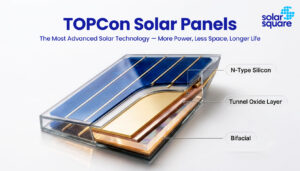
- For most Indian homes and commercial buildings, rooftop solar systems with TOPCon solar panels deliver higher electricity output at lower cost.
- Solar windows are more suitable where roof space is limited or where large glass surfaces can be used to generate additional power.
Here’s a side-by-side comparison of both:
| Factor | Solar Window Panels | Rooftop Solar Panels |
| Efficiency | Usually lower, depending on transparency and cell technology | TOPCon solar panels can be 25-26% efficient |
| Appearance | Integrated into windows, facades, skylights, or railings | Visible as panels on rooftops |
| Best installation area | Vertical walls, glass facades, skylights, and balconies | Rooftops, terraces, and even open ground |
| Best suited for | Glass-heavy buildings or properties with limited roof space |
|
| Availability in India | Extremely limited | Widely available through established installer networks |
What Are the Benefits of Solar Glass Windows?
Solar glass windows offer several benefits, especially for buildings with limited roof space:
- They use vertical surfaces: High-rise buildings and apartments may have little usable roof area but large windows and facades that can generate electricity.
- They blend into the building design: The solar technology is built into the glass, making it visually appealing.
- They can reduce heat and glare: By absorbing part of the sunlight, solar windows may lower indoor heat gain and reduce the need for air conditioning.
- They provide privacy and UV protection: Tinted or semi-transparent designs can reduce glare and block some ultraviolet radiation that causes furniture and flooring to fade.
- They support green-building goals: Generating electricity on-site and reducing cooling demand can help buildings achieve LEED and net-zero targets.
However, these advantages come with trade-offs, especially in terms of efficiency, cost, availability, and installation requirements. Let’s explore all.
What Are the Disadvantages of Solar Windows?
Here are several limitations of solar window panels compared with conventional rooftop panels:
- Lower efficiency: They usually generate less electricity per square meter because some sunlight must pass through the glass.
- Higher upfront cost: Solar glass is newer, less widely manufactured, and often customized, making it more expensive per watt.
- Limited availability in India: Most products are currently designed for commercial buildings rather than standard residential windows.
- Output depends heavily on orientation: Shaded, north-facing, or poorly positioned windows generate very little electricity.
What Should You Check Before Buying Photovoltaic Windows?
Before investing in photovoltaic windows, check the following:
- Power output and transparency: Compare the rated wattage per square meter with the amount of visible light the glass allows through.
- Product certification: Ask which BIS, IEC, electrical safety, and glazing standards the product meets. Also, confirm any DISCOM requirements that may apply to your project.
- Warranty and lifespan: Check both the panel’s product warranty for the glass and the performance warranty for electricity generation.
- Suitability for Indian weather: Confirm that the glass, seals, and wiring can withstand high temperatures, humidity, dust, heavy rain, and wind.
- Site-specific generation estimate: Ask for an output estimate based on the window’s direction, shading, size, and location rather than relying on laboratory efficiency numbers alone.
- Grid connection rules: Check with your local DISCOM whether the system can be connected to the grid and whether surplus electricity can be exported or you’ll need a battery to store solar power.
- Complete installed cost: The quote should include the solar glass, framing, inverter, wiring, safety equipment, installation, and maintenance.
- Supplier experience: Choose a supplier with completed photovoltaic-glass projects, after-sales support, and performance data from existing installations.
Future of Solar Windows in India
Solar windows could become an important part of India’s clean-energy future, especially for high-rise buildings and commercial properties with large glass facades but limited roof space. However, the technology still needs to become more affordable, efficient, durable, and widely available before it can compete with conventional solar panels.
For most Indian solar consumers, rooftop solar remains the better investment today. It generates more electricity, costs less per watt, has a well-established installation network, and offers a faster payback period.
If your place has a suitable rooftop, you do not need to wait for solar-window technology to mature. SolarSquare can help you understand the right system size, expected savings, subsidy eligibility, and installation requirements for your property. Book a free solar consultation with SolarSquare to find out how much you can save with rooftop solar.
FAQs
What is the price of solar window panels in India?
Prices are high and vary by technology and supplier. They can range from ~Rs. 5,500 per square foot for a transparent PV solar glass panel from a less reputable seller to up to ~Rs. 30,000 per square meter for a transparent PV panel from a well-known brand.
Can solar windows be retrofitted?
Yes, in some cases, solar films or coatings can be added to existing glass. However, most PV windows are supplied as complete sealed units, requiring the existing glass to be replaced.
Can solar power glass windows run an entire home?
No, solar windows generate less electricity than rooftop panels because they are partly transparent and installed vertically. They are better used as an additional power source alongside rooftop solar or grid electricity.
Do solar windows work in cloudy weather?
Yes, but their output falls when sunlight is weak. Some thin-film technologies perform relatively well in diffuse light, but they still generate more electricity under clear, direct sunlight.
Can photovoltaic glass be installed in an existing window?
It depends on the product and frame design. Some solar glass units may fit existing frames, while others require new framing, wiring, and structural changes. A supplier must inspect the window before confirming installation.
Are solar windows better than rooftop solar panels?
For most homes, no. Rooftop solar panels are more efficient, affordable, and widely available. Solar windows are useful for buildings with extremely limited roof space and large facades, skylights, or glass surfaces.
How long do solar glass windows last?
The lifespan varies by technology and manufacturer. Silicon-based solar glass may be designed for ~20-25 years, while newer organic and perovskite technologies have a shorter lifespan. Always check the product and performance warranties.
Can window solar panels be used in apartments?
Yes, but installation can be difficult. Apartment owners may need permission from the housing society, builder, or local authority, especially if the external facade or window structure is being changed. Residential products are also still limited in India.
What is BIPV and how do solar windows relate to it?
BIPV stands for building-integrated photovoltaics. It refers to solar products that become part of the building itself rather than being mounted separately. Solar windows, solar facades, photovoltaic skylights, and solar roof tiles are all examples of BIPV.