

In 2022, when someone asked you to wait before you buy solar panels because prices were still falling, it made some sense. In 2024, when your installer said prices might drop a little more, it made less sense. And if you’re still waiting to go solar in 2026, hoping solar prices will fall, you’re shelling out a lot of money that rooftop solar can save. That’s mainly because grid electricity costs 3-6% more every year.
As summers come and go, they run longer and hotter, which means the AC runs for more months than it used to. Refrigerators, water pumps, EV chargers, and a houseful of work-from-home devices all draw power through the day. The load is going up, and grid tariffs are going up with it. That’s exactly why 2026 is the best time to go solar.
- The PM Surya Ghar Muft Bijli Yojana solar subsidy scheme is active.
- Long-term ownership costs for rooftop solar have dropped.
- Solar panels have become much more efficient.
- Financing and rooftop solar loans have become easy to get.
When you look at all these reasons lined up together, you’ll realize that going solar and affording it in 2026 have become simpler than they ever were.
This guide breaks down all the reasons installing a rooftop solar system in 2026 is so beneficial.
Where India’s Solar Market Stands in 2026
India’s love for solar adoption has crossed a real milestone.
- Installed capacity and the rooftop surge: The country had about 143 GW of installed solar capacity by early 2026, having crossed the 100 GW mark in 2025.
- Solar’s share of the grid: Solar produced ~9.4% of India’s electricity in 2025, and that share continues to rise every year. For a homeowner, this is great news because a larger market means more trained installers, faster DISCOM approvals, easier access to high-quality, high-efficiency solar panels, and prices that have settled into a predictable range.
Why 2026 is the Best Time to Go Solar in India?
For a long time, owning a rooftop solar system felt expensive and confusing. The quotes varied wildly, the subsidy felt hard to claim, and nobody could tell you clearly when you would earn your money back. That picture has completely changed. Here is why 2026 looks different.
- The PM Surya Ghar Muft Bijli Yojana subsidy is active: Financial support from the central government is available right now for rooftop solar panel systems for homes.
- Rooftop solar prices are more transparent: You can compare quotes against a known market range instead of guessing.
- Solar loans and EMIs are easier to get: Banks, NBFCs, and some top solar EPC companies have built financing around rooftop solar.
- Panels produce more from the same roof: Better technology means more units per square metre. The best solar panels in 2026 include TOPCon and mono-PERC half-cut bifacial modules.
- Net metering still cuts bills sharply: Exported solar power offsets what you draw from the grid. When sized to meet a home’s actual power consumption, rooftop solar can lower electricity bills by at least 90%.
- Payback periods have shortened: Many homes now recover their cost in 3-5 years rather than a decade.
The rest of this blog walks you through the cost, policy, technology, and ROI reasons that make 2026 a strong year for an Indian homeowner to switch to solar.
#1. PM Surya Ghar Muft Bijli Yojana Subsidy Scheme Lowers the Solar Installation Cost
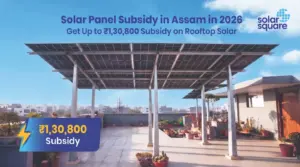
The biggest reason 2026 works in your favor is the central subsidy under the PM Surya Ghar Muft Bijli Yojana. It is built specifically for residential rooftop solar and is credited directly to your bank account. You can apply for the PM Surya Ghar solar subsidy through the PM Surya Ghar National Portal for Rooftop Solar.
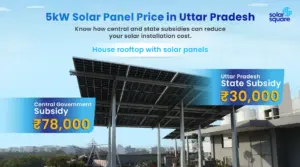
A system with a capacity of 3 kW or higher qualifies for up to Rs. 78,000 in subsidy, bringing the cost of a home solar system well within reach of a middle-class household.
Here is how the subsidy support is structured by system size.
| Solar System Size | PM Surya Ghar Muft Bijli Yojana Solar Subsidy |
| 1 kW solar system | Rs. 30,000 |
| 2 kW solar system | Rs. 60,000 |
| 3 kW solar system | Rs. 78,000 |
| 4 kW solar system | Rs. 78,000 |
| 5 kW solar system | Rs. 78,000 |
| 10 kW solar system | Rs. 78,000 |
There is also a timing angle worth keeping in mind.
The PM Surya Ghar scheme aims to install rooftop solar in 1 crore Indian homes by March 2027, its target date. As the deadline approaches, demand tends to bunch up. Installers get busier, application queues grow longer, and the easy, unhurried slot you can get today becomes harder to find.
Applying while the scheme is in full flow, rather than in its final rush, simply spares you that backlog.
#2. Solar Panel Costs Have Become More Practical for Indian Homes
Rooftop solar used to feel like something only large bungalows or commercial buildings bothered with. That is no longer true.
Systems of 2 kW, 3 kW, and 5 kW now sit comfortably on urban and suburban homes, sized to match how much power a family actually uses.
Here’s a sample table outlining the tentative required solar capacity.
| Solar System Size | How Much Power Can it Generate? | Ideal For? |
| 2 kW | 2,800-2,900 units | 1-2 BHK |
| 3 kW | 4,200-4,350 units | 2-3 BHK |
| 4 kW | 5,600-5,800 units | 3-4 BHK |
| 5 kW | 7,000-7,250 units | 4-5 BHK villas and bungalows with 2 ACs |
Please note: Generation is calculated at 1,400-1,450 units per kW per year. This, however, is an estimated range. Actual generation varies by city. For instance, rooftop solar in Delhi will generate fewer units than the same system in Pune due to higher pollution and lower irradiance.
Let’s find out how much it costs to go solar in a tier-1 city like Pune.
| Solar System Size | Cost of Rooftop Solar in Pune without Subsidy as of 15th June 2026 (Starting Price, Indicative for Base Variant)* | Solar Subsidy in Pune | Cost of Rooftop Solar in Pune with Subsidy as of 15th June 2026 (Starting Price, Indicative for Base Variant)* |
| 2 kWp | ~Rs. 1.83 lakh | 60,000 | ~Rs. 1.23 lakh |
| 3 kWp | ~Rs. 2.15 lakh | 78,000 | ~Rs. 1.37 lakh |
| 4 kWp | ~Rs. 2.60 lakh | 78,000 | ~Rs. 1.82 lakh |
| 5 kWp | ~Rs. 3.23 lakh | 78,000 | ~Rs. 2.45 lakh |
| 10 kWp | ~Rs. 5.83 lakh | 78,000 | ~Rs. 5.05 lakh |
*Please note that prices are subject to change: The above-mentioned solar panel price in Pune is indicative as of 08th July 2026 for the SolarSquare Blue 6ft variant. The final cost of installing a rooftop solar system depends on your DISCOM charges, city, product variant opted for, panel type, inverter type, mounting structure height, type of after-sales service, savings guarantee, roof height, type of solar system, etc.
You can also use SolarSquare’s free solar savings calculator to find estimated savings from solar in your city.
Forecast your savings with solar on your investment on the SolarSquare’s plantCalculate your savings
#3. Payback Periods Are Now Shorter for Many Homeowners
Rooftop solar is an investment, not an expense. You pay once, either upfront or through an EMI, and, in return, your monthly electricity bill drops by at least 90% for the next two decades or more.
Most residential systems pay for themselves in 3-5 years. The higher your current bill, the faster the breakeven happens, because you are offsetting more expensive grid units every month.
- After the system has paid for itself, it keeps generating savings for 25 years or longer
- The subsidy shortens that breakeven point further
- Homes in high-tariff states and heavy daytime consumption see the quickest returns
#4. Electricity Bills Are Likely to Keep Rising
Grid electricity is one cost you have no control over. Tariffs increase over time due to fuel costs, aging infrastructure, rising demand, and the strain of peak summer loads. Several high-tariff states have already pushed through increases, with some seeing hikes in the high single digits and a few applying flat increases across the board. Most states in India see a grid tariff hike of 3-6% every single year.
A few factors are driving up household consumption at the same time.
- AC use keeps rising: Summers are now longer and more intense, which means more cooling for more months of the year.
- Daytime load has grown: Work-from-home and hybrid schedules keep homes powered through the day.
- EV charging has added a new demand: Charging a car at home can significantly increase your monthly unit consumption.
In such scenarios, rooftop solar is the one option that lets you step out of this cycle. It cuts how much power you pull from the grid and gives you a far more predictable energy cost for years, no matter what tariffs do next.
#5. Solar Technology Is Better Than It Was a Few Years Ago
The demand for rooftop solar is going up in 2026, and why shouldn’t it? High-efficiency solar panels now squeeze more power out of the same area, inverters are smarter, and you can watch your generation from an app on your phone.
The new solar technology is truly astounding.
- Mono PERC half-cut panels: With an efficiency of ~22.5%, they remain one of the most dependable and value-for-money choices for most Indian homes.
- TOPCon panels: With an even higher efficiency of up to 26%, they deliver higher output even during intense summer heat.
- Bifacial solar panels: They’ve become the norm, as they capture sunlight from both sides for extra yield on the right roof.
- App-based monitoring: It lets you spot a dip in generation early instead of finding out on your bill.
- Hybrid-ready inverters: They leave the door open for adding a battery later.
The practical payoff from superior solar technology is real. You get more units from the same roof, steadier performance even through a 40-degree afternoon, easier fault detection, fewer maintenance surprises, stronger long-term output, and a setup that is ready for batteries whenever you decide to add storage.

#6. Higher-Wattage Panels Generate More Power From Less Space
Most urban Indian homes do not have a wide, clear terrace to work with. There is a water tank in one corner, a staircase headroom, a dish antenna, and some shaded patches from surrounding trees. Clearly, roof space is tight, but even a 1 kW solar system needs at least 100 square feet of shadow-free area to perform.
That’s why higher-wattage panels are the direct answer for crammed Indian rooftops.
- Because each panel produces more yield, you need fewer panels to reach your target capacity.
- It frees up space and keeps the layout clean.
- Proper shadow analysis before installation, careful placement away from water tanks and parapet shadows, and attention to roof direction and tilt determine how much your system actually generates.
Any installer worth hiring will check these conditions before handing you a quote.
#7. Solar Financing and EMI Options Are More Accessible
For years, the upfront cost was a major reason people postponed installing rooftop solar at home. That barrier was cracked in 2026, as you can spread the cost in ways that were not available earlier.
- Solar loans from PSU banks: They come at concessional rates designed for rooftop systems. Some of the best interest rates on solar come from SBI solar loan, PNB solar loan, and similar PSU banks.
- SolarSquare’s zero-investment scheme: SolarSquare’s zero-investment scheme helps you start your solar journey without paying a lump sum upfront from your own pocket. Under this scheme, the subsidy you receive offsets the down payment and the overall system cost can be spread through an applicable solar loan plan, with EMIs between 6 to 60 months, making solar adoption easier for homeowners who do not want a high upfront payment.
- NBFC financing: This adds more options if a PSU bank loan does not fit your profile.
With the help of solar loans, you can begin saving on your electricity bill while you are still paying off the system, which changes the decision from a big one-time outlay into a manageable monthly plan where your EMI is usually less than what you used to pay on electricity bills before going solar.
#8. Solar Lets You Use High-Power Appliances With Less Bill Anxiety
When your panels are generating electricity from solar radiation through the day, the power your appliances use comes straight from your own roof. So, a heavy-usage afternoon no longer feels like a financial worry.
This suits how homes actually run now.
- Air conditioners are on for most of the year.
- Families are running multiple refrigerators, washing machines, dishwashers, water motors, and a growing pile of electronics.
When that usage happens during sunny hours, your own generation covers most of it, and the savings are largest in homes where someone is around during the day.
#9. It Supports Cleaner Energy Without Forcing Lifestyle Sacrifices
Going solar lowers your household’s carbon footprint by lowering your dependence on fossil-fuel-heavy grid power. And it is so appealing because it cuts your carbon footprint without you having to give up any comfort. You run the same appliances and live the same way, while your bills and your emissions both fall together.
The best part? You’re actually helping lower air pollution in your city right from your rooftop without even lifting a finger.
Here’s how much carbon a rooftop system can offset across 25 years of its life.
| Solar System Size | Carbon Offset in 25 Years | Equivalent to Planting How Many Trees? |
| 2 kW | ~52,000 kg | 78 trees |
| 3 kW | ~78,000 kg | 118 trees |
| 4 kW | ~1.04 lakh kg | 157 trees |
| 5 kW | ~1.30 lakh kg | 196 trees |
| 6 kW | ~1.55 lakh kg | 235 trees |
| 7 kW | ~1.81 lakh kg | 274 trees |
| 8 kW | ~2.06 lakh kg | 314 trees |
| 9 kW | ~2.33 lakh kg | 353 trees |
| 10 kW | ~2.59 lakh kg | 392 trees |
#10. Solar Has a Very High ROI in 2026
If you ever compare the ROI from solar against an FD, RD, gold, or mutual funds, you’ll realize that solar beats them all. It pays you back through savings every single month, and those savings grow as tariffs rise.
Over a 25-year life, the return comfortably outpaces conventional low-risk options, with none of the market swings. Here is what those savings and returns look like in Pune.
| Solar System Size | Solar Savings in Pune Over 25 Years* | Return on Investment (ROI) |
| 2 kWp | ~Rs. 10.74 lakh | 7.8x |
| 3 kWp | ~Rs. 16.12 lakh | 10.7x |
| 4 kWp | ~Rs. 21.49 lakh | 10.8x |
| 5 kWp | ~Rs. 33.46 lakh | 12.6x |
| 10 kWp | ~Rs. 66.93 lakh | 12.3x |
*Please note: While calculating savings, we have considered an annual tariff escalation of 3% and an annual solar plant degradation rate of 1%. The actual final savings from a solar PV system depend on the types of solar panels you’ve installed and their efficiency, the intensity of sunlight your rooftop receives, the orientation of the panels and tilt angle, the pollution level and weather conditions in your city, the temperature, shadow on the roof, impact of dirt/dust, and how well you maintain your panels after installation.
Who Should Go Solar in India in 2026?
You are a strong candidate if you fall into one of these groups.
- Homeowners with monthly bills above Rs. 1,500: Savings you’ll make by going solar will comfortably justify the system cost.
- Independent houses with shadow-free roofs: They will receive clean, uninterrupted solar power.
- Homes running ACs through summer: It makes the most sense where daytime solar offsets the heaviest load.
- Families planning EV charging at home: The bills will climb exponentially if you charge EVs at home. That’s why rooftop solar makes a lot of sense here.
- Housing societies and RWAs with high common-area bills: Here, a shared system spreads the benefit.
- Small businesses with daytime usage: It makes the most sense for businesses where working hours coincide with peak generation.
Conclusion
Going solar in 2026 is a need of the hour for residential customers, as the PM Surya Ghar Muft Bijli Yojana is still in effect. However, it will be provided only until the government solarizes 1 crore Indian homes. The cut-off date to achieve that target has been set as March 31, 2027. If you install solar now, you can save up to Rs. 78,000 on a system with a capacity of 3 kW or higher.
For any further questions about rooftop solar installation, you can book a free solar consultation call with SolarSquare today.
FAQs
When does solar not make sense in 2026?
Solar can be a weak fit if your monthly bill is very low, your roof has almost no usable shadow-free area, or you do not own the roof and cannot get permission to install. In these cases, the savings may not justify the cost within a reasonable period.
Which is the best type of solar system for homes in 2026?
For homes with a stable grid power, an on-grid system with net metering gives the best returns, because it offsets your bill without the added cost of batteries. A hybrid solar system makes sense if you experience frequent power cuts and want backup power. Off-grid suits remote and rural places with poor or no grid access.
What are the cons of going solar in India in 2026?
The main drawback earlier was the upfront cost. However, in 2026, many loan and financing options make it very easy to afford solar.
What happens to solar after 25 years?
Panels do not stop working at 25 years. They continue generating power at a slightly reduced output, ~80% to 85% of their original capacity. Most warranties cover this period, and you can keep using the system well beyond it.
Are solar panel prices still falling in India in 2026?
The cost drop of the past few years is mostly behind us, and prices have largely flattened. There is also a near-term factor pushing the other way. From June 2026, a rule called ALMM List-II requires government-backed and net-metered solar projects to use solar cells made in India, and domestic cell capacity, at around 31 GW, is well below the ~193 GW of module capacity the country has built. That gap can increase panel prices in the short run as supply tightens. As more Indian cell factories come online and capacity closes in on demand, prices will likely soften again.
How much has India’s solar capacity grown in 2026?
India crossed 100 GW of installed solar in 2025 and reached about 143 GW by early 2026, with rooftop solar past 12 GW. Solar now supplies close to a tenth of the country’s electricity, and that share continues to rise as we write this blog.




![10 kW Solar Panel Price in India [With and Without a Subsidy]](https://cdn.solarsquare.in/blog/wp-content/uploads/2025/07/18165650/10-KW-solar-panel-300x167.webp)