

 767 Reads
 14 mins


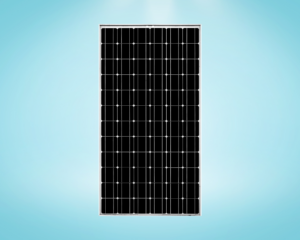
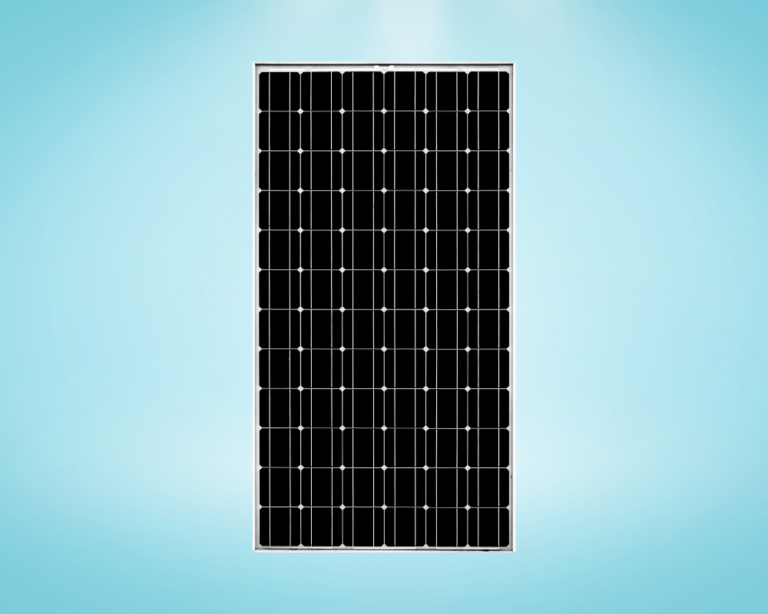
A single mono-PERC solar panel can deliver 520 to 550W of rated power, reach up to 22.5% efficiency, and keep generating electricity for 25 to 30 years. And yet, these panels are getting replaced by the newer N-type TOPCon solar panels.
So, what changed, you ask?
Mono-PERC is still a widely used solar panel technology, but newer cell designs now offer higher efficiency, lower solar panel degradation, and better performance under heat. That makes it important to understand what a mono-PERC solar panel is before deciding whether its lower upfront cost still makes it a sensible choice in 2026.
A mono-PERC solar panel uses monocrystalline silicon cells with a passivated rear layer that reduces energy losses and reflects some of the unabsorbed light back into the cell. You may also come across terms such as half-cut and bifacial alongside mono-PERC, but these refer to additional module configurations rather than distinct PERC technologies.
This guide explains what a mono-PERC solar panel is, how the technology works, what half-cut means in solar cells, its advantages and limitations, current prices in India, the PM Surya Ghar Muft Bijli Yojana subsidy eligibility, and how mono-PERC compares with TOPCon in 2026.
Key Features of a Mono-PERC Solar Panel
Before getting into the cell structure, it helps to look at all the main specifications and features of mono-PERC solar panels together.
The figures below will give you a quick idea of the performance, usable life, wattage, and heat response you can expect from this technology.
| Feature | Explanation |
| Mono-PERC full form | Monocrystalline Passivated Emitter and Rear Cell or Passivated Emitter and Rear Contact |
| What is a mono-PERC solar panel? | It’s a monocrystalline solar panel that uses PERC cell architecture with rear-side passivation to reduce energy losses and improve light utilization. |
| Mono-PERC solar panel efficiency | Up to 22.5% |
| Mono-PERC solar panel rated power | 520-550W |
| Uses | Residential rooftop solar energy panels at homes and housing societies, commercial and industrial rooftop installations, and utility-scale solar projects. |
| Lifespan | 25-30 years |
| Warranty |
|
| Temperature coefficient | -0.32% per °C* |
*Please note: A value of -0.32% per °C means panel power falls by ~0.32% for every 1°C rise in cell temperature above 25°C, assuming other conditions remain unchanged.
What is a Mono-PERC Solar Panel?
A mono-PERC solar panel is a monocrystalline solar panel that uses PERC (Passivated Emitter and Rear Cell) technology to reduce energy losses and increase the amount of solar radiation converted into electricity.
The term, as you can see, combines two ideas.
- Mono refers to monocrystalline silicon.
- PERC refers to the additional rear-side cell structure that improves how the cell handles incoming sunlight and electrical charge.
In a conventional silicon cell, some photons pass through the silicon without generating electricity. Charge carriers can also recombine before reaching the electrical contacts, causing further losses. A PERC cell adds a dielectric passivation layer to the rear surface. This layer reduces rear-surface recombination and improves internal reflection, allowing more light to remain available for conversion.
That extra rear treatment is the main reason PERC should not be confused with ordinary monocrystalline technology. Monocrystalline refers to the silicon material, and PERC describes how the cell is designed.
Mono-PERC vs Mono-PERC Half-Cut Solar Panels
You will also frequently find PERC panels labelled as half-cut. Half-cut does not create a different PERC technology. Instead, solar panel manufacturers take a finished solar cell and divide it into smaller sections before assembling the module.
- Cutting the cells reduces the electrical current carried by each cell section.
- Since resistive power losses increase strongly with current, reducing current can cut these losses and improve module output.
Half-cut mono-PERC modules also divide the panel electrically into separate sections. Depending on the circuit design and the way shade falls across the panel, this arrangement can help part of the module continue producing electricity when another section receives less or no sunlight at all.
So, a mono-PERC half-cut module remains Mono-PERC. Half-cut simply describes an additional construction method.
The table below shows the key practical differences:
| Factor | Mono-PERC Full-Cell | Mono-PERC Half-Cut |
| Current per cell section | Each full-sized cell carries the normal operating current generated by the cell. | Cutting a cell into two halves reduces the current flowing through each half-cell section by half. |
| Resistive losses | The higher current flowing through the cell results in greater electrical resistance losses. | Lower current reduces resistive losses in the cell connections, helping more of the generated power reach the module output. |
| Shading behavior | Partial shading can reduce the output of the affected cell string and, depending on the module circuit, can have a greater effect on overall panel output. | Half-cut modules are divided into separate electrical sections. As a result, an unshaded section continues generating power even when another section is shaded. |
How is a Mono-PERC Solar Panel Made?
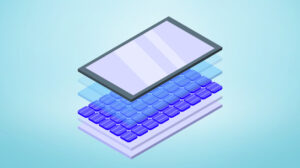
A mono-PERC solar panel is made by processing monocrystalline silicon wafers into solar cells and adding a passivation layer to the rear surface. Small openings in this layer allow electrical contact with the silicon. The finished solar cells are then interconnected, encapsulated, and assembled into a complete solar module.
A simplified production sequence looks like this:
- Step 1 – Prepare the silicon wafer: Manufacturers start with monocrystalline silicon wafers and process the surfaces for photovoltaic conversion.
- Step 2 – Form the emitter: The front side is processed to create the electrical junction required for separating charge carriers.
- Step 3 – Apply passivation: A dielectric passivation layer is added to the rear surface.
- Step 4 – Create local rear contacts: Small openings allow the metallic electrode to contact the silicon while leaving most of the rear surface passivated.
- Step 5 – Add metal contacts: Front and rear metallization collect the generated electrical current.
- Step 6 – Cut the cells when using half-cut construction: Manufacturers divide the completed cells in half before module assembly.
- Step 7 – Assemble the module: The cells are interconnected, encapsulated between protective materials, covered with solar glass, framed where required, and connected to a junction box.
How Does a Mono-PERC Solar Panel Work?
A mono-PERC solar panel works like a standard crystalline silicon panel but includes an additional passivation layer on the rear of the cell. This layer reduces charge-carrier loss and reflects some of the unabsorbed sunlight back into the silicon, improving the overall solar panel efficiency.
Here is how the process works step by step:
- Step 1 – Sunlight reaches the solar cells: Photons from sunlight enter the monocrystalline silicon cells.
- Step 2 – Electrons gain energy: The absorbed sunlight transfers energy to electrons in silicon, creating mobile charge carriers.
- Step 3 – The cell separates the charges: The internal electric field directs these charges toward the electrical contacts, producing direct current electricity.
- Step 4 – The rear passivation layer reduces losses: Some charge carriers that reach the back of a conventional cell can recombine, rendering them unusable. The PERC layer reduces this rear-surface recombination.
- Step 5 – Unabsorbed light gets another chance: The rear layer reflects some light that passes through the silicon back into the cell. The silicon can then absorb part of this reflected light and generate additional electricity.
The rear-side treatment contributes to mono-PERC solar panel efficiency, which can reach up to 22.5%.
Mono-PERC Solar Panel Advantages and Disadvantages
On one hand, a mono-PERC solar panel offers up to 22.5% efficiency, higher power output than poly panels, and a 25 to 30-year lifespan. On the other hand, it has higher degradation, slightly weaker heat performance, and lower efficiency than newer N-type technologies such as TOPCon.
Let’s explore all pros and cons in detail.
What are the Benefits of Mono-PERC Solar Panels?
Mono-PERC became popular because its rear passivation design improves performance without making the technology prohibitively expensive.
Its key benefits include:
- Efficiency of up to 22.5%: Higher efficiency helps generate more power from available area compared to polycrystalline solar panels that became obsolete as soon as PERC technology came.
- Better light utilization: The rear layer reflects some unabsorbed sunlight back into the cell for another chance at conversion.
- Lower losses with half-cut cells: Half-cut construction reduces current through each cell section and lowers resistive losses.
- Long lifespan: Mono-PERC solar panels can last 25 to 30 years with proper panel cleaning and maintenance.
What are the Cons/Limitations of Mono-PERC Solar Panels?
Despite their advantages, mono-PERC panels now face strong competition from newer N-type TOPCon solar panels.
The main limitations are:
- Lower efficiency than TOPCon: Mono-PERC reaches up to 22.5%, while TOPCon can reach 25-26%.
- Higher degradation: Mono-PERC panels degrade more quickly than N-type TOPCon modules.
- Greater heat-related losses: Its temperature coefficient of -0.32% per °C is weaker than TOPCon’s -0.29% per °C.
- Susceptibility to light-related degradation: P-type PERC cells can experience LID (Light-induced Degradation) and LeTID (Light and elevated Temperature-Induced Degradation), although manufacturing improvements can reduce these effects.
Is There a Difference Between Monocrystalline and Mono-PERC Solar Panels?
Yes, there is a difference between them.
In common usage, the term monocrystalline solar panels refers to an older generation of mono modules that did not use PERC rear passivation and offered around 17% to 19% efficiency. Mono-PERC solar panels are a newer generation of monocrystalline solar panels that add a passivation layer to reduce energy losses and improve efficiency.
The important point is that mono-PERC is still monocrystalline. Mono refers to the silicon, while PERC refers to the cell technology added to it.
The progression can be understood simply:
- Conventional monocrystalline: Older cell design without PERC rear passivation, generally around 17% to 19% efficiency.
- Mono-PERC: Monocrystalline cells with rear passivation, offering mono-PERC solar panel efficiency of up to 22.5%.
- N-type technologies such as TOPCon: The newest generation of monocrystalline solar panels that improves further on efficiency, degradation, and temperature performance.
So, mono-PERC did not replace monocrystalline silicon. It upgraded the older monocrystalline cell design, while technologies such as TOPCon represent the next stage of solar-cell development.
Mono-PERC vs TOPCon Solar Panels: Which One is Better in 2026?
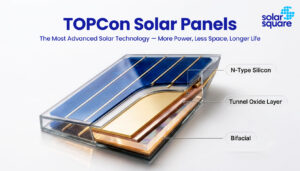
Mono-PERC was a major step forward from conventional crystalline silicon cells, but solar technology has continued to improve. TOPCon, short for Tunnel Oxide Passivated Contact, uses a different passivated-contact structure designed to reduce recombination losses while allowing efficient carrier transport.
For a buyer in 2026, the practical differences come down to output, degradation, heat performance, and long-term use of the available roof space.
Here’s a snapshot of both solar cell technologies compared side by side across multiple parameters:
| Comparison Factor | Mono PERC | TOPCon |
| Common wafer type | P-type | N-type |
| Module efficiency | Up to 22.5% for mono PERC panels | 25-26% |
| Temperature coefficient | -0.32% per °C | -0.29% per °C |
| First-year degradation | ~2% | ~1% |
| Annual degradation after year 1 | ~0.5% | ~0.4% |
| Low-light performance | Good | Very good |
| Availability in India | Widely available | Widely available and growing |
| Cost | Lower | Higher |
| Best suited for | Residential and utility-scale | Residential and utility-scale |
| Main limitation | Higher degradation and lower efficiency than N-type technologies | Limited availability of G12R wafer types, which deliver higher-wattage modules |
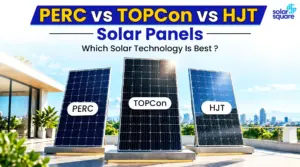
For a detailed analysis of how N-Type panels, including TOPCon (Tunnel Oxide Passivated Contact) and HJT (Heterojunction Technology), compare against mono-PERC, you can also check out our blog on PERC vs TOPCon vs HJT Solar Panels: The Best Option in India in 2026.
What’s the Mono-PERC Solar Panel Price in India in 2026?
In 2026, Mono-PERC solar panel prices in India vary mainly by DCR status, manufacturer, module wattage, order size, and location, with DCR (Domestic Content Requirement) modules costing more than non-DCR panels.
The table below compares the per-watt prices for DCR and non-DCR Mono-PERC modules.
| Category | Price* |
| DCR mono-PERC solar panels | ~Rs. 20 to ~Rs. 21 per watt |
| Non-DCR mono-PERC solar panels | ~Rs. 14 to ~Rs. 16 per watt |
*Please note: The per-watt solar panel price listed above is an indicative range and can change based on the manufacturer, module wattage, order size, location, and market conditions.
For more details, check out our blog on DCR vs non-DCR solar panels.
Are Mono-PERC Solar Panels Eligible for the PM Surya Ghar Muft Bijli Yojana Subsidy in 2026?
Yes, an eligible mono-PERC installation can receive Central Financial Assistance (CFA) under the PM Surya Ghar Muft Bijli Yojana in 2026, but PERC technology itself does not determine subsidy eligibility.
The PM Surya Ghar Muft Bijli Yojana supports grid-connected rooftop solar for the following eligible residential consumers.
- You must choose made-in-India and ALMM-approved solar panels and cells.
- You must be an Indian citizen installing a grid-tied rooftop solar system.
- You must have an active electricity connection in your name with your local electricity distribution company (DISCOM).
- You have never received a subsidy for systems up to 3 kW before.
MNRE also requires consumers seeking CFA to use the PM Surya Ghar Mft Bijli Yojana National Portal for Rooftop Solar and a vendor registered on the portal. The DISCOM verifies the installation before the subsidy is processed.
For residential rooftop solar systems, the notified CFA structure provides support for the first 3 kWp, with no additional CFA for residential capacity beyond 3 kWp.
The standard subsidy structure works out like this:
- Rs. 30,000 per kWp for the first 2 kWp
- Rs. 18,000 for the additional 1 kWp
- A maximum standard central subsidy of Rs. 78,000 for a 3 kW or larger PV system.
Should You Choose Mono-PERC Solar Panels for Your Home or Business in India in 2026?
For a new solar installation in 2026, TOPCon is the wiser choice over Mono-PERC. It offers higher efficiency, lower degradation, and better temperature performance. With TOPCon expected to become mainstream by 2028, choosing it today can make more sense for a system designed to operate for 25 to 30 years.
TOPCon, hands down, is the better choice when you want:
- More power from limited roof space due to its higher module efficiency.
- Better panel performance in hot conditions due to its lower temperature coefficient.
- Lower long-term degradation, helping the system retain more output over its operating life.
The right choice ultimately depends on your roof, electricity consumption, budget, and expected long-term savings. If you want to compare mono-PERC, TOPCon, system size, subsidy, and expected solar savings for your own property instead of relying on generic estimates, you can book a free consultation call with SolarSquare and get a rooftop solar recommendation based on your home’s actual requirements.
FAQs
Are Mono-PERC solar panels suitable for Indian climatic conditions?
Yes, mono-PERC panels can be used across Indian residential and commercial solar installations. TOPCon panels, however, offer a better temperature coefficient, giving them an advantage in hotter operating conditions.
Can mono-PERC solar panels be used at homes?
Yes, mono-PERC panels can still be used at homes with budget concerns. They are still being manufactured in 2026 and can be installed on residential rooftops when the roof has suitable usable area, structural conditions, and solar access.
Is mono-PERC the same as mono-PERC half-cut?
Mono-PERC describes the cell technology, while half-cut describes how cells are divided and arranged within the module. A half-cut PERC module uses PERC cells cut into smaller sections. This lowers current through each cell section and can reduce resistive losses.
Can mono-PERC panels be bifacial?
Yes, PERC technology can be used in bifacial designs. Bifacial refers to a module’s ability to use light from both the front and rear sides, while PERC refers to its rear-passivation architecture.
Is mono-PERC better than polycrystalline?
Yes, mono-PERC has a much higher efficiency than polycrystalline solar panels, which are already obsolete in India. Mono-PERC offers a stronger performance proposition by combining monocrystalline silicon with rear-side passivation, which reduces recombination and improves internal reflection.
Do mono-PERC panels work during cloudy weather?
Yes, solar panels continue generating electricity when daylight reaches the cells, even when clouds reduce direct sunlight. Output will be lower than under strong clear-sky conditions because less solar irradiance reaches the module, but the panels will still produce electricity.
What is LID (Light-induced Degradation) in mono-PERC panels?
Light-induced Degradation, or LID, is an initial loss in solar-cell performance associated with exposure to light. P-type crystalline silicon PERC cells experience degradation linked to material defects, while PERC technologies can also be affected by Light and Elevated Temperature Induced Degradation, or LeTID.


 Previous Article
 31 min