

 39 Reads
 20 mins


For decades, buying and selling electricity in India meant one thing: a long-term power purchase agreement (PPA) between a generator and a distribution company (DISCOM).
- If a state ran short of power, it stayed short until the next contract renewal.
- If a generator had surplus electricity, it often went to waste.
Energy trading changed that by giving electricity a marketplace, much like stocks or commodities.
If you’ve come across terms like electric power trading or P2P electricity trading and wondered how any of this actually works in India, this guide breaks it down in plain language.
What is Energy Trading?
Energy trading, in the electricity context, is the buying and selling of power between generators, distribution companies, industries, and increasingly, individual consumers, outside of a fixed long-term contract. Instead of being locked into a single supplier at a fixed price, energy trading of electricity lets electricity move to wherever it’s needed most, at a price the market decides.
In India, energy trading (also called electric power trading or trading electricity) happens through two broad routes:
- Bilateral trading: Two parties (say, a generator and an industrial consumer) negotiate a direct deal, often through a licensed power trader.
- Exchange-based trading: Buyers and sellers place bids and offers on a power exchange, and prices are discovered through auctions, similar to a stock exchange.
How Big is India’s Energy Trading Market?
Energy trading in India has grown significantly over the past decade. According to the Central Electricity Regulatory Commission (CERC), the combined size of the bilateral electricity market through traders and the power exchange market increased from ₹17,622 crore in 2009-10 to ₹89,681 crore in 2024-25, registering a CAGR of 11.5%.
- India’s gross electricity generation reached 1,829.69 billion units (BU) in FY2024-25, up from 747.07 BU in 2008-09. Gross generation grew at a CAGR of 5.8% over this period.
- Short-term electricity transactions and Deviation Settlement Mechanism (DSM) volume totalled 238.35 BU in FY2024-25, equivalent to 13.03% of India’s gross electricity generation. This includes transactions through traders, direct bilateral contracts, power exchanges and DSM.
- Power exchanges accounted for 143.75 BU, or 60.3% of the total short-term transactions and DSM volume. CERC reports that electricity traded through all three exchanges, Indian Energy Exchange (IEX), Power Exchange India Limited (PXIL) and Hindustan Power Exchange (HPX), grew from 7.19 BU in 2009–10 to 143.75 BU in 2024–25, a CAGR of 22.1%.
- Electricity transacted through trading licensees stood at 26.25 BU, accounting for 11.01% of the short-term transactions and DSM volume. Direct bilateral transactions between entities contributed another 36.21 BU, or 15.19%.
- DSM accounted for 32.14 BU, or 13.49% of the short-term transactions and DSM volume. CERC notes that DSM is not a market mechanism but plays an important role in maintaining system balance and reliable grid operation.
- IEX recorded 141.14 BU of electricity traded in FY2025-26, its highest-ever annual traded volume, representing a 17% year-on-year increase.
- IEX’s Renewable Energy Certificate (REC) trading reached 187.20 lakh certificates in FY2025–26, up 5% year-on-year.
Together, these figures show how power exchanges have become an increasingly important channel for short-term electricity procurement and price discovery in India’s evolving power market.
Sources:
- Central Electricity Regulatory Commission (CERC), Report on Short-term Power Market in India: 2024-25, Economics Division
- Indian Energy Exchange (IEX), FY2025-26 Power Market Update (operational results, April 6, 2026).
Why Does India Need Energy Trading?
Energy trading of electricity exists because electricity demand and supply vary by region, season, and time of day. It lets surplus power in one place meet a shortfall elsewhere, instead of that power going unused or the shortfall going unmet.
Electricity demand isn’t the same everywhere or at every hour. A textile hub in Gujarat might need extra power during the day, while a hydro-rich state like Himachal Pradesh may have a surplus at night. Energy trading solves this mismatch by:
- Letting states and DISCOMs buy short-term power instead of over-committing to long-term contracts
- Giving generators (including renewable energy producers) a market to sell surplus electricity
- Helping balance the grid during demand spikes, such as summer peak loads
- Bringing price transparency through open, auction-based discovery
Who Participates in Energy Trading in India?
India’s short-term power market involves several distinct players, each with a specific role in getting electricity from generation to consumption:
- Power generators: Sell electricity generated from thermal, hydro, solar, wind, and other sources.
- DISCOMs: Buy electricity to meet consumer demand and sell surplus contracted power when permitted.
- Licensed electricity traders: Act as intermediaries between buyers and sellers.
- Open-access consumers: Eligible commercial and industrial consumers that procure electricity outside their local DISCOM.
- Power exchanges: Operate the electronic marketplace and price-discovery mechanism.
- Load despatch centers: Check transmission availability, schedule approved transactions, and maintain grid balance.
- Rooftop solar prosumers: Participate only through approved net-metering or P2P mechanisms, not ordinary wholesale exchange trading.
Who Regulates Energy Trading in India?
Energy trading in India doesn’t operate in a free-for-all market; it sits within a layered regulatory structure built around the Electricity Act, 2003, the parent legislation that created the entire framework for generation, transmission, distribution, and trading electricity in the country.
The Central Electricity Regulatory Commission (CERC) governs interstate trading, power exchanges, and trading licences, while State Electricity Regulatory Commissions (SERCs) govern intrastate transactions; anyone trading electricity commercially must hold a CERC-issued trading licence.
The Central Electricity Regulatory Commission (CERC)
CERC is the apex regulator for anything that crosses state lines: interstate transmission, tariffs for central generating stations, and the functioning of power exchanges. Under Section 66 of the Electricity Act, CERC is specifically tasked with promoting the development of a competitive electricity market.
In practice, this means CERC has the following responsibilities:
- It issues trading licences to companies and individuals who want to trade electricity commercially, under the CERC (Procedure, Terms and Conditions for Grant of Trading Licence) Regulations, 2020.
- It governs how power exchanges operate, including auction mechanisms, membership eligibility, and fee structures, under the CERC (Power Market) Regulations, 2021, which replaced the earlier 2010 framework and introduced Over-the-Counter (OTC) trading platforms for better transparency on off-exchange deals.
- It sets trading margins that licensed traders can charge under the CERC (Fixation of Trading Margin) Regulations.
- It publishes market monitoring data, including the annual Short-Term Power Market report used throughout this guide.
State Electricity Regulatory Commissions (SERCs)
While CERC handles interstate matters, each state has its own SERC, responsible for regulating intrastate transmission, retail electricity tariffs, and open access rules within that state.
This is particularly relevant for peer-to-peer electricity trading and rooftop solar prosumers, since state-level approvals (like the Uttar Pradesh Electricity Regulatory Commission’s approval for the P2P pilot mentioned later in this guide) typically come from the SERC, not CERC.
Who Needs a Trading Licence?
Any entity that wants to buy and resell electricity commercially, as opposed to buying it for its own consumption, needs a CERC-issued trading licence. This applies to standalone power traders as well as trading arms of larger companies.
Generators, DISCOMs, and open access consumers transacting on power exchanges or through licensed traders don’t need a separate trading licence themselves, since the exchange or trader already holds one.
How Does Electricity Trading Actually Work?
Electricity trading in India happens through three main channels: power exchanges (auction-based, like a stock market), bilateral and OTC (Over-the-Counter) deals (direct contracts between two parties), and certificate trading (RECs and ESCerts aka energy trading certificates) for meeting renewable and efficiency obligations.
1. Power Exchanges
India has power exchanges where electricity is traded almost like shares on the stock market. The largest is the Indian Energy Exchange (IEX), followed by the Power Exchange India Limited (PXIL) and Hindustan Power Exchange (HPX).
How Does Trading on a Power Exchange Work?
Electricity traded on a power exchange passes through bidding, price discovery, scheduling, physical delivery, and settlement. The process typically works as follows:
- An eligible buyer or seller participates directly or through a registered exchange member.
- The buyer submits how much electricity it requires and the maximum price it is willing to pay.
- The seller submits how much electricity it can supply and the minimum price it is willing to accept.
- The exchange combines all buy and sell bids for the relevant delivery period.
- The market-clearing price and volume are determined where eligible demand and supply bids meet.
- The relevant load despatch centers check whether sufficient transmission capacity is available.
- If transmission constraints prevent all matched electricity from flowing, the market may split into different areas with separate clearing prices.
- Once the transaction is approved, the final power schedule is shared with the buyer, seller, and grid operators.
- Electricity is delivered through the interconnected grid during the scheduled 15-minute time blocks.
- The exchange and clearing system complete payment and settlement according to the approved schedule and applicable regulations.
The electricity does not travel through a dedicated wire from a particular seller to a particular buyer. All power enters the interconnected grid. Scheduling, metering, energy accounting, and settlement records determine how much each participant supplied or consumed.
On these platforms, DISCOMs, generators, and large industrial consumers place buy and sell bids, and the exchange matches them through a closed double-sided auction, where the market-clearing price is set at the point where total demand equals total supply.
The main trading segments on IEX include:
- Day-Ahead Market (DAM): Electricity is bought and sold for delivery the next day, in 15-minute time blocks
- Real-Time Market (RTM): A faster-paced market with auctions every 30 minutes, for power delivered within a few hours
- Term-Ahead Market (TAM): Covers intraday, daily, and weekly contracts for slightly longer horizons
- Green Day-Ahead Market (G-DAM) and Green Term-Ahead Market (G-TAM): Dedicated segments for trading renewable energy, letting buyers specifically source green power
According to IEX’s monthly market updates, this growth has continued into FY26: electricity traded volumes rose 15% year-on-year in the DAM and over 10% in the RTM by August 2026, while the Green Market (G-DAM and G-TAM combined) grew 17.3% year-on-year in the same month, reflecting rising reliance on exchange-based power trading mechanisms by DISCOMs and industries.
Source: Indian Energy Exchange (IEX), IEX Power Market Update, August 2026
2. Bilateral and OTC (Over-the-Counter) Trading
Not all energy trading happens on an exchange. Large consumers and DISCOMs often strike direct deals through licensed power traders, especially for longer-duration or customized supply arrangements.
The 2021 CERC regulations introduced OTC platforms specifically to bring visibility to these off-exchange deals, which previously had little public data available.
3. Renewable Energy Certificates (RECs) and Energy Saving Certificates (ESCerts)
Beyond physical electricity, power exchanges also trade certificates.
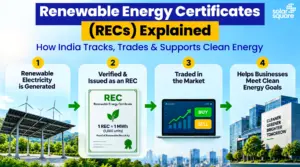
- A Renewable Energy Certificate (REC) represents 1 MWh of renewable power generated and can be bought by entities needing to meet their Renewable Purchase Obligation (RPO) without having renewable capacity of their own.
- Energy Saving Certificates (ESCerts), issued under the Perform, Achieve and Trade (PAT) scheme, work similarly for energy efficiency targets.
What Determines Electricity Prices on a Power Exchange?
Prices on power exchanges like IEX, PXIL, and HPX are discovered through real-time bidding, and they move based on several factors:
- Electricity demand during each time block: Prices fluctuate every 15-minute block based on how much power buyers need at that moment.
- Available generation and generators’ bid prices: The mix of generators willing to sell and the prices they quote directly shapes the market-clearing price.
- Solar and wind availability: Higher renewable output increases supply, typically pushing prices down.
- Fuel prices and thermal-plant availability: Coal, gas, and other input costs affect how competitively thermal generators can bid.
- Weather and seasonal demand: Heatwaves, monsoons, and seasonal consumption patterns shift overall demand levels.
- Power-plant outages: Unplanned or scheduled outages reduce available supply, tightening the market.
- Transmission congestion: When power can’t flow freely between regions, localized price differences emerge.
- Grid emergencies and sudden forecasting errors: Unexpected demand spikes or generation shortfalls can cause sharp price swings.
- Regulatory price caps: CERC-mandated ceilings (like the ₹10/kWh cap in some segments) limit how high prices can rise, regardless of demand-supply gaps.
A common pattern illustrates how these factors interact: abundant solar supply during the day can push daytime prices down, sometimes close to zero, since generation is cheap and plentiful. But once solar output drops in the evening while demand stays high (the “duck curve” effect), prices can spike sharply as the grid leans on costlier thermal or peaking sources to fill the gap.
What is P2P (Peer-to-Peer) Electricity Trading?
Peer-to-peer (P2P) electricity trading is a newer, decentralized model where individual consumers, particularly rooftop solar owners, sell surplus electricity directly to nearby consumers, without going through a traditional exchange or long-term Power Purchase Agreement.
Here’s how peer to peer electricity trading typically works:
- A rooftop solar owner (called a “prosumer” since they both produce and consume power) generates more solar electricity than they use
- Instead of exporting this surplus to the DISCOM at a fixed feed-in tariff, the prosumer lists it for sale on a P2P platform
- A nearby consumer, often within the same local grid or DISCOM area, buys this power at a price discovered through the platform, generally higher than the regulated feed-in rate but lower than retail tariffs
- Smart meters record the actual energy transferred, and the transaction is settled digitally, often using blockchain technology for transparency and tamper-proof record-keeping
Where P2P Trading Stands in India Today
P2P energy trading in India has largely been at the pilot project stage, led by state DISCOMs in partnership with technology providers.
Notable examples include:
- Pilots by Uttar Pradesh Power Corporation Limited (UPPCL) and Dakshinanchal Vidyut Vitran Nigam Limited (DVVNL), which used blockchain platforms to let rooftop solar energy owners trade surplus power with neighbors at market-driven prices, well above the regulated feed-in rateṇ.
- BSES Rajdhani Power Limited (BRPL) in Delhi trialled blockchain-based P2P solar trading within gated communities in Dwarka.
- Tata Power Delhi Distribution Limited (TPDDL) partnered with the Indian Smart Grid Forum (ISGF) on similar blockchain-based trials.
More recently, the Ministry of Power, through its nodal agency REC Limited, has been developing the India Energy Stack (IES), a digital public infrastructure framework meant to formalize P2P trading nationally, covering digital identities for energy assets, consent-based data sharing, and shared registries across DISCOMs.
As of 2026, a live P2P trading pilot is underway across Delhi-NCR and western Uttar Pradesh, covering three DISCOMs. UPERC has approved the interstate P2P trading pilot, including a waiver of the Cross Subsidy Surcharge during the pilot. You can track official updates through the Ministry of Power’s website and the MNRE portal.
This matters because rooftop solar itself is scaling fast in India, giving P2P trading a growing base of potential participants.
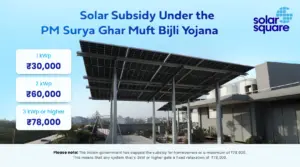
- As per MNRE data, India’s grid-connected rooftop solar capacity reached 23.16 GW as of November 2025, and over 25 lakh households had installed rooftop solar under the PM Surya Ghar: Muft Bijli Yojana scheme by mid-2026.
- As more of these prosumers come online, the surplus capacity available for local, peer-to-peer sale is expected to grow correspondingly, provided the regulatory and metering infrastructure keeps pace.
It’s important to note that peer to peer electricity trading is not yet a mainstream, nationwide option available to every rooftop solar consumer. It remains regulator-approved and pilot-driven, expanding gradually as smart metering infrastructure and supporting rules develop across states.
Energy Trading vs P2P Trading: The Key Difference
Exchange and bilateral energy trading are large-scale, regulated wholesale markets used by DISCOMs, generators, and industries. P2P trading is a smaller-scale model that is still in the pilot stage, allowing rooftop solar prosumers to sell surplus power locally.
Here is the main difference between energy trading and P2P trading:
| Aspect | Exchange/Bilateral Energy Trading | P2P Electricity Trading |
| Participants | DISCOMs, generators, large industries, licensed traders | Individual prosumers and nearby consumers |
| Scale | Bulk power, often in MW/MU | Small, localized surplus (typically rooftop solar) |
| Mechanism | Power exchange auctions or bilateral contracts | Direct matching via digital/blockchain platforms |
| Regulatory status | Fully established under CERC regulations | Pilot stage, expanding under DISCOM/state approvals |
| Price discovery | Market clearing price via auction | Negotiated or algorithm-based, between feed-in tariff and retail rate |
Benefits and Limitations of Energy Trading
Short-term power trading has reshaped how electricity moves through India’s grid, but it comes with trade-offs worth understanding.
Benefits
- Better price discovery: Competitive bidding on exchanges reveals the true market value of electricity at any given time, rather than relying solely on long-term fixed-price contracts.
- Flexibility for DISCOMs: Utilities can buy or sell power on short notice to manage demand fluctuations, instead of being locked into rigid long-term PPAs.
- Improved grid balancing: Real-time and deviation settlement mechanisms help match supply and demand more precisely, reducing the risk of blackouts or wasted generation.
- Monetization of surplus renewable power: Generators and states with excess solar or wind output can sell it through the exchange instead of letting it go unused.
- Lower procurement costs during favorable conditions: DISCOMs can buy cheaper power when supply is abundant (e.g., high solar hours), reducing their average cost of purchase.
- Wider market access: Open-access consumers and smaller players can procure electricity without being fully dependent on a single local DISCOM.
- Supports renewable integration: Instruments like Green Day-Ahead Market (G-DAM) and RECs give renewable generators dedicated avenues to sell power and help obligated entities meet their RPO targets.
Limitations
- Price volatility: Prices can swing sharply within the same day (e.g., near-zero during solar hours, high during evening peak), making costs less predictable.
- Limited long-term certainty: Short-term contracts don’t offer the price stability that long-term PPAs provide, which can complicate financial planning for generators and DISCOMs alike.
- Transmission congestion risk: Even when cheaper power is available elsewhere, grid bottlenecks can prevent it from reaching where it’s needed, sometimes at a higher cost.
- Exposure to regulatory price caps: While caps protect buyers from extreme spikes, they can also discourage high-cost generators from participating when needed most.
- Dependency on accurate forecasting: Errors in demand or renewable generation forecasts can lead to costly last-minute deviations and DSM charges.
- Concentration risk among a few large players: A small number of major trading licensees and generators still account for a large share of volumes (as reflected in HHI concentration data), which can limit competitive intensity.
- Not fully accessible to small consumers: Ordinary residential consumers can’t participate directly in exchange trading; rooftop solar owners, for instance, are limited to net-metering or approved P2P routes rather than open market access.
What This Means for Rooftop Solar Owners
Large-scale energy trading doesn’t directly involve residential rooftop solar owners today; net metering remains the standard route to monetize surplus generation, while P2P trading is an emerging option worth watching as pilots expand.
If you already have a rooftop solar system, or are considering one, large-scale energy trading on exchanges doesn’t directly affect you; that’s a wholesale market for utilities and industries. However, P2P electricity trading is a space worth watching.
As pilots expand and more DISCOMs roll out supporting infrastructure, prosumers could eventually have another avenue to monetize surplus solar generation beyond standard net metering. For now, net metering (where surplus units are adjusted against your DISCOM bill) remains the standard, reliable route for most residential and commercial rooftop solar owners across India.
Frequently Asked Questions
Is energy trading legal in India?
Yes. Electric power trading is fully legal and regulated under the Electricity Act, 2003, with CERC and SERCs overseeing licensing, exchange operations, and market conduct.
Can an individual trade electricity in India?
Not on the main power exchanges; those are meant for licensed entities like DISCOMs, generators, and large consumers. However, individuals with rooftop solar can potentially participate in P2P electricity trading, where regulator-approved pilots currently exist.
What is the difference between a power exchange and P2P trading?
A power exchange handles large-scale, wholesale electricity trades between licensed market participants through centralized auctions. P2P trading is a decentralized, small-scale model where individual prosumers sell surplus solar power directly to nearby consumers.
Does P2P electricity trading affect my net metering benefits?
Currently, no. P2P trading exists as separate, regulator-approved pilots in specific areas. Net metering remains the standard mechanism for most rooftop solar owners to offset their DISCOM bills with surplus generation.
How is the price of electricity decided in trading?
On power exchanges, price is discovered through a closed double-sided auction: buyers and sellers submit bids and offers, and the exchange finds the point where total demand matches total supply, called the market-clearing price. In bilateral trades, the price is negotiated directly between the buyer and seller, often through a licensed trader.
What is the difference between short-term and long-term power trading in India?
Long-term power trading involves multi-year PPAs, typically between a generator and a DISCOM, offering price certainty over years. Short-term trading, which includes exchange transactions, bilateral deals, and deviation settlement, covers contracts ranging from a few hours to about a year, and is used to manage immediate demand-supply gaps.
What is Renewable Purchase Obligation (RPO) and how does it connect to energy trading?
RPO is a regulatory requirement mandating that DISCOMs, open access consumers, and certain other entities source a minimum percentage of their electricity from renewable sources. Entities that fall short can buy Renewable Energy Certificates (RECs) on power exchanges to meet their RPO targets without owning renewable generation capacity themselves.
Can industries and businesses directly buy electricity from the power exchange?
Yes, if they qualify as open access consumers, typically large industrial or commercial users with a minimum contracted demand as specified by their state regulator. This lets them bypass their DISCOM for a portion of their power needs and buy directly from exchanges like IEX, often at a lower cost than regulated tariffs.
Is P2P electricity trading available across all of India right now?
No. As of 2026, P2P electricity trading is limited to specific regulator-approved pilots, such as the India Energy Stack pilot covering Delhi-NCR and parts of western Uttar Pradesh. It has not yet been rolled out as a nationwide, DISCOM-agnostic option for all rooftop solar owners.
How profitable is energy trading?
Profitability in energy trading depends on the type of participant. Licensed traders earn a regulated trading margin, currently capped at ₹0.07/kWh under CERC’s Trading License Regulations, 2020, and the weighted average margin actually charged was just ₹0.019/kWh in 2024-25 due to competition. Generators and DISCOMs, on the other hand, don’t earn a “margin” as such; their gains come from selling surplus power at favorable prices or buying power cheaper than their own generation cost. Because prices can swing sharply within a single day, profitability often depends on timing, forecasting accuracy, and how well a participant manages price volatility rather than trading volume alone.
What is power market coupling?
Power market coupling is a mechanism where bids from all power exchanges (currently IEX, PXIL and HPX) are aggregated to determine a single, uniform market-clearing price across the country, instead of each exchange discovering its own separate price. CERC ordered the rollout of market coupling for the Day-Ahead Market in July 2025, with Grid Controller of India Limited designated as the market coupling operator under draft amendment regulations issued in April 2026. The goal is to improve price discovery, boost liquidity, and create a level playing field for participants regardless of which exchange they trade on. RTM and TAM coupling are being tested next through shadow pilots.
What is cross-border electricity trading?
Cross-border electricity trading refers to the exchange of power between India and its neighboring countries, primarily Bhutan, Nepal, Bangladesh, and Myanmar. India has historically imported electricity from Bhutan and exported to Bangladesh, Nepal, and Myanmar; it was a net importer from 2013-14 to 2015-16 and has been a net exporter since 2016-17. Cross-border trade through the Day-Ahead Market on IEX began in 2021-22, starting with Nepal in April 2021 and Bhutan in January 2022, with Real-Time Market cross-border trade added from October 2023.
Source: Central Electricity Regulatory Commission (CERC), Report on Short-term Power Market in India: 2024-25; “Trading Trends: Shift to market-based solutions,” Indian Infrastructure, July 3, 2026.


 Previous Article
 10 min