

Did you know that scientists can now print solar cells the same way a newspaper is printed? Australia’s national science agency, CSIRO (Commonwealth Scientific and Industrial Research Organisation), has even built a dedicated printed photovoltaic facility to do exactly this, rolling out solar cells onto thin plastic sheets.
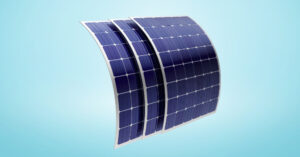
Printable solar panels are thin, bendable solar cells made by printing a special solar ink onto plastic or film, rather than cutting them from silicon wafers. They can be produced on rolls, much like newspapers or banknotes, making them light, bendable, and cheaper to manufacture at scale.
In this blog, we will break down what printable solar panels actually are, how they are made, where they are used, their pros and cons, and where this technology is headed next. Whether you are a curious homeowner or someone tracking the future of solar energy in India, this guide will give you a clear, honest picture.
What Are Printable Solar Panels?
Printable solar panels are solar cells made by printing light-absorbing materials, like organic compounds or perovskites, onto thin, flexible surfaces like plastic film. Instead of slicing silicon into rigid wafers, manufacturers dissolve special solar materials into an ink and print them directly onto a surface.
Printed solar panels are very different from how traditional solar panels are made. A standard silicon solar panel starts with a silicon ingot, sliced into thin wafers, processed, and assembled into a rigid glass-covered panel. It is a heavy, multi-step industrial process.
Printable solar cells replace silicon wafers with a printable “solar ink.” This ink is made from light-sensitive compounds and can be applied by standard printing techniques. As a result, printable solar panels are lightweight sheets that can bend, curve, and be rolled up.
Because the core function remains the same as any solar cell, capturing sunlight and converting it into electricity, this technology is sometimes called printable photovoltaic cells. It’s just the manufacturing process that changes.
How Do Printable Solar Panels Work?
Printable solar panels work by using solar inks made from light-absorbing materials. These materials are deposited layer-by-layer onto flexible film using techniques like inkjet, slot-die, or screen printing. Once printed, these layers form a working solar cell that generates electricity when exposed to sunlight.
Printable solar panels are made by using materials like:
- Organic photovoltaics (OPV): Organic photovoltaic cells are carbon-based polymer-fullerene compounds that can be dissolved into inks and printed onto flexible sheets.
- Perovskites: Perovskites are crystal-structured materials that have seen the fastest efficiency growth of any solar technology in history. These are synthetic or mixed organic-inorganic structures that can be dissolved into liquid inks. According to the U.S. Department of Energy’s National Renewable Energy Laboratory (NREL), perovskite solar cells improved from around 3% efficiency in 2009 to over 25% within roughly a decade.
Source: NREL
The Printing Process of Print Solar Panels
The printing process of print solar panels includes ink preparation, plastic films, printing through industrial printing techniques, layering, sealing, and then testing.
- Ink preparation: The active solar material (organic compound or perovskite) is dissolved into a liquid ink.
- Substrate loading: A long roll of thin plastic film is fed into the printing system.
- Roll-to-roll printing: The ink is applied onto the moving film using industrial printing techniques, similar to how newspapers are printed at scale.
- Layering: Additional functional layers (electrodes, protective coatings) are printed or deposited on top.
- Curing and sealing: The printed sheet is dried and sealed to protect it from moisture and air.
- Testing: Each printed section is tested for performance before being cut and packaged.
CSIRO researchers built a system capable of manufacturing and testing more than 10,000 printed solar cells a day, which helped them quickly identify the best settings for large-scale roll-to-roll production. This is the scale and speed that makes printable solar panels commercially exciting.
Types of Printable Solar Technology
OPV cells use carbon-based, plastic-like compounds. They are extremely lightweight, low-cost to produce, and can even be made semi-transparent, useful for windows and building facades. Their efficiency, however, remains lower than other options.
Perovskites are currently the fastest-improving printable solar technology. CSIRO’s roll-to-roll printed perovskite modules achieved 15.5% efficiency for small cells and 11% for a 50 cm² printed module, a record for fully printed solar cells at that scale. In lab conditions, NREL has certified individual perovskite cells above 25% efficiency, though these are not yet commercial products.
| Technology | Typical Lab Efficiency | Flexibility | Manufacturing Cost | Commercial Stage |
| Organic Photovoltaics (OPV) |
| Very high | Low | Early commercial/niche use |
| Perovskite (printed) |
| High | Low-moderate | Pilot/scaling stage |
| Traditional Silicon |
| Rigid | Moderate | Fully commercial, mainstream |
Source: CSIRO
Advantages of Printable Solar Panels
Printable solar panels offer several real advantages over traditional rigid panels, especially around cost, weight, and manufacturing speed.
- Low manufacturing cost: Printing eliminates the need for silicon wafer processing, which lowers material and production costs. Researchers estimate that once roll-to-roll perovskite production is optimised, costs could fall per watt, still more than silicon, but a significant step toward affordability at scale.
- Lightweight and flexible: Because they are printed on thin plastic film rather than glass, these panels can bend around curved surfaces.
- Faster, scalable production: Roll-to-roll printing works much like printing newspapers, allowing continuous, high-speed manufacturing rather than the slower, batch-based process used for silicon panels.
- New use cases: Their flexibility opens doors that rigid silicon panels simply cannot, curved rooftops, wearable devices, and semi-transparent windows, to name a few.
Limitations and Challenges of Printable Solar Panels
The biggest challenge with printable solar panels right now is durability, not performance. While printable solar panels’ efficiency has improved rapidly in the lab, most printed cells still degrade faster than silicon when exposed to real-world heat, humidity, and sunlight over years.
- Lower efficiency compared to silicon: Most commercial printed solar cells still fall short of the efficiency that mainstream silicon panels offer today.
- Durability and lifespan concerns: Silicon panels routinely last ~25 years or more. Printed perovskite and organic cells, by contrast, have historically lasted only months. Though the lifespan of printed solar panels can be improved with better sealing and materials.
- Moisture and UV degradation: Because these cells are thinner and often lack the protective glass layer of traditional panels, they are more vulnerable to moisture ingress and UV damage over time.
- Commercial scalability still developing: Scaling from lab success to a stable, mass-market solar panel printout remains a work in progress.
Real-World Applications of Printable Solar Panels
Even at this early stage, printable solar cells are already being tested and used in situations where traditional panels simply cannot go.
- Building-integrated solar: Semi-transparent organic photovoltaic cells can be integrated into windows and facades, generating power without blocking light entirely.
- Wearable electronics: Thin, flexible printable photovoltaic cells can be woven into clothing or accessories to power small electronics on the move.
- Portable and off-grid chargers: Lightweight printed solar sheets are ideal for camping gear, emergency kits, and portable chargers where weight matters.
- IoT (Internet of Things) and sensor-powered devices: Small-scale printed solar cells can power remote sensors and low-energy devices without needing battery replacements.
- Space and disaster relief: CSIRO has even sent printed flexible solar modules into space aboard a private satellite, and researchers note their potential for rapid deployment in disaster recovery and defence situations.
Printable Solar vs Traditional Silicon Panels: Which One Should You Choose?
For home and rooftop solar installations, traditional rooftop solar panels remain the better choice today, offering higher efficiency, proven durability, and lower long-term costs. Printable solar panels are better suited to niche, flexible, or portable applications for now, not full home power needs.
Efficiency Comparison
Traditional silicon panels sit comfortably at 22.5%- 26% efficiency in real-world conditions. Printed perovskite modules have reached similar numbers in lab settings, but real-world, large-area printed modules still lag behind, with CSIRO’s own record-setting printed module reaching 11% efficiency at a practical scale.
Cost Comparison
While printable solar panels’ price per watt could eventually undercut silicon, thanks to cheaper materials and faster production, current estimates are still higher than mainstream silicon panel costs. Silicon has decades of manufacturing scale behind it, which keeps its price highly competitive.
Use-Case Comparison
Silicon panels are the right choice when you need long-term, high-output power for a home or business rooftop. Printable solar cells are ideal where weight, flexibility, or unconventional surfaces matter more than raw efficiency.
Which One Makes Sense for What Purpose
If you’re planning a rooftop solar system for your home, silicon remains the dependable, well-tested choice, and this is exactly where Solarsquare can help you design and install a solar system that fits your roof and your budget. If you’re a researcher or business exploring flexible or portable solar applications, printable solar technology is worth watching closely as it matures.
What’s Next for Printable Solar Panels
Printable solar technology is moving from research labs into pilot-scale manufacturing, with global research institutions racing to solve durability issues while pushing efficiency higher. The next five to ten years will likely decide whether this technology becomes a mainstream alternative or stays a specialised niche.
- Current Research Trends
Government-backed research bodies like CSIRO (Australia) and NREL (United States) are leading much of this work. CSIRO’s Printed Photovoltaic Facility, a dedicated space for scaling up flexible solar cell production, represents a serious institutional bet on this technology’s future.
- Efficiency Improvements on the Horizon
Perovskite research has shown the fastest efficiency growth of any solar technology in rom roughly 3% to over 25% in about a decade, according to NREL. If thhistory, moving fis pace continues, printable solar panels’ efficiency could close the gap with silicon sooner than expected, though stability at that efficiency remains the harder problem to solve.
- Realistic Timeline for Mainstream Adoption
Most experts and researchers agree that full commercial, home-scale adoption of printable solar panels is still some years away. Durability, at 25-year lifespans matching silicon, is the single biggest hurdle left to clear. For now, expect printable solar to grow steadily in niche and industrial applications before it challenges silicon panels at home.
Conclusion
Printable solar panels represent one of the most interesting shifts in solar technology in decades. By replacing rigid silicon wafers with printable inks, researchers have opened the door to solar cells that are thinner, lighter, and potentially far cheaper to produce at scale. From CSIRO’s roll-to-roll printed perovskite modules to NREL’s efficiency breakthroughs, the science is advancing fast.
That said, printable solar cells are not yet ready to replace the silicon panel on your rooftop. Durability, long-term stability, and consistent efficiency at scale are still being worked out. For today’s homeowners, traditional silicon solar remains the smarter, more reliable investment, and that’s exactly where Solarsquare can guide you, from choosing the right solar system size to a hassle-free installation.
Curious about where solar technology is headed in India specifically? Read our detailed guide on the future of solar energy in India, or explore how organic photovoltaics are shaping the next wave of flexible solar innovation.
Ready to go solar the reliable way? Get a free rooftop solar consultation with Solarsquare and find out what a proven, high-efficiency solar system can do for your home today.
Frequently Asked Questions
What are printable solar panels?
Printable solar panels are thin, flexible solar cells made by printing light-absorbing materials, like organic compounds or perovskites, onto plastic film. Unlike traditional silicon panels, they don’t need rigid wafers, which makes them lighter, cheaper to produce, and easier to shape.
Are printable solar panels available for home use?
Not yet, at least not for rooftop installations. Printable solar cells are mostly used in research, portable devices, and niche applications today. For home solar, traditional silicon panels remain the reliable, commercially proven choice.
What is the efficiency of printable solar panels?
Printable solar panels’ efficiency varies by material. Organic photovoltaics typically reach up to 20% (Bulk HJT), while printed perovskite cells have hit over 34% (On silicon tandem cells) in lab settings.
What materials are used to print solar panels?
The two leading materials used to print solar panels are organic photovoltaic compounds and perovskites. Both can be dissolved into inks and applied using roll-to-roll printing, a process similar to how newspapers are mass-produced.
How long do printable solar cells last?
Printable solar cells currently have shorter lifespans than silicon panels, often months rather than decades, because they’re sensitive to moisture and UV exposure. Researchers are developing sealing techniques to improve their long-term durability.