

If you’ve ever stood on your terrace and realized there simply isn’t enough flat and shadow-free roof left for the solar system you actually want, you’re not alone. It’s one of the most common issues that homeowners and business owners in Indian cities face, especially in high-rise buildings or row houses. This is exactly where wall mounted solar panels enter the conversation.
Wall-mounted panels typically generate less electricity annually than a rooftop solar system, since a vertical surface doesn’t capture midday sun as efficiently as properly tilted solar panels installed on the rooftop. That gap makes wall-mounted solar a supplementary option in the right conditions. It is rarely a direct replacement for a well-oriented rooftop solar system.
Clearly, vertical solar isn’t a new invention, but it’s only recently started getting serious attention as rooftop space becomes the biggest bottleneck for solar adoption in dense urban India. Here’s an honest, practical look at what wall mounted PV panels are, how they perform, and whether mounting solar panels on a wall makes sense for your property.
What Are Wall Mounted Solar Panels?
Wall mounted solar panels are photovoltaic modules fixed vertically (or near-vertically) onto a building’s exterior wall or façade, instead of the usual tilted mount structure i.e. used in case of the rooftop arrangement. A wall mount for solar panels typically consists of an aluminium or galvanized steel bracket system anchored directly into the wall structure, holding the panels flush or slightly angled away from the surface.
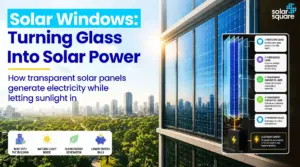
This approach falls under a broader category called Building Integrated Photovoltaics (BIPV), where solar panels double up as part of the building’s envelope rather than sitting separately on top of it.
How Do Wall Mounted Solar Panels Work?
The core technology is identical to rooftop solar; only the orientation changes, along with how much sunlight the panels end up receiving through the day:
- Sunlight to DC electricity: Sunlight hits the photovoltaic cells, which convert it into DC electricity, exactly as on a rooftop solar panel.
- DC to usable AC power: An inverter converts that DC output into AC power for home use or grid feed-in.
- Vertical orientation: Instead of tilting toward the sky, the panels sit flush or near-flush against a vertical wall.
- Fewer peak-sun hours: This orientation means the panels receive direct sunlight for fewer hours and at a less favourable angle through most of the day.
- Same wiring and metering: Wiring, inverter connection, and metering all work the same way as a standard rooftop solar setup.
What Are the Advantages of Wall Mounted Solar Panels?
The following are some of the advantages of wall mounted solar panels and show how and why these can be beneficial for some households:
- Uses space that would otherwise go unused: A real plus when terrace area is limited, shaded, or already occupied by other equipment.
- Stronger winter performance: Vertical panels catch low-angle winter sun more effectively than a flat or tilted roof.
- Lower soiling losses: Dust settles less on a vertical surface, and rain naturally cleans the panel face.
- Easier to inspect and clean: Wall-mounted panels are typically more accessible than terrace-mounted arrays, especially on lower floors.
- Adds capacity without a full re-plan: A practical way to top up an existing rooftop system rather than replacing it.
What Are the Disadvantages of Wall Mounted Solar Panels?
Even though wall-mounted solar panels are very beneficial for people who don’t have rooftop space, there are some disadvantages as well:
- Lower annual yield: Vertical panels generate roughly 20-30% less energy per year than an optimally tilted rooftop array in the same location.
- Fewer panels fit per wall: Most walls accommodate only a handful of modules compared to a full terrace array.
- Orientation-dependent: Performance drops significantly on east, west, or shaded walls compared to a south-facing one.
- Structural and approval requirements: Walls need a dedicated load assessment, and façade changes may require society or municipal approval.
- Still an emerging category in India: Fewer installers specialise in wall-mounted or BIPV systems compared to standard rooftop installation.
How Do Wall Mounted Solar PV Panels Perform Compared to Roof-Mounted Systems?
This is the question most people actually care about, so let’s be upfront: vertical panels generally produce less annual energy than an optimally tilted rooftop PV system in the same location.
Wall-mounted solar panels can generate less electricity than optimally tilted rooftop panels because vertical surfaces receive less direct solar radiation over the year. The difference varies significantly with location, wall orientation, shading, and panel type.
For example, a 2026 study comparing façade-mounted and optimally tilted rooftop PV in Riyadh found the façade system generated about 7-11% less electricity annually.
That said, the story isn’t as simple as less is worse. A few things work in favor of solar panels for vertical walls:
- Better winter and low-sun-angle performance: Because the sun sits lower in the sky during winter months, vertical panels can actually outperform tilted roof panels in that season. In a 2024 comparison by Dutch solar installer Zonnefabriek, a vertical wall-mounted system produced its highest output in winter months, even though a comparable flat-roof system generated more energy over the full year (as of the article’s August 2024 publication).
- Lower soiling losses: Dust and debris don’t settle on a vertical surface the way they do on a tilted or flat roof. Moreover, rain does a better job of naturally cleaning the panels, which is a real advantage in Indian cities with high ambient dust.
- Space that would otherwise go unused: For buildings where the terrace is too small, shaded, or already occupied (water tanks, other equipment), unused façade area becomes usable generation capacity.
Wall-Mounted vs Roof-Mounted Solar System: A Quick Comparison
Rooftop solar is the better choice when enough roof space is available. Tilted panels generally deliver higher annual electricity generation and accommodate larger systems than wall-mounted panels overall.
| Factor | Roof-Mounted Solar System (Tilted) | Wall-Mounted Solar System (Vertical) |
| Annual energy yield | Higher: Optimal tilt captures more sunlight overall | Roughly 20-30% lower, varying by region and orientation |
| Winter / low-sun performance | Comparatively lower | Often stronger, since low winter sun angles suit a vertical surface |
| Panels that typically fit | More panels, limited mainly by available roof area | Fewer panels: Most walls suit a handful of modules rather than a full array |
| Soiling from dust/debris | Higher exposure: Horizontal/tilted panels can accumulate dust and debris | Generally lower accumulation: Vertical panels shed some dust more easily, but still require periodic cleaning |
| Structural planning | Standard rooftop load assessment | Needs wall-specific structural and wind-load assessment |
| Best used as | Primary solar system for most homes, housing societies, and commercial and industrial buildings | Supplementary addition where roof space is constrained |
Solar Panel Tracking Mount vs Fixed Wall Mounting Systems
Not all vertical setups are static. A solar panel tracking mount adjusts the panel’s angle through the day to follow the sun’s path, squeezing out more generation than a fixed vertical wall mount. However, tracking systems add mechanical complexity, cost, and maintenance, which is why most residential and small commercial wall installations in India stick to fixed solar panel wall mounting systems rather than motorized tracking.
For most homeowners, a well-designed fixed mount with a slight outward tilt (even 10-15° off the wall) is usually the more practical, lower-maintenance choice, and it helps narrow the energy gap with rooftop PV systems without the added mechanical upkeep of a tracker.
Types of Wall Mounted Solar Panel Stands
Broadly, wall mounting hardware falls into a few categories, listed below:
| Mount Type | How It Works | Best For |
| Flush-mounted brackets | Panels sit close to the wall, minimal visual footprint | Compact spaces, cooler climates where ventilation matters less |
| Standoff / tilted mounts | Panels held a few inches off the wall at a slight angle for airflow and seasonal tilt gains | Most residential and small commercial installs, a practical middle ground |
| Façade-integrated (BIPV) systems | Panels replace conventional cladding material, becoming part of the building structure | New builds or renovations where aesthetics and structure matter equally |
| Solar panel tracking mount | Motorized mount adjusts panel angle to follow the sun | Larger commercial/institutional installs where the generation gain justifies the added cost |
Whichever wall mounted solar panel stand you choose, it needs to be engineered for the wind loads and structural capacity of the specific wall. This isn’t a DIY job, particularly on load-bearing or non-RCC walls.
How to Install a Wall-Mounted Solar Panel System?
At a high level, the process for installing solar panels on a vertical wall follows a similar sequence to a rooftop install, with a few wall-specific steps built in:
- Site assessment: An installer evaluates the wall’s orientation, shading, and structural capacity to confirm it can safely carry the panels and mounting hardware.
- System design: Panel count, mount type (flush, standoff, or tracking), and inverter sizing are finalized based on the wall’s available area and your energy goals.
- Approvals: Where applicable, society or municipal sign-off is obtained, along with DISCOM (Distribution Company) approval for grid connectivity and net metering.
- Mounting installation: Brackets or standoff frames are anchored into the wall structure, engineered for local wind-load requirements.
- Panel fixing and wiring: Panels are fitted onto the mounts, and cabling is routed to the inverter, often a different run than a rooftop solar system would need.
- Testing and commissioning: The system is checked for output, safety, and grid synchronization before being handed over.
Installing Solar Panels on a Vertical Wall: What to Check First
Before mounting solar panels on a wall, a few practical checks matter more than the panels themselves:
- Wall orientation and shading: A south-facing wall (in the northern hemisphere, which includes India) with minimal obstruction from neighboring buildings or trees will always outperform an east/west or shaded wall.
- Structural capacity: Get the wall assessed for load-bearing capacity. Panels plus mounting hardware add real weight and wind load, especially on taller structures.
- Cable routing and inverter placement: Vertical installations often need different cable runs than rooftop PV systems. So plan this at the design stage, not after installation.
- Local approvals: Unlike a straightforward rooftop solar system, a façade-mounted system can involve building aesthetics or society approvals in apartment complexes. That’s worth checking before committing.
How to Maintain Wall-Mounted Solar Panels in India?
Maintenance is an essential part of a solar system, whether it is for rooftop solar or wall-mounted solar systems. A few basics keep the system performing well:
- Periodic visual checks: Check for dust buildup around the panel edges, loose mounting hardware, and visible cracks. Since vertical panels usually collect less dust, checking them every few months is generally enough.
- Occasional water rinse: Rain does most of the cleaning naturally, but a manual rinse during long dry spells helps, especially in high-dust urban areas.
- Bracket and anchor inspection: Since the mounting hardware bears the full structural load, an annual check for corrosion or loosening (particularly after monsoon season) is worth doing.
- Inverter and wiring checks: Same as any rooftop solar system, periodic monitoring of inverter performance helps catch generation drops early.
- Professional servicing: For anything beyond a basic clean or visual check, it’s best to have your installer handle inspections, given the added structural considerations of a wall-mounted setup.
Is Wall Mounted Solar Right for Your Home or Business?
Vertical wall mounted solar panels make the most sense when:
- Your rooftop space is limited, shaded, or already occupied by other equipment
- You have a large, mostly unobstructed south-facing wall
- You’re comfortable with a system that will generate less annual energy than an equivalent rooftop solar array, in exchange for using otherwise idle space
- You’re building a new office/home or renovating, making it easier to plan structural mounting and cabling from scratch
It’s not suited as a primary solution if you already have ample, well-oriented roof space. In that case, a standard tilted rooftop solar system will always deliver better returns per panel installed.
That’s where working with an experienced installer matters.
SolarSquare designs rooftop solar systems suited to Indian homes and businesses. From assessing your roof’s actual generation potential to handling DISCOM approvals, subsidy paperwork, and net metering, right through to installation and after-sales service, we handle everything.
If you’re exploring rooftop solar for your home or business, it’s worth getting a site assessment done to see what your roof can actually support before deciding on the right mix of systems. Get a free solar consultation today.
Frequently Asked Questions
Can I install a wall-mounted solar panel stand on any type of wall?
Not any wall; the surface needs sufficient structural capacity to safely bear the panel weight and wind load, particularly on multi-storey buildings. RCC walls generally handle this better than lightweight partition walls. A structural assessment before installation is non-negotiable.
Are wall mounted PV panels eligible for subsidy under PM Surya Ghar?
MNRE guidelines allow BIPV installations to be considered for Central Financial Assistance (CFA) when rooftop space is limited, subject to DISCOM approval of the metering arrangement. That said, scheme details and approval processes can vary.
Does a solar panel tracking mount make sense for a home installation?
For most homes, no. The added cost, moving parts, and maintenance of a tracking mount rarely justify the extra generation gain for a small residential system. Tracking mounts are more commonly used in larger commercial or utility-scale vertical installations where the energy gain at scale offsets the added complexity.
Which direction should a wall-mounted solar panel face for best output?
South-facing walls perform best in India, since they receive the most consistent sun exposure through the day. East or west-facing walls will still generate power but at a noticeably lower output, while north-facing walls are generally not recommended for standalone wall-mounted arrays.
Can wall-mounted solar panels be tilted for better performance?
Yes, to a limited extent. Adding a standoff mount with a slight outward tilt (typically 10-15°) improves airflow and captures a bit more sunlight than a flush, flat-against-the-wall installation. It won’t match the output of a properly tilted roof solar array, but it does help narrow the gap slightly.
Do wall-mounted solar panels need special permission in Indian housing societies?
There’s no single blanket rule. It depends on your building type, municipal norms, and (for apartment complexes) your housing society’s approval process. It’s worth checking with your local authority and society management committee before installation, alongside confirming DISCOM approval for grid connectivity.
Is it better to install solar panels vertically or horizontally?
For most homes, horizontally or at an optimal tilt on the roof is better because tilted panels generally receive more sunlight over the year and can accommodate a larger system. Vertical panels make more sense when roof space is limited or as a supplementary installation on suitable walls.
What is the cost of installing wall-mounted solar panels in India in 2026?
In India, wall-mounted solar panels can cost roughly Rs. 50,000 – Rs. 75,000 per kW in 2026, depending on the panel and inverter used, mounting structure, wall condition, installation complexity and electrical work. Custom façade or BIPV installations can cost significantly more.
What are the applications of vertical solar panels in India?
Vertical solar panels can be used on building façades, balconies, boundary walls, terraces, parking structures and other vertical surfaces. They are particularly useful where rooftop space is limited and can also be integrated into buildings as BIPV systems.
Do Wall-Mounted Solar Panel Systems Produce Less Electricity?
Yes. Wall-mounted panels typically generate 20-30% less electricity than well-oriented rooftop panels because they receive less direct sunlight. South-facing walls generally perform best, making wall-mounted solar a useful option when rooftop space is limited.
Where Does Wall-Mounted Solar Fit in India’s Policy Landscape?
MNRE has clarified that BIPV installations may be considered where rooftop space is limited, subject to applicable guidelines and DISCOM approval. Such systems may qualify for PM Surya Ghar Muft Bijli Yojana subsidy, but eligibility should be confirmed before installation.
Wall-mounted panels generally produce less electricity than well-oriented rooftop panels. For most homes, they work best as a supplement to rooftop solar when roof space is limited.