

Second-life EV batteries could make home solar storage 15% to 25% cheaper than new batteries. These retired electric vehicle batteries could also reduce the environmental impact of home solar storage, but India’s residential market is still developing. Battery health, safety certification, inverter compatibility, warranty, and service support require evaluation before used EV batteries go mainstream.
India’s future supply of these batteries could be substantial. A June 2026 Oxford policy brief reports that India’s electric vehicle stock increased from ~50,000 in 2016 to 5.45 million in 2024. It estimates that annual inflows of reusable batteries could rise from ~4 GWh ( Gigawatt-hour) in 2030 to 600 GWh by 2050. However, substantial volumes may become available only during the 2030s, when the first large wave of Indian EVs begins to retire.
Source: 2026 Oxford Policy Brief Report
This raises an important question for homeowners. Can batteries that once powered vehicles provide safe and affordable storage for rooftop solar? This blog explains how second-life EV batteries work, how they are tested and repurposed, their potential benefits and limitations, and the rules governing them in India.
What Are Second-Life EV Batteries?
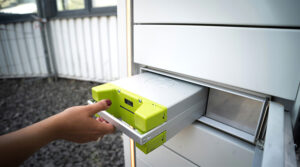
Second-life EV batteries are lithium-ion batteries that no longer satisfy a vehicle’s power, range, or reliability requirements but may still serve a less demanding purpose. After professional testing and reconfiguration, suitable packs can be used in stationary applications such as solar storage for backup power.
Why an EV Battery May Be Retired Before It Is Completely Worn Out
An electric vehicle needs its battery to deliver reliable driving range, rapid power during acceleration, and consistent performance under changing road and weather conditions. As the battery ages, its storage capacity and power capability gradually decline. Even a moderate reduction can make it unsuitable for continued automotive use.
An EV battery may be retired because of:
- Reduced driving range
- Declining peak-power capability
- Greater variation between individual cells or modules
- A vehicle warranty replacement
- An accident or physical damage
- A fault affecting one part of a larger pack
First-Life, Second-Life, and Final Recycling
A battery’s condition determines whether it can continue working in another application or must be processed for material recovery.
Here’s a side-by-side comparison of all three stages:
| Stage | Main Purpose | Battery Condition | What Happens Next |
| First-life | Powering an EV | Meets automotive requirements | Remains in vehicle |
| Second-life | Stationary storage | Usable but below vehicle requirements | Tested and repurposed |
| Recycling | Material recovery | Unsafe, damaged, or no longer viable | Metals and materials recovered |
Repurposing extends the useful life of a battery, but it does not eliminate the need for recycling. Once the battery can no longer operate safely or economically in its second application, it must enter an authorized recycling channel.
Second-Life Battery Versus Vehicle-to-Home Technology
A second-life battery and Vehicle-to-Home (V2H) technology both involve EV batteries, but they work in entirely different ways.
- A second-life system uses a battery permanently removed from an electric vehicle. Operators assess the battery, reconfigure it, and install it as part of a stationary battery energy storage system (BESS).
- V2H (Vehicle-to-Home) uses the battery that remains inside a functioning electric vehicle. A compatible bidirectional charger allows the vehicle to temporarily supply electricity to the home.
Why Are Second-Life EV Batteries Suitable for Solar Storage?
Solar storage generally places lower power and mobility demands on a battery than an EV does. A stationary battery does not need to accelerate a vehicle, withstand constant road vibration, or maintain a dependable driving range.
- An electric vehicle demands a large amount of power within seconds during acceleration: Its battery may also experience fast charging, vibration, changing outdoor temperatures, and frequent charge-discharge cycles.
- A home energy storage system can operate under more controlled conditions: Charging and discharging can be limited to predefined current, voltage, temperature, and depth-of-discharge ranges. The system can also be designed to power selected household loads instead of the entire home.
This lower-intensity role creates an opportunity to reuse eligible EV batteries to store surplus daytime solar generation and supply selected loads when solar output declines.
How Does a Second-Life EV Battery Work With a Home Solar System?
A second-life battery stores direct current electricity and supplies it through a compatible power-conversion system. The inverter, Battery Management System (BMS), protection devices, and energy controller must work together to decide when the battery charges, discharges, or remains idle.
Let’s find out how a used solar battery works with a home solar system in detail.
During a Sunny Day
When solar generation begins, the electricity produced by solar power panels for homes first supplies household loads based on the system’s configured priority.
- If generation exceeds immediate consumption: The available surplus can charge the battery. The BMS (Battery Management System) continuously monitors voltage, current, temperature, and charge level to keep the cells within their permitted operating range.
- Once the battery reaches its charging limit: Any additional solar generation may be exported to the grid where the connection type and applicable regulations allow it.
At Night or During Low Solar Generation
When solar output falls below household demand, the battery can discharge through the inverter to supply its assigned circuits.
The BMS stops the discharge at a predefined level to protect the cells from excessive depletion. In a compatible hybrid solar system, grid electricity can supply the remaining demand if the household load exceeds the battery or inverter’s rated output.
During a Power Cut
A battery can provide backup only when the rooftop solar system has a compatible hybrid or off-grid inverter, islanding capability, battery-backed circuits, suitable electrical isolation, and correctly coordinated protection and controls.
A normal on-grid solar inverter shuts down during a power cut to prevent electricity from flowing into utility lines and endangering workers. Adding a battery alone does not override this safety function or turn every on-grid installation into a backup system.
How Is an EV Battery Prepared for Its Second Life?
Repurposing is a controlled engineering process. It converts a retired automotive battery into a documented stationary-storage product with operating limits suited to its new application.
The process generally involves:
- Collection and traceability: The battery is obtained through an identifiable source, and its available service, charging, and fault history is reviewed.
- Safe isolation: Trained personnel discharge and electrically isolate the pack before it is opened or tested.
- Physical inspection: The pack is checked for impact damage, swelling, leakage, corrosion, moisture exposure, and signs of abnormal heating.
- Diagnostic testing: Capacity, internal resistance, self-discharge, temperature behavior, insulation, and cell imbalance are measured.
- Sorting: Unsafe or unsuitable batteries are separated and sent for recycling.
- Module grading: Suitable modules are classified according to their measured condition and performance.
- Matching: Modules with similar capacity, resistance, and electrical characteristics are grouped.
- Reconfiguration: The selected modules are arranged according to the voltage and capacity required for the stationary application.
- System integration: A suitable BMS, sensors, contactors, fuses, disconnects, thermal controls, and enclosure are added.
- Final testing: The complete system is tested under expected charging, discharging, temperature, and fault conditions.
- Documentation: Usable capacity, power limits, operating conditions, installation requirements, and warranty terms are recorded.
Once these steps are complete, the battery’s tested condition determines whether it is suitable for home solar storage. This is why battery health evaluation is an important part of the repurposing process.
How Is the Health of a Second-Life Battery Evaluated?
Battery health cannot be established from age or appearance alone. The repurposer must interpret the diagnostic results to establish how much energy the battery can store, how much power it can safely deliver, and whether it is suitable for the proposed home-storage application.
The final evaluation should clearly document:
- Measured usable capacity
- Permitted charging and discharging power
- Maximum and minimum operating voltage
- Permitted depth of discharge
- Temperature limits
- Cell or module imbalance
- Self-discharge behavior
- Known faults or physical damage
- Expected degradation in the proposed application
- Conditions under which the battery must stop operating
State of Health (SoH) Is Important, but It Is Not Enough
State of Health generally compares the battery’s present capacity with the capacity it had when new.
For example, a battery that can presently store 8 kWh (kilowatt-hour) but originally stored 10 kWh may be described as having ~80% SoH. However, this figure does not provide a complete picture.
Two batteries with the same SoH can differ in:
- Internal resistance
- Maximum safe power output
- Self-discharge
- Thermal behavior
- Fast-charging history
- Remaining cycle life
- Fault or accident history
A battery can also retain substantial energy capacity while containing a damaged module, compromised insulation, or abnormal temperature behavior. Therefore, SoH must be treated as one measure within a wider assessment.
Nominal Capacity vs Usable Home-Storage Capacity
The battery’s original EV nameplate does not show how much electricity the repurposed system can deliver today.
Consider a pack originally rated at 10 kWh. Automotive use may have reduced its actual storage capacity. The BMS may reserve another portion of the remaining energy to prevent overcharging and deep discharge. Conversion losses further affect how much electricity reaches household appliances.
Therefore, homeowners should compare systems using independently tested usable capacity in kilowatt-hours. The test conditions and permitted depth of discharge should also be stated. Quoting only the original EV capacity can make an older battery appear larger than it really is.
What Are the Benefits of Using Second-Life EV Batteries for Home Solar?
Professionally repurposed second-life EV batteries could reduce the cost and material requirements of solar storage while extending the useful life of batteries that no longer meet automotive requirements.
Their potential benefits include:
- Potentially lower cost: Retired EV packs may cost less than new lithium-ion batteries. However, final savings depend on testing, reconfiguration, installation, and warranty costs.
- Higher solar self-consumption: Stored daytime solar energy can power selected household loads after sunset.
- Extended battery life: Repurposing keeps the battery useful longer before recycling.
- Reduced demand for new materials: Reuse can delay the need to manufacture new storage batteries.
- Alternative to lead-acid batteries: A properly engineered system may require less space and provide a greater usable depth of discharge than lead-acid batteries.
What Are the Risks and Limitations of Using Second-Life EV Batteries?
The main limitation of second-life EV batteries is variability. Two retired batteries of the same model and age may have different capacity, power capability, thermal behavior, and remaining life because their previous operating conditions were different.
Important limitations include:
- Uncertain previous use: Incomplete charging, temperature, repair, accident, or fault records can make the battery more difficult to assess.
- Uneven condition: Cells and modules within the same battery pack may not have aged at the same rate.
- Variable remaining life: Future performance depends on the battery’s present condition and its new charging and discharging pattern.
- Limited standardization: Testing, grading, reconfiguration, and warranty practices may differ among repurposers.
- Reduced cost advantage after integration: Testing, transport, power electronics, protection, installation, and warranty can narrow the savings over a new battery.
- Limited residential support: India currently has a limited supply of standardized products, trained installers, long-term warranties, repair services, and replacement parts.
Are Second-Life EV Batteries Safe for Homes?
Professionally engineered second-life EV batteries may suit stationary applications, but remaining capacity alone does not ensure residential safety. Home use requires a tested product, defined operating limits, compatible equipment, proper installation, documented protection, and accountable after-sales support.
Safety Features a Residential System Should Include
A complete residential system should include:
- Pack-level voltage and temperature monitoring
- Overcharge and deep-discharge protection
- Short-circuit
- Overcurrent protection at BMS level (MCB, aka Miniature Circuit Breaker, is also preferred)
- Isolation monitoring where required
- Correctly rated fuses and disconnects
- Thermal management
- A fire-resistant enclosure
- Compatible BMS-inverter communication
- Warning labels and installation documentation
These protections must be designed and validated as part of the complete system. Merely listing them on a specification sheet does not replace proper testing and commissioning.
Why DIY Repurposing Is Unsafe
High-voltage used EV batteries can cause electric shock, arc flash, fire, and toxic smoke.
A homeowner should never dismantle an EV pack, combine modules, bypass the original controls, or alter its charging connections independently. The work requires specialized isolation procedures, diagnostic equipment, correctly rated electrical protection, and expertise in lithium-ion battery systems.
Cost of a Second-Life Home Solar Battery
A second-life EV battery may cost 15% to 25% less than a comparable new battery. Final prices, however, can vary widely based on the battery’s source, chemistry, tested capacity, current health, level of reconfiguration, power electronics, safety equipment, installation, warranty, and the scale of the repurposer’s operations.
This makes it important to distinguish between the price of a retired battery pack and the cost of a complete home storage system.
Second-Life vs New Batteries: Which One is Better?
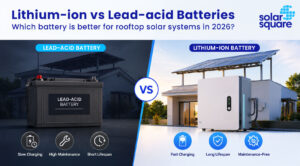
A new lithium battery currently offers the more predictable choice for residential solar storage. A second-life battery may be worth considering when it has verified usable capacity, documented safety testing, inverter compatibility, accountable service support, and a meaningful cost advantage after installation.
Lead-acid batteries remain widely available and may cost less initially, but they generally offer a lower usable depth of discharge and require more space for comparable usable storage.
Here’s a side-by-side comparison of all three types:
| Metric | Second-life Battery | New Lithium Battery | Lead-acid Battery |
| Price | Potentially lower, but integration costs vary | Higher initial cell cost with clearer product pricing | Often lower upfront cost |
| Usable capacity | Must be established through testing | Specified for a new product | Limited by recommended discharge depth |
| Cycle life | Depends on previous use and present health | 10-15 years or 3,000 to 5,000 charge cycles | 2-3 years or fewer than 1,000 charge cycles |
| Warranty | May be shorter or narrowly defined | Usually more comprehensive | Varies by type and manufacturer |
| Final recycling | Required after second use | Required at the end of service | Required at the end of service |
How Much Battery Storage Does an Indian Home Need?
Battery capacity should be based on the appliances that must continue operating, their combined energy consumption, and the required backup duration. The rooftop solar system’s capacity alone does not determine how much storage the home needs.
- Start by listing each essential appliance, its rated wattage, and the number of hours for which it must run.
- Multiply the appliance wattage by its operating hours to calculate watt-hours.
- Add the energy required by all selected loads, then divide by 1,000 to convert the result to kilowatt-hours.
The basic formula is:
| Required usable battery capacity = backup-load energy ÷ inverter efficiency |
Suppose the selected backup loads require 4 kWh and the inverter operates at 90% efficiency. In this case, required usable battery capacity = 4 kWh ÷ 0.90 = 4.44 kWh.
- The selected battery must provide at least 4.44 kWh of usable energy.
- If it should not be discharged completely, its nominal capacity must be higher.
Capacity is only one part of sizing. A battery may contain enough energy to operate an appliance for several hours but still be unable to deliver the power required to start it.
Why an Installer Must Complete the Final Sizing
An installer must verify:
- Simultaneous household load
- Starting surge of motors and compressors
- Inverter continuous and surge rating
- Battery voltage
- Maximum discharge current
- Permitted depth of discharge
- Solar charging capacity
- Required backup duration
- Cable sizing
- Protection coordination
Can Second-Life Batteries Work With Every Type of Solar System?
No. A second-life battery cannot be connected to every solar system without checking the system architecture, inverter capability, battery-voltage range, communication protocol, controls, and protection design.
Compatibility differs by system type:
- On-grid solar system: A conventional on-grid system does not provide battery backup during an outage. Adding storage generally requires compatible power-conversion equipment, isolation, controls, and system redesign.
- Off-grid solar system: A second-life battery may be used if its voltage, charging requirements, discharge limits, communication system, and safety certification match the off-grid inverter.
- Hybrid solar system: This is potentially the most relevant configuration because a compatible hybrid solar system can coordinate solar generation, battery storage, grid electricity, and backup loads.
What Rules Apply to Second-Life EV Batteries in India?
India’s Battery Waste Management Rules, 2022 recognize refurbishment within the formal battery-waste system and assign lifecycle responsibilities to specified participants. The rules cover electric vehicle batteries, portable batteries, automotive batteries, and industrial batteries.
They are based on Extended Producer Responsibility (EPR).
Under this framework, producers must ensure that waste batteries are collected and sent for recycling or refurbishment. Landfill disposal and incineration are prohibited.
The framework also provides for:
- Registration and reporting
- EPR certificates
- Defined responsibilities for producers
- Formal participation by recyclers and refurbishers
- Recovery and recycled-material requirements
- Environmental compensation for non-compliance
Source: CPCB (Central Pollution Control Board) PDF: Battery Waste Management Rules, 2022
What the Rules Do Not Automatically Guarantee
Registration within a waste-management framework does not guarantee residential performance, inverter compatibility, fire safety, remaining life, or warranty quality.
Each finished system still requires suitable testing, operating documentation, professional installation, and compliance with applicable electrical and local safety requirements.
Is India Ready for Second-Life Home Solar Batteries?
India is building the supply chain needed for a second-life battery market, but standardized residential products are still in the early stages. Most homeowners should not currently purchase undocumented EV packs assembled without verified testing, certification, warranty, and service support.
As more Indian electric vehicles retire during the 2030s, second-life EV batteries could become a more accessible home solar-storage option. Their cost will depend on the quality and accountability of the finished storage product, not simply on the availability of retired EV batteries.
SolarSquare can help assess your rooftop solar capacity, household consumption, essential backup loads, and suitable system architecture before you select battery storage. Book a free solar consultation today.
FAQs
What happens to EV batteries after 8 years?
An EV battery does not automatically fail after eight years. Its condition must be tested to determine whether it can remain in the vehicle, be repaired or repurposed, or must enter recycling. Age alone does not establish its usable capacity, power capability, or safety.
What is the scrap value of an EV battery?
There is no universal scrap value for an EV battery. It depends on its chemistry, weight, condition, recoverable materials, prevailing commodity prices, ownership, and reuse potential. The battery should be transferred through an authorized take-back or recycling channel instead of an informal dismantler.
Where should the second-life EV battery be installed?
The approved location depends on the finished product’s instructions and a professional site assessment. The battery must be protected from water, excessive heat, physical impact, unauthorized access, and combustible surroundings, with the specified clearances, electrical isolation, and emergency access.
How much capacity does an EV battery have when it is retired?
An EV battery may reach the end of its automotive life at ~70% of its original capacity. However, actual usable capacity can vary depending on the battery’s age, usage history, operating conditions, faults, and overall health. Professional testing is still required before it can be considered for a second-life application.
How long can a second-life EV battery last?
Its remaining life depends on chemistry, previous use, present health, operating temperature, discharge depth, charging rate, and its new duty cycle. A credible supplier should provide a product-specific estimate and warranty based on diagnostic results, not a universal lifespan claim.
Does the PM Surya Ghar subsidy cover a second-life battery?
No separate central subsidy is provided for adding a second-life battery under the PM Surya Ghar Muft Bijli Yojana. Central Financial Assistance (CFA) is linked to eligible residential rooftop solar capacity and applicable scheme conditions, not to the purchase of battery storage.