

TOPCon (Tunnel Oxide Passivated Contact) solar panels can reach 25-26% efficiency, helping you generate more electricity from the same amount of rooftop space. This becomes especially useful because solar panels do not always work under ideal conditions.
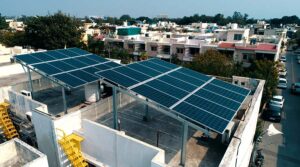
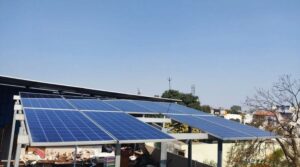
Rooftops can be affected by shade from water tanks or nearby walls, while high summer temperatures can reduce the power generated by conventional panels. This means the actual electricity output may be lower than the panel’s rated capacity. And TOPCon solar panels are designed to perform better in these real-world conditions.
These N-type panels offer higher efficiency of 25-26%; generate more electricity in low light and hot weather, and lose less performance over the years. As a result, homeowners can generate more solar power from the same amount of rooftop space.
Moreover, TOPCon panels are available in two wafer sizes:
- M10 solar wafer size: These come in lower wattages
- G12R solar wafer size: These come in higher wattages
Very few solar panel manufacturers and installers offer G12R for DCR subsidy-related projects, and SolarSquare is one of them. We use only G12R TOPCon panels to provide higher-wattage modules of 600-630 Wp for residential and commercial rooftop solar installations.
In this guide, we will explain what TOPCon solar panels are, how the TOPCon solar technology works, their efficiency, benefits and limitations, TOPCon panel price in India in 2026, and whether a TOPCon PV module is the right choice for your rooftop solar system.
TOPCon Technology at a Glance
Here’s a quick overview of the most important specifications of TOPCon technology:
| Factor | Explanation |
| Full form | Tunnel Oxide Passivated Contact |
| Cell type | N-type silicon |
| TOPCon solar cell efficiency rating | 25-26% |
| Panel wattage | 600-630 Wp |
| Temperature coefficient | -0.29% per °C |
| First-year panel degradation rate | ~1% |
| Annual degradation after the first year | ~0.4% |
| Low-light performance | Good |
| Performance warranty | 28-30 years |
| Most reputable manufacturers | Premier Energies is one of the very few manufacturers of G12R TOPCon modules |
| Best suited for | Rooftop solar systems for homes and housing societies, commercial and industrial projects, and utility-scale solar plants |
What Are TOPCon Solar Panels?
TOPCon stands for Tunnel Oxide Passivated Contact, which refers to a special layer added inside the solar cell to reduce electricity loss. TOPCon panels are high-efficiency modules made using N-type solar cells.
Like any other solar cell, a TOPCon cell converts sunlight into direct current (DC) electricity. However, its improved design allows more of that electricity to leave the cell instead of being lost internally. This helps TOPCon panels generate more power from the same amount of sunlight.
TOPCon panels also perform better than P-type PERC (Passivated Emitter and Rear Cell) panels in high temperatures and low-light conditions. They generally have higher efficiency and a lower degradation rate, which means they retain more of their generating capacity over the years.
Is TOPCon a Solar Cell or a Solar Panel?
TOPCon is technically the design of a solar cell, not the complete panel or rooftop solar system. However, the term is often used for both the cell and the finished panel.
A TOPCon solar cell is a small silicon component that converts sunlight into electricity. When multiple TOPCon cells are connected and sealed together, they form a TOPCon solar module, commonly called a solar panel.
Here’s how you can distinguish them:
- What is a TOPCon cell? The individual electricity-generating component.
- What is a TOPCon panel? A complete module made using several n-type TOPCon solar cells.
- What is TOPCon technology? The internal structure used in the solar cells.
What is an N-Type TOPCon Solar Cell?
An N-type TOPCon solar cell is made using an N-type silicon wafer. The silicon is treated with phosphorus, which results in a high concentration of free electrons and helps electricity move efficiently through the cell.
- Older P-type solar cells use boron instead.
- When boron reacts with oxygen inside the cell, it can cause LID (light-induced degradation), which reduces performance after the panel is first exposed to sunlight.
N-type silicon is much less affected by this problem. As a result, N-type TOPCon solar cells offer higher efficiency, lower initial degradation, and better long-term performance than P-type PERC cells. This is one of the main reasons many solar manufacturers are shifting towards N-type TOPCon technology.
How Does TOPCon Technology Work?
A silicon solar cell converts sunlight into electricity by releasing electrons inside the silicon. These electrons must reach the metal contacts before they can be collected as usable current.
In P-type solar cells, some electrons are lost before reaching the contacts. They recombine with holes inside the cell, reducing the amount of electricity the panel can generate.
TOPCon technology reduces this loss in two ways:
- By adding an ultra-thin tunnel oxide layer
- By adding a layer of doped silicon at the rear of the cell
Together, these layers create a more efficient path for electrons to reach the contact while limiting recombination.
Because fewer electrons are lost, more electricity leaves the cell. This is one of the main reasons TOPCon cells can achieve efficiencies of around 25-26%, compared with 22.5% efficiency output from PERC cells.
TOPCon Solar Cell Structure
From the front, or sunlight-facing side, to the rear, a TOPCon solar cell contains the following layers:
- Front metal contacts: These thin metal lines collect the electricity generated inside the cell and carry it towards the external circuit.
- Anti-reflective coating: This coating reduces the amount of sunlight reflected away from the cell, allowing more light to enter the silicon.
- Front passivation layer: This layer reduces the loss of electrons at the front surface of the cell, helping more electrical charge reach the contacts.
- Emitter: The emitter forms the electrical junction needed to separate the positive and negative charges created when sunlight enters the cell.
- N-type silicon wafer: This is the main light-absorbing layer of the cell. It is made from phosphorus-doped silicon and converts sunlight into electrical charges.
- Ultra-thin tunnel oxide layer: This extremely thin insulating layer reduces electron recombination at the rear surface while allowing useful electrons to pass through by a process called quantum tunnelling.
- Doped polysilicon layer: This layer selectively carries electrons towards the rear contact while preventing other charge carriers from reaching it.
- Rear metal contact: This contact collects the electrons passing through the polysilicon layer and transfers them out of the solar cell as usable electric current.
The ultra-thin tunnel oxide and doped polysilicon layers are the key features of TOPCon technology. Together, they form a passivated contact that allows electrons to move towards the metal contact while reducing recombination losses.
Why Is It Called a Tunnel Oxide Passivated Contact?
The name comes from the ultra-thin oxide layer at the rear of the TOPCon solar cell.
- Tunnel oxide: A silicon oxide layer, about one to two nanometres thick, is placed on the silicon wafer. Because it is extremely thin, electrons can pass through it using a process called quantum tunnelling.
- Passivated: The oxide layer protects the silicon surface and reduces the number of electrons lost through recombination.
- Contact: After tunnelling through the oxide, the electrons move through the doped polysilicon layer towards the rear metal contact, where they are collected as electricity.
The thickness of the tunnel oxide layer is critical. If it is too thick, electrons cannot pass through easily. If it is missing, more electrons are lost through recombination. TOPCon technology balances both needs by reducing losses while allowing electrons to move towards the contact.
How a TOPCon Cell Converts Sunlight Into Electricity?
A TOPCon solar cell converts solar radiation into electricity in a series of steps. Its main advantage appears at the rear contact, where the tunnel oxide and doped polysilicon layers reduce electron loss.
Here’s how the sunlight-to-electricity conversion happens:
- Step 1 – Sunlight enters the cell: The anti-reflective coating reduces reflection and allows more sunlight to reach the silicon wafer.
- Step 2 – Electrical charges are created: When sunlight reaches the N-type silicon wafer, the energy from the light releases electrons and creates positively charged holes.
- Step 3 – The charges move in opposite directions: The cell’s internal electric field directs the electrons towards the rear of the cell and the holes towards the front.
- Step 4 – Electrons cross the tunnel oxide: At the rear, electrons pass through the ultra-thin oxide layer using quantum tunnelling. The layer reduces the chances of electrons recombining with holes.
- Step 5 – The charges reach the contacts: The doped polysilicon layer guides electrons towards the rear metal contact, while the front metal contacts collect the charges moving towards the front.
- Step 6 – Electricity flows to the inverter: The front and rear contacts connect the cell to an external circuit. Direct current flows from the solar panel to the inverter, which converts it into alternating current.
Because the rear contact reduces recombination, a larger share of the electrons released by sunlight is converted into usable electricity. This is why TOPCon panels can generate more power than PERC solar panels under the same conditions.
How Are TOPCon Solar Cells Manufactured?
The TOPCon solar cell manufacturing process is more complex than producing a PERC cell. The process requires N-type silicon wafers, additional high-temperature treatments, and extremely precise control over the tunnel oxide and doped polysilicon layers.
Here’s how these cells are manufactured in a series of steps:
- Step 1 – Preparing and texturing the silicon wafer: The N-type silicon wafer is cleaned to remove impurities. Its surface is then textured with microscopic pyramid-like structures that reduce reflection and help the cell absorb more sunlight.
- Step 2 – Creating the emitter: Boron is added to the front surface of the wafer to form the emitter. This creates the electrical junction that separates the electrons and holes produced when sunlight enters the cell.
- Step 3 – Growing the tunnel oxide layer: An oxide layer, usually only one to two nanometres thick, is formed on the rear surface of the wafer. It reduces electron recombination while allowing electrons to pass through by quantum tunnelling.
- Step 4 – Adding the doped polysilicon layer: A thin layer of doped polysilicon is deposited over the tunnel oxide. It helps transport electrons towards the rear contact and, together with the oxide layer, forms the TOPCon passivated contact.
- Step 5 – Applying passivation and anti-reflective coatings: Additional coatings are added to reduce electron losses at the cell surface and prevent sunlight from being reflected away.
- Step 6 – Adding the metal contacts: Thin metal contacts are printed on the front and rear surfaces of the cell. These contacts collect the electrical charges and carry the current out of the cell.
- Step 7 – Testing and sorting the cells: The finished cells are tested and grouped by performance so that those with similar output can be assembled into the same panel.
- Step 8 – Assembling the solar panel: The tested cells are connected in strings and sealed between layers of glass and protective encapsulant. A frame and junction box are added to create the finished TOPCon solar panel.
What Makes TOPCon Solar Panels More Advanced?
The main upgrade in TOPCon modules comes from the tunnel oxide and polysilicon layers, which reduce the amount of electrical charge lost inside the cell.
Here’s why TOPCon is the most advanced solar cell technology:
- Higher sunlight conversion efficiency: The ultra-thin tunnel oxide and doped polysilicon layers reduce the number of electrons lost. Because more electrical charge generated inside the cell is collected, TOPCon cells can convert around 25-26% of sunlight into electricity.
- More power from limited roof space: High-wattage TOPCon modules can offer outputs of around 600-630 Wp. This allows more solar capacity to be installed where rooftop space is limited.
- Lower power loss in hot weather: A temperature coefficient of -0.29% per °C means TOPCon panels lose less output as their temperature rises during hot afternoons.
- Better output in low light: TOPCon panels can continue generating power effectively during cloudy weather and in the softer sunlight available during early mornings and late evenings.
- Lower initial degradation: N-type silicon is less affected by light-induced degradation. As a result, TOPCon panels experience a smaller initial drop in performance than P-type panels.
- Slower long-term degradation: After losing ~1% of their performance in the first year, tier-1 TOPCon panels degrade by only ~0.4% each year thereafter. In simple terms, they have a low panel degradation rate.
Monofacial TOPCon Versus Bifacial TOPCon
Most TOPCon solar panels available today are bifacial. In fact, when a manufacturer or installer refers to a TOPCon panel, they are usually talking about a bifacial module that can generate electricity from both sides.
- The front side captures direct sunlight
- The rear side uses light reflected from the roof or ground
N-type TOPCon cells are well suited to this design because they can generate efficiently from the rear as well as the front.
Monofacial TOPCon panels, which generate only from the front, do exist in theory but are uncommon. Manufacturers generally prefer bifacial designs because they’re more in demand and provide the possibility of additional rear-side generation without requiring a different cell technology.
What are the Advantages of TOPCon Solar Panels?
The main advantages of TOPCon PV modules are easier to understand in terms of what they mean for your roof, electricity generation, and long-term savings. Here are other advantages of TOPCon solar panels –
- More power from limited roof space: TOPCon PV cells can reach efficiencies of around 25-26%, while high-wattage modules may offer outputs of 600-630 Wp. This allows more solar capacity to be installed on a roof with limited area.
- Lower power loss in hot weather: With a temperature coefficient of -0.29% per °C, TOPCon modules lose less output as their temperature rises. This makes them a suitable choice for solar panels in Nagpur and similar high heat areas in India, where intense summer heat can reduce panel performance.
- Better generation in weaker sunlight: TOPCon panels perform well during cloudy conditions, mornings, and evenings, helping improve generation across the day.
- Additional generation from the rear: Most TOPCon panels are bifacial. Their rear side can capture light reflected from the roof or ground, although the actual gain depends on the mounting height and the reflectiveness of the surface below.
- Slower performance loss over time: Many TOPCon panels degrade by ~1% in the first year and ~0.4% annually thereafter. This allows them to retain a larger share of their original output over their working life.
- Longer performance warranty: Their low degradation rate allows manufacturers to offer performance warranties of around 28-30 years.
- Lower light-induced degradation: N-type silicon is not affected by the boron-oxygen defect found in P-type cells. As a result, TOPCon panels experience less initial power loss after exposure to sunlight.
What are the Disadvantages of TOPCon Solar Panels?
TOPCon solar modules offer better performance than older solar technologies, but they also come with a few trade-offs, listed below –
- Higher upfront cost: TOPCon panels usually cost more than Mono PERC panels because N-type wafers and the additional cell layers are more expensive to manufacture. However, the higher generation and slower degradation make these panels cost-effective in the long run.
- More complex manufacturing: Producing the ultra-thin tunnel oxide and doped polysilicon layers requires additional equipment, precise temperature control, and stricter quality checks. This complexity contributes to the higher TOPCon panel price.
- Bifacial gain depends on installation: The rear side produces additional electricity only when reflected light can reach it. Panels mounted very close to a dark rooftop surface may receive little rear-side light and deliver a smaller bifacial gain.
TOPCon Solar Panel Price in India in 2026
The price of a TOPCon solar panel depends mainly on its brand, wattage, order quantity, and whether it is a DCR or non-DCR module.
- DCR (Domestic Content Requirement) TOPCon panels: ₹21 to ₹24 per watt
- Non-DCR TOPCon panels: ~₹18 per watt
Please note: The per-watt TOPCon solar panel price listed above is an indicative range and can change based on the number of modules you order and the brand you choose.
Are TOPCon Solar Panels Eligible for the PM Surya Ghar Muft Bijli Yojana Subsidy?
Yes, TOPCon solar panels are eligible for the PM Surya Ghar Muft Bijli Yojana subsidy, provided the rooftop system meets the scheme’s requirements.
- The panels must be ALMM (Approved List of Models and Manufacturers) and DCR-compliant: Both the solar cells and modules must be manufactured in India according to the applicable MNRE (Ministry of New and Renewable Energy) rules.
- The installation must follow the official process: The consumer must apply through the PM Surya Ghar National Portal for Rooftop Solar, select a registered vendor, and obtain the required verification from the DISCOM.
Should You Choose TOPCon Solar Panels in India?
TOPCon solar panels are a strong choice if you want to generate more electricity from limited roof space and retain better performance over the long term. Their higher efficiency, better output in hot weather, and slower degradation make them worthwhile, especially for homes and businesses with high electricity consumption.
However, the right solar panel should always be selected based on your roof size, electricity bill, local weather conditions, and budget.
SolarSquare currently offers G12R TOPCon solar panels in UP and Nagpur, along with DCR-compliant options for residential systems eligible for the PM Surya Ghar Muft Bijli Yojana subsidy. Our solar experts will assess your rooftop, calculate the system size you need, and help you understand the expected generation, cost, and solar savings you will receive from day 1.
Book a free solar consultation call with SolarSquare to find out whether TOPCon panels are the right choice for your roof.
Frequently Asked Questions
What is a TOPCon bifacial solar panel?
A TOPCon bifacial solar panel is an advanced module that can generate electricity from both sides. The front captures direct sunlight, while the rear uses light reflected from the roof or ground. Most TOPCon panels available today are bifacial because N-type TOPCon cells offer strong rear-side performance.
Is TOPCon the best solar panel technology?
Yes, TOPCon is the best solar technology for Indian homes and businesses. It offers a strong combination of high efficiency, good performance in hot weather, and low degradation rate.
Are TOPCon panels better than Mono PERC panels?
Yes, TOPCon solar modules perform better than Mono PERC panels. They offer higher cell efficiency, lose less power in high temperatures, and degrade more slowly over time. Mono PERC panels cost less initially, but TOPCon panels can generate more electricity over the system’s lifetime.
Do bifacial TOPCon panels work on residential rooftops?
Yes, bifacial TOPCon panels can be installed on residential rooftops. However, the additional generation from the rear depends on how reflective the roof is.
Do TOPCon solar panels generate power during cloudy weather?
Yes, TOPCon panels continue generating electricity during cloudy weather, early mornings, and even the late evenings.
How long do TOPCon solar panels last?
TOPCon panels come with performance warranties of around 28 to 30 years. Tier-1 modules lose ~1% of their output during the first year and ~0.4% each year after that. The exact degradation rate depends on the panel model and manufacturer.
Is TOPCon better than HJT?
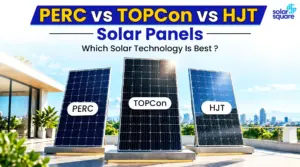
These are two very different technologies and can’t be compared directly. HJT (Heterojunction technology) panels offer excellent efficiency, temperature performance, and bifaciality, but they are more expensive and have a weaker infrastructure in India. TOPCon panels, on the other hand, are more widely available and provide a better balance of performance and price for most Indian rooftop projects.
Which are the best TOPCon panel manufacturers?
Premier Energies is one of the reputable manufacturers offering TOPCon solar panels in India.