

A solar power plant can operate for 25 years or more. So, the EPC company you choose can influence your system’s generation, savings, and reliability for decades. For instance, a 3.24 kW rooftop solar system in a tier-1 city like Nagpur can generate 4,507 units* in a year, translating into estimated electricity bill savings of ~Rs. 67,600*, when you choose a reputable solar EPC company.
Please note: The unit generation and net savings listed above are estimated values from an actual rooftop solar system installed by SolarSquare in Nagpur. These values can differ significantly for you based on the system size you install, type of panel and inverter chosen, the temperature conditions in your area, the electricity tariff in your city, how well the solar system is maintained over its lifetime, etc.
Choosing the latest technology solar panels and inverters is important, but these solar components alone do not guarantee a successful solar project. The final performance of your rooftop solar system depends on the solar energy EPC company in India that you choose to design, install, and commission the PV system.
Reliable solar EPC companies in India calculate the right system size, check roof strength, plan the electrical layout, handle approvals, install the equipment safely, and provide after-sales support after system commissioning.
A poor installation can reduce generation, create safety risks, and increase maintenance costs for years.
Since a solar power plant can operate for 25 years or more, choosing one partner from the many EPC contractors for solar power plants in India should not be based only on the lowest quotation.
This guide explains what solar EPC players in India do, the services included in an EPC contract, the factors you should compare, the questions you should ask, and the warning signs to look for so you end up with nothing but the best EPC partner for your project.
What Is a Solar EPC Company?
A solar EPC company manages the complete solar project, from the initial site survey to the final commissioning of the power plant and after-sales maintenance and cleaning of the rooftop solar system.
EPC stands for engineering, procurement, and construction:
- Engineering: The company studies your electricity consumption, checks the site, decides the right system size based on your actual power consumption, designs the mounting structure, and prepares the electrical layout.
- Procurement: It sources the best solar panels, inverters, cables, structures, and other solar equipment from manufacturers and suppliers.
- Construction: It installs the structure and equipment, completes the wiring, tests the system, and connects it safely to the grid.
Unlike general power EPC companies in India that may also work on thermal plants, transmission lines, or large civil projects, solar power EPC companies in India specialize in photovoltaic systems. Their expertise covers solar design, installation, approvals, commissioning, and long-term system performance.
What Does a Solar EPC Company Actually Do?
The best solar EPC companies in India handle the entire lifespan of the solar project, from checking whether the site is suitable to keeping the plant running after installation.
Here’s everything that SolarSquare, the #1 home solar company in India, does:
- Site survey and feasibility assessment: Engineers inspect the roof, check shading, structural strength, available space, sanctioned load, and grid conditions. This helps determine whether the project is technically and financially practical.
- Solar system engineering and design: The EPC company decides the right system size based on your electricity consumption and site conditions. It also prepares the cable plan and a 3D design of the solar system.
- Procurement of solar equipment: The company sources solar panels, inverters, cables, mounting structures, earthing equipment, and other components. The quality of these materials directly affects generation, safety, and system life.
- Construction and installation: The team installs the mounting structure, fixes the panels, completes the cabling, and sets up the inverter, earthing, and safety systems. The work must follow approved designs and electrical safety standards.
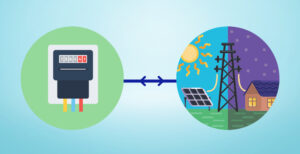
- Testing, commissioning, and grid synchronization: Before the plant starts operating, the EPC company tests the panels, strings, inverter, protection devices, and electrical connections. Then, it works in tandem with the DISCOM that installs a smart meter/bidirectional net meter before commissioning the system and making it live.
- Project handover and documentation: The customer receives system drawings, equipment warranties, test reports, approval documents, and operating instructions. These records are important for maintenance, insurance, and future claims.
- Operations and maintenance (O&M): After commissioning, the EPC company monitors generation, cleans the panels, inspects equipment, and carries out usual and emergency repair services. Regular maintenance helps prevent avoidable losses in power output.
The best EPC contractors for solar power plants in India do more than install panels. They take responsibility for the design, equipment, approvals, safety, performance, and long-term operation of the entire system.
Solar EPC Company vs Solar Installer vs Solar Developer
A solar installer, an EPC company, and a solar developer may all work on the same project, but they do not have the same responsibilities.
The table below gives a side-by-side comparison of the three:
| Provider | Primary Responsibility | Who Owns the Plant? | Best Suited For |
| Solar installer | Installs panels and equipment selected by the customer or another company | Customer | Small rooftop projects where the design and equipment are already finalized |
| Solar EPC company | Manages design, equipment procurement, installation, testing, commissioning, and plant maintenance | Customer | Residential rooftop solar systems for homes, housing societies, and commercial and industrial solar plants |
| Solar developer or RESCO | Finances, develops, owns, and operates the solar plant | Developer or RESCO | OPEX and RESCO/PPA projects |
(H3) EPC vs RESCO or OPEX Model
The main difference between the EPC and RESCO or OPEX models is who invests in the solar plant and who owns it after installation.
- Under the EPC or CAPEX model: As a customer, you pay for the solar system and own it completely. You receive the full benefit of the electricity generated and also claim applicable subsidies, tax benefits, or accelerated depreciation benefits where eligible.
- Under the RESCO or OPEX model: Under the RESCO model, the developer invests in, owns, and maintains the solar plant installed at your site. You purchase the electricity it generates at a pre-agreed rate under a solar PPA (power purchase agreement). This model reduces the upfront financial burden, but the plant remains with the developer for the duration of the contract.
The table below compares both models side-by-side:
| Factor | CAPEX Model | RESCO or OPEX Model |
| Upfront investment | Paid by the customer | Paid by the solar developer |
| Plant ownership | Customer owns the plant | Developer owns the plant |
| Electricity benefit | Customer receives the full savings generated by the solar system | Customer buys solar electricity at an agreed tariff |
| Maintenance responsibility |
| Handled by the developer throughout the PPA tenure |
| Contract period | Not applicable | Long-term PPA or RESCO agreement |
| Best suited for | Customers who can invest upfront and want maximum long-term returns | Customers who want solar electricity without an upfront investment |
What Types of Projects Do Solar EPC Companies Execute?
Solar EPC projects vary widely in size, design, approvals, and investment. A small home rooftop system, for example, requires a very different approach from a multi-megawatt solar plant.
Most major solar EPC companies in India work across the following three project categories.
#1. Residential Rooftop Solar EPC
This includes independent homes, apartment buildings, and housing societies.
- For individual homes: The EPC company sizes the system according to electricity consumption, roof space, and sanctioned load. It also handles net metering, DISCOM approvals, and the PM Surya Ghar Muft Bijli Yojana subsidy documentation.
- For housing societies: Solar is mainly installed for common-area loads such as lifts, water pumps, lighting, clubhouses, and security systems. These projects require additional planning for shared roofs, multiple meters, and society approvals.
#2. Commercial and Industrial Rooftop Solar EPC
Factories, warehouses, hospitals, hotels, schools, and offices often have high daytime electricity consumption, making rooftop solar particularly suitable for them.
These systems can range from a few hundred kilowatts to several megawatts. The solar EPC must study load patterns, roof strength, transformer capacity, electrical safety, and expected savings before designing the plant.
This is the segment where the best solar rooftop EPC companies in India prove their design depth, because a weak design on a large roof wastes lakhs of rupees every year.
#3. Captive and Group Captive Solar Projects
Large commercial and industrial consumers may install solar plants away from their premises when their rooftop space is insufficient or when they need electricity at a much larger scale.
- In a captive solar project: A company owns a solar plant that generates electricity for its own facilities. The plant may be installed within the company’s premises or at an off-site location.
- In a group captive project: Several consumers jointly own and use electricity from a large solar plant while meeting the required ownership and consumption conditions.
These are among the more complex solar EPC projects in India because they may involve transmission arrangements, open-access approvals, captive ownership compliance, and long-term energy accounting.
Why Choosing the Right Solar EPC Company Matters?
The right solar energy EPC company in India protects your investment in several ways:
- Higher power generation: Correct system sizing, panel placement, tilt, string design, and inverter selection help the plant deliver its expected output.
- Better electrical safety: Proper cabling, earthing, protection devices, and connections reduce the risk of faults, electric shocks, and fires.
- Fewer delays: An experienced solar EPC manages net metering, DISCOM approvals, subsidy documentation, and grid connection correctly.
- Lower maintenance costs: Good equipment and installation quality reduce breakdowns, repairs, and avoidable generation losses.
- Stronger long-term returns: Even small design errors can reduce electricity generation and savings over the plant’s 25-year life.
This is why the best solar EPC contractors in India focus on engineering, safety, approvals, and after-sales support, rather than simply installing panels on the roof.
How to Choose Among Solar EPC Companies in India?
Here’s a checklist that you must follow when choosing solar EPC companies for your project:
- Relevant project experience: Choose a company that has completed projects similar to yours, whether residential, housing society, C&I, or utility-scale.
- Strong engineering capability: Ask who handles system design, structural checks, string sizing, and electrical drawings. A dedicated in-house engineering team offers better accountability.
- Certified equipment: Verify the make, model, warranty, and certifications of the panels, inverter, cables, and mounting structure. For subsidized residential projects, confirm that the equipment meets the DCR and ALMM requirements.
- DISCOM empanelment: For projects involving subsidies or net metering, check whether the company is empanelled with the relevant DISCOM and familiar with its approval process.
- Clear quotation: The proposal should specify the system capacity, component brands, expected generation, project timeline, warranties, exclusions, and payment terms.
- After-sales and O&M support: Confirm who will monitor the plant, handle complaints, replace faulty equipment, and take care of plant maintenance after commissioning.
- Generation commitment: Ask whether or not the company offers a generation guarantee with a money-back promise.
- Financial and supply-chain stability: A reliable company should have the resources to complete the project on time and support warranties for years after installation.
- Verified customer reviews: Check recent Google reviews, completed project references, and customer feedback instead of relying only on testimonials shown on the company website.
Red Flags When Selecting a Solar EPC Company
A low price or big promise should not be the only reason to choose an EPC partner. Watch for these warning signs before signing the contract:
- Unrealistically low quotation: A price far below other bids may indicate poor-quality equipment, missing safety components, or hidden charges.
- No proper site survey: An EPC should inspect the roof, shading, structure, sanctioned load, and electrical setup before recommending a system.
- Unclear equipment details: Avoid solar EPC companies in India that do not specify the panel and inverter brands, model numbers, and warranties.
- No after-sales support: Confirm who will handle faults, monitoring, maintenance, and warranty claims after commissioning.
- No verifiable business presence: Check the company’s office details, website, registrations, reviews, and completed projects. Go for a company with traceable PAN India presence.
- Refusal to share references: A reliable EPC should be able to share relevant project examples or customer references.
- No written warranty or guarantee: Equipment warranties, workmanship warranty, generation estimates, and service terms should all be clearly stated in the contract.
Does Location Matter When Choosing a Solar EPC Company?
The basic solar panel technology remains the same across India, but the project conditions do not. Therefore, climate, dust, rainfall, electricity tariffs, DISCOM procedures, and net-metering rules can all vary by location.
A good EPC company should therefore understand both solar engineering and the conditions in the city or state where the plant will be installed.
A solar system should be designed for the conditions it will face throughout the year.
- In Delhi NCR, Noida, Gurgaon, Faridabad, Uttar Pradesh, Kanpur, and Punjab, high temperatures, dust, pollution, and winter fog can affect generation and cleaning frequency.
- Buyers comparing solar EPC companies in Delhi or solar EPC companies in Delhi NCR should therefore ask how the company accounts for soiling and seasonal variation.
Similarly, conditions are different in western India.
- Solar EPC companies in Maharashtra’s Mumbai must plan for humidity, heavy rainfall, and coastal corrosion.
- Meanwhile, solar EPC companies in Pune, Aurangabad, Gujarat, and Rajasthan may need to focus more on heat, dust, wind loads, and panel cleaning.
The same principle applies in the south.
- Solar EPC companies in Tamil Nadu, including Chennai, must consider coastal air, waterproofing, and corrosion.
- Solar EPC companies in Bangalore and Hyderabad may work in milder coastal conditions, but still need to account for monsoon drainage, roof strength, and local weather patterns.
In eastern India, solar EPC companies in Kolkata and other cities must pay particular attention to humidity, rainfall, drainage, and corrosion protection.
How Long Does a Solar EPC Project Take to Complete?
This is highly subjective and depends entirely on the project capacity, state and city, even the type of project (with or without subsidy), and equipment availability.
- Residential projects may take longer if DISCOM approval, net-meter installation, or subsidy documentation is delayed.
- Larger projects can be held up by equipment procurement, grid connectivity, and approvals.
Here is a general estimate for different types of solar EPC projects:
| Project Scale | Completion Timeline |
| Residential rooftop for housing societies | ~100-120 days |
| Commercial and industrial rooftop | ~100 days |
| Megawatt-scale captive projects | ~140-160 days |
Questions to Ask Before Appointing a Solar EPC Contractor
Before signing the contract, ask the following questions that will reveal how the EPC company designs the system, handles approvals, and supports the plant after installation.
- How much electricity will the system generate each year?
- Is the generation estimate guaranteed in writing?
- Which panels, inverters, and other components will you use?
- Who will handle net metering, subsidy, and DISCOM approvals?
- Who designs the system and supervises the installation?
- What does the after-sales and O&M plan include?
- How quickly will service complaints be resolved?
- Can you share references from older projects?
- What is excluded from the quotation?
What Makes SolarSquare the Best Solar EPC in India?
The top solar EPC companies in India should offer more than good panels and competitive pricing. They should have proven installation experience, strong engineering, written performance commitments, and a service team that continues supporting the system after commissioning.
SolarSquare, the #1 home solar company in India, brings these factors together at scale:
- Operations across 31 cities in 10 states
- More than 50,000 homes solarized
- Over 200 MW of solar capacity installed
- More than Rs. 300 crore in subsidies facilitated
- A 4.8 Google rating across 15,000+ reviews
Here is how these capabilities translate into a safer and more dependable solar investment.
- Savings guarantee with a money-back promise: SolarSquare is India’s first and ONLY solar company that offers a solar savings guarantee with a money-back commitment calculated at Rs. 8 per unit.
- Storm-proof solar mounting structures: SolarSquare uses its proprietary mounting structure, the WindPro Mount™, which is tested to withstand wind speeds of up to 170 kmph, is approved by IIT Bombay, uses an 80-micron HDGI coating, and has a corrosion rate of only 0.3 micron per year.
- One-year water-leakage warranty worth up to Rs. 1 lakh: We use HILTI AirTight chemical anchoring at drilling points. The anchoring seals the opening at slab level to reduce the risk of water seepage. If a seepage still occurs, we cover our customers with a 1-year water leakage warranty.
- Five years of after-sales maintenance: Solar generation can gradually fall when dust, faults, loose connections, or equipment issues are not identified on time. SolarSquare, therefore, offers a five-year after-sales maintenance plan instead of ending its responsibility at installation. The plan covers continuous remote system monitoring, monthly preventive maintenance visits, professional panel cleaning, technician support during breakdowns, electrical safety inspections, mounting structure and mechanical health checks, and assistance with equipment warranty claims.
Case Study 1: Net Bill Savings from a 3.24 kW Home Solar System
To understand what residential solar savings can look like in practice, we’ve provided an example of a 3.24 kW rooftop system installed by SolarSquare at a home in Nagpur.
The table below shows the system’s monthly generation and the estimated value of that electricity at a tariff of Rs. 15 per unit:
| Month | Generation From the PV System | Net Electricity Bill Savings @ Rs. 15 per kWh |
| January | 365 units | Rs. 5,480 |
| February | 384 units | Rs. 5,760 |
| March | 462 units | Rs. 6,930 |
| April | 468 units | Rs. 7,020 |
| May | 468 units | Rs. 7,020 |
| June | 352 units | Rs. 5,280 |
| July | 264 units | Rs. 3,970 |
| August | 274 units | Rs. 4,110 |
| September | 326 units | Rs. 4,900 |
| October | 401 units | Rs. 6,020 |
| November | 381 units | Rs. 5,720 |
| December | 360 units | Rs. 5,390 |
| Total | 4,507 units | Rs. 67,600 |
Please note: The unit generation and net savings listed above are estimated values from an actual rooftop solar system installed by SolarSquare in Nagpur. These values can differ significantly for you based on the system size you install, type of panel and inverter chosen, the temperature conditions in your area, the electricity tariff in your city, how well the solar system is maintained over its lifetime, etc.
Case Study 2: ROI From Industrial Rooftop Solar Systems
The financial impact becomes even more significant for commercial and industrial consumers with high daytime electricity demand.
SolarSquare installed a 1 MW solar plant at a manufacturing facility in Jaipur for ~Rs. 3,20,03,840. The table below shows the reported generation, estimated solar revenue, and cumulative cash flow:
| Year | Actual Generation (kWh) | Solar Revenue | Cumulative Cashflow |
| 2020-21 | 5,53,859 | ~Rs. 44,03,179.05 | ~Rs. -2,76,00,660.95 |
| 2021-22 | 14,67,271 | ~Rs. 1,17,38,168 | ~Rs. -1,58,62,492.95 |
| 2022-23 | 13,87,018 | ~Rs. 1,11,65,494.9 | ~Rs. -46,96,998.05 |
| 2023-24 | 13,01,746 | ~Rs. 1,04,79,055.3 | ~Rs. 57,82,057.25 |
| 2024-25 | 12,61,752 | ~Rs. 1,01,57,103.6 | ~Rs. 1,59,39,160.85 |
| 2025-26 | 7,10,130 | ~Rs. 50,77,429.5 | ~Rs. 2,10,16,590.35 |
DISCLAIMER: The figures mentioned above are illustrative estimates for an actual solar plant. Your generation and savings can look very different from this, depending on your location, city, system size, system technology, vendor pricing, prevailing policies, etc.
- The project recovered its initial investment and became cash-flow positive during 2023-24, its fourth year of operation.
- By 2025-26, its cumulative positive cash flow had reached ~Rs. 2.10 crore.
Conclusion
The EPC company you choose today will shape the safety, generation, savings, and reliability of your solar plant for decades. Therefore, compare solar EPC companies in India based on their engineering experience, equipment quality, written warranties, generation commitments, project record, and after-sales support.
Avoid selecting a contractor purely because it offers the lowest quotation. A dependable solar energy EPC company in India will study your requirements carefully, design the right system, manage necessary approvals, and remain accountable after commissioning.
SolarSquare provides end-to-end solar EPC solutions in India, backed by guaranteed savings, storm-resistant structures, and long-term maintenance support. Book a free solar consultation call with our experts to understand the right system size, installation cost, expected generation, and potential electricity bill savings for your property.
FAQs
What is the full form of EPC in solar?
EPC stands for engineering, procurement, and construction. In a solar project, it means one company designs the system, buys the equipment, and builds the plant under a single contract. As a result, you deal with one point of accountability instead of several vendors.
Does a solar EPC company handle subsidy and net metering?
Yes, a full-scope EPC files the subsidy claim under schemes like PM Surya Ghar Muft Bijli Yojana, submits the net-metering application, and coordinates with the DISCOM for approvals, so the paperwork does not land on you.
Do solar power plant EPC companies in India provide maintenance?
Only the best and most reputable ones such as SolarSquare do. Operations and maintenance keep the plant clean, monitored, and repaired. Check how many years of O&M are included and whether the monitoring is remote and continuous.
What can delay a solar EPC project?
Most delays are a result of pending DISCOM sign-off, the net-metering installation, subsidy processing, or unavailability of equipment. Weather and roof readiness can add time too.
What clauses should you check before signing an EPC contract with your chosen company?
Look for the generation or savings guarantee, the panel and inverter warranties, the O&M scope and duration, penalties for underperformance or delay, and a clear water-leakage or workmanship warranty for any rooftop work.