

 45 Reads
 11 mins


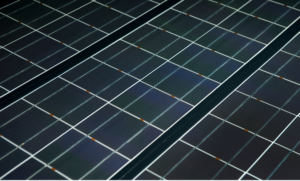
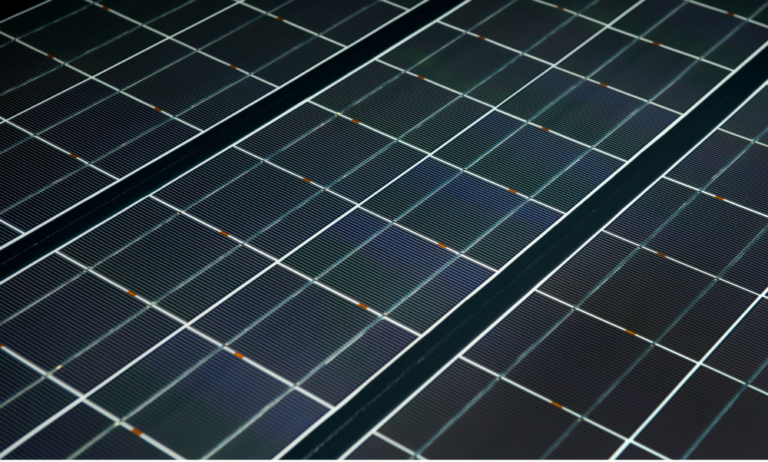
Thin-film solar panels start at ~₹16 per watt and can flex around curved roofs. You can check some facts about thin-film photovoltaic solar panels
- Price range: ~₹16 to ~₹30 per watt
- Efficiency range: 6% to 18% for most commercial panels
- Best for: Curved surfaces, portable setups, and large-space commercial or industrial installations
A solar panel can convert sunlight into usable electrical energy for daily consumption. This process works on the principle of the photovoltaic effect that allows the conversion of sunlight into solar energy. Thin-film solar panels are the new generation of modern solar cells known as thin-film photovoltaic cells.
Thin-film solar panels tend to be more budget-friendly, generate less manufacturing waste, and are genuinely flexible. This makes them a good fit for certain homes, businesses, and specialised applications. This guide walks you through what a thin-film solar cell actually is, the different types available, how efficient they really are, what they cost in India today, and where you’re likely to actually see them used.
If you’ve been researching solar for a commercial use, rooftop project, or just out of curiosity about how the technology has evolved beyond standard blue-black panels, this guide covers the essentials in simple language.
What Is a Thin Film Solar Cell?
A thin film solar panel is built from thin film solar cells, manufactured by stacking several layers of light-absorbing material on top of one another. Because these layers absorb light so effectively, they don’t need to be thick, which keeps the whole panel lightweight, flexible, and easy to work with.
In practice, some solar panel manufacturers even produce these layers as a solar film sheet. It’s a thin, flexible sheet of photovoltaic material that can be applied to curved or unconventional surfaces where a rigid glass panel simply wouldn’t fit.
How Does a Thin Film Photovoltaic Solar Panel Work?
Each thin film photovoltaic cell contains P-type and N-type semiconductor material. The P-type layer has fewer free electrons, while the N-type layer has plenty of them. When sunlight strikes the panel, electrons get energised and move across the P-N junction, generating an electric current.
This current either powers appliances directly or gets stored in a battery for later use. While traditional crystalline panels rely almost entirely on silicon, a thin film solar module can use materials like copper, indium, gallium, selenide, amorphous silicon, or cadmium telluride instead.
Types of Thin Film Solar Cells
There are three well-established types of thin film solar cells in use today, along with newer technology still making its way to market.
1. Amorphous Solar Cells (a-Si)
These cells are made of silicon and are widely used for their abundance and low cost. They are very thin, and one layer is the size of one micrometre.
2. Copper Gallium Indium Diselenide (CGID)
These cells are made of Copper, Indium, and Selenide, layered on top of each other. The thin layer of these thin-film solar panel cells provides flexibility.
3. Cadmium Telluride (CdTe)
These are the most popular thin-film solar panel cells used today. They are made from thin layers of cadmium telluride. They can absorb sunlight at shorter wavelengths than traditional solar cells. Wavelengths that are more concise help in easily converting sunlight into electricity.
4. Emerging Technology: Perovskite Cells
Perovskite thin film cells are still largely in the research and early-commercial stage. They’ve shown impressive efficiency gains in lab conditions, but haven’t yet reached the same level of large-scale, proven commercial deployment as CdTe or CIGS.
How Are Thin Film Solar Panels Manufactured?
Manufacturing starts with aluminium foil coils rolled through large presses, similar to how newspapers are printed. The machine presses these rolls into long sheets, and a printer applies a thin layer of semiconducting ink onto the coating, in an open-air setting.
This open-air printing approach is a real step up from older CIGS-on-glass or CdTe cell fabrication methods. It is faster, simpler, and considerably cheaper. Another layer of CdS and ZnO is added to ensure that sunlight can permeate through the semiconductor layer.
After this, the foil is laid down and cut into sheets. In this process, very little waste is generated, making the process highly efficient and cutting down electricity costs.
Thin Film Solar Panels Efficiency
Thin film solar panels efficiency is between ~6% and ~18%, depending on the technology used. CdTe (Cadmium Telluride) panels tend to sit at the higher end of that range, amorphous silicon at the lower end, with CIGS (Copper Indium Gallium Di selenide) falling somewhere in between.
This lower efficiency isn’t necessarily a dealbreaker. Since thin film panels are cheaper to produce, the trade-off often works out fine for large installations with plenty of open space, even if it means covering more area for the same output as a smaller crystalline system. For a sprawling solar farm or a large commercial rooftop, that trade-off between efficiency and cost per watt can genuinely work out in thin film’s favour.
Do Thin Film Panels Perform Better in Hot Weather?
Thin film panels generally hold up a bit better in high heat than crystalline silicon, since their output tends to drop less steeply as temperatures rise. That said, this varies by technology, and it isn’t accurate to assume every thin film panel automatically outperforms every crystalline panel once the temperature climbs.
Advantages of Thin Film Solar Cells
Here’s what makes thin film solar cells genuinely worth considering:
- They are very flexible, making them easy to use in various applications.
- They are lighter, and mass production requires less capital.
- They are environmentally friendly because they contain less percentage of silicon. Thus, there are fewer emissions during their production.
- They work even on cloudy days. The thin-film solar cells have a variety of layers for absorbing light of varying degrees. Thus, they can produce electricity in cloudy, rainy weather by absorbing ultraviolet radiation.
Limitations of Thin Film Solar Panels
Some of the limitations of thin-film photovoltaic solar panels are:
- The thin-film solar cells are less efficient, converting only 20 to 30% of the solar energy into electricity.
- More space is required for their installation.
- They also absorb more heat, thereby making heat retention higher. Thin-film solar panels are placed directly under the sunlight. Hence, they take a long time to cool down.
Thin-Film Solar Panel Price in India
Thin film solar cells generally cost less than crystalline silicon panels, largely because they use far less raw material and are cheaper to produce. A basic thin-film solar panel price in India starts from around ~₹16* to ~₹ 30* per watt depending on the supplier and quality, though pricing varies quite a bit based on brand, technology, and order quantity.
Cost has been a barrier keeping thin film technology out of everyday use for a long time, but manufacturers have steadily worked to bring prices down and make this option more accessible. When comparing a full system rather than just the raw panel, always check whether a quote covers just the thin film solar module itself, or the complete installation, since mounting structure, inverter, and wiring add substantially to the final number.
*Disclaimer: The thin-film solar panel prices mentioned above are indicative estimates based on publicly available market data as of 2026. Actual thin-film solar panel prices can vary significantly based on the brand, technology, and order quantity. These rates are intended for general informational purposes only and should not be treated as an official quotation or offer. SolarSquare does not manufacture, sell, or install thin-film solar panels. We do not earn commission or revenue from any thin-film solar panel vendors, nor do we endorse any specific brand.
Applications of Thin Film Solar Panels
Thin film’s light weight and flexibility open up uses that rigid crystalline panels can’t easily match:
- Utility-scale solar farms, where lower per-watt manufacturing cost offsets the need for more land
- Building-integrated photovoltaics (BIPV), where flexible panels blend into facades, windows, or curved rooftops
- Portable and off-grid solar setups
- Vehicles and transportation, including solar-assisted charging on some EVs
- Commercial and industrial rooftops with large, uninterrupted surface area to spare
Are Thin Film Solar Panels Suitable for Homes?
For most Indian homes, a thin film solar panel isn’t usually the first choice, and that comes down to simple math. A standard 1 kW rooftop installation needs around 100 square feet, and thin film’s lower efficiency means needing even more roof space than that to generate the same output as a crystalline system. Most homeowners don’t have unlimited rooftop space to spare, especially once water tanks, drying areas, or other everyday uses are accounted for.
Thin film panels can make sense for specific home situations, unusual roof shapes, curved surfaces, or where weight limits rule out heavier crystalline panels. For a typical rooftop solar installation aimed at maximising savings within limited space, monocrystalline silicon panels, which are what most standard on-grid residential systems use, remain the more space-efficient and widely available choice.
In addition, most residential solar installers in India, and the subsidy structure under schemes like PM Surya Ghar Muft Bijli Yojana, are built around standard monocrystalline panel installations. Homeowners specifically interested in thin film for a rooftop project would need to confirm availability, installer experience, and subsidy eligibility for that particular technology before committing. The subsidy eligibility includes:
- You should be an Indian resident.
- The property should be residential (commercial and industrial properties aren’t eligible).
- You should have the property ownership and roof rights.
- You should have an active DISCOM electricity connection.
- You must have at least 80-100 sq. ft. of shadow-free rooftop space for a 1 kW solar system.
Conclusion
Thin film solar panels have real strengths; they’re lightweight, flexible, and genuinely useful across a wide range of applications. But before choosing this technology, it’s worth thinking carefully about installation space, since these panels typically need more roof area, and the surface should get direct, uninterrupted sunlight, along with roof strength that can support the setup.
Whether a thin film solar panel or a monocrystalline one makes more sense really comes down to your specific site, available space, and what you’re trying to achieve, not simply picking whichever technology sounds newer.
Frequently Asked Questions
What makes the thin-film solar cells so high in demand?
These cells are made using affordable materials. Also, the manufacturing technique has the lowest environmental impact. This makes these solar panels quite efficient.
Why should you choose a thin-film solar cell?
Thin-film solar cells work even during cloudy or rainy weather or in low light. This is due to the variety of materials that allow absorbing light of different frequencies.
How long do the thin-film solar panels last?
The thin-film panels have a shelf life of 10-20 years. That’s shorter than monocrystalline or polycrystalline panels, which usually run for 25 to 30 years. The shorter lifespan depends on the materials used and degradation rates.
Is a thin film solar module available for residential use in India?
Yes, though it’s far less common than monocrystalline panels for home rooftops. Thin film solar modules are more frequently used in commercial, industrial, and specialised applications like BIPV (Building-integrated photovoltaics), where their flexibility and light weight offer a genuine advantage over rigid panels.
What’s the difference between a solar film sheet and a standard thin film solar panel?
A solar film sheet usually refers to a thin, flexible photovoltaic layer that can be applied directly to curved or unconventional surfaces. On the other hand, a standard thin film solar panel is typically framed and mounted like a conventional module, just built using thinner, lighter photovoltaic layers than crystalline silicon.
Do thin-film solar panels need special disposal at end of life?
Yes. Some thin-film panels contain regulated materials, like cadmium in CdTe panels. They shouldn’t go to a regular scrap yard or landfill. They need to be handled through a licensed solar panel recycling facility instead. This keeps harmful materials out of soil and water.
Are thin-film solar panels waterproof or weatherproof?
Most thin-film panels handle rain, humidity, and heat quite well. Their flexible design also makes them less likely to crack under pressure compared to rigid glass panels. You should always check the manufacturer’s rating before using them in extreme weather conditions, since quality varies a lot between brands.


 Previous Article
 16 min






![10 kW Solar Panel Price in India [With and Without a Subsidy]](https://cdn.solarsquare.in/blog/wp-content/uploads/2025/07/18165650/10-KW-solar-panel-300x167.webp)