
 957 Reads
 17 mins




Electricity bills in Kerala rise by 3-6% every year. A rooftop solar system helps reduce that pressure by letting you generate your own electricity from sunlight for 25 years or more, lowering bills by up to 90%. In Kerala, most homeowners make this switch through the Soura rooftop solar scheme, which is the Kerala State Electricity Board’s (KSEB) rooftop solar program.
But the Soura rooftop solar scheme is often misunderstood. Unlike common belief, it is not a separate Kerala state subsidy program. The only solar subsidy in Kerala is the central government’s PM Surya Ghar Muft Bijli Yojana, capped at Rs. 78,000 for systems with a capacity of 3 kW or higher. The subsidy comes under the central PM Surya Ghar Muft Bijli Yojana, while Soura is KSEB’s rooftop solar programme for facilitating installations and related approvals in Kerala.
This guide breaks down what the Soura rooftop solar scheme actually is, how it connects to the PM Surya Ghar Muft Bojli Yojana, the subsidy you can claim and who qualifies for it, the step-by-step application process, how net metering settles your solar bill at the end of the year through KSEB, and the rooftop solar financing options that make rooftop solar affordable for everyone.
What is the Soura Rooftop Solar Scheme?
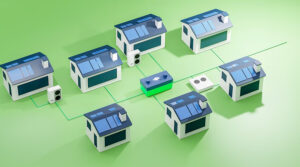
The Soura scheme is the rooftop solar program run by the Kerala State Electricity Board (KSEB) for homes and housing societies across the state. Under the scheme, you install solar panels on your own roof, run your home during the day on the solar electricity those panels produce, and send surplus units you do not use back into the KSEB grid.
The central government’s solar subsidy brings down what you pay to install the rooftop solar system, and net metering makes sure you earn credit for the surplus you export. More than 35,000 customers in Kerala have already gone solar through the Soura rooftop solar scheme.
Who Launched the Soura Rooftop Scheme?
The Soura rooftop solar scheme was launched and is run by KSEB, Kerala’s electricity distribution licensee.
KSEB introduced the scheme to help Kerala add more rooftop solar capacity and reduce its dependence on power purchased from outside the state. When the Soura rooftop scheme began, KSEB aimed to bring rooftop solar to 75,000 homes and add 350 MW of rooftop solar capacity across Kerala.
- The scheme was originally linked to the central government’s Grid-Connected Rooftop Solar Programme Phase II, under which Kerala received a rooftop solar capacity allocation from MNRE.
- Later, after the PM Surya Ghar Muft Bijli Yojana was launched in 2024, the older Phase II rooftop solar programme was subsumed under PM Surya Ghar.
So, for Kerala homeowners today, the only subsidy available is the PM Surya Ghar Muft Bijli Yojana. Soura scheme is the KSEB route through which rooftop solar applications, installation, and subsidy processing are handled in Kerala.
What is the Main Goal of the Soura Scheme?
The Soura rooftop solar scheme is built around a few connected goals.
- Lower household bills: Every electricity unit your solar system generates is a unit you no longer buy from the KSEB grid.
- Wider solar adoption: It makes the switch to solar realistic for ordinary homes, not just large buildings.
- Less strain on the grid: Solar power made on the roof reduces what KSEB has to supply from conventional sources.
- Generation at the point of use: Electricity is produced where it is consumed, which avoids the losses that come from carrying it long distances.
- Better use of scarce space: Kerala has little spare land for large solar farms, so rooftops do the work instead.
Now, let’s find out the status of the Soura Rooftop Solar Scheme in 2026.
Soura Rooftop Solar Scheme Status in 2026
The Soura rooftop solar scheme does not work exactly the way it did when it was first launched.
- In its earlier phase: The Soura rooftop solar scheme followed the older MNRE solar subsidy structure, under which eligible residential consumers could receive up to 40% central support. Registrations were initially handled through KSEB’s own system.
- In the later phase: The process moved to Kerala’s E-Kiran portal, and the earlier subsidy registration route was paused during the transition.
- For homeowners applying in 2026: The subsidy falls under the PM Surya Ghar Muft Bijli Yojana. KSEB’s role is to process and support rooftop solar applications in Kerala through the Soura route.
This change also makes it important to understand how the Soura program differs from the PM Surya Ghar Muft Bijli Yojana.
Is Soura Rooftop Solar Scheme Different from the PM Surya Ghar Muft Bijli Yojana?
The Soura rooftop solar scheme is not a Kerala state subsidy, even though its name and KSEB’s involvement make it look like one. Here is what is actually happening.
- The subsidy grant is central: The subsidy is funded by the Ministry of New and Renewable Energy and reaches the end customer through the PM Surya Ghar Muft Bijli Yojana.
- Soura scheme is the delivery channel: It is KSEB’s program for organizing the subsidy and the installation, not a separate fund the state has set aside.
- KSEB manages everything related to the grant: This includes the tendered pricing, the approved vendor list, the feasibility check, net metering, and the upfront deduction handled under the Soura tender model.
So, when you hear it called the KSEB subsidy or the Kerala subsidy, that describes who hands it to you, not who pays for it.
How the Soura Scheme Connects to the PM Surya Ghar Muft Bijli Yojana?
From your side as a homeowner, the two work as a single process. PM Surya Ghar provides financial benefits, and KSEB is the local body that makes it happen.
- PM Surya Ghar Muft Bijli Yojana provides the subsidy: It is the central scheme that determines how much financial assistance you receive from the government.
- KSEB is your discom: As the distribution company, it reviews and clears your rooftop solar installation application in Kerala.
Two portals carry the work between them.
- You register and file your subsidy claim on the PM Surya Ghar Muft Bijli Yojana National Portal for Rooftop Solar.
- KSEB’s E-Kiran portal handles feasibility approval, empanelled developer selection, and net meter or smart meter installation.
Why is the Soura Rooftop Solar Scheme Important for Kerala?
The Soura rooftop solar scheme is important because it helps Kerala solve the problem of limited land for large solar projects, rising household electricity bills, and dependence on power purchased from outside the state.
Let’s understand the importance of the scheme in detail:
- Limited land makes rooftop solar more practical: Kerala’s dense towns, smaller plots, and high land value make large solar farms difficult to scale. Rooftop solar works better because it uses existing roof space without needing extra land.
- Kerala households can reduce high electricity bills: A rooftop solar system can lower electricity bills by 90% or more, and continue generating free power from solar radiation for 25+ years.
- It supports Kerala’s renewable energy targets: Each grid-connected rooftop solar system adds renewable energy capacity to the state and helps Kerala move towards a cleaner electricity mix.
- It gives homeowners more control over energy costs: Once your rooftop system covers most of your electricity use, yearly tariff hikes affect you less. You still stay connected to the grid, but a large share of your power comes from your own roof.
For most homeowners, the next question is how much subsidy they can receive when installing rooftop solar. Let’s tackle that.
How Much Solar Subsidy Can You Receive Under the PM Surya Ghar Solar Scheme in Kerala 2026?
The maximum subsidy that homeowners in Kerala receive under the PM Surya Ghar Muft Bijli Yojana is Rs. 78,000 for systems of 3 kW or more. Here’s the tiered subsidy structure for homes:
- Solar subsidy in Kerala for systems up to 2 kW: Rs. 30,000 per kW
- Solar subsidy in Kerala for additional capacity up to 3 kW: Rs. 18,000
- Solar subsidy cap in Kerala for systems equal to or above 3 kWp: Rs. 78,000
Here’s a snapshot of the total rooftop solar subsidy in Kerala for different-capacity solar systems:
| Solar System Size | PM Surya Ghar Muft Bijli Yojana Solar Subsidy in Kerala |
| 1 kW solar system | Rs. 30,000 |
| 2 kW solar system | Rs. 60,000 |
| 3 kW solar system | Rs. 78,000 |
| 4 kW solar system | Rs. 78,000 |
| 5 kW solar system | Rs. 78,000 |
| 10 kW solar system | Rs. 78,000 |
For housing societies, the PM Surya Ghar Muft Bijli Yojana subsidy is Rs. 18,000 per kW, capped at Rs. 90 lakh for systems of 500 kW or more.
Here’s a snapshot of the solar subsidy in housing societies for different capacity solar systems:
| Solar System Size | PM Surya Ghar Muft Bijli Yojana Subsidy for Housing Societies |
| 30 kW solar system | Rs. 5.40 lakh |
| 50 kW solar system | Rs. 9 lakh |
| 100 kW solar system | Rs. 18 lakh |
| 200 kW solar system | Rs. 36 lakh |
| 300 kW solar system | Rs. 54 lakh |
| 500 kW solar system | Rs. 90 lakh |
The Three Soura Rooftop Solar Scheme’s Business Models Explained
KSEB runs three solar adoption business models, and the right one for you depends on whether you want to own the system, avoid upfront cost, or simply earn from your roof.
- CAPEX model, where you own the system: Under the CAPEX model, you pay for the rooftop solar system and own it completely. This means the electricity generated by the system directly reduces your bill, and you get the full financial benefit. The main advantage is that your long-term savings are higher because the system belongs to you. The trade-off is that you need to pay the upfront cost.
- RESCO model, where the developer owns it: Under the RESCO model, a solar developer installs and operates the system on your roof. You do not have to pay the full installation cost upfront. Instead, you buy the electricity generated by the system, usually at an agreed rate, as listed in the solar power purchase agreement (PPA). This model works for consumers who want solar savings without making a large initial investment.
- Third party, where you lease your roof: Under this model, you allow a developer to use your roof for a solar project. The developer installs, owns, and operates the PV system, while you earn income from leasing your roof. This option is useful if you do not want to invest in a solar system or use the power yourself, but still want to earn from an unused rooftop.
Which is the Right Model for Your Home?
The right Soura model between CAPEX and OPEX/RESCO or leasing depends on whether you want to own the system, avoid the upfront cost, or earn from your roof.
- Choose the CAPEX model if you can pay for the system and want the highest long-term savings. Since you own the system, most of the financial benefit stays with you.
- Choose the RESCO model if you want solar power but do not want to spend a large amount upfront. The developer owns and maintains the system during the PPA tenure, while you pay for the electricity it generates.
- Choose the third-party leasing model if you do not want to use the solar power yourself and mainly want rental income from your roof. In this case, your roof becomes an earning asset for the developer’s solar project.
Eligibility for the Soura Rooftop Solar Scheme
Eligibility for the Soura rooftop solar scheme depends on your KSEB connection and your claim to the property. You can apply under this scheme if:
- You have an active KSEB domestic connection in your name.
- You have not previously claimed a central rooftop subsidy on the same property for systems of 3 kW or more.
- You are an Indian citizen installing made-in-India, ALMM-approved solar panels.
Roof, Ownership, and KSEB Connection Requirements
Before your rooftop solar system is approved, KSEB will confirm that your roof, electricity connection, and consumer details are suitable for installation.
- Your roof should have enough shade-free space: For a 3 kW rooftop solar system, you’ll need ~250 to 300 sq. ft. of shadow-free roof area. The space should not be shaded by trees, nearby buildings, water tanks, or other structures.
- You need a valid KSEB consumer number: The solar system should be linked to your electricity connection, so your KSEB consumer number is required during the application and net metering process.
- The applicant should have rights over the roof: Since the system is installed on the property, the applicant should either own the house or have permission to use the roof for solar installation.
Capacity Limits Under the KSERC Net Metering Regulations in Kerala
KSERC (Kerala State Electricity Regulatory Commission) limits the size of rooftop solar systems based on the consumer category. For some larger systems, the regulations also require battery storage. The storage requirement is calculated as a percentage of the system’s generation potential.
- Domestic consumers: Homes can install rooftop solar systems up to 20 kW. Battery storage is required only for larger systems (10% storage for systems above 10 kW and up to 15 kW, and 20% storage for systems above 15 kW and up to 20 kW). From April 1, 2027, systems between 5 kW and 10 kW will also need 10% storage.
- Industrial consumers: They can install industrial solar systems up to 500 kW. Battery storage is required for higher-capacity systems (10% storage for systems above 25 kW and up to 100 kW, and 20% storage for systems above 100 kW and up to 500 kW).
- Apartments, colonies, and common-area connections: Common-area connections can also install systems up to 500 kW, but the system size must not exceed the connected load or contract demand. The same storage rule applies. 10% storage above 25 kW and up to 100 kW, and 20% storage above 100 kW and up to 500 kW.
What are the Documents Needed to Apply for the Soura Rooftop Solar Scheme?
Here are the core documents you will need to apply for the Soura rooftop solar scheme in Kerala:
- Identity proof
- Proof of property ownership
- Latest KSEB bill with consumer number
- Bank account details for the subsidy
- Rooftop photographs
Once these documents are ready, you can begin the application process, explained below.
How to Apply for the Soura Rooftop Solar Scheme?
You can simply follow the steps listed below to apply for the Soura rooftop solar scheme in Kerala in 2026:
- Step 1: Register on the rooftop solar/discom portal: Sign up with your mobile number and KSEB consumer number, choose Kerala and KSEB as your discom, and submit the application.
- Step 2: Get technical feasibility approval from KSEB: KSEB checks if the connection and local network can take the system. Feasibility approval comes before installation.
- Step 3: Select an empanelled developer: The solar vendor must be on the approved list of empanelled developers on the KSEB or PM Surya Ghar National Portal. Using a non-listed vendor disqualifies you from subsidy eligibility.
- Step 4: Installation and inspection: The developer installs the solar system. KSEB inspects before the system becomes live and starts generating power.
- Step 5: Net meter installation and commissioning: A net meter replaces the old meter. You have to sign the net meter agreement with the DISCOM. Commissioning makes the system live and grid-connected.
- Step 6: Subsidy disbursal and timelines: This is only relevant to homes and housing societies, as commercial users do not receive a subsidy. You can register on the PM Surya Ghar Muft Bijli Yojana National Portal to claim your subsidy.
Net Metering and Billing Under the Soura Rooftop Solar Scheme
Solar net metering is the billing system that converts your rooftop solar generation into savings. It tracks how much solar power your home uses directly, how much extra power you send to the KSEB grid, and how that exported power is adjusted against your bill.
How Does Net Metering Work?
Here’s the full flow for net metering in Kerala:
- Solar power is used by your home: If your rooftop PV system is generating electricity while your appliances are running, that solar power is used directly, reducing the units you buy from KSEB.
- Extra solar power is exported to the grid: If the system produces more electricity than your home needs at that moment, the extra units are sent to the KSEB grid.
- Exported units are adjusted against imported units: KSEB first adjusts the exported solar units against the electricity you import during the same billing cycle.
- Unused surplus is banked for later use: If any exported units remain after adjustment, they are banked. These banked units can be used to offset your future electricity imports.
- Banked units are used in a set order: When you use banked energy later, it is first adjusted against solar-hour imports, then off-peak imports, and then peak-hour imports.
- Some surplus can be used to cover fixed charges: If surplus units are still available at the end of the billing period, the units needed to cover fixed charges, meter rent, and similar charges are settled at the applicable APPC or feed-in tariff rate.
- Year-end surplus is settled separately: At the end of the financial year, any remaining banked energy is paid out by KSEB before 30 April of the following year, unless you choose to carry it forward.
KSERC Settlement: Banking and What KSEB Pays for Surplus?
If KSEB settles your remaining surplus in cash, the rate depends on whether you are an existing or new prosumer (producer and consumer of solar electricity):
- Existing prosumers: Rs. 3.08 per kWh
- New prosumers: Rs. 2.79 per kWh for solar
Net metering necessarily does not mean KSEB pays you the full retail electricity tariff for every extra unit you export. Your biggest savings come from using your own solar power and offsetting exported units against your bill. Cash payout applies only to the surplus remaining after billing and banking adjustments.
Financing and Loan Options for Rooftop Solar
The PM Surya Ghar Muft Bijli Yojana subsidy reduces your final cost, but you usually have to pay for the rooftop solar system first. The subsidy is credited later, after installation and approval. This is where a solar loan can help.
KSEB lists a loan facility on its E-Kiran portal, and several banks run dedicated solar loan products for rooftop systems. This allows you to install the system now, repay the loan in EMIs, and use the subsidy amount to prepay part of the loan once it is credited to your bank account.
Before choosing a loan, compare the interest rate, repayment tenure, processing fee, prepayment rules and total EMI. The best solar loan is the one that keeps your monthly repayment comfortable while still making solar savings worthwhile.
Conclusion
For Kerala homeowners, the Soura rooftop solar scheme makes solar easier to understand and access. The subsidy comes through the PM Surya Ghar Muft Bijli Yojana, while KSEB handles the application, net metering and billing process in the state.
SolarSquare is not operational in Kerala at the moment, but we help homeowners go solar across 29 other Indian cities. If you are planning a rooftop solar installation and want to understand the right system size, subsidy, savings, and installation process for your home, book a free consultation call with SolarSquare.
FAQs
What types of solar systems can be installed under the Soura Rooftop Solar Scheme?
Under the Soura rooftop solar scheme, Kerala homeowners can install grid-connected rooftop solar systems. This includes on-grid systems and, where allowed, hybrid systems with battery backup.
Is there any separate Kerala state subsidy?
No, Kerala does not currently offer a separate state subsidy for residential rooftop solar installation. The subsidy is provided under the central PM Surya Ghar Muft Bijli Yojana. Soura rooftop scheme, on the other hand, is the KSEB route through which the application and subsidy process is handled in Kerala.
Is net metering available in Kerala?
Yes, net metering is available in Kerala under KSERC regulations. It allows your exported solar units to be adjusted against the electricity you import from the KSEB grid, with any remaining surplus banked or settled in accordance with the applicable rules.
Can tenants apply for the Soura rooftop solar scheme?
Yes, but tenants need written permission from the property owner. Since the solar system is installed on the roof and linked to the KSEB electricity connection, owner approval is required.
Where can I find KSEB-approved solar vendors?
You can find approved or empanelled solar vendors on the KSEB portal and the PM Surya Ghar Muft Bijli Yojana National Portal for Rooftop Solar. Before signing with any installer, check that the vendor is listed as approved for rooftop solar work in Kerala.
How long does the KSEB solar application process take from start to finish?
The process usually takes around 30 days, but the exact timeline can vary. Delays may occur if documents are incomplete or feasibility approval takes longer.


 Previous Article
 30 min