The need for warehouses and logistics parks is increasing like never before in India. With an e-commerce boom and dedicated freight corridors and industrial park developments, logistics infrastructure is going up at a pace. Cities like Mumbai, Pune, Bengaluru, Hyderabad, Chennai, Delhi NCR, and Ahmedabad are seeing massive logistics hubs come up on their outskirts.
Warehouses and logistics parks in India are going solar to cut the huge cost of electricity. The electricity bill at the end of the month? It can run into lakhs. Sometimes well above ₹10 lakh for a single facility.
Warehouses and logistics parks across India are increasingly turning to solar to reduce their high electricity costs, with monthly power bills for a single large facility often running into lakhs of rupees and, in some cases, exceeding ₹10 lakh.
Think about everything running inside a modern warehouse at any given moment. The air conditioning, conveyor belts, refrigeration units in cold storage facilities cannot be switched off, not even for an hour. The cameras, the security lights, the automated gates. All of it running simultaneously, all day, every day.
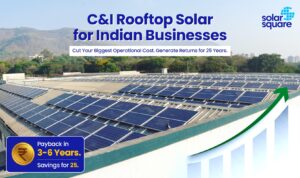
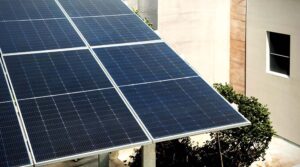
So, when industrial solar panels started making financial sense, warehouse owners and logistics park developers paid attention. A large, flat rooftop with nothing on it is essentially an unused power plant. Put solar panels on it, and that same roof starts generating free electricity every day. No fuel. No price hikes. Just sunlight doing the work.
That’s why warehouses across India are going solar. Not because it sounds good in a brochure. Because it genuinely cuts costs and, in this business, every rupee saved on operations matters.
Why Electricity Is the Biggest Hidden Cost in Indian Warehouses
People who are running warehouses will agree that their highest costs are electricity rates, rent, manpower, and transport. Electricity in warehouses and logistics parks is not one big switch you can turn off when things slow down. It is dozens of systems running in parallel, most of which have no off button.
There is a system called HVAC (Heating, Ventilation, and Air Conditioning) that maintains the temperature in a certain range. Its role is not just for the comfort of the workers, but for storing the products as well. Products like medicines, FMCG (Fast-Moving Consumer Goods), and electronics all have specific temperature requirements.
In addition, material handling equipment such as conveyors, stackers, and automated sorting systems runs through entire shifts. EV(Electric Vehicle) charging bays for electric forklifts are becoming standard in newer facilities, adding another constant draw. Security infrastructure, including cameras, motion sensors, and perimeter lighting, never goes off. Refrigeration in cold chain facilities is perhaps the most unforgiving of all; it runs 24 hours a day, 365 days a year, without exception.
All of this adds up to a power consumption profile that is heavy, consistent, and very hard to reduce without affecting operations.
How Much Do Warehouses Actually Spend on Power?
The total power spent on warehouses varies based on size, operations, and state. Here you can check the rough picture to give you a sense of scale.
- A standard warehouse of around 50kW with basic operations, including lighting, HVAC system, and modest material handling, spends between ~₹3 lakh and ₹ 6 lakh per month on electricity.
- A warehouse with a ~₹1.5 lakh square foot facility with automation, round-the-clock operations, and a charging bay for electric equipment, the spend goes between ~₹10 lakh and ₹ 20 lakh per month.
- In addition, cold storage facilities are in a category of their own. A mid-sized cold chain warehouse spends ~₹ 25 lakh to ₹ 40 lakh every single month just to keep the refrigeration running.
Over a year, that is a significant chunk of operating cost sitting in electricity bills alone. And unlike rent, which is locked in at a fixed rate for years, electricity costs have no ceiling.
*Please note that prices are subject to change. The above-mentioned commercial monthly electricity cost is indicative and not fixed. The electricity, refrigeration, and charging cost range of a warehouse varies depending on factors like size, operations, and state tariff rates. The estimated range presented above may change depending on these factors.
Why Warehouses Are Perfect for Solar
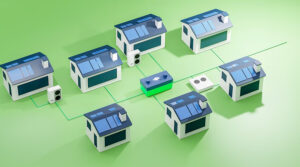
While we install rooftop solar, things that matter the most are shaded roofs, complex structures, load bearing limitations. Warehouses have none of these problems. They have flat roofs, power can be consumed during daytime operations, and have high base loads. These three things make warehouses exceptionally well suited for solar, and they all work together.
- Large, unobstructed rooftops: A typical Grade A warehouse has tens of thousands of square feet of flat, open rooftop with no obstructions (chimneys, water towers). So, nothing is blocking the sun, which translates directly into generation capacity. More usable roof area means more panels, which means more units generated every day.
- Daytime operations that align with solar generation: Most warehousing activity happens between 8 AM and 6 PM, the same window when solar panels are working at full capacity. This is more important than most people realise. When solar generation and power consumption happen at the same time, you use the electricity directly. You do not need expensive battery storage to hold it and release it later.
- The base load is always high: Some buildings consume electricity in peaks and troughs, heavy at certain hours, almost nothing at others. Warehouses are different. The HVAC runs all day. The security systems never stop. Refrigeration is constant. This means nearly everything solar generates gets consumed on-site, so you are not wasting units or getting a fraction of the benefit.
Owner-Occupied vs. Leased Warehouse Solar: Who Should Install What
Not every warehouse operator owns the roof they work under. That changes the solar conversation quite a bit.
- If you own the warehouse: You can install a rooftop solar system, own it outright or through a low-EMI financing plan, and keep the savings for ~ 25 years. You can also decide on system size, expansion plans, and whether to add battery storage later. There is no one else to consult, no lease terms to negotiate around.
- If you lease the warehouse: Many facility operators now go with a Power Purchase Agreement, or PPA. A solar company installs and owns the system on your roof, and you simply buy the power it generates at a lower rate than your DISCOM (Distribution Company) tariff. You can save from day one without investing and worrying about maintenance. The catch is that you need your landlord’s sign-off, since the panels sit on their asset. Most landlords agree once they see it does not cost them anything and often adds value to the property.
- If you are a landlord renting out warehouse space: Solar can actually work in your favour too. A solar-powered warehouse is more attractive to tenants, especially larger logistics players who have their own sustainability targets to hit. Some landlords install the system themselves and build the cost into rent or common area charges, turning it into a small additional revenue stream.
What Does a Warehouse Solar System Actually Cost in India?
The cost of solar has come down over the last decade, but it is still a capital investment for people installing solar in warehouses.
For a standard solar system installed on a commercial warehouse in India, the cost is roughly between ~₹29,000 and ₹ 50,000 per kW. So, a ~ 300-kW system, which is a reasonable starting point for a mid-sized warehouse, would cost somewhere between ~₹ 90 lakh and ₹1.5 crore.
A larger 500kW system, ideal for a bigger facility, comes in between ~₹1.5 crore and ₹ 2.5 crore depending on the panel brand, inverter specifications, and structural requirements of the roof.
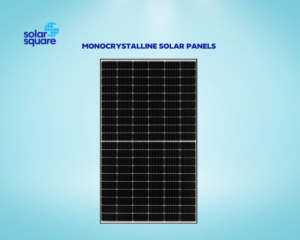
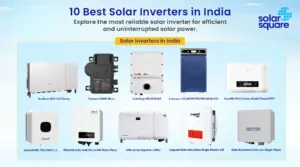
The overall cost of a warehouse solar system includes panels, mounting structures, inverters, wiring, monitoring systems, and installation charges.
You can check the estimated cost of a commercial solar power plant in India below:
| Size of Industrial Solar Energy Systems | Estimated Cost of Commercial Solar Power Plants in India in 2026* |
| 50 kW | ~₹ 20 lakh to ~₹ 30 lakh |
| 100 kW | ~₹ 35 lakh to ~₹ 50 lakh |
| 200 kW | ~₹ 60 lakh to ~₹ 1 crore |
| 300 kW | ~₹ 90 lakh to ~₹ 1.50 crore |
| 500 kW | ~₹ 1.50 crore to ~₹ 2.50 crore |
| 1 MW | ~₹ 3 crore to ~₹ 5 crore |
*Please note that prices are subject to change. The above-mentioned commercial solar installation cost is indicative, and not fixed. The final commercial solar panel cost can vary based on the type of solar panels you use (imported and DCR solar panels have a cost variation of ~30%), type of solar inverter you choose (string inverters and optimizers have a cost variation of ~10-15%), type of solar industrial system, whether or not you use a battery energy storage system (it increases the final cost by almost 40%), mounting structure height, type of after-sales service, roof height, etc.
#System Sizing: How Many kW Does Your Facility Need?
The sizing of solar panel depends on two things, including the amount of electricity consumed by you and the available roof space.
For every 1 kW of solar capacity needs roughly 10 square meter of usable shadow free roof area, and it generates ~1,300 to 1,500 units of electricity per year in most parts of India.
For a warehouse consuming 30,000-1,00,000* units per month, it would cover roughly 65–80%* of daytime consumption.
The right way to size a system properly is through an energy audit. It looks at your actual consumption data month by month, identifies your peak load hours, and maps that against the solar generation potential of your specific location and roof orientation.
*Disclaimer: Figures are indicative estimates based on general industry patterns. Actual consumption, load profile, and payback period will vary based on the specific size, location, operating hours, and energy requirements of each building. A site-specific energy audit is recommended before finalizing system sizing or ROI projections.
#CAPEX vs RESCO vs Open Access: Which Model Works for You?
One thing that has changed over the last few years is solar financing. You no longer have to pay for the entire capital at once. There are various solar models through which you can finance warehouses:
Three ways you can finance your solar for warehouses:
- Capex model: For the CAPEX solar model, you or your business has to pay for the system upfront. The best part is you own it and keep all the savings. The upfront cost is high in this case, but you get the best long-term returns as every rupee saved on electricity belongs to you.
- RESCO model: For the RESCO model, a solar company installs the system on your roof at their cost. You pay them per unit for the electricity generated, at a rate lower than your current grid tariff. The best part of this model is zero upfront investment. The solar company recovers its investment over time through the per-unit charges.
- Open Access: If you are looking for a facility with an above ~1 MW consumption, you can source solar power directly from a solar plant or through the grid. You need to pay only for transmission and wheeling charges. Open access is best for facilities where roof space is limited, but power consumption is very high.
For most warehouse operators exploring solar for the first time, the RESCO model is the easiest entry point. It has no capital outlay, immediate savings, and no operational responsibility for the system.
The Logistics Parks Leading the Shift
India’s Grade A logistics park developers have been among the most active adopters of rooftop solar. And it’s not accidental; the largest institutional developers operate at a scale where energy costs are a board-level concern.
IndoSpace, India’s largest industrial and logistics real estate developer, has been known as a pioneer in green logistics parks and has pursued IGBC (Indian Green Building Council) Green certification. Several of its parks across Pune, Chennai, and Delhi NCR feature rooftop solar installations as standard.
ESR (e-Shang Redwood) India and other REIT (Real Estate Investment Trust)-backed logistics developers have similarly integrated solar as a baseline sustainability feature, partly because global institutional investors now expect measurable ESG commitments as a condition of capital.
This isn’t just optics. When a logistics park can demonstrate ~30-40% lower electricity costs for tenants compared to older, non-solar facilities, it becomes a genuine leasing advantage. In a competitive market for Grade A space, that matters.
Government Subsidies and Open Access: What’s Changed
For commercial and industrial solar users, two policy frameworks have significantly improved the economics over the last three years.
- Accelerated Depreciation (AD): Businesses installing solar can claim 40% depreciation in Year 1 under Section 32 of the Income Tax Act. For a ₹3 crore installation, that’s ~₹ 1.2 crore of depreciation benefit in the first year alone, substantially reducing the effective capital outlay.
- Green Energy Open Access Rules (2022): This is the bigger game-changer for large facilities. Under the Green Energy Open Access framework, any commercial or industrial consumer using more than 100 kW can now directly purchase renewable energy from producers via a Power Purchase Agreement, paying only wheeling and transmission charges. For warehouses that can’t install enough rooftop solar to meet their full demand, either due to roof space constraints or very high consumption, open access allows them to source the balance from nearby solar parks at fixed, below-grid rates.
- Net Metering: For rooftop systems, most states now allow net metering, where excess solar generation gets exported to the grid and credited against future bills. This effectively means a well-designed rooftop system can achieve near-zero electricity cost for the hours when generation exceeds consumption.
The Cold Chain Opportunity Is Still Largely Untapped
Compared to standard warehouses, cold storage opportunities are still not being touched for solar.
Cold chain operations are among the most energy-intensive in the logistics sector. Refrigeration compressors, blast freezers, temperature-controlled docking areas. These run continuously, 24 hours a day, 365 days a year. If we look at the total electricity bill, 20-30% represents the total operating cost for a cold storage facility.
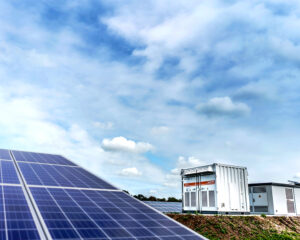
The only drawback with cold chain solar is that consumption doesn’t stop at night. This means battery storage or the grid is required at night. But during the day, a well-sized solar system can cover a substantial fraction of the refrigeration load, directly reducing the highest-cost power consumption.
In addition, the payback periods are longer than standard warehousing due to the battery component.
How to Get Started: From Site Assessment to First Unit Generated
If you have made it this far and are seriously thinking about solar for your warehouse or logistics facility, here is what the actual process looks like.
Step 1: Site assessment
A team will survey the rooftop, find the required load capacity, review your electricity bills for the last 12 months, and estimate the consumption pattern. The assessment helps to know the estimated generation, system sizing, payback period, and financial model.
Step 2: System design
Once the assessment is done, the design team provides the exact panel count, inverter configuration, mounting structure type, and cable routing.
Step 3: Commercial proposal
You will receive a proposal including the CAPEX cost or a RESCO arrangement. Also, the projected savings, payback timeline, and tax benefit illustration.
Step 4: Approvals
Your solar partner handles all paperwork, including DISCOM application for net metering connection, structural clearance, and any local municipal permissions required. This is often the longest part of the process.
Step 5: Installation
The physical installation of a 300-500 kW system can take 3 to 5 weeks once approvals are in place.
Step 6: Commissioning and monitoring
Once live, a real-time monitoring dashboard shows exactly how much your system is generating, how much your facility is consuming, what is being exported to the grid, and what your savings are, updated every 15 minutes. You can access this from your phone or desktop.
Final thoughts
Solar is not a future plan for Indian warehouses anymore. It is a present-day business decision that thousands of facility operators and logistics park developers are already acting on.
The electricity bills are not going to come down on their own. The roof is already there. The technology is proven. The financing options mean you do not even have to put up capital upfront if you do not want to.
Whether you own a single warehouse or manage an entire logistics park, the question is no longer really whether solar makes sense. It is just how soon you want to start saving.
Ready to put your warehouse roof to work? SolarSquare can assess your site, size the right system for your load, and walk you through financing options that fit your business. Book a free consultation and get a clear picture of what solar could save you.
Frequently Asked Questions
What size solar system does a typical warehouse need?
The solar system size for a typical warehouse depends on consumption and roof space. .As a rough guide, a 1 lakh square foot warehouse with standard operations typically needs an approx. ~200 to 500 kW system. Cold storage or highly automated facilities with heavier equipment loads may need ~600 kW to 1 MW or more. To know the right system size, we should do a detailed energy audit to know the consumption pattern as per the available roof area.
Is rooftop solar viable for a warehousing tenant rather than the building owner?
Yes, rooftop solar can be done for a warehousing tenant; it may require the building owner’s agreement. The most common arrangement is a tripartite agreement between the tenant, the landlord, and the solar installation company. Through this agreement, the tenant funds the installation, the system is fixed to the landlord’s roof, and savings are shared, or the tenant retains full benefit depending on what is negotiated.
What is the payback period for solar in a warehouse or logistics park?
For a standard warehouse with typical grid tariff exposure, payback periods generally range from 4 to 7 years under a CAPEX model. With accelerated depreciation benefits factored in, effective payback can come down to 3-5 years. For cold chain facilities with higher energy intensity, the absolute savings are greater, but battery storage adds to the upfront cost, typically extending payback to 6-8 years.
Can a warehouse operate fully off-grid with solar?
Most people owning warehouses believe fully off-grid systems require either enough battery storage to cover all consumption outside sunlight hours, or a backup generator, both of which add high cost. On the other hand, if we go with on-grid, you generate as much as possible during the day, consume it directly, export the surplus, and draw from the grid only for overnight loads or overcast days.
What approvals are needed to install solar in a warehouse?
The main approvals are: net metering application with your state DISCOM (Distribution Company), structural clearance from a certified engineer confirming the roof can carry the panel load, and in some cases, a local building or municipal clearance depending on the state. For open access connections above a certain capacity, additional approvals from the state electricity regulatory commission are required. The timelines vary by state.