

 4124 Reads
 14 mins


Tamil Nadu has put rooftop solar on more than 55,000 homes under the PM Surya Ghar Muft Bijli Yojana, as of February 2026. The scheme is advancing quickly across the country, with over 40 lakh homes covered and the government aiming for 75 lakh installations by December 2026.
The central government’s solar panel subsidy in Tamil Nadu is funded by a fixed national budget of Rs. 75,021 crore, and more than Rs. 22,750 crore of that has already been used. Clearly, this is not a permanent entitlement. The scheme will run only until the target of solarizing 1 crore homes is met, or the budget is exhausted, whichever comes first.
If you still wait for the solar prices to fall or incentives to increase, you might miss the subsidy window. The solar subsidy in Tamil Nadu is generous right now, and acting sooner means installing a cheaper solar PV system.
This guide walks you through the amount of on-grid solar system subsidy in Tamil Nadu in 2026, who pays it, how much you get, who qualifies, and how to apply for the PM Surya Ghar Muft Bijli Yojana solar panel government scheme in Tamil Nadu.
Types of Subsidies for Solar Energy in Tamil Nadu in 2026
In 2026, there is only one active solar panel subsidy in Tamil Nadu, which is the central government’s PM Surya Ghar Muft Bijli Yojana. While there was a TEDA state subsidy scheme in 2022, it was fully replaced by the central subsidy introduced on February 13th 2024.
Let’s check out both Tamil Nadu government solar panel subsidy schemes and understand which one you can still claim in 2026:
- Central government subsidy (The PM Surya Ghar Muft Bijli Yojana): This is the only active government subsidy for solar panels in Tamil Nadu for homes, capped at Rs. 78,000 for systems with a capacity of 3 kW or higher. It is funded by the Ministry of New and Renewable Energy (MNRE), applies to homes nationwide, and is paid directly into your bank account after your PV system is commissioned. Every rupee of residential subsidy you receive in 2026 comes through this scheme.
- State government subsidy (TEDA incentives): This state-level Tamil Nadu subsidy for solar systems, offered by TEDA, was available in 2022. However, it is no longer active. The old Chief Minister’s Solar Rooftop Capital Incentive, which offered ~Rs. The 20,000 per kW cap for small systems was effectively replaced by the PM Surya Ghar Muft Bijli Yojana scheme on February 13th 2024. The state renewable agency itself has changed, too. TEDA merged into the Tamil Nadu Green Energy Corporation in 2024.
How Much is the Solar Panel Subsidy in Tamil Nadu in 2026?
The solar panel subsidy for homes in Tamil Nadu follows a simple slab structure, capped at Rs. 78,000.
- Solar energy subsidy in Tamil Nadu for systems up to 2 kW: Rs. 30,000 per kW
- Solar power subsidy in Tamil Nadu for additional capacity up to 3 kW: Rs. 18,000
- Tamil Nadu solar subsidy cap for systems equal to or above 3 kWp: Rs. 78,000
Here’s a snapshot of the total rooftop solar subsidy in Tamil Nadu for different-capacity solar systems:
| Solar System Size | PM Surya Ghar Muft Bijli Yojana Solar Subsidy in Tamil Nadu |
| 1 kW solar system | Rs. 30,000 |
| 2 kW solar system | Rs. 60,000 |
| 3 kW solar system | Rs. 78,000 |
| 4 kW solar system | Rs. 78,000 |
| 5 kW solar system | Rs. 78,000 |
| 10 kW solar system | Rs. 78,000 |
How Does Solar Subsidy Work in Tamil Nadu in 2026?
The solar subsidy scheme in Tamil Nadu operates as a partnership between the central government, which provides funding, and TANGEDCO, the nodal agency administering the central government’s solar scheme in Tamil Nadu.
- The central government sets the rules and releases the subsidy.
- TANGEDCO, as your local electricity distribution company, handles your application, checks feasibility, installs the net meter, and connects your system to the grid.
There is no special state-level incentive layered on top in 2026.
Relation between TANGEDCO and Solar Subsidy in Tamil Nadu
TANGEDCO is the state distribution utility and the body responsible for processing your entire rooftop solar application under the PM Surya Ghar Muft Bijli Yojana. It is not a rooftop solar scheme of its own.
When you apply for the rooftop solar subsidy in Tamil Nadu, your paperwork flows through TANGEDCO’s Unified Solar Rooftop Portal, and TANGEDCO is the authority that approves your connection and switches on solar net metering.
Here is what TANGEDCO actually does in the entire solar installation process.
- Grants feasibility approval: It checks your sanctioned load and the local transformer capacity to confirm your roof can be connected safely before installation begins.
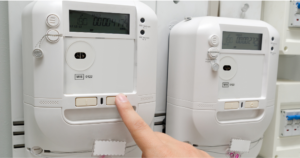
- Installs the bi-directional net meter: After your solar PV system is in place, TANGEDCO fits the net meter/smart meter that measures both the power you draw and the surplus you export.
- Connects you to the grid and commissions the system: It completes the technical inspection and records the commissioning on the portal, which is what triggers your subsidy release.
In simple terms, the central government funds the subsidy on solar energy for homes in Tamil Nadu, and TANGEDCO is the agency that implements the application and turns it into a commissioned, active, grid-connected solar system.
Who is Eligible for a Solar Panel Subsidy in Tamil Nadu in 2026?
If you are an Indian citizen, you can claim the PM Surya Ghar solar panel government subsidy in Tamil Nadu if you fulfill the conditions listed below:
- You have an active electricity connection in your name with your city’s DISCOM.
- You are installing made-in-India DCR solar panels and a grid-tied PV system.
- You have never received a subsidy on systems up to 3 kW before.
- You own the roof where the system will be installed.
Documents Needed to Claim a Solar Subsidy in Tamil Nadu
Keep these documents ready before you start, as having them on hand makes claiming the subsidy for solar panels in Tamil Nadu a faster process.
- A copy of your most recent electricity bill showing your consumer number
- Identity proof, usually Aadhaar
- Proof of roof ownership
- Cancelled cheque or bank passbook copy for the subsidy transfer
How to Apply for a Solar Panel Subsidy in Tamil Nadu in 2026?
You can follow these steps to apply for the PM Surya Ghar Muft Bijli Yojana (the only active Tamil Nadu government solar power scheme):
- Step 1 – Access the solar portal: Open the PM Surya Ghar Muft Bijli Yojana National Portal for rooftop solar and click the rooftop solar application section.
- Step 2 – Register yourself: Select your state, district, and DISCOM from the available dropdowns. Then, create an account using the Customer Account number on your electricity bill.
- Step 3 – Fill in your details: Share your name and age, and enter the relevant numbers from your most recent electricity bill.
- Step 4 – Add your banking details: Upload the required supporting documents, provide your bank account information, and attach a copy of a cancelled cheque.
- Step 5 – Finalize an empanelled vendor: Review the list of DISCOM-approved installers on the portal and choose the vendor you want to hire.
- Step 6 – Review, sign, and upload the agreement: Go through the installer agreement, sign it, and upload the signed version to the portal.
- Step 7 – DISCOM installs the net meter: After your rooftop solar system is installed, DISCOM installs a bi-directional net meter or smart meter.
- Step 8 – Collect your commissioning certificate: The DISCOM runs an inspection of the solar system and then issues the Solar Commissioning Certificate.
- Step 9 – File for the subsidy: Return to the portal, log in, and upload the solar commissioning certificate to file the subsidy claim.
- Step 10 – The TN government solar subsidy is credited to your account: Once verification is complete, the central subsidy is deposited directly into your registered bank account within 30 days.
What’s the Cost of Rooftop Solar in Tamil Nadu with Subsidy?
Here’s a snapshot of the cost of rooftop solar both with and without a solar power subsidy for a house in Tamil Nadu in 2026:
| Solar System Size | Cost of Rooftop Solar in Tamil Nadu’s Chennai without Subsidy as of 16th June 2026 (Starting Price for Base Variant)* | Solar Panel Subsidy in Tamil Nadu | Cost of Rooftop Solar in Tamil Nadu’s Chennai with Subsidy as of 16th June 2026 (Starting Price for Base Variant)* |
| 2 kWp | ~Rs. 1.95 lakh | Rs. 60,000 | ~Rs. 1.35 lakh |
| 3 kWp | ~Rs. 2.23 lakh | Rs. 78,000 | ~Rs. 1.45 lakh |
| 4 kWp | ~Rs. 2.63 lakh | Rs. 78,000 | ~Rs. 1.85 lakh |
| 5 kWp | ~Rs. 3.40 lakh | Rs. 78,000 | ~Rs. 2.62 lakh |
| 10 kWp | ~Rs. 5.77 lakh | Rs. 78,000 | ~Rs. 4.99 lakh |
*Please note that prices are subject to change: The above-mentioned solar panel price in Chennai is indicative as of 16th June 2026 for the SolarSquare Blue 6ft variant. The final cost of installing a rooftop solar system depends on your DISCOM charges, city, product variant opted for, panel type, inverter type, mounting structure height, type of after-sales service, savings guarantee, roof height, type of solar system, etc.
Solar Savings in Tamil Nadu for Homeowners
Here’s how much money a rooftop solar system can save in Tamil Nadu’s Chennai:
| Solar System Size | Cost of Rooftop Solar in Tamil Nadu’s Chennai with Subsidy as of 16th June 2026 (Starting Price for Base Variant)* | Solar Savings in Tamil Nadu Over 25 Years** | Return on Investment (ROI) |
| 2 kW solar system | ~Rs. 1.35 lakh | ~Rs. 3.54 lakh | 1.6x |
| 3 kW solar system | ~Rs. 1.45 lakh | ~Rs. 7.41 lakh | 4.1x |
| 4 kW solar system | ~Rs. 1.85 lakh | ~Rs. 11.95 lakh | 5.4x |
| 5 kW solar system | ~Rs. 2.62 lakh | ~Rs. 17.02 lakh | 5.5x |
| 10 kW solar system | ~Rs. 4.99 lakh | ~Rs. 43 lakh | 7.6x |
*Please note that prices are subject to change: The above-mentioned solar panel price in Chennai is indicative as of 16th June 2026 for the SolarSquare Blue 6ft variant. The final cost of installing a rooftop solar system depends on your DISCOM charges, city, product variant opted for, panel type, inverter type, mounting structure height, type of after-sales service, savings guarantee, roof height, type of solar system, etc.
**Please note: While calculating savings, we have considered an annual tariff escalation of 3% and an annual solar plant degradation rate of 1%. The actual final savings from a solar PV system depend on the types of solar panels you’ve installed and their efficiency, the intensity of sunlight your rooftop receives, the orientation of the panels and tilt angle, the pollution level and weather conditions in your city, the temperature, shadow on the roof, impact of dirt/dust, and how well you maintain your panels after installation.
You can also use SolarSquare’s free solar savings calculator to find approximate solar savings you can make in your city.
SolarSquare Installation in Chennai: A 3.78 kWp Rooftop Solar Case Study
A homeowner in Selaiyur, Chennai, switched to rooftop solar with SolarSquare in 2026 and claimed the full central subsidy under the PM Surya Ghar Muft Bijli Yojana within 11 days after commissioning.
Here is how the project played out.
| Project Details | Value |
| Location | Selaiyur in Chennai, Tamil Nadu |
| DISCOM | TANGEDCO, Chennai South II Circle |
| Solar system size | 3.78 kW |
| Total subsidy the customer received | Rs. 78,000 |
| System installation date | 4th June 2026 |
| Systems commissioning date | 8th June 2026 |
| Subsidy credited on | 19th June 2026 |
SolarSquare registered on the PM Surya Ghar Muft Bijli Yojana National Portal for Rooftop Solar on behalf of the customer in late April 2026. The subsidy amount was credited to the customer’s bank account by 19th June. So, the whole journey from sign-up to subsidy took ~6-7 weeks. The Rs. 78,000 grant landed just 11 days after commissioning, well inside the 30-day window the scheme promises.
What are the Benefits of a Solar Panel Subsidy in Tamil Nadu?
The Tamil Nadu government solar panel subsidy delivers benefits that go well beyond the one-time discount on installation.
Here is what you actually gain.
- A much lower upfront installation cost: Subsidy for solar in Tamil Nadu knocks up to Rs. 78,000 off your system price, which makes rooftop solar extremely affordable.
- Shorter payback period: This is the benefit most people overlook. Your monthly savings stay the same whether or not you claim the subsidy, but the subsidy leaves you far less to earn back. The system cost can be recovered in 3 to 5 years with a subsidy, helping you reach the free-returns stage sooner.
Common Mistakes that Can Make You Ineligible for a Solar Subsidy in Tamil Nadu
Here are some common mistakes that can make you ineligible for the Tamil Nadu government solar energy subsidy scheme, or delay it:
- Choosing an unregistered vendor: Choosing an installer who is not empanelled to save a little money costs you the entire solar panel subsidy in Tamil Nadu.
- Skipping ALMM-approved panels: Modules not on the approved list will disqualify your application. So, confirm the panel models before installation.
- Entering wrong bank details: While this won’t disqualify you, it will complicate the process of applying for and receiving a subsidy for solar power plants in Tamil Nadu. A small error in your account information on the portal is the top cause of delayed subsidy transfers.
- Applying for a subsidy on the wrong connection type: The subsidy is for residential connections only. A commercial or non-residential connection does not qualify, regardless of how the building is used.
- Claiming the Tamil Nadu government subsidy for a solar power plant without roof rights or an NOC: The connection holder must own the roof or hold an NOC from the owner. Without that proof, a renter or shared-building applicant cannot claim.
- Trying to claim a solar power plant subsidy in Tamil Nadu twice on the same connection: The subsidy is available once per electricity connection. A connection that has already drawn the subsidy once cannot claim again for a second system.
Conclusion
Claiming a solar system subsidy for homes in Tamil Nadu is genuinely simple when you choose the right installation partner, such as SolarSquare. We’re India’s #1 home solar company and have helped disburse 280 crore worth of PM Surya Ghar Muft Bijli Yojana subsidy for our customers nationwide.
If your roof has shadow-free space, the next step is simple. Register on the PM Surya Ghar Muft Bijli Yojana portal, pick an empanelled vendor in your city, such as SolarSquare, and get your feasibility approval in motion. Your roof can start paying you back this year itself.
For any further queries, you can book a free solar consultation call with SolarSquare.
FAQs
Is solar worth it in 2026 for homes in Tamil Nadu?
Yes, 2026 is the best time to go solar. As a homeowner, not only will you get the TN govt subsidy for solar panels (up to Rs. 78,000 for 3 kW or higher-capacity systems), but you will also have the option to choose high-efficiency, latest modules such as Mono-PERC or TOPCon, which were not available a few years ago. Improved solar technology and the current subsidy scheme make solar installation worthwhile in 2026.
Does Tamil Nadu give a state subsidy on top of the PM Surya Ghar Muft Bijli Yojana subsidy?
No, there’s no state-level solar system subsidy for homes in Tamil Nadu. The only active TN govt solar scheme is the central government’s PM Surya Ghar Muft Bijli Yojana itself.
How do I check my PM Surya Ghar application status in Tamil Nadu?
Visit the PM Surya Ghar Muft Bijli Yojana National Portal, log in with your registered mobile number, and open your dashboard to see the current stage of your application, from feasibility approval through to subsidy release.
Can apartments and housing societies get a solar panel subsidy in Tamil Nadu?
Yes. Group housing societies and resident welfare associations can claim Rs. 18,000 per kW for common facilities up to a limit of 500 kW. Individual flat owners with their own roof rights and a separate connection can apply as residential consumers.
How long does the subsidy take to reach my account?
It takes around 30 days after plant commissioning for the Tamil Nadu solar panel subsidy to reach your bank account.
Can I install more than 3 kW and still get a subsidy?
Yes, you can do that. However, you must know that the central government grant is capped at Rs. 78,000. So, any system of 3 kW or more will receive a fixed assistance of Rs. 78,000.


 Previous Article
 13 min