

The GST on solar panels and qualifying solar inverters is “5%” in India in 2026. However, a complete rooftop solar system does not attract a flat 5% GST.
- Panels and inverters generally account for 70% of the system cost and attract a 5% GST.
- The remaining components and installation services account for 30% and attract 18% GST.
- This results in an effective GST rate of 8.9% on the complete system.
From September 22, 2025, the GST on solar panels and inverters was reduced from 12% to 5%. The 18% rate on other components and installation services remained unchanged.
This guide explains the applicable GST (Goods and Services Tax) and HSN (Harmonized System of Nomenclature) codes for rooftop solar, component-wise GST rates, residential and commercial calculations, Input Tax Credit (ITC), and what to check in a solar quotation.
GST and HSN on Solar Equipment in 2026 at a Glance
Solar panels and solar inverters attract 5% GST, while batteries, mounting structures, cables, distribution boxes, meters, and installation services attract 18%.
The table below shows the commonly used HSN and Services Accounting Codes (SAC) for the main equipment and services included in a rooftop solar system –
| Item | Indicative HSN/SAC Classification | GST Rate in 2026 |
| Photovoltaic cells | 85414200 | 5% |
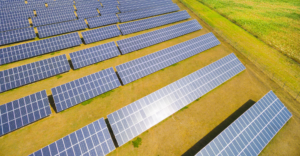
| Solar photovoltaic modules or panels | 85414300 | 5% |
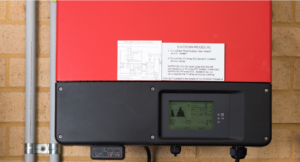
| Solar inverter | 85044090 | 5% |
| Lithium-ion solar battery | 85076000 | 18% |
| Lead-acid solar battery | 85072000 | 18% |
| Iron or steel module mounting structure | 73089090 | 18% |
| Aluminium module mounting structure | 76109090 | 18% |
| Insulated solar DC (direct current) or AC (alternating current) cable | 85444999 | 18% |
| Electrical installation service | SAC 995461 | 18% |
Please note: These are commonly used classifications. The exact Harmonized System of Nomenclature (HSN) or Services Accounting Code (SAC) can vary based on the product’s material, voltage, construction, technical specifications, supply arrangement, and contract terms. The vendor should apply the classification that accurately describes the product or service supplied.
How Is GST Calculated on a Complete Rooftop Solar System?
A complete rooftop solar system includes panels, an inverter, mounting structures, AC and DC cables, protection equipment, meters, and installation services. Because these items don’t all attract the same rate, GST is calculated by splitting the rooftop solar system cost between the 5% and 18% portions.
How Does the 70:30 Cost Split Work?
Solar inverters and household solar panels generally account for 70% of the total rooftop solar system cost. This portion attracts 5% GST. The remaining 30% covers other solar components and installation services, which attract 18% GST.
The structure can be understood as follows:
| Cost Portion | What it Covers | Applicable GST |
| 70% | Solar panels and inverter | 5% |
| 30% | Other components and installation services | 18% |
This does not mean that every component in the 30% portion is a service. It includes physical equipment such as mounting structures, cables, batteries, AC and DC distribution boxes, and meters, along with design, labor, installation, testing, and commissioning services.
Why Is the Effective Solar System GST Rate 8.9%?
The effective solar system GST rate is calculated by applying the relevant tax rate to each cost portion:
- (70%×5%) + (30%×18%)
- 3.5% + 5.4% = 8.9%
Therefore, based on the 70:30 cost split, the effective GST on a complete rooftop solar system is 8.9%.
Please note: The 8.9% GST figure is an effective rate calculated across the complete project value. It does not replace the underlying 5% and 18% rates shown for component and service categories.
What Is the GST Rate When You Purchase Only Solar Panels?
The applicable solar panel GST rate in India in 2026 is 5%. The calculation is simpler because the complete taxable value related to panels is covered by the 5% GST only.
How to Calculate GST on a Standalone Solar Panel Purchase?
For calculation purposes, let’s assume that the pre-GST price of the solar panels is ₹1,00,000. GST will be calculated at 5% on the entire taxable value.
| Particular | Calculation | Amount |
| Price of solar panels before GST | – | ₹1,00,000 |
| GST at 5% | ₹1,00,000 × 5% | ₹5,000 |
| Price including GST | ₹1,00,000 + ₹5,000 | ₹1,05,000 |
Please note: For an intra-state purchase, the 5% GST is generally divided into 2.5% Central Goods and Services Tax (CGST) and 2.5% State Goods and Services Tax (SGST). An inter-state purchase generally attracts 5% Integrated Goods and Services Tax (IGST). Also, the ₹1,00,000 cost range is an assumption used for calculations. The actual cost of solar panels depends on multiple factors, such as the panel’s technology, their wattage, and whether the panels are DCR (Domestic Content Requirement) or non-DCR etc.
What Is the HSN Code for Solar Panels?
Solar photovoltaic products fall under HSN (Harmonized System of Nomenclature) heading 8541. Within this heading, separate eight-digit codes distinguish photovoltaic cells from cells assembled into modules. The correct solar panel HSN code depends on how the photovoltaic product is supplied.
The following two HSN codes apply to photovoltaic cells and finished solar panels, respectively:
- HSN 85414200 for photovoltaic cells: HSN 85414200 covers photovoltaic (PV) cells that have not been assembled into modules or made into panels. Solar panel manufacturers generally purchase these individual cells to assemble into finished solar modules. Photovoltaic cells covered by this classification attract 5% GST in 2026.
- HSN 85414300 for solar modules: HSN 85414300 covers photovoltaic cells assembled into modules. This classification is generally relevant when a homeowner, housing society, or business purchases finished solar panels. Therefore, the commonly applicable solar panel HSN code and GST rate for finished photovoltaic panels (solar modules) are HSN 85414300 and 5%, respectively.
HSN 8541 vs HSN 85414200 / 85414300
HSN 8541 is the broader four-digit heading for semiconductor devices, including photovoltaic cells. HSN 85414200 / 85414300 are more specific eight-digit tariff items within that heading.
Here’s a side-by-side comparison for clarity:
| Code | What it Represents |
| 8541 | Broad HSN heading covering semiconductor devices and photovoltaic cells |
| 85414200 | Photovoltaic cells not assembled into modules or panels |
| 85414300 | Photovoltaic cells assembled into modules/panels |
A quotation may mention the broader heading, while the final tax invoice may provide a more detailed classification. The code should accurately describe the product being supplied.
GST Calculation for a Residential Rooftop Solar Installation
For calculation purposes, we have considered a residential rooftop solar system costing ₹3,00,000 before GST. The panels and inverter portion (70%) comes to ₹2,10,000, and the remaining ₹90,000 covers other components and installation.
The table below applies 5% and 18% GST to these portions, resulting in the total GST of ₹26,700.
| Particular | Calculation | Amount |
| Pre-GST system cost | – | ₹3,00,000 |
| Panels and inverter portion | ₹3,00,000 × 70% | ₹2,10,000 |
| GST on panels and inverter | ₹2,10,000 × 5% | ₹10,500 |
| Other components and installation portion | ₹3,00,000 × 30% | ₹90,000 |
| GST on other components and installation | ₹90,000 × 18% | ₹16,200 |
| Total GST | ₹10,500 + ₹16,200 | ₹26,700 |
| Total cost including GST | ₹3,00,000 + ₹26,700 | ₹3,26,700 |
Please note: This is an illustrative calculation. Depending on the nature of the transaction, GST may be charged as Central Goods and Services Tax (CGST) and State Goods and Services Tax (SGST), or Integrated Goods and Services Tax (IGST). The actual system price and GST amount may vary with system size, equipment selection, battery inclusion, roof requirements, installation scope, and vendor pricing.
GST Calculation for a Commercial Solar Installation
For this calculation, we considered a commercial rooftop solar system costing ₹50,00,000 before GST. The panels and inverter portion (70%) is ₹35,00,000. The remaining components and installation account for 30% portion i.e. ₹15,00,000.
The table below applies the respective rates, resulting in a total GST of ₹4,45,000.
| Particular | Calculation | Amount |
| Pre-GST project cost | – | ₹50,00,000 |
| Panels and inverter portion | ₹50,00,000 × 70% | ₹35,00,000 |
| GST on panels and inverter | ₹35,00,000 × 5% | ₹1,75,000 |
| Other components and installation portion | ₹50,00,000 × 30% | ₹15,00,000 |
| GST on other components and installation | ₹15,00,000 × 18% | ₹2,70,000 |
| Total GST | ₹1,75,000 + ₹2,70,000 | ₹4,45,000 |
| Total cost including GST | ₹50,00,000 + ₹4,45,000 | ₹54,45,000 |
Please note: The business initially pays ₹54,45,000, including ₹4,45,000 in GST. If the business is eligible for Input Tax Credit (ITC), it may use the eligible tax credit against its output GST liability. However, commercial eligibility is not automatic. It depends on the buyer’s GST registration, system use, documentation, supplier compliance, capitalization, and applicable restrictions.
Can You Claim Input Tax Credit (ITC) on Solar Panels?
Residential homeowners generally cannot claim Input Tax Credit (ITC) on solar purchased for personal use. A GST-registered business may be eligible if the system supports taxable business activities and all legal conditions are met. Housing societies require a separate assessment based on their registration and use. It’s further explained below for each category –
1. Input Tax Credit for Residential Customers
As already explained, a homeowner installing rooftop solar for personal electricity consumption cannot claim Input Tax Credit. The GST paid on the panels, inverter, other components, and installation therefore remains part of the homeowner’s total project cost.
A residential subsidy does not convert the homeowner into a GST-registered business or create a right to claim Input Tax Credit.
2. Input Tax Credit for Businesses
A GST-registered business may be able to claim Input Tax Credit on an eligible commercial solar installation if:
- The system is used for taxable business activities.
- The business holds a valid tax invoice.
- The goods and services have been received.
- The supplier has reported the transaction correctly.
- The applicable payment and return-filing conditions have been met.
- The credit is not restricted or blocked under the relevant GST provisions.
3. Input Tax Credit for Housing Societies
A housing society cannot claim Input Tax Credit merely because it holds a Goods and Services Tax Identification Number (GSTIN). Eligibility depends on whether the society is registered, makes taxable supplies, uses the solar system for those supplies, and meets the applicable credit conditions.
A solar power plant for a housing society used only to reduce electricity expenses for common areas may require a different assessment from one used in connection with taxable commercial facilities. The society should obtain transaction-specific tax advice before claiming credit.
How to Check Whether the Vendor Has Applied the Correct GST?
A solar quotation or invoice should clearly show which items attract 5% GST and which attract 18%. It should also state the applicable HSN or SAC code, taxable value, tax amount, and whether the final quoted price includes or excludes GST.
To avoid mistakes while buying solar, always check whether the document includes:
- Supplier’s Goods and Services Tax Identification Number (GSTIN)
- Customer and installation-site details
- Solar system capacity
- Description of each product or service provided
- Applicable HSN or Services Accounting Code (SAC)
- Taxable value of each item
- Applicable GST rate
- Central Goods and Services Tax (CGST) and State Goods and Services Tax (SGST), or Integrated Goods and Services Tax (IGST)
- Total GST charged
- Final amount payable
- Clear confirmation of whether the quotation is GST-inclusive or GST-exclusive
Finally, calculate whether the tax shown against each category matches its taxable value and applicable GST rate. The sum of these amounts should equal the total GST stated on the quotation or invoice.
Conclusion
The GST on solar panels and solar inverters is 5% in India in 2026. Other components and installation services attract 18%. Since panels and inverters generally account for 70% of a rooftop system’s cost, the effective GST on the complete system works out to 8.9%.
The applicable tax amount ultimately depends on the system price, equipment included, component classifications, installation scope, contract structure, and Input Tax Credit eligibility. Before approving a quotation, check the HSN and SAC codes, component-wise tax rates, and final GST-inclusive price.
Book a free consultation with SolarSquare today to receive a detailed rooftop solar assessment and a transparent system quotation for your property.
Frequently Asked Questions
Is 12% GST still applicable?
No. GST on solar panels and inverters was reduced from 12% to 5% effective September 22, 2025. Other components and installation services continue to attract 18% GST.
Does GST affect the PM Surya Ghar Muft Bijli Yojana subsidy?
No. GST forms part of the vendor’s project invoice, while the subsidy under the PM Surya Ghar Muft Bijli Yojana is governed separately by the scheme’s eligibility and disbursement rules. The subsidy should not be treated as a refund of the GST paid.
What is the effective GST on a turnkey solar installation?
The effective rate is 8.9% because 5% GST applies to the 70% cost attributed to panels and inverters, while 18% applies to the remaining 30% on other components and installation services.
What if equipment and installation are invoiced separately?
When equipment and installation are invoiced separately, each item attracts the GST rate applicable to its classification. Separate invoicing does not change a product’s underlying GST rate or make an 18% component eligible for the 5% rate.
- The equipment invoice should mention the correct HSN code for every product.
- The installation invoice should show the relevant SAC and 18% GST.
Together, the invoices should cover the complete project scope and match the price agreed upon in the contract or final quotation. A vendor may issue one detailed invoice or separate equipment and installation invoices. In either case, the HSN or SAC classification, taxable value, and applicable GST rate should be clearly stated for every item.
Is GST charged on solar installation labor?
Yes. Solar installation labor and related electrical installation services attract 18% GST. Depending on the contract, this may include services like – installation, wiring, testing, connection, and net meter commissioning.
Is GST included in the solar panel price quoted by a vendor?
It depends on whether the quotation states that the price is GST-inclusive or GST-exclusive. A GST-exclusive quotation will have tax added later. Customers should check the taxable value, applicable GST rate, tax amount, and final payable total before comparing vendor quotations.