A solar investment plan (SIP) lets homeowners install rooftop solar through manageable monthly payments instead of paying the full system cost from personal savings at once. The system then reduces the electricity you buy from the Distribution Company (DISCOM), while the government subsidy lowers your effective investment.
For example, the 3 kW system may cost ~₹2.50 lakh before subsidy. Eligible residential consumers can receive up to ₹78,000 under the PM Surya Ghar Muft Bijli Yojana, reducing the effective investment in this case to ~₹1.72 lakh. The estimated payback period in this case can be ~4.5 years. If financed, the monthly installment depends on the loan amount, interest rate, and repayment tenure.
That is what makes a solar SIP different from simply paying an electricity bill. Instead of repeatedly paying for grid electricity, you’re paying toward a rooftop solar system that can continue generating solar electricity even after the financing period ends.
This guide explains how a solar investment plan works, where its returns come from, how return on investment (ROI) is calculated, and what risks homeowners should consider before choosing it.
What is a Solar Investment Plan?
A solar investment plan is a financing arrangement that lets a homeowner install rooftop solar without paying the full cost from personal savings at once. The homeowner repays the financed amount through monthly installments while the system helps reduce electricity purchases from the grid.
Why is It Called an SIP?
SIP usually stands for Systematic Investment Plan, a method commonly associated with mutual funds. In this case, it describes a structured way of investing in solar energy systems through regular payments.
- A conventional SIP requires you to invest fresh money periodically to build a financial corpus.
- A solar investment plan redirects part of an existing household expense towards a physical asset. The system generates electricity, and the resulting bill savings act as its financial return.
However, a solar SIP is not a mutual fund, deposit, or market-linked financial product. It is a rooftop solar ownership and financing plan.
What Makes Solar an Investment Rather Than an Expense?
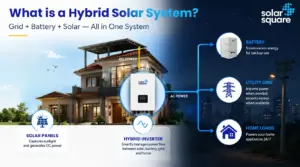
A normal electricity bill pays for power already consumed. A solar investment, on the other hand, creates a physical asset that can generate free electricity from solar radiation for many years. Its value comes from lower electricity bills and, where applicable, credits for surplus electricity exported to the grid (in case of on-grid or hybrid solar systems).
However, a rooftop solar system generates returns differently from a traditional deposit. As this comparison of solar vs. fixed deposit returns explains, a Fixed Deposit (FD) earns interest on the money deposited. In contrast, rooftop solar creates value by reducing a recurring household expense.
Since electricity tariffs in India rise by 3-6% annually, solar is more of an investment instead of an expense. With proper maintenance and regular servicing, it lasts 25 years or more.
How Does a Solar Investment Plan Work?
A solar investment plan combines roof assessment, system sizing, financing, the government subsidy, and electricity savings. The system is installed first, and the homeowner uses the electricity it generates while repaying the financed amount through monthly installments.
The process generally works as follows:
- The homeowner’s electricity consumption and roof are assessed.
- The appropriate rooftop solar capacity is selected.
- The system cost and eligible PM Surya Ghar Muft Bijli Yojana subsidy are calculated.
- The customer pays the full system cost, with the required amount financed through monthly installments.
- The rooftop solar system is installed and connected through net metering.
- The approved subsidy is later credited to the customer’s bank account.
- Solar generation reduces the household’s grid electricity purchases.
- The household uses these monthly savings to offset the solar payment.
- After the repayment period, the system continues generating electricity and monthly savings.
How Can You Install Solar Without a Large Upfront Payment?
Solar financing divides the system cost into manageable installments, reducing the need to use a large amount of personal savings at once. The government subsidy further reduces the homeowner’s effective investment once it is credited after installation and approval.
How the Government Subsidy Reduces Your Initial Cost
Eligible homeowners can receive a subsidy under the applicable government rooftop solar scheme. The maximum subsidy under the PM Surya Ghar Muft Bijli Yojana is capped at ₹78,000 for solar systems of 3 kW or higher capacity.
However, as already explained, the central subsidy should not be treated as an advance discount. It remains subject to the customer, system, equipment, installer, and documentation meeting the applicable requirements.
How Solar Financing Covers the Remaining Cost
Financing helps the customer pay the system price without using the entire amount from personal savings. The financed amount is repaid through monthly installments over the agreed tenure.
Before accepting a financing offer, the customer should review:
- Loan amount
- Interest rate
- Monthly installment
- Repayment tenure
- Processing charges
- Credit eligibility
- Prepayment conditions
- Penalties for delayed payments
- Treatment of the subsidy after it is received
Once the system starts operating, its financial value appears in several ways.
Where Do the Returns from a Solar Investment Plan Come From?
The main return from a solar power investment comes from reducing the amount of electricity purchased from the DISCOM (distribution company). Additional value may come from net metering credits, protection against future tariff increases, and savings after the solar loan is repaid.
The returns can come from the following sources:
- Savings from using solar electricity at home: Every solar unit consumed at home replaces a unit that the household would otherwise purchase from the grid. A properly sized rooftop solar system can lower your electricity bills by up to 90% or more.
- Credits for surplus solar electricity: When the system generates more electricity than the home consumes, surplus units may be exported to the grid.
- Protection against future electricity tariff increases: Grid tariffs rise by 3-6% annually. Since solar now caters to all your home energy needs, you’re automatically shielded from tariff hikes.
- Savings after the monthly payments end: Once you repay the loan, the rooftop photovoltaic (PV) system continues generating electricity without the monthly solar installment.
The actual value of these returns depends on solar generation, household consumption, electricity tariffs, net metering rules, maintenance expenses, system performance, and financing terms.
How is the ROI of a Solar Investment Plan Calculated?
Return on Investment (ROI on solar panels) compares the financial value you receive from rooftop solar with the amount you invest. An accurate solar ROI calculator (also known as a solar return on investment calculator) should account for the subsidy, electricity bill savings, financing expenses, maintenance, and other applicable costs.
The basic formula is:
Solar ROI (%) = [(Annual electricity savings − Annual operation and maintenance cost) ÷ Net solar investment] × 100 |
Here:
- Annual electricity savings means the amount saved on electricity bills in one year.
- Annual operation and maintenance cost includes the applicable yearly expenses for maintaining the system.
- Net solar investment is the system cost remaining after deducting the government subsidy.
ROI Calculation for a 3 kW Home Solar System
Consider a 3 kW rooftop solar system that costs ~₹2.50 lakh. The customer pays the complete system price and later receives a subsidy of ₹78,000.
The table below shows how the investment, savings, maintenance cost, and return are calculated over 10 years.
| Calculation Component | Amount or Calculation |
| Total system cost | ₹2,50,000 |
| Government subsidy | ₹78,000 |
| Net investment | ₹2,50,000 − ₹78,000 = ₹1,72,000 |
| Annual electricity bill savings | ₹36,000 |
| Savings over 10 years | ₹36,000 × 10 = ₹3,60,000 |
| 4-year of annual servicing by SolarSquare | ₹30,000 |
| Total return after servicing | ₹3,60,000 − ₹30,000 = ₹3,30,000 |
| Estimated return | 190% |
| Estimated payback period | 4.5 years |
For the 10-year example, the same formula must use figures from the same period:
10-year return (%) = [(Electricity savings over 10 years − Operation and maintenance cost over 10 years) ÷ Net solar investment] × 100
Using the approved figures:
10-year return (%) = [(₹3,60,000 − ₹30,000) ÷ ₹1,72,000] × 100 = ~190%
What is the Solar Payback Period?
The solar payback period shows approximately how long the system takes to recover its net cost through electricity bill savings. A shorter payback period means the homeowner begins receiving post-recovery savings sooner.
The formula is:
Solar Payback Period = Net solar system cost ÷ Annual net electricity savings
In the 3 kW example, the net investment is ₹1,72,000, and the annual savings are ₹36,000. The estimated payback period is 4.5 years. After this period, the continuing electricity bill savings contribute to the homeowner’s net financial benefit.
What is Included in Annual Net Savings?
Annual net savings represent the financial value the system produces after deducting applicable recurring solar expenses. This provides a more realistic result than treating the value of all generated electricity as a return.
The formula is:
Annual net electricity savings = Value of solar electricity used at home + Value of exported electricity − Annual maintenance and recurring charges |
- The value of solar electricity used at home depends on the applicable grid tariff.
- The value of exported electricity depends on the state’s net metering or settlement rules.
Why ROI on Solar Panels is Different for Every Home
Two homes with systems of the same capacity may receive different returns because their roofs, electricity consumption, tariffs, financing terms, and solar generation can differ.
The main factors affecting ROI include:
- System size
- Roof orientation and available sunlight
- Shading
- Local electricity tariff
- Daytime electricity use
- Net metering rules
- Subsidy eligibility
- Loan interest and tenure
- Equipment performance
- Maintenance and system downtime
Why Can a Solar Investment Plan Deliver a High ROI?
A solar investment plan can offer an attractive ROI because the government subsidy reduces the effective investment while the system produces electricity for many years.
Several features support the potential return:
- Government subsidy reduces the cost base: With government subsidy available, less capital is tied up in the solar system. A lower net investment lets the same electricity savings deliver a higher percentage return.
- Solar replaces expensive grid electricity: Solar electricity consumed at home reduces the number of units purchased from the DISCOM.
- Solar panels have a long operating life: Modern high-efficiency TOPCon panels keep generating electricity after the original investment is recovered.
- Operating costs are relatively low: Rooftop solar generally requires cleaning, monitoring, periodic inspections, and occasional repairs.
Why Is the Risk in Solar Investment Plan (SIP) Lower Than Many Market-Linked Investments?
A solar SIP has limited exposure to daily financial-market movements because its return comes mainly from electricity generation and bill savings. However, lower exposure to market volatility does not make it risk-free. Its performance still depends on technical, financial, and regulatory conditions.
Its risk is lower in some respects for the following reasons:
- Returns do not depend on stock-market prices: Electricity bill savings do not rise or fall with daily equity-market movements.
- Electricity is an existing household expense: Homeowners already need electricity, so solar replaces part of a recurring monthly household expense.
- Generation can be estimated before installation: Roof conditions, local sunlight, system capacity, and previous electricity use can help estimate potential output of rooftop solar systems.
- Warranties reduce some equipment risks: Applicable panel, inverter, structure, and workmanship warranties may cover specified faults or performance issues.
These factors can make potential savings more predictable than market-linked returns, but they cannot guarantee a fixed result. SolarSquare is India’s first and only solar company to offer a savings guarantee with a money-back promise. If generation falls short, we compensate the shortfall at ₹8/unit.
What Risks Should You Check Before Choosing the SIP (Solar Investment Plan)?
The plan’s results can be affected by solar generation, financing, subsidy approval, roof conditions, equipment quality, and changes in electricity regulations. Homeowners should evaluate these factors before comparing projected electricity savings with the monthly loan payment.
The main risks include:
- Lower-than-expected electricity generation due to shade, dust, poor design, equipment faults, or downtime
- Electricity savings that are lower than the monthly loan installment
- Subsidy rejection or delay if the applicable requirements are not met
- Loan interest, repayment obligations, and late-payment penalties
- Poor-quality equipment, unsafe installation, or inadequate after-sales service
Solar Investment Plan vs Mutual-Fund SIP
A solar SIP and a mutual-fund SIP both involve planned payments, but they serve different financial purposes. One creates a physical energy-producing asset, while the other purchases financial units whose value depends on market performance.
The following comparison shows how the two differ:
| Factor | Solar Investment Plan | Mutual-Fund SIP |
| Purpose | Reduce electricity costs and own solar | Build financial wealth |
| Return | Avoided electricity expense | Market-linked capital appreciation |
| Risk source | Generation, equipment, tariff, and policy factors | Market and fund-performance factors |
| Cash payout | Usually no regular cash payout, but electricity bill savings can create additional cash flow | Redemption value |
| Government subsidy | Applies to residential rooftop solar | Generally not applicable |
| What does the customer own? | Physical rooftop system | Financial units |
| Suitable for | Eligible homeowners with sufficient bills and roof space | Investors seeking financial asset exposure |
Who Can Benefit Most from a Solar Investment Plan?
An solar investment plan (SIP) is highly suitable for:
- Homeowners with an unshaded and structurally suitable roof
- Households with consistently high electricity bills
- Consumers paying higher electricity tariffs
- Families expecting to remain in the property for several years
- Homes with high daytime electricity consumption
- Residential consumers eligible for the subsidy
- Customers who qualify for the required financing
When May a Solar Investment Plan Not Be Suitable?
A solar SIP plan may be less suitable in the following situations:
- Very low or heavily subsidized electricity bills
- A shaded or structurally unsuitable roof
- A rented property without the owner’s approval
- Plans to demolish, or reconstruct the property soon
- Inability to meet monthly loan payments
How to Start a Solar Investment Plan with SolarSquare?
Starting a solar investment plan requires an electricity bill assessment, roof survey, system design, financing review, installation, and net-metering process. Homeowners should compare the projected monthly savings with the complete repayment cost before approving the installation.
For a detailed analysis, you can book a free solar consultation call with SolarSquare.
Frequently Asked Questions
Is a solar investment plan the same as a mutual-fund SIP?
No. A solar investment plan finances a physical rooftop solar system, while a mutual-fund SIP purchases units in a market-linked fund. Solar returns mainly come through electricity bill savings, whereas mutual-fund returns depend on the changing value of the underlying investments.
Does a solar investment plan require any down payment?
It depends on the system cost, approved loan amount, customer eligibility, and lender’s terms. The customer repays the financed portion through monthly installments and pays only the required upfront contribution, if any. The approved subsidy is credited to the customer’s account after commissioning.
Is the solar investment plan really a zero-investment plan?
It may reduce or remove the need for a large upfront payment under an eligible financing arrangement, but the system is not free. The customer must repay the financed amount, interest, and applicable charges, even when electricity savings help offset the monthly installment.
Can electricity savings completely cover the EMI?
Electricity savings may cover or exceed the EMIs in suitable cases, but this is not guaranteed. The result depends on solar generation, electricity tariffs, daytime consumption, system size, interest rate, repayment tenure, and net-metering rules.
Is the return from solar guaranteed?
In most cases, no. Solar returns depend on actual electricity generation, household consumption, grid tariffs, system performance, maintenance, downtime, financing costs, and applicable policies.
What happens after the solar loan is repaid?
Once the solar loan is fully repaid, the lender cancels the hypothecation on the solar asset. The solar system then remains with the homeowner and can continue generating electricity bill savings, subject to its performance, maintenance, and operating condition.
Can tenants apply for a solar investment plan?
A tenant would generally require the property owner’s approval because the system is permanently installed on the roof. Financing eligibility, electricity connection details, roof rights, and responsibility for future repayments must also be resolved before installation.
Is solar investment income taxable?
Residential electricity bill savings are generally a reduction in household expenses rather than a regular investment payout. Savings from solar are not taxable.