

 729 Reads
 13 mins




Walk into a school or college campus on a weekday, and the energy demand is hard to miss: fans run through classrooms, computers power up in labs, lights stay on across corridors, and air conditioners add another load during warmer months. For educational institutions operating on tight budgets, electricity is not a one-time expense; it is a recurring operating cost that can steadily eat into funds meant for teaching, infrastructure, and student facilities.
Yet solar adoption across India’s schools is still surprisingly low. According to an analysis of UDISE+ 2024–25 data, only 10.8% of India’s 14.71 lakh schools, or about 1.60 lakh schools, had solar panels. That means nearly 9 out of 10 schools were still without solar power. The figure has improved only marginally from 10.5% in 2023-24.
The gap also shows that solar is far from being a mainstream feature of Indian educational infrastructure. Adoption varies sharply across the country: Chandigarh leads with solar panels in 85.5% of its schools, while several states remain in the single digits.
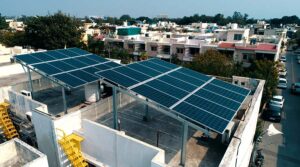
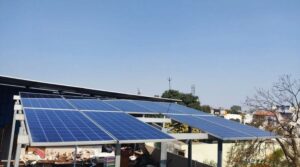
That leaves a significant opportunity for schools and colleges. A suitably designed rooftop solar system can generate electricity on-site and substantially reduce the amount of power an institution needs to purchase from the grid. For campuses with sizeable daytime electricity consumption, the economics can become particularly compelling: instead of treating the rooftop as unused space, an institution can turn it into an asset that helps offset a recurring electricity expense.
So, does solar for schools and colleges make financial and operational sense? In this guide, we look at system sizing, costs, electricity savings, installation requirements, financing options, applicable subsidies and incentives, and the practical considerations educational institutions should evaluate before making the switch.
Why Educational Institutions Are Switching to Solar
Across India, schools, colleges, and universities are quietly becoming some of the most active adopters of rooftop solar. Driven by rising electricity costs, government schemes for solar schools, and growing sustainability mandates, the shift is picking up pace.
The following are some of the reasons why solar for schools is the way to go:
#1. Rising Electricity Costs Are Eating Into Budgets
Schools and colleges are high-consumption spaces. Lighting, cooling, lab equipment, digital infrastructure, water pumps- the load is constant from morning to evening, five to six days a week. For private institutions managing their own finances, electricity often ranks among the top three operational costs.
As grid tariffs rise year-on-year, more institutions are looking at solar as a long-term hedge against unpredictable electricity pricing, essentially locking in lower energy costs for 25+ years.
#2. Solar Aligns Naturally with Campus Hours
Solar panels generate the most electricity between 9 AM and 5 PM. That’s almost exactly when schools and colleges are in full operation. Unlike homes, where most consumption happens in the evening, campuses are a near-perfect match for solar, meaning more of what’s generated gets used directly on-site, and less is wasted.
#3. Sustainability Goals and Green Campus Initiatives
Many institutions today are actively pursuing sustainability certifications, green building ratings, or NEP 2020-aligned environmental goals (NEP 2020 recommends integrating environmental education into school curriculum). Solar is often the most visible and impactful step in that direction, reducing carbon emissions while also improving the institution’s public image.
And there’s a bonus: a rooftop solar system is also a teaching resource. For science, engineering, and environmental studies students, having a live solar plant on campus is genuinely valuable.
Key Benefits of Solar for Schools and Colleges
Solar energy for educational institutions generally works, and not just because of the subsidies. Large rooftops, daytime energy loads, and long institutional lifespans mean the returns are both faster and longer-lasting than in most other segments.
Here are the key benefits of solar installation for schools and institutions:
- Lower electricity bills: This is the most immediate benefit. Institutions with high daytime consumption can offset a substantial portion of their grid electricity with solar generation, directly reducing monthly bills.
- Long-term cost certainty: Once installed, a solar system has near-zero fuel costs. With a lifespan of 25+ years and minimal maintenance, it provides predictable energy costs in an otherwise volatile tariff environment.
- Energy reliability: Grid outages can disrupt exams, labs, and digital operations. Solar systems (especially when paired with a battery energy storage system) add a layer of resilience.
- Live learning opportunity: From energy monitoring dashboards to engineering project work, a campus solar plant has genuine pedagogical value.
- Improved institutional reputation: A solar-powered campus signals forward-thinking leadership and environmental responsibility, increasingly important to students, parents, and accreditation bodies alike.
How Much Does a Rooftop Solar System Cost for Schools and Colleges?
For commercial and institutional installations, which is the category solar for schools and colleges fall under, grid-connected rooftop solar systems in India currently cost in the range of ~Rs. Rs.55,000 to Rs. ~Rs. 70,000 per kW, inclusive of panels, inverters, mounting structure, and installation.
Larger systems generally come in at a better per-kW rate due to economies of scale.
Typical System Size and Estimated Cost
The school solar system cost depends on its size. Here’s a typical cost range based on the campus’s electricity demand and available rooftop area.
| System Size | Suitable For | Approx. Cost (Before Subsidy/Incentives)* |
| 25-50 kW | Small schools | ~Rs. Rs.14-35 lakh |
| 50-100 kW | Medium-sized schools | ~Rs. Rs.35-70 lakh |
| 100-250 kW | Large schools and colleges | ~Rs. Rs.70 lakhRs. to ~Rs. 1.75 crore |
| 250 kW+ | Universities and large campuses | ~Rs. Rs.1.75 crore+ |
*DISCLAIMER: The costs shown above are indicative estimates for reference only and may vary significantly based on the location, system size, panel and inverter brands, mounting structure, rooftop conditions, installation complexity, electrical infrastructure, applicable taxes, and prevailing market prices. The actual project cost should be confirmed through a site assessment and a detailed quotation from the solar vendor. Any applicable government subsidies, incentives, or other financial benefits are not included in these figures unless explicitly stated. For commercial and institutional systems, subsidy eligibility and applicable incentives may also differ from those available to residential consumers.
For a 100 kW PV system, which suits most medium-to-large colleges, indicative pricing in 2026 ranges from Rs.35-Rs.55 lakh depending on panel brand, inverter quality, roof structure, and site complexity.
Thumb rule for rooftop area: You’ll need roughly 100 sq. ft. per kW of installed capacity. A 100 kW system needs approximately 10,000 sq. ft. of usable rooftop, not unusual for a school building with multiple floors.
Types of Solar Systems for Schools
Schools and colleges can choose from three types of solar systems, depending on their electricity needs and backup requirements:
- On-grid solar: An on-grid solar system is connected to the electricity grid and ideal for institutions that want to reduce their regular electricity bills. Surplus generation can be exported to the grid, subject to the applicable state regulations.
- Off-grid solar: Off-grid solar system works independently of the grid and uses batteries to store solar energy for use when sunlight is unavailable. It is suitable for campuses that need power in areas with unreliable grid supply.
- Hybrid solar: A hybrid solar system combines grid-connected solar with battery storage, allowing institutions to reduce grid consumption while also having backup power during outages.
What Factors Affect the Final Cost?
The following are some of the most important factors to consider that might affect the final cost of your school solar system:
- Panel type: TOPCon panels offer higher efficiency and better long-term performance at a lower cost. Mono PERC half-cut panels are a little on the costlier side but deliver reliable performance.
- Inverter quality: A premium inverter adds cost but ensures better long-term performance and monitoring capability.
- Roof structure: Older buildings or RCC roofs with structural constraints may need additional civil work.
- Net metering setup: Includes DISCOM application, meter, and approval charges.
- Location: Labour rates and logistics vary across states.
CAPEX vs. RESCO: Which Model Fits Your Institution?
Educational institutions can install rooftop solar through either the CAPEX or RESCO model. The right choice depends on your budget, ownership preference, and long-term savings goals.
- CAPEX (own the system): The institution invests upfront, owns the plant, and keeps all the savings. Typically offers the best return over the system’s lifetime. Institutions with access to capital or institutional loans are usually better off with CAPEX.
- RESCO (zero upfront): A developer installs and owns the system. The institution pays only for the solar electricity consumed, typically at a rate lower than the grid tariff, under a long-term Power Purchase Agreement (PPA) of 20-25 years. SECI (Solar Energy Corporation of India)) has actively been facilitating exactly this model for educational institutions across India, making it viable even for institutions with limited capital budgets.
How Much Can Schools and Colleges Save?
Savings depend on three main variables: your current electricity tariff, how much solar your rooftop generates, and how much of that generation you actually consume on-site (called self-consumption).
| Parameter | Typical Benchmark for Schools & Colleges in India |
| Daytime Electricity Offset | Offset a significant amount of daytime electricity consumption with a well-sized rooftop solar system. |
| Annual Cost Savings | Save Rs.5 lakh to Rs.30 lakh+ annually, depending on system size and electricity tariffs. |
| Payback Period (CAPEX Model) | Recover the investment in 3–6 years, followed by up to 25+ years of low-cost electricity. |
| States with Faster Payback | Institutions in Maharashtra, Tamil Nadu, and Karnataka typically achieve faster paybacks due to higher commercial tariffs. |
Net metering adds yet another dimension. Any excess generation during low-load periods (lunch breaks, holidays) gets fed back to the grid and credited against future bills. Almost all states in India now have net metering policies in place for institutional consumers. You can find your state’s net metering regulations on the Ministry of Power’s Vidyut Pravah portal.
Government Schemes Supporting Educational Institution Solar Projects
The government has made it easier and cheaper for educational institutions to go solar. Here are the key solar government schemes for solar to know.
#1. PM Surya Ghar: Muft Bijli Yojana
Launched in 2024 with a Rs.75,000 crore outlay, PM Surya Ghar Muft Bijli Yojana is the central government’s flagship rooftop solar programme. While the direct subsidy under this scheme is targeted at residential consumers, the programme’s broader framework includes a mandate to solarise all central and state government buildings, including schools and colleges run by government bodies, to the maximum extent technically feasible.
Government-run institutions can explore solarization under this framework through their respective State Electricity Distribution Companies (DISCOMs). More details are available at the National Rooftop Solar Portal.
#2. SECI Tenders for Educational Institutions (RESCO Mode)
This is one of the most actively relevant schemes for colleges and universities right now. The Solar Energy Corporation of India (SECI), under MNRE, regularly floated tenders to deploy rooftop solar at premier academic institutions under the RESCO model.
Recent examples include:
- 3.54 MW across IIT Guwahati, Sikkim Manipal University, IIIT Guwahati, and Manipur University (August 2025) under 25-year PPAs
- 6.25 MW across 10 institutions including IITs, IIMs, NITs, and central universities, all under RESCO mode
Under these arrangements, developers invest, install, and maintain the system for 25 years, supplying solar power to the campus at a competitive tariff. The institution pays nothing upfront and simply pays for the solar electricity it uses.
#3. State-Level Solar Schemes
In addition to central schemes, most states have their own renewable energy in education programs with net metering policies, capital subsidies for institutions, and expedited approvals.
These are a few worth knowing:
- Punjab has already solarized over 4,238 school buildings with 21.19 MW of installed capacity generating 2.89 crore units of clean electricity annually
- States like Gujarat, Maharashtra, Rajasthan, and Karnataka offer additional incentives for institutional consumers beyond the central framework
Check your state’s renewable energy development agency (REDA/MNREDA equivalent) for state-specific schemes. A full list of state nodal agencies is available on the MNRE website.
#4. Green Financing and CSR Funding
For private institutions, solar projects can also be financed through:
- Green loans: From SIDBI, IREDA, or commercial banks with preferential interest rates. IREDA offers institutional financing specifically for renewable energy projects.
- CSR partnerships- Many corporates actively fund solar projects at schools under their CSR mandates, particularly in rural or semi-urban areas.
Solar Installation Process for Schools
The installation typically involves these steps:
- Site assessment: The solar vendor evaluates the rooftop, electricity consumption, available space, and structural requirements.
- System design: The appropriate system capacity, panels, inverter, mounting structure, and other components are finalised.
- Cost and proposal: The vendor provides a detailed quotation based on the system design.
- Approvals and documentation: Required permissions and electrical approvals are completed, depending on the system type and local regulations.
- Installation: Solar panels, mounting structures, inverter, wiring, and safety equipment are installed.
- Testing and commissioning: The system is tested and connected to the grid or battery system, as applicable.
- Monitoring and maintenance: Generation is monitored regularly, with periodic cleaning, inspections, and maintenance.
Note: The exact installation process, approvals, timelines, and technical requirements can vary by state, DISCOM, system size, and project type. For the final process, we should validate the steps with the SME before publishing.
Is Solar the Right Choice for Your Campus?
Ask yourself these questions:
- Does your institution operate primarily during daytime hours?
- Do you have a large, shadow-free rooftop?
- Are you planning to operate this campus for at least 10 more years?
- Is your monthly electricity bill above Rs.50,000-Rs.1 lakh?
- Are you working toward a green campus or sustainability certifications?
If you’re checking most of these boxes, solar is very likely a sound investment, or in the RESCO model, a zero-risk upgrade. Contact SolarSquare today and get a free quote based on your solar needs.
Frequently Asked Questions
Can colleges install rooftop solar without upfront investment?
Yes. Under the RESCO model facilitated by SECI and private developers, the institution pays nothing upfront. A developer installs and owns the system, and the college pays only for the solar electricity it consumes under a long-term PPA, typically at a rate lower than the grid tariff.
How much rooftop area is required for a school solar installation?
As a rule of thumb, you need approximately 100 sq. ft. per kW of installed capacity. A 50 kW system needs around 5,000 sq. ft. of usable, shadow-free rooftop area.
Can solar power for schools and colleges meet the entire electricity demand of a college?
It depends on the rooftop size relative to total consumption. Educational institutions can meet a substantial share of their daytime electricity demand with a properly sized rooftop solar system, as classroom hours closely align with peak solar generation.
What are the maintenance requirements for a school solar system?
Solar systems require regular preventive and corrective maintenance services to keep the solar output efficient. You would need 15-20 maintenance cycles a year, this would include cleaning and system check services. SolarSquare provides upto 20 cycles of maintenance a year to commercial and industrial solar systems.
How long do solar panels for schools last?
Quality solar panels come with a 25-year performance warranty. Most systems continue to generate well beyond that, with efficiency degrading gradually (typically 0.5-0.7% per year). The inverter usually needs replacement after 10-12 years, which is the main maintenance cost to plan for.


 Previous Article
 22 min