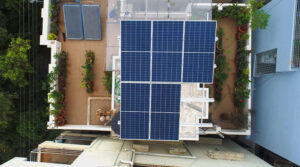


Most people already know that solar can reduce their electricity bills and pay for itself over time. The main challenge that still stops them from going solar is the upfront cost. Whether it is a 3 kW system for a home, a 100 kW plant for a housing society, or a 1 MW system for a factory, paying the full amount at once can be difficult.
Solar power financing makes this cost easier to manage.
Homeowners, housing societies, and commercial or industrial businesses can choose from options such as government-backed bank loans, NBFC EMI plans, and CAPEX or OPEX models. When you choose financing solar projects as the go-to option instead of making a large one-time upfront payment, you get to spread the cost into predictable monthly payments.
This guide explains the solar financing options available in India in 2026, how they work, the current interest rates, and how to choose the right option for your needs.
What is Solar Power Financing?
Solar power financing is any financial arrangement that lets you install a solar system without paying the full cost upfront. You spread the amount across a stretch of time through a solar loan, an EMI plan, or an arrangement where another party pays for the system and owns it on your behalf.
No matter which option you choose, finance on solar panels helps align your payments with the savings on your electricity bills.
These are the three main sources that supply financing for solar energy in India.
- PSU banks like SBI and PNB: They lend at concessional solar financing rates under the PM Surya Ghar Muft Bijli Yojana for residential rooftop solar systems. For most homeowners, this is their first encounter with a solar finance bank.
- NBFCs (Non-Banking Financial Companies): These are fully digital solar energy loans for homes, housing societies, and businesses.
- CAPEX and OPEX/RESCO financing structures: These solar financing schemes primarily serve C&I (commercial and industrial) consumers, with capital coming from term loans, solar power purchase agreements (PPAs), or a blend of both.
Read our complete guide to financing solar projects in India for a detailed comparison of each option.
The best option for you turns on who you are, because a homeowner, a housing society, and a business each face different eligibility rules, interest rates, and subsidy treatment. Solar energy financing covers a whole family of products, and the skill lies in fitting the right one to your profile.
How Does Solar Financing Work?
Solar financing works much like any other loan or payment plan. You pay part of the system cost upfront (or, in some cases, nothing at all) and repay the remaining amount through monthly EMIs over a fixed period.
Buying solar on installment allows you to install a PV system without using up all your savings at once.
The process usually works like this:
- Your installer assesses your property: They study your electricity usage, inspect the available roof space, recommend the right system size, and provide a quote.
- You choose a financing option: Homeowners may select a PSU bank loan or an NBFC EMI plan. Housing societies and businesses may also consider CAPEX loans or OPEX/RESCO models.
- The lender checks your eligibility: For individuals, this usually includes income and credit history. For housing societies and businesses, the lender may review financial statements and other documents.
- The loan amount is released: Depending on the lender, the money may be paid to you or directly to the installer. It may also be released in stages as the installation progresses.
- You begin paying monthly EMIs: The EMI is designed to stay close to the amount you were already spending on paying electricity bills.
- Your electricity bill starts to fall: Once the system begins generating power, the savings on your bill help offset your EMI.
The exact terms of a solar finance loan depend on whether you borrow from a PSU bank or an NBFC. The main differences usually include the interest rate, loan tenure, down payment, and the handling of the PM Surya Ghar Muft Bijli Yojana subsidy.
Different Types of Solar Financing Options in India
Solar financing options in India broadly fall into three categories:
- Government-backed, subsidy-linked loans for homes
- Financing options for commercial and industrial projects
- NBFC solar loans available to both individuals and businesses
Let’s explore all three types in detail.
#1. Subsidy-Related Government Loans for Residential Installations
Under the PM Surya Ghar Muft Bijli Yojana, several public sector banks offer low-interest solar loans to homeowners.
The subsidy and the loan are two separate things.
- The subsidy is a one-time government grant
- The solar loan scheme helps finance the remaining system cost.
Anyone looking for a loan for a solar rooftop for home should usually start with these schemes because they offer some of the lowest interest rates available.
The table below compares the current rates and terms for a residential solar rooftop loan.
| Bank | Interest Rate up to Rs. 2 Lakh | Interest Rate Above Rs. 2 Lakh | Max Loan | Max tenure |
| State Bank of India (SBI) | 5.75% p.a. | 8-9% p.a. | Rs. 10 lakh | Up to 10 years |
| Other PSU banks through Jan Samarth | Similar concessional rates | Varies by bank | Varies by bank | Up to 10 years |
Before choosing this PSU-backed solar panel finance scheme, keep these points in mind:
- You must apply through the Jan Samarth Portal, the government loan platform linked to the PM Surya Ghar Muft Bijli Yojana scheme.
- The bank may complete KYC verification and inspect your property before approving the loan. The process can take around 15-30 days.
- The PM Surya Ghar Muft Bijli Yojana subsidy is applied against the loan amount rather than paid to you separately.
- The down payment is generally 10% for loans up to Rs. 2 lakh and 20% for higher amounts.
- These solar loans may offer a moratorium of up to six months and usually do not have foreclosure charges.
Choose this option for solar rooftop only when getting the lowest possible interest rate matters more than fast approval or minimal paperwork.
For more details on eligibility, documents, and the application process, read our guides on the SBI solar loan scheme and the PNB solar loan scheme.
What About Solar Financing for Housing Societies?
Housing societies usually cannot access the same standard PSU bank loans available to individual homeowners. In some cases, banks may lend only when the society provides a fixed deposit as security.
Because of this, NBFCs are the primary source of a group housing society rooftop solar loan. The society can repay the EMIs through maintenance collections or, more commonly, through the savings generated on its common-area electricity bills.
SolarSquare’s guide on solar financing for housing societies explains this process through a real case study and shows how rooftop solar financing works for a shared residential roof.
#2. Solar System Financing for Industrial and Commercial Installations
Commercial and industrial (C&I) consumers are not covered under the residential PM Surya Ghar loan route or personal loans. Factories, warehouses, hospitals, IT parks, and retail chains need much larger solar systems, and solar is treated as a business asset to claim accelerated depreciation for tax purposes.
Therefore, C&I solar power project finance schemes generally lean on either CAPEX or OPEX/RESCO financing models. The right option depends on whether you want to own the solar system or only purchase the solar electricity it generates.
CAPEX Solar Financing for C&I Consumers
Under the CAPEX (Capital Expenditure) model, your business pays for the system with its own funds or a term loan. Your company owns the solar system from the first day.
Ownership may also provide two tax benefits:
- Accelerated depreciation can help reduce the taxable income of a profitable business.
- The business may be able to claim GST input tax credit on the solar equipment.
CAPEX is best suited to businesses with stable cash flow and enough taxable income to use these benefits. Since the company owns the system, it retains the full electricity savings throughout the plant’s life.
OPEX/RESCO Financing
Under the OPEX or RESCO model, an external solar developer pays for, installs, owns, and maintains the system on your premises.
- Your business signs a long-term Power Purchase Agreement (PPA) lasting 10 to 25 years.
- You pay only for the electricity generated by the solar system at a rate lower than the grid tariff.
This model does not require a loan for the solar system or a large upfront investment. The developer also handles maintenance.
Check out our guide on the RESCO/OPEX solar financing model vs CAPEX model to find out which model is best for your business.
C&I solar term loans usually have a tenure of 3-7 years, broadly matching the system’s payback period. RESCO and PPA agreements generally continue for 10 years or longer.
Here are the four main types of lenders that support financing solar projects for commercial and industrial consumers:
- Development finance institutions: IREDA and PFC finance larger industrial solar projects, often above Rs. 1 crore, with competitive rates and longer repayment periods.
- Public sector banks: Solar financing banks such as Canara Bank and Union Bank of India offer renewable energy and solar term loans for businesses.
- SIDBI: Small Industries Development Bank of India, aka SIDBI, offers financing schemes for MSMEs installing solar as part of an energy-efficiency upgrade.
- NBFCs: NBFCs finance both businesses purchasing systems under CAPEX and RESCO developers building C&I rooftop projects.
#3. NBFC Solar Financing
NBFCs have become one of the fastest and most flexible sources of solar panel financing in India in 2026. They are especially useful for borrowers who want quick approval and a fully digital process.
For homeowners, an NBFC solar panel loan comes with an interest rate of ~14-16% per year and a tenure of 6–60 months.
- These rates are higher than PSU bank loans, but the process is much faster.
- Applications are completed online, approval can come within 24 hours, and there is no branch visit, physical inspection, or compulsory Jan Samarth registration.
Another advantage is that the borrower keeps the full PM Surya Ghar Muft Bijli Yojana subsidy. The NBFC does not adjust the subsidy against the loan amount. In simple terms, this solar installation loan costs more in interest but saves time and paperwork.
For housing societies, NBFCs are often the main source of group solar system loans, as PSU banks rarely offer standard term loans to societies.
These loans generally come with:
- Interest rates of ~14-17% per year
- Processing fees of 1-2%
- Repayment tenures of up to five years
Approval is based on the society’s audited financial statements, maintenance collection record, and committee resolution. The credit score of an individual resident is generally not taken into account.
For commercial and industrial consumers, NBFCs fund both CAPEX term loans and RESCO developers that supply solar power through long-term PPAs. NBFC loans are usually approved faster than loans from PSU banks or development finance institutions, which helps businesses move from quotation to installation more quickly.
Needless to say, across homes, housing societies, and businesses, NBFCs have become an important part of solar finance solutions in India.
How Can SolarSquare Funding Help You?
SolarSquare’s own financing, offered through NBFC partnerships, is built around the idea that your solar EMI shouldn’t feel like a new expense. Instead, it should replace the electricity bill you were already paying before going solar.
Rather than adding a new monthly expense, the SolarSquare EMI plan aims to keep your overall monthly spending roughly the same while helping you move to solar.
Here is how it works:
- Zero out-of-pocket down payment: Instead of paying a percentage of the system cost upfront, your applicable PM Surya Ghar Muft Bijli Yojana subsidy is adjusted directly against the system cost. You don’t need to arrange a separate down payment.
- Quick, digital loan approval: The application is completed online, with no branch visits or physical inspections. Approval can come within 24 hours.
- Flexible EMI tenures: Choose a repayment period between 6 and 60 months, based on what fits your monthly budget.
- EMIs mapped to your savings: The EMI is designed to stay close to, or below, your previous electricity bill.
- Zero foreclosure charges: You can prepay or close the solar loan early without any penalty.
- Minimal documentation: You usually need only your PAN, Aadhaar, and latest electricity bill.
In simple terms, the SolarSquare EMI scheme removes two major barriers to going solar:
- The upfront cost
- The long approval process.
This helps you get your rooftop solar system installed faster than with a traditional PSU bank loan. You can check the SolarSquare EMI structure along with the solar savings and ROI in your city through SolarSquare’s free solar savings calculator.
Conditions to Meet When Applying for Financing for Solar Energy Systems
What lenders check before they approve financing for solar energy systems depends on whether you apply as an individual, a housing society, or a business.
An individual homeowner must meet the following conditions:
- A CIBIL score of 650 and above for a smoother approval.
- Ownership of the property or rooftop where the system will go.
- An age within the lender’s limit, which generally means below 60 years.
- Basic KYC for smaller loan amounts, or income proof, ITR, and bank statements for larger ones.
A housing society must meet the following conditions:
- Registered legal status under the relevant state cooperative act.
- At least three years of operating history with consistent maintenance collections.
- Audited financial statements and a healthy bank statement, with no bounced cheques or negative balances.
- A formal committee resolution that approves the solar installation and the loan.
A business applying under CAPEX or OPEX must meet the following conditions:
- Financial statements that show stable revenue and the capacity to repay.
- Enough rooftop or land area
- A sanctioned electricity load that justifies the system size
- Project reports and technical feasibility documentation, when the money comes from a DFI or PSU business loan.
Meet these and a loan on a solar rooftop system, whether for a home or a commercial site, moves through approval with far less friction.
How to Apply for a Solar Loan?
The process of applying for a solar loan is broadly similar across PSU banks, NBFCs, and business financing options. The main differences are the approval time and the amount of paperwork involved.
- Get a system quote: Ask your solar installer to assess your property and recommend a system based on your electricity use.
- Choose a financing option: Compare a PSU bank loan with an NBFC loan. PSU loans offer lower interest rates but take longer, while NBFC loans are faster but cost more. Businesses must also choose between CAPEX and OPEX financing.
- Submit your application: Apply through the Jan Samarth Portal for a PSU bank loan. For an NBFC loan, you can usually apply online through the installer or lender.
- Provide the documents: Smaller loans may require only basic KYC, while larger residential, society, or business loans may need income and financial documents.
- Wait for approval and disbursement: PSU loans may take 15-30 days and usually include a site inspection. NBFC loans can sometimes be approved within 24 hours.
- Complete the installation: The installer sets up the system, while the DISCOM completes net metering and commissioning.
- Start repaying the EMI: Your EMIs begin after disbursement or installation, depending on the loan terms. The savings on your electricity bill help offset the monthly payment.
What Factors Should You Consider When Applying for Solar Power Financing?
Before choosing a solar power financing option, compare these factors:
- Interest rate and subsidy treatment: PSU banks usually offer lower interest rates but may adjust the subsidy against the loan. NBFCs may charge more but often let you retain the full subsidy. So, compare the total cost, not just the advertised rate.
- Approval time: NBFC loans can be approved within 24 hours, while PSU bank loans may take 15-30 days.
- Documentation: PSU loans, especially those above Rs. 2 lakh, may require proof of income, ITRs, and bank statements. NBFCs often ask only for PAN, Aadhaar, and the latest electricity bill.
- Loan tenure and EMI: Choose a tenure that keeps the EMI close to the savings you expect on your electricity bill.
- Foreclosure charges: Many solar loans allow early repayment without a penalty, but confirm this before signing.
- CAPEX vs OPEX for businesses: CAPEX offers ownership, tax benefits, and higher long-term savings. OPEX or RESCO requires no upfront investment and includes maintenance, but delivers lower overall savings.
Always remember that solar financing rates alone do not show the full picture. The best solar financing option depends on the total cost after interest, subsidy treatment, fees, and repayment terms.
Conclusion
The right way to finance solar depends on what matters most to you. Ask yourself what you want the most? The lowest interest rate, faster approval, a lower upfront cost, full ownership, or a plan that does not require you to handle solar plant maintenance?
Whether you’re a homeowner, housing society, or a business, the purpose of solar power financing is to remove the upfront cost. Instead of paying the full amount at once, you spread the cost over time while the system starts reducing your electricity bills from the day it is installed.
As electricity tariffs rise, waiting will only increase the amount you continue paying to the grid. The best time to explore solar financing is before another high electricity bill arrives. Book a free consultation with SolarSquare now to compare financing options and find a plan suited to your home, housing society, or business.
FAQs
What are the best solar financing rates in India?
The lowest rates come from PSU bank loans under the PM Surya Ghar Muft Bijli Yojana scheme, at 5.75% per annum for loans up to Rs. 2 lakh and 8-9% per annum above that. NBFC loans have interest rates of 14-16% per annum for homeowners and 14-17% per annum for housing societies. Commercial and industrial borrowers can access rates as low as 6.5-9.25% per annum through SIDBI, IREDA, PFC, or a PSU bank such as Canara Bank or Union Bank of India. These are the solar financing rates worth using as your benchmark.
What are the documents needed for rooftop solar financing?
Here’s the list that covers documentation for rooftop solar financing for homes and societies alike.
- For a PSU loan up to Rs. 2 lakh, basic KYC usually does the job.
- Above Rs. 2 lakh, you add KYC documents, your ITR, your salary or bank statements, and a copy of your electricity bill.
- An NBFC loan generally asks for nothing more than PAN, Aadhaar, and your latest electricity bill.
- A housing society must submit its registration certificate, PAN, bye-laws, audited financial statements, bank statements, a committee resolution, and common-area electricity bills.
What is the interest rate for solar finance from NBFCs?
NBFC solar loan rates range from 14-16% per annum for individual homeowners and 14-17% per annum for housing societies. Rates for commercial/industrial NBFC financing vary by lender, project size, and the borrower’s financial profile.
How long is solar financing?
Tenures usually fall between 6 months and 10 years.
- A PSU bank loan can run for 10 years
- NBFC loan for an individual runs 6-60 months
- A housing society loan caps at five years
- A commercial CAPEX loan runs 3-7 years
- OPEX and RESCO PPAs for societies and businesses last up to 10 years
Which bank finances solar systems?
For residential solar, SBI and PNB are the primary PSU banks offering concessional loans under the PM Surya Ghar Muft Bijli Yojana scheme. For commercial and industrial solar, Canara Bank, Union Bank of India, SIDBI (for MSMEs), and development finance institutions like IREDA and PFC are active lenders. NBFCs such as SolarSquare’s financing partners fund solar across residential, society, and business segments.
How much CIBIL is required for a solar loan?
Most lenders, PSUs and NBFCs want a CIBIL score of 650 or above for fast, smooth approval. A lower score will not always rule you out, though it can push up your interest rate, reduce the loan amount you qualify for, or trigger extra documentation.
How does PM Surya Ghar Yojana support solar financing?
The PM Surya Ghar Muft Bijli Yojana is a subsidy, which works as a one-time capital grant that lowers your system cost, and it never functions as a loan on its own. To help homeowners cover the balance, the scheme pairs that grant with concessional PSU bank loans routed through the Jan Samarth Portal at low interest rates. If you take one of those PSU loans, your subsidy is folded into the loan structure. On the other hand, when you choose an NBFC loan, you get your full subsidy on the side.








![10 kW Solar Panel Price in India [With and Without a Subsidy]](https://cdn.solarsquare.in/blog/wp-content/uploads/2025/07/18165650/10-KW-solar-panel-300x167.webp)