

 12 Reads
 9 mins


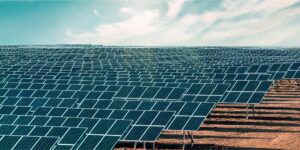
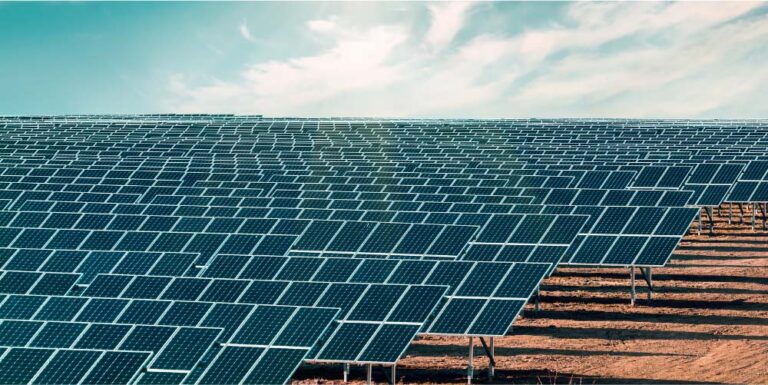
The Rewa solar power plant was once hailed as Asia’s biggest solar plant, and it remains one of the most talked-about solar projects in the country. It was built by the Solar Energy Corporation of India (SECI) along with Madhya Pradesh Urja Vikas Nigam Limited, and Prime Minister Narendra Modi dedicated it to the nation on 10th July 2020.
This blog breaks down what the Rewa solar power plant actually is, how the Rewa Ultra Mega Solar Project came together, where it stands today, and what its future looks like as India’s solar sector keeps growing around it.
What Is the Rewa Solar Power Plant?
The Rewa solar plant is a ground-mounted, grid-connected photovoltaic solar plant located in the Rewa district of Madhya Pradesh. It began generating power in 2018, and the original target was 750 MW. The plant hit that full target by January 2020.
You’ll be surprised to know that this project was acknowledged worldwide for its robust structuring. With solar energy becoming a vital electricity source daily, the project was expected to provide clean energy to residential and commercial buildings.
According to India’s Prime Minister, although multiple solar power plant projects like Neemuch, Shajapur, Omkareshwar, and Chattarpur were ongoing, Rewa would become a major hub for supplying solar energy in the future. Let’s now look into the objective and significance of this project.
Why Rewa Was Once Called Asia’s Biggest Solar Plant
When it was commissioned in 2020, the Rewa ultra-mega solar project was widely reported as Asia’s biggest solar plant, and for a while, that title held true. It was one of the largest single-site solar installations on the continent at the time, and its record-low tariff of Rs. 2.97 per unit made global headlines.
That said, India’s solar sector has grown fast since then, and a few other Indian solar parks have since overtaken Rewa in size. Bhadla Solar Park in Rajasthan, for instance, now has a capacity of around 2,245 MW, and Pavagada Solar Park in Karnataka sits at roughly 2,050 MW. Both are significantly larger than Rewa’s 750 MW.
This doesn’t take away from what Rewa achieved. It remains one of the ten largest solar power plants in India and one of the most studied solar projects in the world for its financing model and execution speed. Its real legacy isn’t just its size; it’s the blueprint it created for how future solar parks in India could be structured, funded, and run.
Objectives and Significance of the Rewa Ultra Mega Solar Project
The project was built with a few clear goals in mind. Because it generates low-cost power, the benefits were meant to reach a wide range of people, from wealthier households to farmers and tribal communities in the region. It was also designed to supply clean electricity for both household and commercial use, cutting down on the pollution linked to coal-based power.
According to early estimates, the plant was expected to cut carbon emissions by around 15 lakh tonnes every year. That’s a meaningful dent in emissions, especially in a state where power demand keeps climbing. Part of the power generated also goes toward running Delhi’s metro rail network, along with local industries in the Rewa region.
At a national level, the project played a role in helping India work toward its renewable energy targets under the National Solar Mission. It was one of the clearest proof points that ultra-mega solar parks, built through public-private partnerships, could actually work at scale in India.
Key Features of the Rewa Solar Plant
The Rewa solar plant is spread across roughly 1,500 acres of land and consists of three generating units, each with a capacity of 250 MW. It is a state-led initiative rather than one run by a central federal company, and it was structured to serve both in-state and inter-state customers.
Rewa Solar Power Plant: Key Features
| Feature | Detail |
| Total Capacity | 750 MW (3 units of 250 MW each) |
| Land Area | ~1,500–1,590 acres |
| Location | Gurh Tehsil, Rewa district, Madhya Pradesh |
| Commissioned | Full capacity by January 2020; dedicated to the nation July 2020 |
| Developer | Rewa Ultra Mega Solar Limited (RUMSL), a Joint venture of SECI (Solar Energy Corporation of India Limited) and MPUVN (Madhya Pradesh Urja Vikas Nigam Limited) |
| Power Buyers | 76% to Madhya Pradesh DISCOMs, 24% to Delhi Metro Rail Corporation |
| Record Tariff | Rs. 2.97/unit (first unsubsidised utility-scale solar tariff in India) |
Funding and Investment Behind the Project
Since the Rewa solar plant needed a large amount of land and infrastructure, it received significant financial backing. The Central Government granted around Rs. 138 crore toward the installation. On top of that, the World Bank invested close to $440 million in the project.
What made this funding especially notable is that Rewa became the first Indian solar project to receive financial support from the Clean Technology Fund, at a low interest rate of 0.25% over 40 years. This kind of concessional financing (funding provided on below-market terms than a commercial lender would offer) helped keep the plant’s power tariffs low, which in turn helped it break the grid parity barrier.
The International Finance Corporation, part of the World Bank Group, also acted as a transaction advisor on the project, helping structure the deal in a way that later became a reference point for other Indian states planning similar ultra-mega solar parks.
Key Facts About the Rewa Solar Power Plant
Here are a few numbers and facts that stand out when you look at the project closely:
- As per the reports, the solar plant will provide 76% of the solar power to the distribution companies in Madhya Pradesh and 24% to the Delhi Metro.
- The Rewa solar plant consists of three generating units. Each unit has a power capacity of 250MW and is located inside the solar park.
- The project has been recognised for its excellence and innovation and rewarded with the World Bank Group President’s Award.
- In fact, India’s Prime Minister’s book “A Book of Innovation: New Beginnings” contains interesting details about this project.
- It was first announced in 2014, formally set up as a company (RUMSL) in 2015, and started producing power in 2018.
How Rewa Compares to Other Major Solar Parks in India
To put Rewa’s scale in context, here’s how it stacks up against some of India’s other large solar parks as of 2026.
Major Solar Parks in India (2026)
| Solar Park | State | Approx. Capacity* |
| Bhadla Solar Park | Rajasthan | ~2,245 MW |
| Pavagada Solar Park | Karnataka | ~2,050 MW |
| Kurnool Ultra Mega Solar Park | Andhra Pradesh | ~1,000 MW |
| Rewa Ultra Mega Solar Plant | Madhya Pradesh | 750 MW |
| Kamuthi Solar Power Project | Tamil Nadu | ~648 MW |
*Disclaimer: Please note that the figures are approximate and based on industry reports and MNRE data as of 2026.
Even though newer parks have overtaken Rewa in raw capacity, it’s still widely regarded as one of India’s most efficiently executed solar projects, largely because of how quickly it moved from planning to full commissioning.
What’s Next for Rewa Ultra Mega Solar
The team behind the original Rewa project hasn’t slowed down. Rewa Ultra Mega Solar Limited has gone on to develop other large renewable projects across Madhya Pradesh, including the Omkareshwar Floating Solar Power Park, built on the Omkareshwar Dam reservoir, which is expected to become one of the largest floating solar parks in the world once fully commissioned.
RUMSL (Rewa Ultra Mega Solar Limited) has also started work on a 600 MW solar project paired with battery energy storage in Morena, Madhya Pradesh. Projects like this signal where India’s solar sector is heading next, not just bigger solar parks, but ones that combine generation with storage, so that solar power stays useful even after the sun goes down.
For a state that was once seen as an unlikely candidate for a solar revolution, Madhya Pradesh has quietly become one of the more important players in India’s renewable energy story, largely because of the groundwork Rewa laid down first.
Conclusion
The Rewa solar power plant may no longer hold the title of Asia’s biggest solar plant, but its impact goes well beyond the numbers on a capacity chart. It proved that solar power could be affordable, scalable, and genuinely competitive with conventional electricity in India. It gave farmers, tribal communities, and city dwellers alike access to cleaner power, and it gave policymakers a working model to replicate across the country.
As India keeps building toward its 500 GW renewable energy target by 2030, projects like Rewa remain the foundation this growth is built on.
Big solar parks like Rewa show what’s possible at a national scale, but you don’t need a 750 MW project to start saving on your own electricity bill. SolarSquare helps homeowners across 35+ Indian cities switch to rooftop solar with zero-investment plans and full support with PM Surya Ghar subsidies. Book a free consultation with SolarSquare and find out how much you could save, starting with your own rooftop.
Frequently Asked Questions
How much investment was made for the Rewa solar project?
The first funding came in the form of Rs. 138 crores from the Central Government for the installation of the power plant. Then, the World Bank invested $440 million in this project.
What activities did RUMS Ltd. adopt for setting up the Rewa solar project?
RUMS adopted activities like market consultations, conceptualisation, legal and financial structuring, and bid process management for setting up the Rewa solar project.
When was the Rewa solar power plant established?
Interestingly, the Rewa solar power plant was announced in 2014, established in 2015, and started generating electricity in 2018.
Who manages the Rewa Ultra Mega Solar project?
It was managed by Rewa Ultra Mega Solar Limited (RUMSL), a joint venture between the Solar Energy Corporation of India (SECI) and Madhya Pradesh Urja Vikas Nigam Limited (MPUVN).
Why is the Rewa solar plant important for India’s renewable goals?
It was one of the first projects to prove that large-scale solar power in India could be priced below conventional grid electricity, helping pave the way for the country’s broader renewable energy targets.
How big is the Rewa solar power plant?
It has a total capacity of 750 MW, split into three units of 250 MW each. It sits on about ~1,590 hectares of land in the Rewa district of Madhya Pradesh.
Who uses the power generated by the Rewa solar plant?
Delhi Metro gets 24% of the power, and the rest goes to electricity distribution companies in Madhya Pradesh. This makes it one of the few solar plants supplying power across state lines.


 Previous Article
 10 min
![10 kW Solar Panel Price in India [With and Without a Subsidy]](https://cdn.solarsquare.in/blog/wp-content/uploads/2025/07/18165650/10-KW-solar-panel-300x167.webp)