

India’s rooftop solar story is full of contradictions. On one hand, the numbers look impressive. Grid-connected rooftop solar capacity crossed 27.88 GW as of May 2026, forming part of India’s total solar installed capacity of around 157 GW. FY2025-26 alone saw about 8.7 GW of new rooftop capacity installed, marking a 69% year-on-year increase. Meanwhile, under the PM Surya Ghar: Muft Bijli Yojana, more than 26 lakh rooftop solar systems had been installed and ₹17,967.53 crore in Central Financial Assistance (CFA) disbursed as of March 19, 2026.
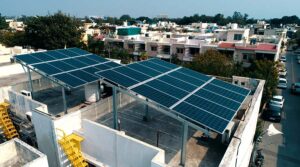
On the other hand, rooftop solar still makes up only about 18% of India’s total solar capacity, a fraction of what’s technically possible given the country’s vast rooftop area. And the PM Surya Ghar Muft Bijli Yojana scheme’s own target of solarizing 1 crore households by FY2027 means India still needs to solarize ~74 lakh more homes in under two years. That’s a massive execution challenge given the barriers that have slowed progress so far.
So what’s going wrong? The barriers aren’t one big wall; they’re several smaller ones, each knocking a percentage of willing adopters out of the funnel.
Here’s an honest look at the five that matter most.
1. Limited Financing Options
Money remains the biggest consideration for most homeowners weighing rooftop solar. A 2024 survey by Luminous Power Technologies found that 59% of respondents cited high initial installation costs as their primary concern. For a 3 kW system, the most common residential size, out-of-pocket costs before subsidy can run into ₹1,00,000+ depending on state, panel type, and structural complexity.
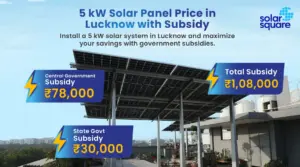
The good news is that both the government and solar companies have been actively working to close this financing gap. PM Surya Ghar offers a central subsidy of up to ₹78,000 for eligible households, and government-backed collateral-free loan schemes have been introduced specifically to help homeowners bridge the upfront cost. You can read more about solar loan options in India and how to apply for them.
SolarSquare goes a step further with its Zero Investment Scheme, allowing homeowners to go solar with no upfront payment at all. You start saving on your electricity bill from day one while paying it off over time. Combined with the PM Surya Ghar subsidy, this makes rooftop solar accessible to a much wider set of households than financing alone would suggest.
Not sure which solar type fits your roof and what your financing options are? Get a free site assessment from SolarSquare and our team will help you map out the right option.
2. Approvals, Net Metering, and Compliance Complexity
Going solar in India involves a defined process of applications, permits, and DISCOM approvals.
- A 2025 study by TeamLease RegTech found that a standalone solar plant in Maharashtra with a corporate office in Haryana must navigate 2,735 total compliance instances annually, spanning 799 unique regulatory obligations. For residential consumers, the solar installation approval process reportedly requires nearly 51 licences and permits.
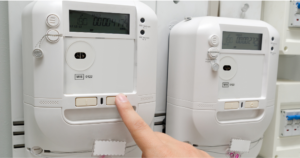
- Net metering, the mechanism that allows consumers to export surplus solar power to the grid and receive credits that can offset their electricity consumption, is state-regulated, with rules, caps, and application processes varying by DISCOM. In some high-congestion areas, DISCOMs have paused new net metering applications. Where net metering is available, DISCOM approval typically takes 7 to 30 days, with site inspections or corrections sometimes extending this timeline.
Choosing the right partner for your solar installation makes a meaningful difference. SolarSquare handles the paperwork for approvals, net metering applications, and all necessary forms, helping you get the PM Surya Ghar Muft Bijli Yojana subsidy credited straight to your bank account.
3. Low Solar Awareness, Especially in Tier-2, Tier-3, and Rural Cities in India
India’s rooftop solar boom is largely concentrated in a handful of states and city types. Rooftop solar in Gujarat, Maharashtra, Uttar Pradesh, Kerala, and Rajasthan accounts for nearly three-fourths of all rooftop installations. Everywhere else, a significant chunk of the adoption gap is not financial or regulatory, but informational.
Many households remain unaware of the financial benefits of solar. Even those who are interested often don’t know what the process involves, which vendors to trust, or whether the subsidy actually applies to them.
This awareness deficit is especially acute in rural and semi-urban regions, where solar renewable energy could provide the greatest value but faces the steepest information barriers.
4. Vendor Quality and Trust Deficits
For consumers considering rooftop solar, one of the most important questions is often not whether to go solar, but whom to trust with the installation.
- India’s rapid solar expansion has attracted a large number of unqualified or fly-by-night installers, and the consequences have been visible. Instances of substandard solar equipment, faulty wiring, and inadequate after-sales support from earlier phases have created trust deficits that slow down even consumers who are financially ready to proceed.
- Under PM Surya Ghar Muft Bijli Yojana, choosing a solar installer who is not listed on the official portal, even a locally reputable contractor, completely disqualifies the subsidy application, with no exceptions.
- The quality problem has a geographic dimension, too. Vendors are concentrated in a few high-adoption states, causing delivery delays and thin service coverage elsewhere.
Before choosing a vendor, always check the ALMM list on the PM Surya Ghar website for registered vendors. SolarSquare is the #1 home solar company in India. As of 6th August 2026, as listed on the PM Surya Ghar Muft Bijli Yojana National Portal for Rooftop Solar, we have installed 1,80,557 kWp of rooftop solar across 44,163 properties.
5. DISCOM Resistance and Structural Grid Incentives
This is the barrier least discussed in consumer-facing coverage, but arguably the most structural: electricity distribution companies (DISCOMs) often have little financial incentive, and in some cases, an active disincentive, to promote rooftop solar aggressively.
Here’s why.
DISCOMs traditionally cross-subsidize low-income residential and agricultural consumers by charging commercial and industrial users premium rates. As solar households reduce their grid dependence, the cross-subsidy pool shrinks, and non-adopters, who are predominantly lower-income families unable to install panels, end up bearing higher fixed charges to cover transmission and maintenance costs.
States are already adjusting. For instance, Maharashtra and Karnataka have capped net metering credits and introduced ToD tariffs partly to protect DISCOM revenues.
The Path Forward
None of these five barriers is unsolvable. Some states are already demonstrating what fast, effective rooftop solar rollout looks like: Maharashtra recorded the highest rooftop solar installations in FY2026 with 2,144 MW, followed by Gujarat with 1,777 MW, both states with relatively mature vendor networks, digital approval processes, and consumer awareness infrastructure.
India’s rooftop solar potential is enormous. What’s missing isn’t sunlight; it’s the last-mile infrastructure of awareness, trust, and administrative simplicity to convert interest into installation.
The best way forward in 2026 is to find a rooftop solar vendor that will last for as long as your rooftop solar system. SolarSquare, with over 50,000 homes solarized across 10 years, is an ideal partner. If you want to install rooftop solar that can outlast winds up to 170 km/hr and have the peace of mind of a money-back-guarantee in case of low solar generation, book a free solar consultation call with SolarSquare now.
Frequently Asked Questions
How much of India’s solar capacity is rooftop solar?
As of May 2026, grid-connected rooftop solar stood at 27.88 GW out of India’s total solar installed capacity of 157 GW, which is roughly 18% of the total. While rooftop installations have grown rapidly, ground-mounted utility-scale projects continue to dominate, accounting for over 118 GW.
Why is PM Surya Ghar adoption still slow despite subsidy?
Despite 26 lakh installations and Rs. 17,967 crore disbursed as of March 2026, the scheme still has ~74 lakh households to solarize before hitting its 1 crore target by FY2027. Persistent bottlenecks include DISCOM approval delays, portal errors, documentation complexity, and the cash-flow burden of paying upfront before subsidy reimbursement arrives.
Which states are leading in rooftop solar adoption?
Gujarat, Maharashtra, Kerala, Rajasthan, and Uttar Pradesh account for nearly three-fourths of India’s rooftop solar installations, with Gujarat leading under the PM Surya Ghar scheme. Gujarat’s high conversion rate is attributed to its digital approval infrastructure, strong vendor base, and consumer awareness initiatives.
Does a DISCOM need to approve rooftop solar installation?
Yes. DISCOM approval covers technical feasibility, grid compatibility, and net metering. The subsidy under PM Surya Ghar is only released after this verification is complete. Delays at this stage are one of the most common causes of subsidy disbursement hold-ups.
How does rooftop solar benefit India’s electricity grid?
Rooftop solar reduces demand on the central grid precisely during the hours when grid stress is highest, sunny midday periods. On 21 May 2026, India recorded its all-time peak electricity demand of 270.7 GW, and solar energy alone helped meet 22% of that demand. By generating power close to the point of consumption, rooftop systems also reduce transmission and distribution losses, a chronic problem for Indian DISCOMs, and ease the pressure on substation infrastructure in dense urban areas.


![10 kW Solar Panel Price in India [With and Without a Subsidy]](https://cdn.solarsquare.in/blog/wp-content/uploads/2025/07/18165650/10-KW-solar-panel-300x167.webp)