

 21 Reads
 11 mins


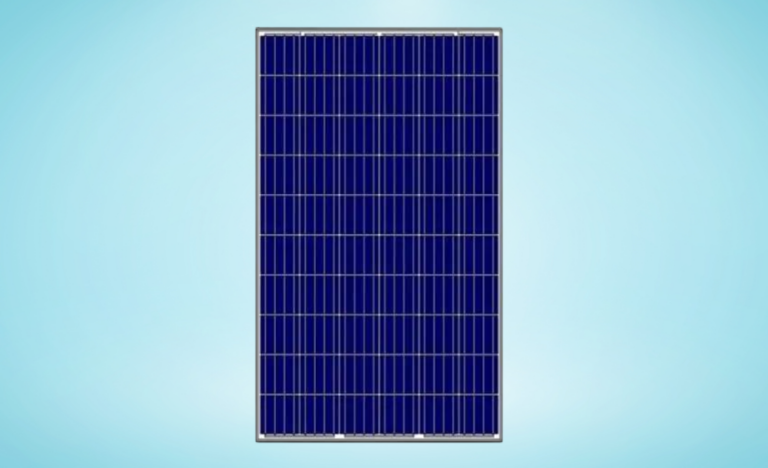
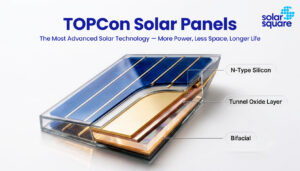
Polycrystalline solar panels were once the undisputed kings of the rooftop solar industry in India. However, by the end of 2025, they accounted for less than ~2% of India’s solar module manufacturing capacity, according to Mercom India. N-type TOPCon (Tunnel Oxide Passivated Contact) solar panels alone had grown to ~70%.
Source: State of Solar PV (Photovoltaic) Manufacturing Report, MERCOM India Research
The primary reason polycrystalline solar modules have declined is the emergence of high-efficiency N-type TOPCon solar panels. Compared with polycrystalline solar panels, which were only 13-18% efficient, TOPCon panels reach up to 26% efficiency. This means they produce more power from fewer panels and require less rooftop space.
Although not used in new rooftop solar panels in homes, polycrystalline PV panels still exist in 2026 as specialized products. They are available as low-wattage modules that can be used to charge batteries, power lights in off-grid cabins or RVs, or supply emergency power during camping and hiking.
This guide explains in detail where polycrystalline panels still fit in 2026, including their efficiency and prices in India, advantages and disadvantages, and how they compare with modern monocrystalline panels.
Are Polycrystalline Solar Panels Still Used for Rooftop Solar in 2026?
Polycrystalline technology now represents only a small part of India’s solar manufacturing capacity. Recent capacity additions have concentrated on TOPCon, HJT (Heterojunction Technology), and other monocrystalline technologies rather than conventional polycrystalline modules.
India’s latest solar manufacturing data shows how sharply this transition has happened.
According to Mercom India’s State of Solar PV Manufacturing in India 2026 report, India ended 2025 with ~210 GW of solar module manufacturing capacity and 27 GW of solar cell manufacturing capacity.
The technology split was heavily tilted away from polycrystalline:
- TOPCon panels accounted for ~70% of India’s module manufacturing capacity.
- Monocrystalline technology accounted for more than 25%.
- Polycrystalline modules accounted for only ~2%.
This difference was obvious at the cell level, too:
- Monocrystalline solar cells represented more than 57% of manufacturing capacity.
- TOPCon cells contributed more than 39%.
- Polycrystalline solar cells were down to ~3.5%.
The direction of new investment makes the change even clearer.
The absence of polycrystalline technology from major capacity additions indicates that solar panel manufacturers are prioritizing mono-based products for future demand. This reduces the availability of new, high-wattage polycrystalline modules in the Indian market.
Existing polycrystalline rooftop solar systems are not automatically obsolete. A system that remains safe and functional can continue generating electricity. The change is mainly relevant when deciding what solar panel technology to buy for a new rooftop solar plant in 2026.
What Are Polycrystalline Solar Panels Used For Today?
Polycrystalline silicon solar panels are now more relevant for small off-grid applications, specialized low-wattage needs, and as compatible replacements for older solar systems.
Current uses include:
- Small battery-charging systems: Low-wattage polycrystalline modules can still charge batteries used for basic off-grid applications.
- Solar lighting: Small modules remain suitable for lanterns, garden lights, and similar loads.
- Camping and portable power: Compact poly panels are still sold for low-power portable applications.
- Street lights and remote equipment: These systems may need only a small solar module rather than a high-efficiency residential panel.
- IoT (Internet of Things) and monitoring systems: Remote sensors and communication equipment can operate from relatively small solar modules.
- Older solar installations: A compatible polycrystalline solar module may be useful when replacing a damaged panel in an existing poly solar array.
What Is a Polycrystalline Solar Panel?
A polycrystalline solar panel is a low-wattage photovoltaic module made using silicon cells whose wafers contain multiple crystal grains. These grains form when molten silicon cools and solidifies, giving polycrystalline cells their characteristic non-uniform crystal structure.
Like other PV panels, polycrystalline panels convert solar radiation into DC (direct current) electricity through the photovoltaic effect. Sunlight absorbed by the semiconductor generates electrical charges that move through the cell and are collected by electrical contacts.
What Are Polycrystalline Solar Cells?
Polycrystalline solar cells are individual photovoltaic cells made from silicon wafers containing multiple crystal grains. Several cells are electrically connected and protected inside glass, encapsulant, and other materials to form a polycrystalline solar module or panel.
The terminology can be better understood via a simple flow, listed below:
- Solar cell: The individual semiconductor device that converts sunlight into electricity.
- Solar module or panel: Multiple connected solar cells packaged together.
- Solar array: Multiple solar modules connected to form a larger PV system.
How Are Polycrystalline Solar Cells Made?
Polycrystalline solar cells are made by melting high-purity silicon, allowing it to solidify into a multicrystalline ingot, slicing the ingot into wafers, and processing those wafers into photovoltaic cells.
Unlike monocrystalline silicon, the resulting material contains many crystal grains.
The process can be simplified into the following steps:
- High-purity polysilicon is produced from purified silicon feedstock.
- Polysilicon is melted at high temperatures.
- The molten silicon is cooled slowly from the bottom, allowing it to solidify gradually.
- Multiple silicon crystal grains form during solidification, creating a multicrystalline ingot.
- The ingot is cut into blocks and thin wafers.
- The wafers are textured and processed to form the electrical junction required for a solar cell.
- Anti-reflective coatings and electrical contacts are added.
- Individual cells are interconnected and encapsulated within a glass enclosure to form the finished solar module.
Polycrystalline Silicon vs Polysilicon: Are They the Same?
No, they’re not the same thing.
- Polysilicon is the high-purity silicon raw material used further upstream in solar manufacturing.
- Polycrystalline or multicrystalline describes silicon containing multiple crystal grains.
This distinction is important because polysilicon raw material can also be used to make monocrystalline solar cells.
In monocrystalline manufacturing, polysilicon is melted and grown into a single-crystal ingot, using the Czochralski process. For multicrystalline wafers, molten polysilicon can instead undergo directional solidification.
What Is the Efficiency of a Polycrystalline Solar Panel?
Conventional commercial polycrystalline solar panels achieve a lower efficiency of about 13% to 18%, although the exact efficiency depends on the cell and module design.
Solar panel efficiency measures how much of the sunlight striking the entire panel area is converted into electrical output under standard test conditions.
What Affects the Real-World Output of a Polycrystalline Panel?
A module’s laboratory-rated efficiency does not guarantee the same electrical output in every installation. Sunlight, temperature, placement, shading, cleanliness, and equipment condition influence how much electricity it produces in practice.
Here’s a look at all the factors:
- Cell and module design: Better cell processing, contacts, and optical coatings can improve conversion efficiency.
- Cell temperature: Solar output declines as cells become hotter.
- Solar irradiance: Lower sunlight levels reduce available power.
- Shading: Even partial shading can reduce module or string output depending on system design.
- Dust and dirt: Soiling blocks sunlight from reaching the cells directly.
- Orientation and tilt: Poor placement reduces the amount of sunlight reaching the module.
- Age and degradation: Module output gradually declines over years of operation. This process is known as solar degradation.
What Is the Polycrystalline Solar Panel Price in India in 2026?
Since they are no longer used in new rooftop solar systems, polycrystalline solar panel prices are extremely scattered among sellers. It can range from ~₹500* for a small 5-watt panel to around ₹12,600-₹18,900* for a 335W panel. Between these extremes, current listings also show prices of ~₹1,900* for 40W, ~₹4,000* for 100W, and ~₹6,400-~₹6,500* for 165-watt modules.
*Please note: The above-mentioned polycrystalline solar panel prices are indicative and not fixed. They’re based on standard market research. The final polycrystalline solar panel price in India can vary depending on brand, panel wattage, market demand for the module, promotional offers provided by the manufacturer, etc. SolarSquare does not manufacture, sell, install, or endorse any polycrystalline solar panel. We install rooftop solar systems for housing societies, homes, and commercial and industrial buildings using high-wattage TOPCon or latest technology solar panels.
What Are the Advantages and Disadvantages of Polycrystalline Solar Panels?
Polycrystalline solar panels are a mature solar technology with useful small-module and legacy applications. However, their lower efficiency, lower power density, and rapidly declining manufacturing base make them less suitable than monocrystalline technologies for new rooftop installations.
Here’s a snapshot of all the key benefits polycrystalline solar panels:
- Proven technology: Large numbers of poly modules have operated for many years around the world.
- Long operating life: Quality crystalline-silicon modules can remain operational for 25 years or longer.
- Useful for compatible replacements: A matching polycrystalline module may help restore an older solar array when its voltage, current, dimensions, and other electrical characteristics are compatible.
Now, let’s take a look at all the cons of polycrystalline solar panels:
- Lower efficiency: Conventional poly modules convert less sunlight into electricity per square meter than modern mono modules.
- More roof area required: Lower power density means more panel area is required for the same solar system capacity.
- Limited current availability: New manufacturing investment has moved to TOPCon technology.
Polycrystalline vs Monocrystalline Solar Panels: What Is the Difference?
Polycrystalline solar panels use wafers containing multiple silicon crystal grains, while monocrystalline panels use single-crystal silicon wafers. Modern monocrystalline panels offer higher efficiency and power density and have largely replaced polycrystalline modules for new rooftop PV systems.
Here’s a side-by-side comparison of both:
| Features | Mono Panels with Half-Cut PERC cells | Polycrystalline Solar Panels |
| Silicon type | Single crystal of silicon | Multiple melted silicon fragments |
| Appearance | Uniform black color | Speckled blue color |
| Efficiency | Up to 22.5% | 13-18% |
| Degradation rate | ~0.5% per year | ~0.8% per year |
| Heat performance | Better due to a lower temperature coefficient. | Not that great because of a higher temperature coefficient. |
| Shade tolerance | Higher due to the half-cut cell design | Poor |
| Space efficiency | It’s higher because less space is needed to achieve the same output. | It’s lower as more space is needed to achieve the same output. |
| Availability in Indian market | Readily available as it’s the most popular choice for rooftop solar installations. | Sharply declining as the technology is almost obsolete. |
For a more detailed comparison, you can read our guide on monocrystalline vs polycrystalline solar panels.
Should You Buy Polycrystalline Solar Panels for Your Home in 2026?
No. Polycrystalline panels are generally not the right choice for a new residential rooftop solar installation in India. Their declining availability can make panel selection, future replacement, and long-term system support more difficult.
Existing polycrystalline solar systems do not need to be replaced merely because the technology is older. If the system is safe and performing properly, it can remain in operation. A damaged module should be replaced only with a panel whose electrical characteristics are compatible with the existing array.
For a new installation, panel efficiency is only one consideration. You should also examine module wattage, warranty, manufacturer support, PM Surya Ghar Muft Bijli Yojana eligibility, roof conditions, system design, and installation quality.
SolarSquare installs modern high-wattage rooftop solar systems for homes. Book a free consultation with our experts to identify a suitable solar system for your property and electricity consumption.
Frequently Asked Questions
Why are polycrystalline solar cells less efficient?
Polycrystalline wafers contain many crystal grains and therefore more grain boundaries. These boundaries can increase charge-carrier recombination, reducing the amount of electrical energy that can be collected. This is one reason conventional poly cells achieve lower efficiency than modern monocrystalline cells.
What is another name for a polycrystalline solar panel?
A polycrystalline solar panel is also commonly called a multicrystalline solar panel or multi-Si module. Polysilicon, on the other hand, is not another name for the finished panel. Polysilicon is the high-purity silicon feedstock used earlier in the manufacturing process.
Can polycrystalline panels get the PM Surya Ghar Muft Bijli Yojana subsidy?
Yes, but only if the polycrystalline modules meet the scheme’s Domestic Content Requirement (DCR) and are included in the applicable Approved List of Models and Manufacturers (ALMM). Polycrystalline technology is not specifically prohibited, but eligible modules are now limited and may be difficult to source.
Why are polycrystalline solar panels blue?
The blue appearance comes from the optical properties of the cell surface and its anti-reflective coating. Multiple crystal grains create the characteristic uneven or speckled appearance.
Are polycrystalline panels good in hot weather?
Polycrystalline panels work in hot weather, but their output falls as cell temperature rises. N-type solar panels offer far better performance in hot Indian summers.


 Previous Article

 15 min