

 4 Reads
 9 mins


The Ministry of New and Renewable Energy (MNRE) is reportedly working on a redesigned version of India’s rooftop solar scheme, which media and installers are calling PM (Pradhan Mantri) Surya Ghar 2.0. The reported plan would reward the power a system actually generates, not just the capacity installed. It may also add support for battery storage and bring in households that can’t use the scheme today, such as apartment residents. None of this is confirmed policy yet, and it is still under discussion at the ministry.
This guide separates what has been notified from what is only being talked about, whether you search for PM Surya Ghar Yojana 2.0 or PM Surya Ghar Muft Bijli Yojana 2.0. It covers the current subsidy, eligibility, the 2026 rule changes, and whether to wait.
What Is PM Surya Ghar 2.0?
PM Surya Ghar 2.0 (also searched as PM Surya Ghar Yojana 2.0 or PM Surya Ghar Muft Bijli Yojana 2.0) is an informal label. It describes the possible next phase of India’s residential rooftop solar programme. It is not an official scheme name. Here is how that label came about, and how much of it is confirmed.
Where Things Stand Today
PM Surya Ghar 2.0 has not been officially launched. The original scheme began in February 2024 with an outlay of ₹75,021 crore, and it is meant to run until the end of the financial year (FY) 2026-27, as MNRE’s scheme guidelines and Press Information Bureau (PIB) material describe. Today the solar subsidy in India depends on installed capacity alone; batteries get no subsidy of their own, and apartment residents largely sit outside the scheme. The 2.0 talk began after MNRE reportedly held a brainstorming session on 23 July 2026 on the next roadmap. Trade media said a discussion document would follow, but nothing has been notified since, so treat every 2.0 detail as a proposal.
What Could PM Surya Ghar 2.0 Change?
The ideas reported so far fall into a few buckets. None of them is policy yet.
| Area | Today (live scheme) | Reported idea for 2.0 (not confirmed) |
| Subsidy basis | Fixed amount by system size | Part of the support linked to actual electricity generation |
| Battery storage | No dedicated subsidy | Possible support for battery energy storage systems (BESS) |
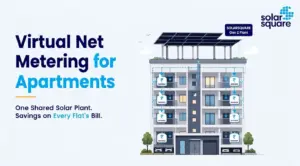
| Apartments | Individual rooftops; housing societies get common-area support | Shared or community rooftop solar, possibly with virtual net metering |
| Timeline | Runs till FY 2026-27 | No launch date announced |
| Monitoring | Application tracked on the portal | A “digital solar passport” recording output, service history, and warranty |
If you want proof that storage is already on MNRE’s radar, look at the scheme’s “Innovative Projects” component. It earmarks ₹500 crore for pilots such as rooftop solar with battery storage and electric vehicles, funding up to 60% of project cost or ₹30 crore, whichever is lower (All India Radio). That is a pilot window for startups and institutions, not a household subsidy.
PM Surya Ghar 2.0 Subsidy: What You Can Count On Today
People search “PM Surya Ghar 2.0 subsidy” hoping for a new number. There isn’t one. The numbers below apply to the current scheme and are in effect now.
Subsidy for Individual Homes
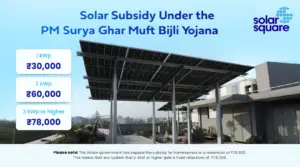
The central financial assistance (CFA) is calculated per kilowatt (kW) and capped at 3 kW, as listed on state government scheme pages and the national portal.
| System size | Central subsidy |
| 1 kW | ₹30,000 |
| 2 kW | ₹ 60,000 |
| 3 kW & Above | Capped at ₹ 78,000 |
So a 5 kW system gets the same central subsidy as a 3 kW one. The subsidy is credited by Direct Benefit Transfer (DBT) to your bank account through the portal.
Subsidy for Housing Societies
Group Housing Societies (GHS) and Resident Welfare Associations (RWA) get ₹18,000 per kW for common facilities, including EV charging, up to 500 kW (calculated at 3 kW per house), as per official scheme listings.
Will Your Subsidy Change Under 2.0?
There’s no way to say yet. A generation-linked model could mean some of the support arrives over time instead of in one payment, but that is speculation until MNRE publishes a draft. Any state top-up is separate. States can add to the central amount; for example, Gujarat has newly reported support for systems up to 2.18 kWp from 22 October 2026, so always check your state nodal agency, too.
PM Surya Ghar Yojana 2.0 Eligibility: Who Can Apply?
No separate eligibility list exists for 2.0. What you can apply under today is the existing scheme, so here is who it covers and what the proposals might widen.
Eligibility Under the Current Scheme
According to MNRE’s reply in the Lok Sabha on 29 July 2026, all residential consumers with a grid-connected electricity connection from their local distribution company (DISCOM) can apply on the National Portal for PM Surya Ghar Muft Bijli Yojana. In practice, you will need:
- A residential electricity connection in your name
- A rooftop with enough shadow-free space
- A system installed by a vendor registered on the portal
- Equipment that meets the scheme’s domestic content rules
Commercial and industrial buildings are not covered by the residential subsidy.
Could Eligibility Expand Under 2.0?
Possibly. Apartment residents and renters without their own roof are the obvious gap, which is why shared solar keeps coming up in the reports. Until MNRE says so officially, don’t assume you qualify through a route that doesn’t exist yet.
What Has Changed in PM Surya Ghar Rules in 2026?
While 2.0 stays a proposal, the existing scheme has been tightened and simplified. These are the changes that matter to a homeowner.
Easier Approvals and Cheaper Loans
MNRE’s Lok Sabha reply lists the measures taken to speed things up:
- Collateral-free loans from nationalised banks at repo rate plus 50 basis points (5.75% a year at present) for 10 years
- Technical feasibility requirement waived, with auto load enhancement up to 10 kW
- Net metering agreement built into the portal application, so no separate paperwork
- A grievance helpline, 15555, running in 12 languages
Equipment and Quality Rules
Domestic content matters. Under the Approved List of Models and Manufacturers (ALMM) List-II, solar cells must be on the approved list for projects commissioned after 1 June 2026, as industry guides report. MNRE has also set a 15-day window for vendors to fix defects flagged in third-party inspections. In plain words, a poor installation can delay your subsidy.
Progress and Deadline
As of 27 July 2026, MNRE reported 40,45,298 systems installed, 48,80,796 households benefited, and ₹27,343.9 crore released as CFA. The official timeline still runs to FY 2026-27. Reports of an extension exist, but we found no notification.
Should You Wait for PM Surya Ghar 2.0?
For most households, no. The scheme you can use is open, funded, and paying out. Waiting means paying higher electricity bills each month for a scheme with no date. A few things worth weighing:
- Timeline risk: The current scheme is approved only till FY 2026-27, and the subsidy is released after inspection, not at application.
- Battery plans: If you want storage, you can add a battery privately today, though it is not subsidised under the current scheme.
- Apartment dwellers: You may be better off watching for official shared-solar rules, or checking whether your society can apply as a GHS or RWA.
The Bottom Line: Start With the Scheme That’s Live
PM Surya Ghar 2.0 is, for now, a reported idea with no notification, no subsidy amount, and no launch date. The scheme that pays today is the existing one: up to ₹ 78,000 in central subsidy, collateral-free loans, simpler approvals, and a fixed window that runs to 31 March 2027. Generation-linked incentives, battery support and shared solar may arrive later. Until MNRE notifies them, waiting only means paying full electricity bills while a working scheme sits unused.
So go for the current scheme, which has already benefited so many Indian households. SolarSquare can size a system around your actual electricity bill, guide you through the PM Surya Ghar application, and install it, so nothing holds up your subsidy. If the 2.0 changes do arrive, you will already be generating. Get your free solar quote from SolarSquare, book your free solar consultation now.
Frequently Asked Questions
Is PM Surya Ghar 2.0 launched?
No. As of 25 October 2026, we found no scheme, guideline, or portal called PM Surya Ghar 2.0 notified by MNRE. What exists is media reporting that the ministry discussed a redesign in July 2026. The live scheme is still the original PM Surya Ghar: Muft Bijli Yojana, and you can apply under it on the National Portal. Check the portal and MNRE’s website for any official change.
What is the subsidy under PM Surya Ghar 2.0?
No amount has been announced, so any 2.0 figure you see online is unofficial. The central subsidy today is ₹30,000 for 1 kW, ₹60,000 for 2 kW, and ₹78,000 for 3 kW or more, paid by DBT to your bank account. Reports suggest part of future support could depend on actual generation, but that is only a proposal.
Is PM Surya Ghar Yojana 2.0 the same as PM Surya Ghar Muft Bijli Yojana 2.0?
Yes. PM Surya Ghar Yojana 2.0, PM Surya Ghar Muft Bijli Yojana 2.0, and PM Surya Ghar 2.0 all refer to the same thing: the talked-about next phase of the existing scheme. The official name remains Pradhan Mantri Surya Ghar: Muft Bijli Yojana, and “2.0” is not a formal title. Whichever spelling you search, the live scheme is the same one.
Will batteries get a subsidy under PM Surya Ghar 2.0?
Not confirmed. Battery storage is reportedly one of the ideas under discussion, but no subsidy has been notified, and the current residential subsidy has no dedicated battery component. You can add a battery privately, though its cost would not be covered. MNRE’s Innovative Projects component does fund battery pilots, but that is meant for startups and institutions, not households.
What is the last date for PM Surya Ghar?
The scheme is approved till the end of FY 2026-27, i.e., 31 March 2027. Reports mention a possible extension, but we found no notification. Industry guides note the subsidy is released after inspection and commissioning, not at application, so applying late can still miss the window. Aim to finish installation well before March 2027.
Should I wait for PM Surya Ghar 2.0 before installing solar?
No. 2.0 has no launch date, no notified benefit, and no confirmed rules, while the current subsidy of up to ₹78,000 is available now. Waiting also means paying full electricity bills in the meantime, and the existing scheme is approved only till March 2027. If battery or apartment support matters to you, watch the portal for official notices rather than pausing your plan.


 Previous Article

 12 min