

 514 Reads
 22 mins


Two homes can install rooftop solar of the same capacity and still have completely different experiences during a power cut. One system may shut down immediately during an outage, another may continue supplying power through batteries, while a third may not depend on the grid at all.
The difference largely comes down to the type of solar inverter and system architecture you choose.
- An on-grid solar inverter is the most economical choice when the grid is reliable, and your priority is reducing electricity bills.
- An off-grid solar inverter is best for locations that are so remote that there’s no grid supply available, or where it’s so unpredictable that power comes only for a few hours.
- A hybrid solar inverter works with the grid and battery storage, making it better suited to homes that need backup during frequent power cuts.
This guide compares the differences between off-grid, on-grid, and hybrid inverters based on grid dependency, battery requirements, backup power, solar export, net metering, subsidy eligibility, cost, maintenance, and ideal use cases.
On-Grid vs Off-Grid vs Hybrid Inverters at a Glance
On-grid is the lowest-cost option for homes with reliable grid electricity, while hybrid systems combine grid connectivity with battery backup. Off-grid, on the other hand, is designed for complete grid independence and is not automatically cheaper than hybrid because full autonomy can require a much larger solar array and battery bank.
Here is the difference between off-grid, on-grid, and hybrid inverters at a glance:
| Factor | On-Grid Solar Inverter | Off-Grid Solar Inverter | Hybrid Solar Inverter |
| Grid connection | Yes | No | Yes |
| Battery requirement | No | Yes | Yes |
| Electricity during a power cut | No | NA | Yes |
| Export of surplus solar electricity | Yes | No | Yes, if DISCOM approves net metering |
| Net metering | Yes | No | Yes |
| Main power sources managed | Solar + grid | Solar + battery energy storage system (BESS) | Solar + grid + battery |
| Energy storage | No | Yes | Yes |
| Level of energy independence | Low | 100% | Balanced |
| Upfront system cost | ~₹2.30 lakh* for 3 kW | ~₹3.40 lakh* for 3 kW + 10 kWh battery | ~₹3.60 lakh* for 3 kW + 5 kWh battery |
| Battery replacement cost | Nil (no battery) | ~₹1 lakh+ after 5-8 years | ~₹50,000+ after 8-10 years |
| Maintenance requirement | Moderate | High | High |
| Installation complexity | Low | Moderate | High |
| DISCOM approval requirement | Yes | No | Yes |
| Subsidy eligibility | Yes | No | Yes, if the discom allows net metering |
| Best suited for | Reliable grid conditions | Remote installations | Frequent power cuts and non-net-meter cases |
| Main limitations | No power during grid downtime and no energy storage | Blackout risk if stored energy is depleted | Higher cost and system complexity |
*DISCLAIMER (VERY IMPORTANT): The solar inverter price in India listed above is an indicative range and should not be treated as a final quotation. The actual price can vary based on the inverter’s capacity, type, single-phase or three-phase configuration, brand and model, number of MPPTs (maximum power pointer trackers), efficiency, DC (direct current) input and overloading capability, monitoring and communication features, IP (ingress protection) rating, warranty and extended warranty options, applicable safety and grid-compliance requirements, after-sales service coverage, GST, dealer or distributor margins, location, product availability, ongoing discounts or offers, protection devices, communication dongles, installation, or commissioning charges, etc.
What Is an On-Grid Solar Inverter?
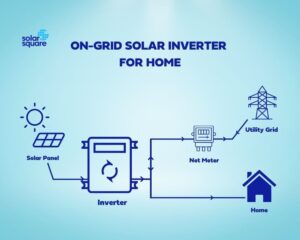
An on-grid solar inverter connects a rooftop solar system directly to the utility grid and works without batteries. It converts solar DC (direct current) to AC (alternating current), supplies solar power to the home, draws electricity from the grid to cover shortfalls, and can export surplus solar generation to the grid through an approved solar net metering arrangement.
It is primarily designed for homeowners with a reliable grid connection who want rooftop solar to reduce their electricity bills.
How Does an On-Grid Inverter Work?
An on-grid inverter uses available solar electricity first, takes additional electricity from the grid when solar generation is insufficient, and exports surplus solar when permitted. Because it must remain synchronized with the grid, normal operation depends on a utility connection.
The power flow works like this:
- Solar panels generate DC electricity.
- The inverter converts it into AC electricity.
- Your home consumes the available solar electricity.
- If demand exceeds solar generation, the grid supplies the balance.
- If solar generation exceeds demand, the surplus can flow to the grid through the applicable metering arrangement.
Advantages and Disadvantages of an On-Grid Inverter
The main advantage of an on-grid solar inverter is its lower system cost, as it does not require battery storage. Its main limitation is grid dependence. When the grid goes down, the solar inverter also shuts down, and the home loses solar power.
Here’s a snapshot of the key benefits of on-grid solar inverters:
- Lowest system cost and highest ROI (return on investment) among the three options
- No battery required
- Lower installation complexity
- Surplus solar can be exported to the grid
- Best suited to reducing bills in locations with a reliable grid connection
Here’s a snapshot of the key drawbacks of on-grid solar inverters:
- No power during a grid outage
- No built-in energy storage
- Solar operation depends on acceptable grid conditions
For a deeper explanation of sizing, specifications, panel oversizing, and how they work, read our detailed guide on on-grid solar inverters.
What Is an Off-Grid Solar Inverter?
An off-grid solar inverter supplies electricity without depending on the utility network. It works with solar panels and a battery bank, making it suitable for remote properties where grid electricity is unavailable or too unreliable to serve as the primary power source.
Because there is no grid to cover a shortfall, the entire system must be sized to the property’s actual load, battery requirements, and solar generation needs.
How Does an Off-Grid Inverter Work?
An off-grid inverter uses solar electricity to support loads and charge batteries during the day. Then, it draws stored battery energy when solar generation falls. The battery and solar array must together meet the planned electricity requirement, as the utility grid is not available as a fallback.
The basic working process is listed below:
- Solar panels generate DC electricity.
- The solar charging stage regulates the electricity entering the battery bank.
- The system uses available solar energy to support daytime loads and battery charging.
- The inverter converts DC electricity into AC for household appliances.
- Battery energy supplies the required loads when solar generation is insufficient or unavailable.
Advantages and Disadvantages of an Off-Grid Inverter
An off-grid solar inverter provides complete independence from grid infrastructure when the system is sized correctly. However, achieving that independence requires sufficient solar capacity and battery storage, which makes the complete system expensive and creates a risk of downtime if stored energy is exhausted.
Here’s a snapshot of all the benefits of an off-grid solar inverter:
- Suitable for remote properties with no grid available
- Solar electricity can be stored for later use
- Can provide 100% energy independence when correctly sized
Here’s a snapshot of all the drawbacks of an off-grid solar inverter:
- Requires a large enough battery bank
- Higher total system cost
- Battery replacement adds future cost
- Several low-generation days can reduce available autonomy
- Surplus solar cannot be exported to the utility grid
For detailed load, battery, autonomy, and solar panel calculations, read our complete guide on off-grid solar inverters.
What Is a Hybrid Solar Inverter?
A hybrid solar inverter integrates solar panels, battery storage, and the utility grid into a single system. It can reduce grid electricity use like an on-grid inverter while also storing energy and supplying backup loads during outages when a compatible battery is installed.
This makes hybrid particularly relevant for grid-connected homes where power cuts are frequent, or the homeowner wants to add storage.
How Does a Hybrid Inverter Work?
A hybrid inverter combines grid access, battery storage, and power-cut backup, offering greater flexibility than an on-grid inverter. The trade-off is higher upfront cost, greater installation complexity, and future battery replacement costs.
Here’s how the system works:
- Solar panels generate electricity.
- Solar power supports household consumption.
- Available surplus can charge the battery.
- Battery or grid electricity covers a shortfall according to the system settings.
- Further surplus may be exported where the DISCOM (distribution company) permits net metering.
How Does a Hybrid Inverter Provide Backup During a Power Cut?
During a grid outage, a hybrid inverter can isolate the solar-plus-storage system safely from the utility network and use battery energy to power the configured backup loads. Backup duration depends on battery capacity, charge level, inverter output, and the appliances being operated.
The system therefore provides support during a power cut without feeding electricity back into failed utility lines.
Advantages and Disadvantages of a Hybrid Inverter
A hybrid inverter combines grid access, battery storage, and power-cut backup, giving it more flexibility than an on-grid inverter. The trade-off is higher upfront cost, greater installation complexity, and future battery replacement costs.
Here’s a snapshot of all the key benefits of a hybrid solar inverter:
- Grid connectivity plus battery storage
- Backup during power cuts
- Surplus solar export where permitted
- Greater control over solar, battery, and grid electricity
Here’s a snapshot of all the key drawbacks of a hybrid solar inverter:
- Higher cost than an on-grid system
- More complex installation
- Battery replacement adds future cost
- Grid-connected installations still require applicable DISCOM approvals
For detailed load, battery, working, and solar panel calculations, read our complete guide on hybrid solar inverters.
Difference Between On-Grid and Off-Grid Inverters (Off-Grid vs On-Grid Inverter)
The key difference between on-grid and off-grid inverter systems is their dependence on the grid. An on-grid inverter needs the utility network for normal operation and does not require batteries. An off-grid inverter operates independently of the grid and therefore needs battery storage and sufficient solar capacity to support the planned loads.
The difference between on-grid and off-grid solar inverter systems also affects costs, backup power, and the handling of surplus solar electricity.
Here’s an off-grid inverter vs on-grid inverter comparison designed to help you choose the right option based on your needs:
| Factor | On-Grid inverter | Off-Grid inverter |
| Grid dependency | Must remain connected to the utility grid during normal operation | Operates independently of the utility grid |
| Main power sources | Solar + grid | Solar + battery |
| Battery requirement | Not required | Required |
| Power during an outage | Not available. The on-grid inverter shuts down during a grid failure because of anti-islanding protection. | Grid outages do not affect operation because the off-grid solar system is not grid-dependent. |
| What happens when solar generation is low? | The grid supplies the shortfall | The battery supplies the shortfall |
| What happens at night? | The home draws electricity from the grid | The home uses electricity stored in the battery |
| What happens if the battery is depleted? | Not applicable because a standard on-grid system does not use a battery. | Power stops until sufficient solar generation resumes or another supported AC source is available. |
| Surplus solar electricity | Can be exported to the grid under the applicable metering arrangement | Cannot be exported to the utility grid |
| Net metering | Yes, subject to DISCOM approval and applicable rules. | No |
| Cost | Lower because batteries are not required | Higher because a sufficiently large battery bank and solar array are required |
| Indicative 3 kW system cost* | ~₹2.30 lakh | ~₹3.40 lakh for 3 kW + 10 kWh battery |
| Battery replacement cost | Nil | ~₹1 lakh+ after 5-8 years |
| DISCOM approval | Required for grid connection and applicable net metering arrangement | Not required because the system does not connect to the utility grid |
| PM Surya Ghar Muft Bijli Yojana | Eligible when applicable scheme and DISCOM requirements are met | Not eligible |
| Best suited for | Rooftop solar at housing societies, homes, and commercial and industrial setups in areas with a reliable grid | Remote homes, farms, and other sites where dependable grid electricity is unavailable |
*DISCLAIMER (VERY IMPORTANT): The solar inverter price in India listed above is an indicative range and should not be treated as a final quotation. The actual price can vary based on the inverter’s capacity, type, single-phase or three-phase configuration, brand and model, number of MPPTs, efficiency, DC input and overloading capability, monitoring and communication features, IP rating, warranty and extended warranty options, applicable safety and grid-compliance requirements, after-sales service coverage, GST, dealer or distributor margins, location, product availability, ongoing discounts or offers, protection devices, communication dongles, installation, or commissioning charges, etc.
Difference Between On-Grid and Hybrid Inverters
The main difference between on-grid and hybrid inverter systems is the presence of a battery. Both connect to the utility grid and can export solar electricity where permitted. Still, only a hybrid solar inverter can manage battery storage and provide backup during an outage when configured with a compatible battery.
This difference also affects how the two systems behave during power cuts, how they manage surplus solar electricity, their cost, and whether battery storage can be added later.
Here’s a side-by-side comparison of both, designed to help you choose the right option based on your needs:
| Factor | On-Grid Solar Inverter | Hybrid Solar Inverter |
| Main power sources managed | Solar + grid | Solar + battery + grid |
| Battery compatibility | No | Yes |
| Can it work without a battery? | Yes. Batteries are not required | Yes. It can initially operate without a battery and storage can be added later |
| Power during a grid outage | No. The on-grid inverter shuts down because of anti-islanding | Yes, when a compatible battery is installed, and backup loads are configured |
| What happens when solar generation is low? | The grid supplies the shortfall | Battery or grid electricity can cover the shortfall according to system settings |
| What happens at night? | The home relies on grid electricity | The home can use stored battery energy or grid electricity |
| Surplus solar electricity | Exported to the grid under the applicable metering arrangement | Can charge the battery first and may then be exported to the grid where permitted |
| Net metering | Yes, subject to applicable DISCOM rules | Yes, where the DISCOM permits the hybrid system and net metering arrangement |
| Future battery expansion | A battery cannot simply be added to convert the inverter into a hybrid system | Battery storage can be added later if the inverter and battery are compatible |
| Energy independence | Low because the grid is required for normal operation | Higher because stored battery energy can reduce grid dependence |
| System cost | Lower because no battery storage is required | Higher because of battery storage and additional system complexity |
| Indicative 3 kW system cost* | ~₹2.30 lakh | ~₹3.60 lakh for 3 kW + 5 kWh battery |
| Battery replacement cost | Nil | ~₹50,000+ after 8-10 years |
| PM Surya Ghar Muft Bijli Yojana | Eligible when scheme and DISCOM requirements are met | Eligible if the DISCOM allows the required grid-connected and net metering arrangement |
| Best suited for | Rooftop solar at commercial and industrial setups, homes, and housing societies in locations with a reliable grid | Homes with frequent power cuts or homeowners who want battery storage now or later |
*DISCLAIMER (VERY IMPORTANT): The solar inverter price in India listed above is an indicative range and should not be treated as a final quotation. The actual price can vary based on the inverter’s capacity, type, single-phase or three-phase configuration, brand and model, number of MPPTs, efficiency, DC input and overloading capability, monitoring and communication features, IP rating, warranty and extended warranty options, applicable safety and grid-compliance requirements, after-sales service coverage, GST, dealer or distributor margins, location, product availability, ongoing discounts or offers, protection devices, communication dongles, installation, or commissioning charges, etc.
The difference between grid-tied and hybrid inverter systems follows the same principle.
- A grid-tied inverter depends on the utility network and has no integrated battery management
- A hybrid inverter combines grid connectivity with battery storage and backup capability.
Difference Between Off-Grid and Hybrid Inverters
The key difference between off-grid and hybrid solar system designs is grid connectivity. Both use battery storage, but an off-grid inverter is designed to operate without the utility grid. In contrast, a hybrid inverter can use solar, batteries, and grid electricity within the same system.
This difference also affects battery sizing, surplus solar use, autonomy, cost, and what happens when stored energy runs low.
Here’s a side-by-side comparison of both, designed to help you pick the right option based on your needs:
| Factor | Off-Grid Solar Inverter | Hybrid Solar Inverter |
| Grid connection | No | Yes |
| Main power sources managed | Solar + battery | Solar + battery + grid |
| Battery requirement | Yes | Yes for storage and backup |
| Can it work without a battery? | No. Battery storage is required for normal off-grid operation | Yes. It can initially operate without a battery, and storage can be added later |
| Power during a grid outage | Unaffected by the outage because the system does not depend on the grid | Can continue supplying configured backup loads using battery energy |
| What happens when solar generation is low? | The battery supplies the shortfall | Battery or grid electricity can cover the shortfall according to system settings |
| What happens at night? | Loads depend on stored battery electricity | Loads can use battery electricity or draw from the grid |
| What happens when the battery becomes depleted? | Power stops until sufficient solar generation resumes or another supported AC source is available | The grid can supply electricity during normal grid availability |
| Required battery capacity | Generally larger because the off-grid system must be designed for the required autonomy without relying on the grid | Can be smaller because the grid remains available as an additional power source |
| Autonomy requirement | Important because the system must survive periods with little or no solar generation without grid support | Lower autonomy may be sufficient because grid electricity remains available |
| Net metering | No | Yes, where the DISCOM permits the applicable grid-connected arrangement |
| Risk if solar is undersized | Higher. The property can experience a blackout if usable battery energy is exhausted | Lower during normal grid availability because the grid can cover the shortfall |
| System cost | Can be high because complete autonomy may require a larger battery bank and solar array | Higher than on-grid, but battery capacity need not necessarily be sized for full autonomy |
| Indicative 3 kW system cost* | ~₹3.40 lakh for 3 kW + 10 kWh battery | ~₹3.60 lakh for 3 kW + 5 kWh battery |
| Battery replacement cost | ~₹1 lakh+ after 5-8 years | ~₹50,000+ after 8-10 years |
| PM Surya Ghar Muft Bijli Yojana | No | Yes, if the DISCOM allows the required net metering arrangement |
| Best suited for | Remote homes, farms, and properties without dependable grid electricity | Rooftop solar system at homes, housing societies, and commercial and industrial setups where grid is available but power cuts are frequent |
*DISCLAIMER (VERY IMPORTANT): The solar inverter price in India listed above is an indicative range and should not be treated as a final quotation. The actual price can vary based on the inverter’s capacity, type, single-phase or three-phase configuration, brand and model, number of MPPTs, efficiency, DC input and overloading capability, monitoring and communication features, IP rating, warranty and extended warranty options, applicable safety and grid-compliance requirements, after-sales service coverage, GST, dealer or distributor margins, location, product availability, ongoing discounts or offers, protection devices, communication dongles, installation, or commissioning charges, etc.
Net Metering and PM Surya Ghar Subsidy for Each Inverter Type
Net metering and PM Surya Ghar Muft Bijli Yojana subsidy eligibility clearly separate the three inverter types.
- On-grid solar panel systems can use net metering and qualify for subsidy.
- Eligible hybrid solar systems can also qualify where the DISCOM permits net metering.
- Off-grid solar systems have neither net metering nor PM Surya Ghar Muft Bijli Yojana subsidy eligibility.
Net metering requires a connection between the rooftop solar system and the utility network so that electricity can move between the home and the grid. An off-grid system has no such grid connection. Hence, it is not eligible for a subsidy.
On-Grid Inverter Subsidy Eligibility
An eligible residential on-grid rooftop solar system can receive a subsidy under the PM Surya Ghar Muft Bijli Yojana because it is connected to the utility network and complies with the required DISCOM and net metering processes.
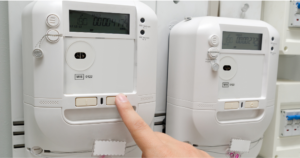
With net metering, the bidirectional net meter, or smart meter, records both electricity drawn from the grid and surplus solar electricity exported back to the grid.
The installation must still meet the applicable DISCOM, technical, and metering requirements. Simply purchasing an on-grid inverter does not, by itself, make an installation subsidy-eligible.
Is a Hybrid Solar System Eligible for Subsidy?
Yes, a hybrid solar system can be eligible for the PM Surya Ghar Muft Bijli Yojana subsidy if the DISCOM approves it as a grid-connected, net-metered rooftop solar installation. The presence of a battery does not by itself make a hybrid system ineligible.
The important distinction is how the system is connected and approved.
A hybrid installation configured only for backup or under an arrangement that the local DISCOM does not permit for net metering cannot be treated the same as an approved net-metered rooftop system.
Are Off-Grid Systems Eligible for PM Surya Ghar Subsidy?
No. Off-grid solar systems are not eligible for the PM Surya Ghar Muft Bijli Yojana subsidy because they operate independently of the utility network. They cannot participate in net metering and do not export surplus rooftop solar electricity through a DISCOM-approved grid connection.
This is an important cost difference.
Buyers comparing off-grid vs on-grid solar inverter systems should compare the final solar system cost after accounting for subsidy eligibility, not just the inverter price.
Which Solar Inverter Should You Choose?
Between on-grid inverter vs off-grid inverter vs hybrid inverter:
- Choose on-grid if your home has reliable grid electricity and your priority is lower bills.
- Choose a hybrid system if power cuts are frequent and you need battery backup.
- Choose off-grid only when dependable grid connectivity is unavailable, and the property genuinely needs to operate independently.
You can also book a free solar consultation call with SolarSquare to assess your electricity usage, grid reliability, backup requirements, and rooftop conditions before choosing among hybrid vs on-grid vs off-grid solar inverters.
Frequently Asked Questions
What does a solar inverter do?
A solar inverter converts DC electricity produced by solar panels into AC electricity that home appliances can use. Depending on the inverter type, it can also manage grid synchronization, battery charging, energy storage, solar export, and backup power.
Which solar inverter offers the best return on investment?
When comparing ROI between hybrid vs on-grid vs off-grid inverter systems, on-grid always wins. It offers the shortest payback period because it avoids battery storage costs, reduces grid electricity consumption, and allows surplus export where permitted. But in the future, policies will be more favorable for hybrid systems.
What is the difference between grid-tied and off-grid solar inverters?
A grid-tied inverter connects to the utility network, normally operates without batteries, and shuts down during a grid outage. An off-grid inverter, on the other hand, uses solar panels and batteries to operate independently of the grid and therefore does not use net metering.
Can an off-grid inverter use a generator or grid supply?
Some off-grid inverters and solar PCUs can accept an external AC source such as a generator or grid supply for charging or additional support. However, this does not make them grid-tied inverters, as they typically do not synchronize with the grid to enable solar export and net metering.
Does an on-grid inverter work during a power cut?
No. An on-grid solar inverter shuts down when the utility grid fails, even if the solar panels are producing electricity. This is caused by anti-islanding protection, which prevents the rooftop system from feeding electricity into de-energized utility lines during repairs.
Why is battery sizing critical in an off-grid system?
Battery sizing is critical because an off-grid home cannot draw electricity from the utility network when stored energy runs low. The battery bank must support the required nighttime consumption and provide enough autonomy for periods when solar generation is lower than expected.
- The required storage depends on daily electricity consumption, desired autonomy, usable depth of discharge, system efficiency, and battery-bank voltage.
- A battery that is too small increases the risk of blackouts. An unnecessarily large battery, on the other hand, sharply increases the cost of the off-grid solar system.
What is the usual power priority in a hybrid solar system?
A hybrid system gives solar electricity priority for household consumption. Surplus solar can then charge the battery, while the battery and the grid cover shortfalls, depending on the selected operating mode. The exact priority can vary with inverter settings and system design. This ability to decide when to use solar, stored electricity, and grid power is one of the main differences between hybrid and on-grid systems.
Can a hybrid inverter work without a battery?
Yes. A hybrid inverter can initially be installed without a battery and work like an on-grid inverter. A compatible battery can be added later, allowing homeowners to install rooftop solar now while retaining the option to add storage in the future. This is different from a conventional on-grid inverter, which cannot later become a hybrid inverter simply by connecting a battery.
Which is cheaper: on-grid, off-grid or hybrid?
On-grid is generally the cheapest because it does not require batteries. Hybrid costs more because storage is added. Off-grid can also be expensive because complete independence may require a larger battery bank and solar array to support loads without any grid fallback.
Can I add a battery to an existing on-grid inverter?
No. An on-grid inverter cannot simply be converted into a battery-based inverter. A separate UPS can be installed for backup, but the two systems will not operate as one integrated solar-plus-storage setup. A hybrid inverter can instead be installed without a battery initially, with storage added later.
Does a hybrid inverter provide backup to the entire house?
A hybrid inverter can provide backup during an outage, but the loads it can support depend on inverter output, battery capacity, charge level, wiring, and system design. The installation may be designed to power selected essential loads rather than every appliance.
Can I switch from an on-grid to a hybrid or off-grid system later?
No, this cannot be achieved by simply modifying the existing on-grid inverter. To move to a hybrid or off-grid architecture, the inverter must be replaced with equipment designed for that purpose, along with the required battery, controls, protection equipment, and wiring.


 Previous Article
 17 min