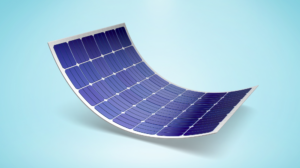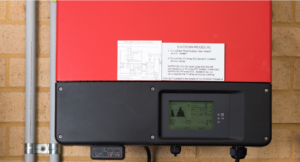


The new GST on solar panels and solar inverters has reduced the tax rate from 12% to 5%. According to the Ministry of New and Renewable Energy, this change can make a 3 kW residential rooftop solar system ~₹9,000 to ₹10,500 cheaper. The revised rate has been applied since September 22, 2025.
Source: Press Information Bureau
However, the GST on every solar component did not fall.
- Panels and inverters generally account for 70% of a rooftop system’s cost. Their GST rate fell to 5%.
- The remaining 30% covers other solar components and installation services that continue to attract 18% GST.
Based on this 70:30 cost split, the effective GST rate on a complete solar system fell from 13.8% to 8.9%. This guide explains how that change affects commercial and residential project prices, solar loans, payback, Input Tax Credit, and accelerated depreciation.
New GST on Solar Panels in 2026 at a Glance
The September 2025 GST revision reduced the GST for solar panels and qualifying solar inverters.
The table below summarizes the change and the savings estimates published by the Ministry of New and Renewable Energy –
| Point | Before September 22, 2025 | From September 22, 2025 |
| GST on solar panels and inverters | 12% | 5% |
| GST on other components and installation | 18% | 18% |
| Effective GST based on the 70:30 cost split | 13.8% | 8.9% |
| Reduction in effective GST rate | – | 4.9 percentage points |
| Typical 3 kW rooftop savings, as per MNRE | – | ~₹9,000-₹10,500* |
| Estimated reduction in qualifying module and component costs | – | ~3%-4% |
| Estimated utility-scale savings, as per MNRE | – | ~₹20-₹25 lakh per MW* |
| 5 HP solar-pump savings, as per MNRE | – | ~₹17,500* |
*Please note: All the savings figures listed above are direct representations of the data shared by the Ministry of New and Renewable Energy (MNRE) through the Press Information Bureau.
What Changed and What Remained Same Under the New GST on Solar Panels?
From September 22, 2025, the solar inverter and solar panel GST rates fell from 12% to 5%.
The portion that remained the same and continues to attract 18% GST includes:
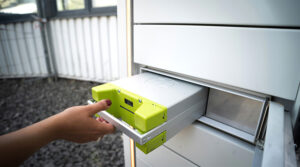
- Batteries, if included
- Mounting structures
- Alternating Current (AC) and Direct Current (DC) solar cables
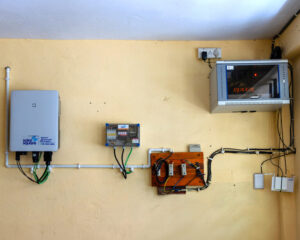
- Alternating Current Distribution Box (ACDB) and Direct Current Distribution Box (DCDB), which contain electrical protection devices on the AC and DC sides of a solar system, respectively.
- Switchgear and protection devices
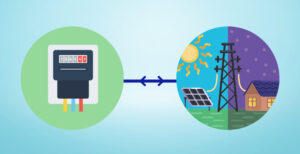
- Solar or net meters
- Installation, testing, and commissioning services
Therefore, the 5% GST rate should not be applied to the entire rooftop solar system. It applies to the panels and qualifying inverter portion only, while the remaining equipment and services retain their applicable 18% GST rates.
What Is the HSN Code Under the New GST on Solar Panels?
HSN or Harmonized System of Nomenclature is a standardized coding system used to classify products for taxation. Solar photovoltaic products fall under HSN 8541. More specific tariff classifications distinguish photovoltaic cells from cells assembled into finished modules or panels.
Here’s a quick breakdown:
- HSN code 85414200: This is for photovoltaic cells not assembled into modules and attracts 5% GST.
- HSN code 85414300: This is for photovoltaic cells assembled into modules and attracts 5% GST.
Therefore, the commonly applicable solar panel HSN code and GST rate for a finished photovoltaic panel are 85414300 and 5%, respectively.
These codes apply to photovoltaic products. Inverters, batteries, mounting structures, cables, meters, and installation services have their own classifications. For the complete component-wise solar HSN code table, read our guide on GST on Solar Panels in India 2026: Complete Rate & HSN Code Guide.
Does a GST Reduction from 12% to 5% Make a Solar Panel 7% Cheaper?
A drop from 12% to 5% is a seven-percentage-point reduction in the tax rate. However, it does not mean that you are exactly saving 7% on the final price as compared to the old GST inclusive prices.
Let’s understand this through a simple calculation for a panel purchase worth ₹1,00,000 before GST. We are taking the following assumptions to see the calculation:
| Particular | Old GST Rate | New GST Rate |
| Pre-GST panel price | ₹1,00,000 | ₹1,00,000 |
| GST | ₹12,000 @12% GST | ₹5,000 @5% GST |
| Price including GST | ₹1,12,000 | ₹1,05,000 |
| Customer Saving | ₹7,000 |
Here’s the final saving % from the previous GST-inclusive price:
- Percentage reduction = (Saving ÷ Old GST inclusive price) × 100
- Percentage reduction = (₹7,000 ÷ ₹1,12,000) × 100 = 6.25%
The panel buyer saves ₹7,000 on this purchase, which is a 6.25% reduction compared with the earlier GST inclusive price. The complete rooftop solar system becomes more affordable under the revised GST structure, even though the 18% GST rate on other equipment and installation services remains unchanged.
Why Did the Effective Solar System GST Rate Fall by 4.9 Percentage Points?
The effective GST rate fell from 13.8% to 8.9% because the tax reduction applies to the 70% cost attributed to panels and the qualifying solar inverter. The 18% rate on the remaining 30% stayed unchanged.
Effective GST Before September 22, 2025
Before the revision:
- GST on solar panels and inverter portion = 70% × 12% = 8.4%
- GST on the remaining portion = 30% × 18% = 5.4%
- Effective GST rate = 8.4% + 5.4% = 13.8%
Effective GST From September 22, 2025
After the revision:
- New GST on solar panels and inverter portion = 70% × 5% = 3.5%
- GST on the remaining portion = 30% × 18% = 5.4%
- Effective GST rate = 3.5% + 5.4% = 8.9%
Therefore, the reduction in the effective GST rate is 13.8% − 8.9% = 4.9 percentage points.
However, this does not mean that the earlier GST-inclusive project price falls by 4.9%. If the pre-GST system price remains unchanged, the reduction in the final invoice value is:
| Percentage reduction in final price = (Old GST inclusive price − New GST inclusive price) ÷ Old GST inclusive price × 100 |
For every ₹100 of pre-GST project value:
- Previous price including GST of 13.8% = ₹113.80
- New price including GST of 8.9% = ₹108.90
- Saving = Previous GST including price – new GST including price
- Saving => ₹113.80 – ₹108.90 = ₹4.90
- Reduction from previous final price = ₹4.90 ÷ ₹113.80 × 100 = ~4.31%
How Much Cheaper Is Residential Rooftop Solar After the GST Cut?
A typical 3 kW residential rooftop system is estimated to be ~₹9,000 to ₹10,500 cheaper under the revised GST structure. The actual savings depend on the pre-GST project price, equipment configuration, battery inclusion, installation requirements, and taxable cost breakup.
Before-and-After Cost of a Residential Installation
For calculation purposes, let’s consider a household solar panel system costing ₹2,00,000 before GST. With the earlier effective rate of 13.8%, the customer paid ₹27,600 in GST. At the revised effective rate of 8.9%, the GST falls to ₹17,800.
Here’s the complete breakdown:
| Particular | Before September 22, 2025 | From September 22, 2025 |
| Pre-GST system cost | ₹2,00,000 | ₹2,00,000 |
| Effective GST rate | 13.8% | 8.9% |
| Total GST | ₹27,600 | ₹17,800 |
| Total cost including GST | ₹2,27,600 | ₹2,17,800 |
| Customer savings | – | ₹9,800 |
Please note: In this example, the customer saves ₹9,800 without any change in the pre-GST system price. This falls within the government’s estimated savings of ₹9,000 to ₹10,500 for a typical 3 kW rooftop system. The result may differ if the system includes a battery energy storage system (BESS) or requires extensive structural and electrical work. These additions can increase the portion attracting 18% GST.
How Much Can Commercial Solar Projects Save?
Commercial rooftop solar systems can achieve larger absolute reductions in upfront GST because their project values are higher. For instance, on a ₹50 lakh pre-GST project, the reduction from an effective 13.8% to 8.9% lowers the GST charged by ₹2.45 lakh.
Before-and-After Cost of a Commercial Solar System Installation
For this calculation, let’s consider a commercial solar project with a pre-GST value of ₹50,00,000.
| Particular | Before September 22, 2025 | From September 22, 2025 |
| Pre-GST system cost | ₹50,00,000 | ₹50,00,000 |
| Effective GST rate | 13.8% | 8.9% |
| Total GST | ₹6,90,000 | ₹4,45,000 |
| Invoice value including GST | ₹56,90,000 | ₹54,45,000 |
| Reduction in upfront GST | ₹2,45,000 |
Please note: The new invoice is ₹2,45,000 lower, assuming the same pre-GST project value and cost composition. This reduction can lower the initial funding requirement. However, its final benefit depends partly on whether the business can claim Input Tax Credit.
Does Input Tax Credit Change the Commercial Savings?
Yes. If a GST-registered business can claim the complete eligible Input Tax Credit (ITC), which allows eligible businesses to offset GST paid on purchases against GST owed on sales, the lower GST rate may primarily reduce its upfront cash outflow and the amount temporarily tied up until the credit is used.
If Input Tax Credit is unavailable, restricted, or only partly eligible, lower GST can directly reduce the business’s effective project cost.
Eligibility depends on factors such as:
- GST registration
- Use of the system for taxable business activities
- Valid tax invoices
- Supplier compliance
- Payment and return-filing conditions
- Capitalization of the solar asset
- Restrictions applicable to plant, machinery, and immovable property
Can Businesses Combine the GST Reduction with Accelerated Depreciation?
An eligible business may benefit from both the lower GST structure and accelerated depreciation. The benefits operate under different tax laws. Lower GST affects the purchase invoice, while depreciation reduces taxable business income according to the applicable income-tax provisions.
How Does Accelerated Depreciation on Solar Work?
A qualifying business that owns and uses a solar power generating system for its operations may be able to claim depreciation on the asset’s written-down value.
If a 40% depreciation rate applies:
- Up to 40% depreciation may generally be available in the first year when the asset is used for more than 180 days.
- Half of the normal rate may generally apply when the asset is used for less than 180 days.
- Depreciation in later years is calculated on the remaining written-down value.
GST Savings and Accelerated Depreciation Are Different
Although both can improve the economics of commercial solar, they affect different parts of the transaction.
Here’s how they differ:
| Benefit | What it Affects | When the Benefit Arises |
| Lower GST | Tax charged on the solar transaction | At invoicing and purchase |
| Input Tax Credit | Eligible GST liability | Through GST set-off |
| Accelerated depreciation | Taxable business income | While calculating income tax |
| Electricity savings from commercial solar | Grid electricity purchases | During system operation |
Accelerated depreciation brings a larger share of the depreciation deduction into the earlier years. It does not provide a fresh deduction of 40% of the original project cost every year.
Eligibility and tax savings depend on the taxpayer’s legal structure, tax regime, asset ownership, capitalization, commissioning date, period of use, and current income-tax provisions. A qualified tax professional should verify the applicable depreciation benefits before including the estimated savings in the solar project’s financial calculations.
Can the GST Rate Cut Reduce Solar Loan EMIs?
Yes. A lower GST inclusive project price can reduce the amount that a customer needs to finance a solar system. If the down-payment percentage, interest rate, and rooftop solar loan tenure remain unchanged, a smaller loan principal results in a lower EMI (Equated Monthly Installment) and lower total interest.
However, the exact EMI reduction will depend on:
- GST inclusive project price
- Down payment
- Loan amount
- Loan Interest rate
- Loan tenure
- Processing fees
- Subsidy adjustment
- Timing of subsidy receipt
A lower solar system price does not change the lender’s interest rate or approval criteria. It simply reduces the amount that may need to be borrowed.
Will the Lower GST Rate Improve Solar Payback Period?
Yes. Lower GST rate can shorten the solar payback period because it reduces the initial project cost while the system’s electricity generation and bill savings remain broadly unchanged. However, the improvement depends on the rupee savings and the system’s annual financial benefit.
The basic calculation is:
Payback period = Net solar system cost ÷ Annual electricity bill savings
If the initial cost falls while annual savings remain the same, the payback period becomes shorter.
The final payback depends on:
- Rooftop solar system price after GST rate
- Applicable subsidy
- Household or business consumption
- Self-consumption, meaning the amount of solar electricity used directly by the household or business instead of being exported to the grid.
- Electricity tariff
- Export credits
- Financing cost
- Maintenance/servicing expenses
- Equipment degradation
The GST rate reduction improves the starting cost, but it does not create a universal payback period for every rooftop solar system.
How Can You Check Whether the Vendor Applied the New GST Rate?
Check whether every product and service in the quotation carries the correct classification, taxable value, and GST rate. Compare quotations only when the system capacity, equipment specifications, warranty coverage, and installation scope are equivalent.
Verify:
- Panels and inverters are included in the 5% GST portion.
- Other solar system components and installation are included in the 18% GST portion.
- The HSN and Services Accounting Codes (SAC) match the invoiced items.
- The price is clearly marked as GST inclusive or GST exclusive.
- The total GST rate matches the stated cost breakup.
- Batteries or additional structural work are shown separately.
- The final invoice matches the accepted quotation.
When comparing an older and a newer quotation, confirm that the equipment and project scope have not changed. A lower quotation may reflect the GST rate reduction, a change in equipment price, a different warranty, or a reduced installation scope.
Conclusion
The revised GST rate on solar panels lowers the upfront price of eligible solar projects, but savings depend on the full taxable cost breakdown. For the typical 70:30 cost split, the effective GST rate falls from 13.8% to 8.9%, reducing the previous GST inclusive project price by ~4.31%.
Residential customers may benefit from a lower purchase price, lower loan requirements, and a shorter payback period. For businesses, the final benefit also depends on Input Tax Credit (ITC) eligibility and applicable income-tax treatment.
Book a free consultation with SolarSquare to receive a rooftop assessment and a transparent GST inclusive quotation for your home, housing society, or business.
Frequently Asked Questions
Where can I find reliable live updates on GST news in India?
Check notifications and circulars published by the Central Board of Indirect Taxes and Customs (CBIC), GST Council announcements, and Press Information Bureau (PIB) releases. For transaction-specific interpretation, consult a qualified tax professional, as rates, classifications, and implementation dates may change.
Does adding a battery change the effective GST rate on a solar system?
Yes. Solar rechargeable batteries attract 18% GST rate. Adding a battery increases the share of the project taxed at 18%, so the system’s effective GST may exceed 8.9%. The final rate depends on the battery price and the complete component-wise cost breakup.
Does the new GST rate apply to a system purchased before September 22, 2025?
The applicable rate depends on GST time-of-supply rules and the dates of invoicing, payment, and supply. A system ordered before September 22, 2025 may not automatically receive the revised rate. The vendor should verify the applicable rate for the specific transaction.
Is the GST on solar panels the same for all states in India?
The combined GST rate is generally the same across India. An intra-state transaction is ordinarily divided between Central Goods and Services Tax (CGST) and State Goods and Services Tax (SGST), while an inter-state transaction attracts Integrated Goods and Services Tax (IGST). The combined applicable rate remains the same.
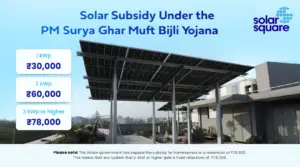
Does the PM Surya Ghar Muft Bijli Yojana subsidy cover the GST on solar panels?
No. The PM Surya Ghar Muft Bijli Yojana subsidy does not operate as a refund of the GST paid. The GST rate is calculated on the taxable project value, while the subsidy is determined separately according to eligible system capacity, scheme conditions, application approval, technical compliance, inspection, and commissioning.
How does the GST cut affect utility-scale solar projects?
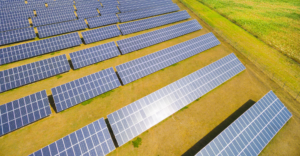
According to the Ministry of New and Renewable Energy (MNRE), the GST reduction may lower utility-scale project costs by ~₹20 lakh to ₹25 lakh per megawatt. For a 500 MW solar park, the government estimates that the savings can exceed ₹100 crore.
The actual savings depend on module and inverter prices, domestic or imported equipment, balance-of-system costs, location, grid-connection requirements, project scope, contract structure, and Input Tax Credit eligibility.
Source: Press Information Bureau