

Net metering in Maharashtra in 2026 allows rooftop solar users to send excess solar power to the MSEDCL grid and use those units later to reduce their electricity bills. When your solar panels generate more electricity than your home or building needs, the surplus units go to the grid and are adjusted against future consumption.
MSEDCL consumers with active connections can apply if capacity stays within sanctioned load. All you have to do is choose a registered vendor, submit documents, get the system installed and inspected, and get a bidirectional meter. In 2026, systems up to 10 kW receive deemed approval, banking deductions ended, and larger systems attract new grid support charges.
The entire process is completed through the PM Surya Ghar Muft Bijli Yojana National Portal for Rooftop Solar and the MSEDCL rooftop solar portals.
This guide explains the full 2026 process of net metering in Maharashtra step by step. It also covers the new billing rules that started on April 1, 2026, and the deemed approval process under the PM Surya Ghar Muft Bijli Yojana.
What are the Latest Net Metering Regulations in Maharashtra in 2026?
Maharashtra updated a few rooftop solar rules in 2026. These changes affect how much solar capacity you can install, how approvals work, and what charges may apply.
Here are the key rules you should know before applying:
- Deemed approval up to 10 kW under the PM Surya Ghar Muft Bijli Yojana: If you apply for a rooftop solar system up to 10 kW under the PM Surya Ghar Muft Bijli Yojana, your system is treated as approved. This means you do not need a manual technical check by the DISCOM. But if you apply outside this scheme, the DISCOM will check technical feasibility through on-site inspection before approving your application.
- Solar capacity depends on your electricity use: Your solar system size is now more closely tied to how much electricity you actually use. This helps prevent people from installing a much bigger system than they need.
- Net metering allowed up to 5 MW: MERC has increased the net metering limit from 1 MW to 5 MW. However, your allowed system size cannot exceed your sanctioned load. So, the final limit is 5 MW or your sanctioned load, whichever is lower.
- Grid support charges apply above 10 kW: If your sanctioned load exceeds 10 kW, you need to pay grid support charges for the solar electricity your system generates. Solar systems up to 10 kW are exempt from this charge.
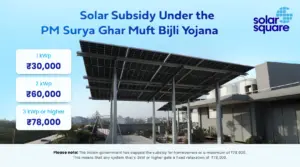
- SMART scheme adds extra state subsidy: The Swayampurna Maharashtra Residential Rooftop Solar Scheme, also called the SMART scheme, gives an additional state-level subsidy. This runs along with the central PM Surya Ghar Muft Bijli Yojana subsidy. MSEDCL is the nodal agency for this scheme. This is, however, a solar subsidy scheme for economically weaker households.
New Solar Billing Rules in Maharashtra Effective From April 1, 2026
Effective April 1, 2026, MSEDCL changed the billing rules for solar consumers with a sanctioned load above 10 kW. These changes are part of the MYT 2026 tariff order.
Two major changes were introduced:
- Banking deduction has been removed: Earlier, MSEDCL used to deduct 12% of the extra solar units sent to the grid. This was called a banking deduction. For example, if you exported 100 units, only 88 units were available for future adjustment. This rule ended on March 31, 2026. Now, the full exported units are carried forward. So, if you export 100 units, all 100 units can be used later.
- Grid support charges introduced: In place of banking, MSEDCL now levies a grid support charge on total solar generation at Rs. 1.96 per unit for LT consumers and Rs. 1.42 per unit for HT consumers. This charge applies to the total electricity your solar system generates. It is not limited to only the extra units you export to the grid. In simple terms, your exported units now carry over in full, but consumers above 10 kW have to pay a grid support charge on their total solar generation.
If your system is 10 kW or smaller, none of this affects you. The change matters for larger solar systems in residential housing societies, non-residential, and commercial and industrial solar consumers.
What is the Net Metering Policy in Maharashtra in 2026?
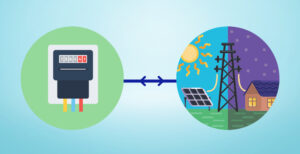
Net metering is the billing mechanism that makes rooftop solar financially worthwhile in Maharashtra. When your solar panels generate excess electricity, it goes to the MSEDCL grid. A bidirectional meter records these exported units, and MSEDCL adjusts them in your electricity bill.
Here is the basic flow.
- Solar panels generate electricity during the day: Your rooftop solar system makes electricity when there is sunlight. It usually produces the most power around midday.
- Your home or building uses solar power first: The electricity your system produces is used by your home or building first. You use grid electricity only when your solar power is not enough.
- Extra solar power goes to the MSEDCL grid: If your solar system makes more electricity than you need at that time, the extra units are sent to the grid.
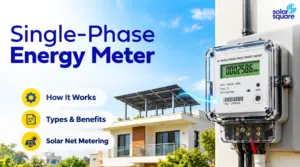
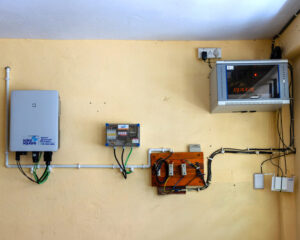
- A bidirectional meter, or smart meter, records import and export: The smart meter tracks units drawn from the grid and units sent back separately.
- MSEDCL adjusts exported units against imported units: MSEDCL subtracts the exported units from the imported units. You pay only for the remaining units, which helps reduce your electricity bill.
How Does Solar Net Metering Work in Maharashtra?
During every billing cycle, MSEDCL compares two things. One, how many units you take from the grid, and two, how many units you send back to the grid.
You are billed only for the net units.
- When your solar generation is higher than your electricity use: If your system sends more units to the grid than you use in a month, the extra units are carried forward as credit. You can use this credit in the coming months.
- How carry-forward helps households: Solar systems generate more power in summer. The extra credits collected during these months can help reduce your electricity bills during the monsoon, when solar generation is lower.
But what happens to unused surplus units, you ask? Well, any surplus left at the end of the settlement period is settled in cash at a fixed rate set by MSEDCL.
Net Metering vs Net Billing vs Gross Metering in Maharashtra
Net metering, net billing, and gross metering are three different ways to calculate the value of solar power. The main differences between them are how your solar units are used, how exported units are valued, and how your final bill is calculated.
For most rooftop solar systems for homes in Maharashtra, net metering is the most useful option because your solar power is used at home first, and only the extra units are sent to the grid.
Here is a simple comparison:
| Parameter | Net Metering | Net Billing | Gross Metering |
| How solar power is used | Your home or building uses solar power first. Extra units go to the grid. | Your home or building uses solar power first. Extra exported units are valued separately. | Most or all solar power generated is exported to the grid. |
| Billing basis | Exported units are adjusted against imported units. You pay only for the net units. | You pay for the units taken from the grid, and exported units are credited at a separate rate. | Solar generation and electricity consumption are billed separately. |
| Value of exported power | Exported units usually reduce your bill unit-for-unit. | Exported power is credited at a fixed export tariff, which may be lower than your retail electricity rate. | The entire solar generation is paid for at the approved tariff. |
| Best suited for | Homes, housing societies, small businesses, and consumers who use most of their solar power themselves. | Consumers with specific export tariff structure. | Larger projects or specific solar models where power is mainly sold to the grid. |
| Savings potential | Usually higher for self-consumption users | Moderate, because savings depend on the export rate. | Depends fully on the tariff approved for solar generation. |
Primary Objectives of Solar Net Metering Policy in Maharashtra
The solar net metering policy in Maharashtra is not just a billing rule. It is designed to make rooftop solar more useful and financially practical for consumers. It also helps the state and DISCOM add more clean energy without depending only on large solar parks or utility-scale solar projects.
Here are the key objectives of the solar net metering policy in Maharashtra:
- Encourage rooftop solar adoption: Net metering gives homes, housing societies, shops, offices, and institutions a clear incentive to install grid-connected solar systems. Since extra-solar units can be adjusted on the electricity bill, consumers do not lose the value of surplus daytime generation.
- Supports Maharashtra’s renewable targets: Under Maharashtra’s Renewable Energy and Energy Storage Policy 2025-26 to 2035-36, the state aims to meet 50% of its electricity demand from renewable energy by FY 2029-30 and 65% by FY 2035-36. It also targets 100 GW of renewable energy capacity and 100 GWh of energy storage by FY 2035-36. Source: Maharashtra Renewable Energy & Energy Storage Policy 2025-26 to 2035-36.
- Reduce pressure on the grid during daytime hours: Solar panels generate power during the day, when many homes, offices, and businesses use electricity. When consumers use solar power at the same location, they draw less electricity from the grid. This can reduce pressure on local transformers, feeders, and distribution lines.
- Lower electricity bills and high savings: The policy helps consumers use their own solar power first and buy fewer units from MSEDCL. If extra units are exported to the grid, they are adjusted against future consumption. This lowers the final bill and improves the return on solar investment. Since solar systems last for 25+ years and grid tariffs increase by 3-6% annually, going solar can save tens of lakhs of rupees over the system’s lifespan.
Planning to apply for net metering in Maharashtra? Start by checking how solar can lower your electricity bills and save in the long run. Use SolarSquare’s free solar calculator to estimate your ideal system size, installation cost, subsidy benefit, monthly savings, and payback period.
At What Rate Does MSEDCL Settle Credits in Maharashtra?
MSEDCL settles leftover solar credits at Rs. 2.82 per unit at the end of the settlement period. However, this does not mean every exported unit is paid at Rs. 2.82. During the year, your exported solar units are first adjusted against the units you import from the grid. You get a payout only if any surplus units remain after this adjustment.
Let’s understand this through a simple example.
- Suppose your solar system exports 1,200 units to the grid in a year.
- During the same year, you import 1,000 units from MSEDCL.
- MSEDCL will first adjust your exported units against your imported units: 1,200 exported units – 1,000 imported units = 200 surplus units
- These 200 leftover units will be settled in cash at Rs. 2.82 per unit.
- So, your settlement amount will be: 200 units x Rs. 2.82 = Rs. 564
This means MSEDCL will pay or credit Rs. 564 for the surplus units left at the end of the settlement period.
Who is Eligible for Net Metering in Maharashtra in 2026?
You qualify for MSEDCL net metering when you meet the basic conditions below.
- You own a property with an active MSEDCL connection: The connection should be in your name with a valid consumer number.
- Your system stays within your sanctioned load: Capacity should match your sanctioned load, and going above it requires a load enhancement.
- You hire a registered vendor for the PM Surya Ghar Muft Bijli Yojana: Installers must be registered on the PM Surya Ghar Muft Bijli Yojana National Portal for Rooftop Solar to qualify for the central subsidy.
- Your installation meets MSEDCL technical standards: The system must comply with grid connectivity and safety requirements. The panels must be made in India and ALMM-approved.
Documents Needed to Apply for Net Metering in Maharashtra
Here are the most important documents you need to apply for net metering in Maharashtra:
- Aadhar card copy: This is treated as the identity proof of the applicant.
- Property tax receipts: This works as proof of ownership.
- Latest electricity bill copy: This confirms that the applicant is an active user registered with MSEDCL.
How to Apply for Net Metering in Maharashtra in 2026? The Step-by-Step MSEDCL Application Process
To apply for net metering in Maharashtra, you need to complete the process on both the PM Surya Ghar Muft Bijli Yojana National portal and the MSEDCL Rooftop Solar (RTS) portal. After approval and installation, MSEDCL verifies the system, and a third-party agency installs the net meter or smart meter.
Here is the step-by-step process:
- Step 1 – Apply on the PM Surya Ghar Muft Bijli Yojana National Portal for Rooftop Solar: First, register on the PM Surya Ghar Muft Bijli Yojana portal using your mobile number and MSEDCL consumer number. After registration, submit your rooftop solar application on the portal.
- Step 2 – Submit the application on the MSEDCL RTS portal: Next, submit the same rooftop solar application on the MSEDCL Rooftop Solar (RTS) portal. This helps your application reach the correct MSEDCL field office for processing.
- Step 3 – Wait for the sanction letter from MSEDCL: MSEDCL reviews your application and sends the sanction letter to your registered email ID. This letter means you are approved to move ahead with the solar installation. It also includes your application number, which you can use to track the process.
- Step 4 – Install the rooftop solar system and upload documents: After approval, your selected installer completes the solar plant installation. Once the work is complete, upload the required documents to both portals, i.e., the MSEDCL RTS portal and the PM Surya Ghar Muft Bijli Yojana portal.
- Step 5 – Complete the MSEDCL site inspection: MSEDCL officials will visit your property to verify that the solar system has been installed correctly. During this visit, they verify the work and complete the joint inspection report.
- Step 6 – Get the net meter or smart meter installed: After the site inspection is approved, the AMISP installs the net meter or smart meter. AMISP is the third-party agency responsible for net-meter/smart-meter installations in Maharashtra. Once the net meter is installed, your solar system starts working under monthly import and export billing.
How to Check Your MSEDCL Net Metering Application Status Online?
You can check your net metering application status on the MSEDCL Rooftop Solar (RTS) portal. To track it, you need your application number. You can find this application number in the sanction letter that MSEDCL emails to you, as listed in Step 3 of the process above.
Here is how to check the status:
- Open the MSEDCL Rooftop Solar portal.
- Go to the application tracking or application status section.
- Enter the application number from your sanction letter.
- Submit the request to see the latest status.
The portal will show where your application currently stands. For example, it may show whether your application is under review, approved, pending for document upload, pending for site inspection, or ready for net meter installation.
TOD Tariff and How It Affects Net Metering Benefits in Maharashtra
Time-of-Day (TOD) tariff means electricity rates change based on the time of day. In Maharashtra, TOD billing applies to consumers with a sanctioned load of 20 kW or more, primarily in the non-residential, commercial, and industrial categories.
MSEDCL applies the TOD tariff by consumer category from July 1, 2025. This includes LT non-residential consumers, HT commercial consumers, and HT industrial consumers.
Under TOD billing, MSEDCL divides the day into three time slots:
| Time Slot | Timing | What Does it Mean? |
| Off-peak hours | 9 AM to 5 PM | Electricity is cheapest during this period. This is also when solar panels generate the most power. |
| Peak hours | 5 PM to 12 AM | Electricity is the costliest during this period because demand is high. |
| Normal hours | 12 AM to 9 AM | Standard electricity rates apply during this period. |
TOD tariff matters because rooftop solar generation mostly happens between 9 AM and 5 PM. This means solar power helps you reduce grid consumption mainly during the off-peak window.
- For commercial and industrial consumers, this can still be useful, as many offices, factories, warehouses, hospitals, schools, and shops use a lot of electricity during the day.
- If their solar system is sized properly, they can use more solar power directly and reduce the number of units bought from MSEDCL during working hours.
However, solar may not reduce the costliest peak-hour consumption much because peak TOD hours start after 5 PM, when solar generation drops sharply. So, for TOD consumers, the biggest net metering benefit comes from matching solar generation with daytime electricity use.
MSEDCL Net Metering Timeline: How Long Does Approval Take?
The net metering timeline in Maharashtra depends on the type of consumer and the size of the solar system. Smaller residential solar systems are usually processed faster, while commercial and industrial solar systems take longer because they need more checks and approvals.
Here is the usual timeline:
- Residential systems below 10 kW: From application to net-meter installation, the process takes about 20 days.
- Commercial and industrial systems: These take about 60 days from application to net-meter installation.
This timeline covers the process from application submission to net-meter installation. It includes application review and approval, document submission, site inspection, and installation of the net or smart meter.
The subsidy transfer under the PMSGMBY is a separate step. It happens after the system is commissioned and the documents are verified. So, even if your net meter is installed, the subsidy may take additional time to reach your bank account.
What is the Cost of a Net Meter In Maharashtra?
MSEDCL provides a bidirectional net meter, or smart meter, free of cost to the consumer. This means you do not have to pay separately for the net meter.
Disclaimer: This covers only the net meter. The solar system, including panels, inverter, mounting structure, and installation, remains your cost. Also, meter-related rules and charges can change from time to time. So, before applying, confirm the latest details with your MSEDCL division office or your solar installer.
Conclusion
Net metering in Maharashtra makes rooftop solar more practical because it lets you use your own solar power first and adjust extra units against future electricity use. For most homes, especially systems below 10 kW, the process is now simpler under the PM Surya Ghar Muft Bijli Yojana.
You can apply online, get deemed approval, install the system through a registered vendor, and receive a net meter or smart meter without paying separately for it.
The most important thing to remember is to size your system correctly. A system that matches your actual electricity use can reduce your bill by at least 90% and help you make better use of rooftop space.
If you’ve been meaning to install rooftop solar in Maharashtra but don’t know where to begin, you can book a free, no-obligation call with SolarSquare.
FAQs
Can I apply for net metering without the PM Surya Ghar Muft Bijli Yojana subsidy?
Yes, you can apply for net metering directly through the MSEDCL RTS portal. However, without the PM Surya Ghar Muft Bijli Yojana, the DISCOM runs a technical feasibility check rather than granting deemed approval.
What is the maximum system size for net metering in Maharashtra?
MSEDCL permits net metering up to 5 MW or your sanctioned load, whichever is lower.
How are surplus units settled at year-end?
Any surplus remaining at the end of the settlement period is paid at Rs. 2.82 per unit. Throughout the year, your exported units are offset against your imported units on the bill, and only the remaining surplus is settled in cash.
Is net metering available for commercial and industrial consumers?
Yes, net metering is currently available for commercial and industrial consumers in Maharashtra, subject to the applicable MSEDCL and MERC rules. These consumers can install rooftop solar systems and export surplus units to the grid.
What are the common reasons MSEDCL net metering applications are rejected or delayed?
If your documentation is complete, rejection is very rare. Delays usually come from load enhancement requests or a name change on the connection.
Can I install solar above my sanctioned load in Maharashtra?
No, you cannot install a rooftop solar system above your sanctioned load under net metering in Maharashtra. The approved solar capacity is linked to your sanctioned load and your actual electricity consumption.
If you want to install a larger system, you need to first apply to MSEDCL for load enhancement. Once the higher sanctioned load is approved, apply for a solar system size that fits within the revised limit.
How long does MSEDCL approval and net-meter installation take?
Residential systems below 10 kW take ~20 days from application to net-meter installation. Commercial and industrial systems may take ~60 days because they require additional checks and approvals.
Are there any application or net-metering fees?
MSEDCL provides the bidirectional or smart meter free of cost. However, the solar panels, inverter, mounting structure, and installation remain the consumer’s responsibility.
What should I do if my net-metering application is rejected?
First, check the reason given by MSEDCL. Applications are commonly delayed or rejected because of incomplete documents, a pending name change, or the need to enhance the sanctioned load. Correct the issue and resubmit the application or contact your MSEDCL division office for guidance.
How are grid support charges calculated in Maharashtra?
For consumers with a sanctioned load above 10 kW, MSEDCL charges Rs. 1.96 per unit for LT consumers and Rs. 1.42 per unit for HT consumers on total solar generation. For example, if an LT system generates 500 units, the grid support charge will be Rs. 980. Systems up to 10 kW are exempt.