

 6 Reads
 8 mins


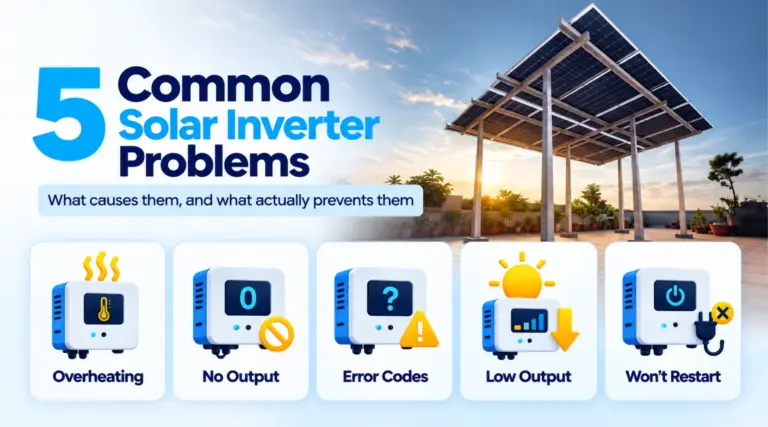
Solar inverters are one of the crucial components of any solar PV system. They convert DC (Direct Current) generated by solar panels into AC (Alternating Current). Almost every appliance runs on AC in homes and businesses. However, like any electrical device, inverters can experience problems that affect the system’s overall efficiency. Some of the common solar inverter problems include:
- Overheating
- The inverter not turning on, or showing no power output
- Confusing error codes or frequent fault alerts
- Poor output despite good sunlight
- The inverter not restarting after a power cut or grid fault
A solar inverter problem is rarely random. It’s usually a sign that something was wrong with the design, placement, or installation quality from day one. You must ensure the whole checklist for a solar rooftop is fulfilled to avoid any solar problems.
In this guide, we’ll walk through each of these five problems, what actually causes them, the generic advice you’ll find everywhere else, and how proper design and installation prevent them in the first place. We’ll also cover a few genuine inverter problems and solutions backed by real government standards, not just guesswork.
Problem 1: Inverter Overheating
Inverters are packed with electronic components, and electronics don’t work well under heat. Inverter overheating usually occurs due to poor ventilation, direct sunlight hitting the unit, dust building up inside, or high ambient temperatures. This is genuinely a bigger problem in most parts of North India that mostly see summer temperatures over 40°C, and an inverter mounted in a poorly ventilated spot in that kind of heat is under real strain.
Solution: Some generic fixes include improving ventilation, adding fans or heat sinks, or cleaning the inverter unit regularly. At SolarSquare, inverter placement isn’t an afterthought in our installations. Our solar experts pick shaded, well-ventilated spots during the site assessment, before a single panel goes up. Deciding inverter placements in advance prevents a huge share of overheating complaints down the line.
Problem 2: Inverter Not Turning on or Showing No Power Output
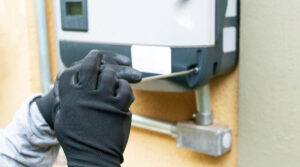
This is one of the most alarming solar panel inverter problems, mostly because it’s so visible. It’s quite annoying to get no output on a bright, sunny day. Some common reasons behind an inverter not turning on include loose wiring, faulty connections, or damaged components. This may also occur due to rushed installation where corners were cut on the electrical work.
Solution: The basic fixes that can be implemented include checking your wiring and trying to reset the unit. You can call a technician if that doesn’t work. At SolarSquare, we have trained solar installation teams, not local vendors picked up for the day. We ensure the quality of DC solar cables and wires, and connect solar panels professionally. On top of that, every SolarSquare system comes with 24/7 remote monitoring, so if your system shows zero output, our team often catches it before you do, not after a week of wondering why your bill dropped.
Problem 3: Confusing Error Codes and Frequent Fault Alerts
Modern inverters are smart enough to tell you when something’s wrong, which is genuinely useful, until you’re staring at a code you don’t understand. These alerts usually point to firmware issues, internal faults, or grid synchronisation problems.
Solution: You can keep the manual handy, look up the code, and try to decode it yourself. This is where most solar inverter troubleshooting guides stop; they hand you a glossary and wish you luck.
At SolarSquare, we only install branded, quality-tested inverters. Along with that, our monitoring app translates faults into plain language, so you don’t need to decode anything. And if something does need attention, our on-call support team handles it; you’re never expected to self-diagnose a system.
Problem 4: Poor Output Despite Good Sunlight
When everything looks fine on the surface, but your output stays low despite good sunlight, that’s usually a sign of a solar inverter problem hiding underneath. This may occur due to incorrect system sizing, a mismatched DC: AC ratio between your panels and inverter, shading issues, or panel-inverter mismatches.
Please note: A small amount of reduced output around midday, called inverter clipping, is actually a normal part of a well-designed system, not a fault. It only becomes a real problem when a system is sized carelessly.
Solution: Inspect your panels, keep them clean, and check for new shading from a tree that’s grown taller since installation. All useful, but none of it addresses the root issue if your system was undersized or mismatched from the start.
At Solarsquare, system sizing and DC: AC ratio isn’t templated. They’re calculated per roof, based on your actual sunlight exposure, roof orientation, and household usage. We do this calculation during the design phase, not copy-pasted from a generic spreadsheet. Also, if your solar panel energy conversion is less than what we projected, we compensate you at ₹8 per unit for the shortfall.
Problem 5: Inverter Not Restarting After a Power Cut or Grid Fault
In most cases, your inverter shutting down during a power cut isn’t a malfunction. It’s a legally mandated safety feature working exactly as designed.
Every grid-connected solar inverter sold in India must include anti-islanding protection, under the Bureau of Indian Standards (BIS) and the Central Electricity Authority’s Technical Standards for Connectivity of Distributed Generation Resources.
Source: Bureau of Indian Standards, IS 16221 Part 2; Central Electricity Authority, Connectivity Regulations, cea.nic.in
If your inverter kept feeding power into the grid during an outage, it could energise lines that a utility lineman assumes are dead. This will result in a lethal hazard for anyone repairing the fault nearby. So, the standard requires your inverter to disconnect automatically, within strict thresholds. This isn’t a software glitch, but a system protecting people.
The shutdown itself is mandatory, but how reliably your inverter reconnects once grid power is stable again is crucial. This may occur in cheaper, poorly tested inverters that sometimes fail to auto-reconnect smoothly.
At SolarSquare, every installation gets proper net metering and grid-sync configuration from day one, using inverters certified to IS 16221 and listed on MNRE’s (Ministry of New and Renewable Energy) ALMM (Approved List of Models and Manufacturers). Our 4-year maintenance plan also includes electrical check-ups at no extra cost. If reconnection issues ever happen, our team will resolve them on a routine visit or a quick support call.
Why Installation Quality Is the Real Differentiator
If you’ve noticed, every one of the five problems above comes down to the same root cause, which is getting the design and installation right from the start.
This is really the honest takeaway behind any list of solar inverter problems and solutions. You can teach a homeowner to reset an inverter or decode an error message, but none of that changes the fact that a well-designed, properly installed system runs into these problems far less often in the first place.
At Solarsquare we prevent these problems from day one by:
- Site assessment before quoting, not after, so your system is designed around your actual roof, not a generic template
- In-house trained solar experts, never subcontracted local vendors handling your wiring and setup
- Only certified, branded components, inverters that meet BIS’s IS 16221 standard and sit on MNRE’s ALMM list
- 24/7 remote monitoring paired with a 4-year maintenance program, so issues get caught early, not after weeks of lost generation
- A written savings guarantee, compensating you directly if your system underperforms what was promised
Worried your current system might be at risk of any of these issues? Book a free consultation with SolarSquare, and we’ll assess your setup properly, the same way we design every new installation.
Frequently Asked Questions
How long do solar inverters typically last?
Most solar inverters last around 10 to 15 years, depending on build quality, usage, and maintenance. If you do regular cleaning, provide proper ventilation, and schedule inspections, their lifespan can be extended. String inverters typically need replacement once within a ~25-year system’s lifetime.
Can a solar inverter work without a battery?
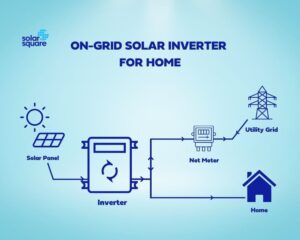
Yes, a solar inverter can work without a battery. Most residential on-grid systems in India work without a battery. The inverter converts DC power from your panels into AC directly for home use, and draws from the grid when your panels aren’t generating enough.
What does it mean when my solar inverter shows a red light or error code?
It usually signals a fault, ranging from minor (a firmware hiccup) to more serious (an internal component issue or grid sync problem). You must check your manual or monitoring app for the specific code, and contact your installer if it persists.
Is solar inverter troubleshooting something I can do myself, or do I need a technician?
You can do simple checks like confirming connections or restarting the unit. In case of wiring issues, persistent error codes, or repeated shutdowns, you should go to a certified technician, as these can be risky.
Why does my inverter shut off completely during a power cut, even though it’s sunny?
This is mandatory anti-islanding protection, required under BIS standard IS 16221 for every grid-connected inverter sold in India. It prevents your system from feeding power into grid lines that utility workers assume are safely de-energised during repairs.


 Previous Article
 16 min