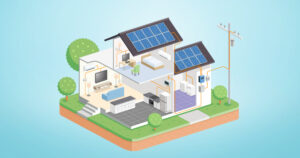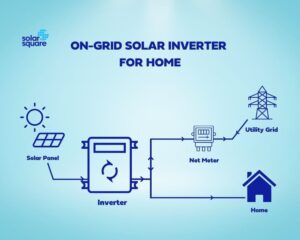


Solar panels produce DC (Direct Current) using sunlight, which is then converted to AC (Alternating Current) to run household appliances. During peak sunshine hours, the solar panels generate excess energy; the net metering system sends those extra units straight to the grid.
Under net metering, your extra units go to your DISCOM (Distribution Company), and you get credit on your bill. What happens to the leftover credit depends on your state’s regulator. In most states, unused credits are settled at the end of the financial year (31 March) at the APPC (Average Power Purchase Cost) rate approved by the state regulator. The amount differs by state and can change every year.
However, the settlement period and the rate differ from state to state. Some states follow a different cycle, some settle more frequently, and in a few states, unused units lapse without any payment. Both the rate and the rules can also change when the state regulator issues a new order, so check your state’s current regulations.
In the peer-to-peer (P2P) model, you sell your extra solar power directly to another consumer, such as a neighbour or a business. It skips the usual step where your surplus goes back to the DISCOM.
In this blog, we will cover how net metering works and what you are paid for extra units. We will explain gross metering and how P2P trading works, along with where it stands today.
Can You Actually Sell Solar Electricity in India?
Yes, you can sell solar electricity in India within limits. Most homes do it through net metering, where your extra units earn credit on your bill. What happens to the surplus left at the end of the settlement period depends on your state. In many states, it is paid at the APPC rate approved by your state regulator, while in a few, unused units lapse without payment.
This does not mean you should add extra solar panels to your roof to earn from selling power. The surplus is usually paid at a much lower rate than the tariff you pay for grid electricity, so additional panels mostly increase your cost without giving a worthwhile return. The best approach is to size your system to match your yearly consumption.
On the other hand, peer-to-peer trading is still a pilot, and selling to a third party mostly suits businesses. The total amount you earn depends on your state, your DISCOM, and your meter setup. Some of the ways you can sell electricity in India are discussed below:
| Option | How you benefit | Who it suits |
| Net metering | Exported units offset units you import | Most homes |
| Gross metering | Power sold to the grid at a set rate | Specific cases |
| P2P trading (pilot stage) | Sell surplus directly to another consumer | Smart-meter users in pilot areas |
| Selling to a third party / open access | Sold under a contract | Mostly businesses |
How Net Metering Works
Net metering is a simple way of keeping count. Your rooftop solar system makes power, and your home uses power. Net metering is the difference between the solar electricity your rooftop solar system generates and the total electricity your household consumes.
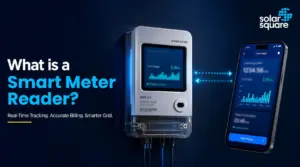
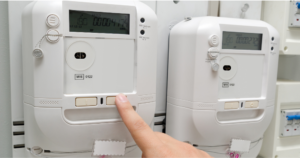
Your DISCOM fits a bidirectional net meter at your home. It records how much power your solar system makes, how much you send to the grid, and how much you take from it.
- If you sent more than you took, the extra units carry forward to the next month. At the end of the financial year, you get a final credit or settlement*.
- If you took more than you sent, you get a bill for the additional units you used.
*Please note: The settlement of carried-forward units can be monthly or yearly, based on your state and net metering state policy. For instance, states like Gujarat, Karnataka, and Tamil Nadu settle the net units on a monthly basis. On the contrary, if you export more units in states like MP, UP, Delhi, and Haryana, they’re carried forward every month and adjusted at the end of the financial year.
Also, net metering matters if you want to avail the central subsidy. Under the PM Surya Ghar subsidy the PM Surya Ghar subsidy, you can avail a central subsidy up to ₹78,000 for a 3 kW or above system size (capped).
What Is the Solar Energy Selling Price Under Net Metering?
There is no single national solar energy selling price. For surplus units left at the end of the year, you are paid the APPC your state regulator approves. The solar energy price differs by state and by year. You must check the latest tariff order from your state regulator, or ask your DISCOM, before you plan around it.
APPC is the average cost at which your state power distribution company buys power. Comparing it with the rate on your bill will tell you why using your own solar power often saves you more than exporting it. This is why sizing a rooftop solar system matters. A system sized to your daytime use works harder for you than one built mainly to export.
What Is Gross Metering?
Gross metering means all the power your panels make goes to the grid through a separate meter. You buy the power you use from the grid in the usual way.
Under gross metering, you are paid for what you generate, and you pay your normal bill for what you use. Rates and rules depend on your state. For most homes, it is rarely the best way to sell solar electricity. You still buy your own power at the regular tariff. You also lose the savings that come from using your own solar power directly.
What Is Peer-to-Peer Solar Trading?
Peer-to-peer (P2P) trading means you sell your extra solar power directly to another consumer, such as a neighbour or a business. It replaces the usual step where your surplus goes back to the DISCOM.
With P2P, you can sell solar electricity directly to another consumer through a platform. Selling solar energy this way is new for India. Four parties are involved:
- The seller: a rooftop solar owner with surplus power
- The buyer: a consumer who wants to buy that power
- The DISCOM: it delivers the power and handles billing
- The digital platform: it records each trade
In the current pilots, eligible rooftop owners and consumers with smart meters trade through a blockchain-enabled digital platform. The pilots run under the India Energy Stack, a national digital initiative launched in June 2025. The Ministry of Power coordinates it through REC (Renewable Energy Corporation).
Where P2P Trading Stands in India Today
P2P trading is real, but it is still a test. Here is what has happened so far.
- The pilots began in February 2026. DERC (Delhi Electricity Regulatory Commission) and UPERC (Uttar Pradesh Electricity Regulatory Commission) approved six-month pilots for P2P trading under the India Energy Stack framework.
Source: powerline.net.in
- Earlier rules were narrower. Earlier guidelines allowed such trades only within a single DISCOM. In Delhi, the 20% Capacity Utilisation Factor limit was removed, so prosumers can sell as much solar energy as they generate.
Source: powerline.net.in
- Delhi added some relief on charges. Wheeling and open access charges within Delhi were waived, and a transaction charge of ₹0.42 per unit was set, shared equally between buyer and seller. This figure comes from a news report. Please check it against the DERC order.
- The pilots have been extended. DERC extended the BRPL (BSES Rajdhani Power Limited) and TPDDL (Tata Power Delhi Distribution Limited) pilots from 11 August 2026 to 31 March 2027. UPERC also extended its approvals until 31 March 2027 and reported that PVVNL (Pashchimanchal Vidyut Vitran Nigam Limited) conducted 1,164 trades in six months, all settled.
Source: SolarQuarter, citing DERC Petition No. 38 of 2026
- Permanent rules are still to come. After the trial, DERC will review the results and decide on permanent rules and charges.
There are limits, too. One analysis calls the pilot a carefully controlled experiment, with small injections within defined geographic boundaries. Any waiver on national transmission charges falls under CERC, not the state regulator.
If you want to sell solar electricity in India through P2P today, your location matters most. Selling solar power this way is not open to every home yet, and rules differ by state. Ask your DISCOM if a pilot covers your area. The next stage of selling solar energy will depend on what regulators decide after these pilots.
Net Metering vs. P2P: Which Is Better for You?
Net metering is the better choice for most homes today because it is available and proven. P2P is promising, but it is still a pilot in a few areas.
| Net metering | P2P trading | |
| Availability | Widely available, with state rules | Pilot areas only (Delhi and Uttar Pradesh reported so far) |
| Who you sell to | Your DISCOM | Another consumer, through a platform |
| How you are paid | Bill credit, with year-end surplus paid at APPC | Per trade, on pilot terms |
| Meter needed | Bi-directional net meter | Smart meter |
| Certainty of rules | Established | Pilots running until at least 31 March 2027 |
Both routes let you sell solar electricity in India, but they work differently. With net metering, your surplus earns credit and a year-end payment. With P2P, your surplus could earn a different price from a buyer. No earnings are guaranteed.
Selling solar energy through P2P may suit you later, once the rules are permanent. For now, size your system to your own use first. Treat any income from selling as a bonus.
Can You Sell to a Third Party or Through Open Access?
Yes, you can sell solar power to a third party or through open access, but this route is mostly for businesses with larger systems. It needs a contract and approvals from your DISCOM and state regulator.
If you run a factory, hotel, or large commercial building, you can sell solar electricity under a contract to a third party. Selling solar energy this way means more paperwork, such as agreements and approvals. Also, rules vary by state, so check with your state regulator before you plan. For a home, this route is rarely practical.
If you are a business owner, also look at the tax side. Read our guide on accelerated depreciation on solar panels for businesses. The Income-tax Act, 2025 came into force on 1 April 2026, so confirm the current rules with a tax advisor.
What You Need to Be Ready to Sell Solar Electricity in India
Getting ready is simple if you take it step by step. Here is a checklist to follow before you start selling solar power.
- A system sized to your sanctioned load and usage. Bigger is not always better.
- A DISCOM-approved on-grid inverter. It must sync with the grid.
- A bi-directional net meter. For P2P trading, you also need a smart meter.
- Net metering paperwork and DISCOM inspection. This is how your system gets approved.
There is some good news on approvals. The Ministry of Power’s 2024 amendment exempts rooftop systems up to 10 kW from the technical feasibility study. Your state rules may still add steps, so ask your DISCOM.
Source: PIB.gov.in
This is where a good solar company helps. SolarSquare can size your system around your bills and your roof, and support your net metering application, so you do not pay for more capacity than you need.
Conclusion
To sell solar electricity in India today, net metering is your reliable route. P2P trading is promising, but it is still being tested in a few places. Before you plan around any income, check your state’s current solar energy selling price, because it differs by state and by year.
Size your system to your own use first. Treat any income from selling solar power as a bonus.
Ready to find the right system size for your home? Book a free site assessment with SolarSquare. Our team will look at your bills and your roof and help you plan a system that fits. Planning to sell solar electricity from your rooftop? We can help you with the net metering steps too.
Frequently Asked Questions
Can I sell solar electricity in India to my neighbour?
You can sell solar electricity to your neighbour only through a P2P pilot, and only where one is running. P2P trading is being tested in Delhi and Uttar Pradesh under the India Energy Stack. If you belong to outside pilot areas, your surplus goes back to your DISCOM under net metering.
Can you sell solar electricity in India to the government or your DISCOM?
Yes, you can sell solar electricity to your DISCOM through net metering. You get bill credit for exported units. The surplus left at year-end is paid at the APPC approved by your state regulator. The rates may differ by state.
Do I need a smart meter for P2P trading?
In the current pilots, eligible consumers and rooftop owners need smart meters to trade. Net metering needs a bi-directional net meter instead. You need to check with your DISCOM which meter applies to your connection.
Is P2P trading available in my state?
Pilots are reported in Delhi and Uttar Pradesh. Both were extended until 31 March 2027. Other states may follow, so you need to ask your DISCOM or state regulator for the latest status.
What happens to my extra units at the end of the year?
The extra unit credits carry forward month to month. At the end of the financial year, the surplus is paid at the APPC your state regulator approves. The rate can change every year, so check the current one with your DISCOM.
What is the solar energy selling price per unit in India?
There is no single national rate. For net metering surplus, it is your state’s APPC, which can change each year. For P2P, it depends on the pilot platform. You need to check your state tariff order for the latest figure.