

Two solar quotes can look nearly identical on page one and still describe very different systems. One may leave out the cables, earthing, or net meter paperwork. Another may quote a subsidy the panels don’t qualify for. A rooftop solar system stays on your roof for about 25 years, so read a quote carefully before you sign.
Going solar makes sense for a lot of homeowners right now, and for all good reasons. Electricity bills keep rising year after year, which means the more they climb, the more you end up saving by generating your own power. In addition, the PM Surya Ghar Muft Bijli Yojana cuts down your overall cost through subsidies and easier financing options, letting you pay the full amount in installments. It’s no surprise rooftop solar has become such a popular choice for people looking to save up to 90% on their monthly electricity bills.
This guide covers solar quotes comparison in India step by step. It gives you ten checks to run on every solar panel quote, plus a table to line the quotes up side by side.
Why Solar Quotes Comparison in India Needs More Than a Price Check
Solar companies often use the same promises: lowest price, fastest installation, biggest savings. The solar quote is where those promises must become specifics. This section explains what a quote should contain and why the headline price misleads.
Solar panel quote, quotation or energy quote: is there a difference?
No. A solar panel quote and a solar panel quotation all mean the same document: a priced proposal for your system. What matters is how much detail it carries. A good quote names the exact brands, lists every component, states what’s excluded, and puts the warranty terms in writing.
Why the cheapest solar panel installation quotation can cost more
A noticeably low solar panel installation quote usually means something has been trimmed. It could be panel quality, the strength of the mounting structure, the cabling, or after-sales service. You pay for the shortfall later, as repairs, lost generation, or a rejected subsidy claim.
11 Things to Check Before You Compare Solar Panel Quotation Options
Work through these ten points for every installer. The first seven cover what is in the quote and what it promises. The last three cover price logic, installer credibility, and payment terms.
1. Check Whether the Proposed Solar System Size Suits Your Home
Check whether both installers are recommending a rooftop solar system that makes sense for your home. A lower solar panel installation quotation may simply be for a smaller system, while a larger PV (photovoltaic) system may not be useful if your electricity consumption or usable roof area does not support it.
Compare the proposed DC (direct current) capacity in kW (kilowatts) with your recent electricity consumption. The installer should also consider the usable roof area, shading from nearby buildings, trees, or rooftop objects, and the proposed panel layout before estimating the required capacity.
If two installers recommend different system sizes, ask why. Compare the reasoning behind each recommendation before comparing their total prices.
2. Check What the Price Actually Includes
This is the first check because the same total can hide very different scope. Ask for a component-wise breakdown instead of one lump sum.
- Solar panels: Brand, model, wattage per panel, number of panels, and whether they are DCR (Domestic Content Requirement) modules
- Inverter: Brand, type (string inverter, microinverter or power optimiser), and AC rating
- Mounting structure: Material (galvanised iron or aluminium), coating thickness, and design wind load. SolarSquare’s WindPro Mount™ IIT-Bombay-approved mounting structures is made of corrosion-resistant virgin steel with 80-micron hot-dip galvanised iron. The zinc coating and virgin steel make it rust-proof for the long run.
- Cables and protection: Cable brand and size, earthing, lightning arrestor, MCBs (miniature circuit breakers) and surge protection
- Other costs: Net metering paperwork, DISCOM (distribution company) fees, transport, labour, and GST (Goods and Services Tax)
If a line says “quality panels” and nothing more, ask for the brand and model. That vague wording is the most common gap in a solar panel setup cost estimate.
3. Confirm the Subsidy Amount And Eligibility
The PM Surya Ghar: Muft Bijli Yojana is the central rooftop scheme, and the national portal lists its subsidy slabs. A quote should state the exact subsidy you qualify for, not a round figure.
| System size | Central subsidy |
| Up to 1 kW | ₹ 30,000 |
| 2 kW | ₹ 60,000 |
| 3 kW and above | ₹ 78,000 |
Source: PM Surya Ghar national portal.
To claim this central subsidy, the panels must be DCR-compliant and listed on MNRE’s (Ministry of New and Renewable Energy) ALMM list, the Approved List of Models and Manufacturers. They should also be BIS (Bureau of Indian Standards)-certified. The installer must be empanelled with your DISCOM. Ask which of these the quote covers.
Do not compare the subsidy figure alone. First confirm that the exact equipment and vendor proposed in the quote are eligible, because a lower-priced system that does not meet the scheme requirements can affect your subsidy eligibility.
For a full walkthrough, see our guide to solar panel subsidy in India.
4. Look For the Expected Unit Generation
A good quote tells you how many units the system should produce. As a rough guide, a 3 kW solar panel system in India typically generates around 300-360 units a month, depending on sunlight and upkeep.
If a company promises much more generation without explaining how, question it. If it gives no figure at all, that’s a bigger concern, because it often means nobody assessed your roof. Then ask whether the quote includes a generation guarantee or only a sales promise.
5. Ask For A Realistic Project Timeline
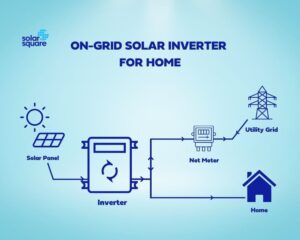
Solar installation itself is a quick process. The slower part is net metering, where your DISCOM swaps your old meter for a bidirectional one after an inspection. The quote should say how long the full process takes for your area, and who handles the application, documents, and follow-ups.
Under the Ministry of Power’s Electricity (Rights of Consumers) Rules, net metering for rooftop solar is permitted up to 500 kW or the sanctioned load, whichever is lower. Your state regulator sets the details.
The quote should also make the vendor’s responsibilities after installation clear. Check who will submit the net metering application, coordinate the required inspection or testing, follow up with the DISCOM, and support meter installation and commissioning.
Also ask whether any applicable meter, testing, application, or DISCOM charges are included in the quoted price or payable separately. This prevents a low initial quote from becoming more expensive later.
6. Compare Warranty Terms Line by Line
Every quote mentions a warranty, but the terms differ. Ask these questions:
- Is it a product warranty, a performance warranty, or both?
- Does the manufacturer honour it directly, or only through the installer?
- What is the inverter’s warranty? It is usually shorter than the panel’s.
- What does the installer’s workmanship warranty cover?
Also compare the warranty period with the process for actually claiming it. Check who you contact if a panel, inverter, mounting component, or installation work develops a problem, whether replacement labor is covered, and whether service is available in your city.
For installations covered by PM Surya Ghar requirements, also verify the applicable servicing and maintenance commitments instead of relying only on the manufacturer’s panel warranty.
Get all of this in writing, not as a verbal promise on a sales call.
7. Check the After-Sales Support Promised
After-sales support matters because the solar system is expected to operate for at least 25 years after installation. The quote or agreement should explain what maintenance and servicing support is included, how faults are reported, and who will provide service in your location.
For an eligible installation under the PM Surya Ghar framework, check the vendor’s applicable five-year warranty and comprehensive maintenance commitment. Also understand what preventive and corrective maintenance is covered during this period and whether any service, labor, or replacement costs can be charged separately.
Finally, check whether the installer has a local service team and a clear escalation process. A long warranty is far less useful if getting a technician to inspect the solar system is difficult.
8. Read the Financing Terms Closely
If you are taking a solar loan, compare the interest rate, the tenure, and the EMI (Equated Monthly Instalment). Remember that the subsidy reaches your bank account after installation through DBT (Direct Benefit Transfer). Installers don’t deduct it from your price upfront, so plan your cash flow around that gap.
When comparing financed solar systems, look at the total repayment amount rather than the EMI alone. A lower system price may not remain the cheaper option if the loan carries a higher interest rate, additional charges, or a longer repayment period.
9. Compare the Exact Equipment and Installation Scope
Two quotes for the same system capacity can use very different equipment. Avoid descriptions such as premium panels, Tier-1 modules, or high-quality inverters unless the quote also gives the exact specifications.
Compare the following details across each quote:
- Solar panels: Check the brand, model number, wattage per panel, number of panels, cell technology, and applicable DCR and ALMM status. Knowing the technology, such as mono-PERC (Monocrystalline Passivated Emitter and Rear Cell), TOPCon (Tunnel Oxide Passivated Contact), HJT (Heterojunction Technology), or bifacial, also makes it easier to compare two apparently similar modules.
- Inverter: Check the brand, exact model, inverter type, AC (alternating current) rating, warranty, applicable certification, and monitoring capability. A smaller inverter is not automatically unsuitable. So ask whether the proposed DC-to-AC sizing has been considered in the system’s generation estimate.
- Mounting structure: Check the material, corrosion protection, design wind load, and how the structure will be fixed to your roof. If drilling, grouting, or other civil work is required, the quote should make the scope and waterproofing responsibility clear.
- Electrical protection: Check the specifications for DC and AC cables, earthing, lightning protection, surge protection, and the AC Distribution Box (ACDB) and DC Distribution Box (DCDB), wherever applicable.
- Monitoring: Check whether the solar system includes online generation monitoring and whether you will receive access to the inverter app or monitoring portal after commissioning.
- Other installation costs: Check whether labor, transport, GST (Goods and Services Tax), civil work, net-metering support, and other applicable charges are included.
Do not compare the equipment only by brand name. The exact model, specifications, warranty, and installation scope determine what you are actually receiving for the quoted price.
10. Verify the installer’s credentials
A detailed quote is useful only if the company can deliver what it promises. For a PM Surya Ghar installation, first verify the vendor’s applicable registration on the PM Surya Ghar Muft Bijli Yojana National Portal for Rooftop Solar.
Then compare the installers’ completed projects, customer feedback or available vendor ratings, local service presence, and experience with installations similar to yours. Ask who will handle support after commissioning and how service complaints are escalated.
This matters because equipment warranties can last for many years, but your practical experience will depend heavily on whether the installer remains available to support the solar system.
11. Compare the Final Cost, Cost Per-Watt, Payment Terms and Exclusions
Only compare prices after you have checked that the quotations cover similar system capacities, equipment, installation work, warranties, and services. A lower total price can be misleading if one installer has left out items that another has included.
For systems of the same capacity, calculate the cost per watt by dividing the total quoted price by the system capacity in watts.
For example, a 3 kW system has a capacity of 3,000 W. The table below shows how two quotes for the same system size can differ:
| Quote A | Quote B | |
| System size | 3 kW | 3 kW |
| Quoted total | ₹1,80,000 | ₹1,65,000 |
| Cost per watt | ₹60 | ₹55 |
Please note: The table above shows illustrative figures only, not a benchmark.
At first glance, Quote B appears cheaper because its cost is ₹55 per watt compared with ₹60 per watt for Quote A. But this comparison is useful only if both quotes include the same scope.
For example, if Quote B excludes GST, earthing, net metering charges, civil work, or some electrical protection components that are already included in Quote A, its actual all-inclusive cost may be much closer to Quote A than the initial ₹5-per-watt difference suggests.
That is why the cost per watt should always be calculated using the all-inclusive price and compared only after you have confirmed that both quotations cover similar equipment, installation work, warranties, and services.
Once you have compared the real project cost, review the commercial terms as well. The quote should clearly state:
- Whether GST is included
- Which civil, electrical, transport, net metering, or other charges are excluded
- How additional work or changes in scope will be priced
- How long the quotation remains valid
- The payment amount due at each project milestone
- The cancellation and refund terms
Avoid paying the entire project amount upfront. The payment schedule should be linked to clearly defined stages, such as booking, equipment delivery, installation, or commissioning.
Before making the final payment, also confirm what the solar installer will hand over after commissioning. This should include the applicable equipment and workmanship warranties, user or operation and maintenance/servicing documents, commissioning records, and monitoring-system access credentials.
Anything that materially affects the overall rooftop solar system price, installation scope, or long-term support should be written into the quote or agreement rather than left as a verbal promise.
Quick Comparison Table for Your Solar Quotes
Copy this table and fill it in for each installer. Gaps show up quickly once the quotes sit side by side.
| What to compare | Quote A | Quote B | Quote C |
| Proposed DC system size | |||
| Sizing based on electricity use and roof assessment | |||
| Panel brand, model, wattage, and technology | |||
| DCR/ALMM eligibility confirmed | |||
| Inverter brand, model, and AC rating | |||
| Generation monitoring included | |||
| Expected annual generation | |||
| Mounting structure material and wind rating | |||
| Roof/civil work and waterproofing responsibility | |||
| Cables, earthing and electrical protection | |||
| Subsidy amount and eligibility | |||
| Net metering support and charges | |||
| Panel, inverter and workmanship warranties | |||
| Five-year maintenance commitment, where applicable | |||
| Local after-sales support | |||
| All-inclusive cost per watt | |||
| GST and exclusions | |||
| Payment milestones | |||
| Quote validity and cancellation terms | |||
| Handover documents and monitoring credentials |
How SolarSquare Approaches Solar Quotes
If you’d like a reference point, SolarSquare issues an itemized quote for every installation. Our panels are BIS-certified and ALMM-listed, as required for subsidy eligibility. The structures we use are WindPro Mount, designed for wind speeds up to 170 km/hr. We also offer a written savings guarantee. If your generation falls below what we promise, we compensate you for the shortfall at ₹8 per lost unit. Servicing and maintenance are part of the offer.
Now that you know what to check, put it to work. SolarSquare will send you a clear, line-by-line quote for your home, with subsidy eligibility confirmed up front. Get your free solar quote from SolarSquare.
Frequently Asked Questions
How do I compare solar quotes in India?
Line the quotes up in one table. Compare components by brand and model, subsidy eligibility, expected generation, warranty, after-sales support, financing, and payment terms. Only compare prices once every quote covers the same scope.
What should a solar panel quotation include?
It should include itemized costs for panels, inverter, structure, cables and protection, plus labor, net metering, GST, and the installer’s exclusions. It should also state the expected generation, the subsidy amount, warranty terms, and a timeline.
How much does a solar panel setup cost in India?
A solar panel setup cost depends on system size, panel type, inverter brand, roof type, and location. For example, the 3 kW solar plant starting price with installation in Pune is approximately ~₹ 1.49 lakh* after subsidy. On the other hand, a 3 kW solar panel starting price with installation in Bangalore is ~₹ 1.82 lakh* after subsidy.
Disclaimer: These prices are indicative as of 07 अक्टूबर 2026 for the SolarSquare Blue 6ft variant. Please note that the final cost of your 3kW solar plant depends on your city, DISCOM charges, product variant opted for, panel type, inverter type, mounting structure height, type of after-sales service, savings guarantee, roof height, etc.
How do I check if my panels are ALMM-listed?
You can check whether your solar panels are ALMM-listed by visiting the MNRE’s official ALMM page. Open the latest List-I for solar PV modules and check whether your panel manufacturer and exact model are listed. You can also ask your solar installer for the panel’s model number and supporting documents to verify the details.
How many solar quotes should I get before buying?
Aim for at least three solar quotes before you make a final decision. That’s enough to spot a quote that is unusually low, unusually high, or missing items.