

Based on BEE efficiency data, an average Indian household running an older 3-star AC, a basic electric geyser, and standard kerosene or CFL lighting can overpay a year compared to a home running efficient, solar-backed alternatives. These 5 upgrades can cut that electricity bill by half, or more.
Electricity rates in India keep climbing every year, and most homes end up paying more for the same lifestyle. The good news is, the right home upgrades can bring that electricity bill down meaningfully, sometimes by half or more. Some of the home upgrades that add value and cut your electricity bill are:
- Installing rooftop solar
- Switching to 5-star/BEE-rated appliances
- A solar home lighting system
- Solar rechargeable batteries or a solar heat pump
- A solar water heater
We’ll cover how each one works, what it costs, and how much it can realistically save you, so you know exactly where to start. None of these needs to happen overnight. But stacked together, they work far better than any single fix. Let’s go through each one.
5 Home Upgrades that Cut Your Electricity Bills
Your electricity bill depends on what you use and how efficiently you use it. These five home upgrades target cutting your electricity bills by changing how you generate power and how you use appliances:
Upgrade 1: Installing Rooftop Solar
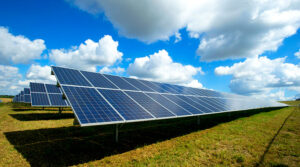
Of all five upgrades, installing rooftop solar cuts the biggest chunk off your electricity bill. With proper solar system sizing, shifting heavy appliance use to daytime peak-generation hours, and using net metering, you can reduce your electricity bill.
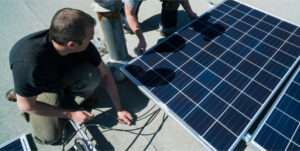
Solar panels capture sunlight and convert it into DC (Direct Current), and your solar inverter turns that into AC (Alternating Current) to power your home. On days your panels generate more than you use, that surplus power flows back to the grid through net metering. You get credited for it on your next electricity bill.
A 3kW rooftop system typically costs between ~₹ 2.17 lakh before subsidy in Lucknow, between ~₹ 2.17 lakh in Nagpur, and ~₹ 2.6 lakh in Bangalore and ~₹ 2.15 lakh in Jaipur.
*Please note: Prices are subject to change. The above-mentioned cost of solar panels for homes in different states before subsidy for on-grid solar systems is indicative as of 06 October 2026 for the SolarSquare Blue 6ft variant. The final solar panel cost for homes in different states in India depends on your DISCOM (Distribution Company) charges, product variant opted for, panel type, inverter type, mounting structure height, type of after-sales service, savings guarantee, roof height, etc.
Under PM Surya Ghar Muft Bijli Yojana, you can avail a central subsidy of ₹ 78,000 for a 3 kW or above system size (capped). You can also avail an additional state subsidy if you belong to Uttar Pradesh, Rajasthan, Delhi, Chhattisgarh, and more. Here are the subsidy details:
| Solar System Size | Solar Subsidy Offered Under PM Surya Ghar Muft Bijli Yojana |
| 1 kWp | ₹ 30,000 |
| 2 kWp | ₹ 60,000 |
| 3 kWp and higher | ₹ 78,000 |
A rooftop solar system can lower your electricity bills by 90% for more than 25 years, but you may recover the solar installation cost in just 3 to 5 years. The payback period depends on system cost, electricity tariff, solar generation, location, and how much of the generated power you use
Beyond the monthly savings, solar also adds something harder to put a number on. Some of the advantages of installing solar are given below:
- Increased property value
- Offset carbon emissions and reduce carbon footprint
- Long lifespan and high savings
- Government subsidies
Upgrade 2: Switch to 5-Star/BEE-Rated Appliances
The BEE star rating is simply a score the Bureau of Energy Efficiency gives to appliances, on a scale of 1 to 5. BEE is a government agency under the Ministry of Power. The agency is responsible for setting norms and standards for energy rating and works as an enforcement body.
Five stars means the appliance is the most efficient in its category. It uses less electricity to do the same job compared to a 1-star or 3-star model. These ratings are genuinely useful. A 5-star 1.5-ton inverter AC consumes roughly ~0.9 to 1.2 units per hour, compared to a 3-star non-inverter model that can pull ~1.5 to 2 units per hour. Over a full summer season, that difference adds up.
*Please note that the electricity consumption range provided for inverter AC is approximate and varies by brand, model, usage pattern, and state tariff.
One thing worth noting is that 5-star rated appliances or BEE-star rated appliances still run on grid electricity. Every unit the appliance consumes still gets billed at your state’s commercial or domestic tariff.
Here’s where it gets interesting if you’ve already gone solar. Efficient appliances mean your solar system ends up covering a larger share of your actual usage, since you’re simply drawing less power overall. The two home upgrades reinforce each other.
Upgrade 3: Solar Home Lighting System
A solar home lighting system is a cleaner alternative to standard electric lighting. The system takes power from sunlight through PV (photovoltaic) panels. The panels absorb sunlight and convert it into electricity, which is stored in batteries. You can use this electricity at night, on cloudy days, or during outages. It works especially well in areas where regular power lines don’t reach easily, such as remote rural regions, as well as in cities where power cuts are common.
A solar home lighting system typically costs between ₹4,500 and ₹25,000*, depending on backup time, capacity, and features.
*Please note: The solar lighting system price range mentioned above is an indicative estimate based on publicly available market data as of 2026. Actual solar home lighting system prices can vary significantly based on the brand or manufacturer, battery type, and location. These rates are intended for general informational purposes only and should not be treated as an official quotation or offer. SolarSquare does not manufacture, sell, or install solar home lighting systems. We do not earn commission or revenue from any solar lighting system vendors, nor do we endorse any specific brand.
You can use a home lighting system for indoor lighting, outdoor lighting, powering small appliances, and charging portable devices. Here’s what makes a solar light for home genuinely worth considering:
- Solar-powered lights are roughly 20 times brighter and last longer than traditional kerosene lamps
- In rural communities, a solar home lighting system can provide energy independence.
- They’re safe for the environment and don’t pose any health risk to users.
- Unlike kerosene lamps, they don’t cause accidents or contribute to respiratory issues.
- Most solar home lighting systems are lightweight and easy to move around as needed.
- A good solar battery can last up to 5,000 charge cycles, so maintenance and replacement need to stay minimal.
Upgrade 4: Solar Rechargeable Batteries
Solar rechargeable batteries are energy storage units that get charged using the electricity that solar panels generate during the day. Instead of sending all that solar power back to the grid, these batteries store it so you can use it whenever you actually need it, not just while the sun’s out.
Here’s how it works, in two steps:
- During the day: Your solar panels charge the battery, with an MPPT solar charge controller managing the process.
- At night or during a power cut: That stored charge takes over, running your lights, fans, pumps, or whatever else needs power.
This makes solar batteries especially useful for homes in remote or rural areas, where the grid is either unreliable or simply doesn’t reach.
The main types of solar batteries are lithium-ion, tubular lead-acid, and gel batteries. Each one differs in cost, how much capacity you can actually use, how much upkeep it needs, how fast it charges, how long it lasts, and what kind of solar setup it suits best.
Lithium-ion batteries: Lithium-ion batteries use compounds like lithium iron phosphate or nickel manganese cobalt as the cathode and graphite as the anode. When the battery charges, lithium ions move from the cathode to the anode through an electrolyte, and they travel back when discharging
These batteries are lighter, charge faster, and let you use a bigger share of their stored capacity compared to lead-acid batteries. They also simply last longer.
Tubular lead-acid batteries
Lead-acid batteries use lead dioxide as the cathode, sponge lead as the anode, and sulfuric acid as the electrolyte.
A tubular lead-acid battery uses thick, tubular positive plates built to handle repeated charging and discharging. They’re more affordable upfront, but some types need regular maintenance, and you can’t draw as much of their stored capacity as you can with lithium.
Gel batteries
These are sealed batteries where the electrolyte sits in gel form instead of liquid. They need very little maintenance, no water topping required, and work well where spills or regular servicing would be a hassle. The trade-off is that they need the right charging settings; otherwise, you risk damaging the battery.
Upgrade 5: Solar Water Heater or Solar Heat Pump
A solar water heater uses sunlight to heat water. The sunlight falls on solar collectors installed on the rooftop; the collectors absorb the heat energy and transfer it to water flowing through a system of pipes. The heated water is stored in an insulated tank so that you can use it for any purpose.
The solar water heater for home works on three components, including solar collectors, a storage tank, and a piping system.
A heat-pump water heater works a bit differently. It runs on electricity, but instead of generating heat directly through an electric element like a regular geyser does, it pulls heat from the surrounding air and transfers it into the water. Essentially, it works like a refrigerator or AC running in reverse.
It heats water through the following process:
- The evaporator absorbs heat from the surrounding air
- A refrigerant carries this heat to the compressor
- The compressor raises the refrigerant’s pressure and temperature
- The condenser transfers the captured heat to the water
- The insulated tank stores the heated water until it is required
Which Home Upgrade Should You Start With?
If you can invest once, start with rooftop solar. You can cover the biggest part of your electricity bill and improve your long-term savings. A rightly sized system can cover a large share of your electricity use. SolarSquare can help you to install a rightly sized solar based on your electricity bills and your roof, so you don’t pay for more than you need. Book a free consultation with SolarSquare now!
If your budget is low, you can also start with BEE-rated appliances and a solar home lighting system. These may cost less upfront and are faster to execute, but the biggest impact on your electricity bill is possible with rooftop solar.
In addition, you must analyse your annual electricity bill and look at what’s actually driving your consumption. If your AC and geyser dominate, that tells you where to focus first. A proper site assessment for solar, or checking appliance energy labels for the rest, will always give you a far more accurate picture than guessing.
Frequently Asked Questions
What’s the single best home upgrade to reduce my electricity bill in India?
Installing rooftop solar can deliver the biggest single impact. It reduces how much power you draw from the grid in the first place, rather than just using your existing power more efficiently.
How many units does a 5-star AC consume per hour compared to a 3-star AC?
A 5-star 1.5-ton inverter AC consumes roughly ~0.9 to 1.2 units per hour, compared to a 3-star non-inverter model that can pull ~1.5 to 2 units per hour.
Do I need a battery if I already have rooftop solar?
No, it’s not always necessary to install a rooftop solar system with a battery; it depends on your area (power outages are rare or frequent). A battery lets you store daytime solar generation and use it in the evening, when your household usage often peaks and your panels aren’t producing.
Is a solar water heater worth it alongside rooftop solar panels?
Yes, since water heating is one of the biggest power draws in most Indian homes. A solar water heater handles this directly, rather than relying on your rooftop system to offset an inefficient electric geyser.
How do I know which home upgrade to prioritise first?
You must check your electricity bill for your biggest consumption contributors, which is usually your AC or geyser. For solar specifically, a proper site assessment gives a far more accurate picture than an online guess.
Does upgrading to BEE-rated appliances really make a noticeable difference?
Yes, BEE-rated appliances can make a noticeable difference, especially for high-usage appliances like ACs and refrigerators that run for hours daily. The savings compound over the appliance’s lifetime and pair well with a rooftop solar system.