Every unit of electricity you use, and every rupee on your bill, is measured by a small device you’ve probably never looked at twice: your electricity meter. Yet not all meters work the same way, and the type installed at your home determines everything from billing accuracy to whether you can go solar.
Whether you’re checking your monthly bill, planning a home upgrade, or installing rooftop solar, understanding the different types of electric meters can help you know what’s happening behind that little display. Here’s a complete breakdown of every energy meter type used in Indian homes and businesses today.
What Is an Electricity Meter?
An electricity meter, also called an energy meter, is a device that measures the electrical energy consumed by a home, building, or piece of equipment over a period of time. It records how much power is drawn from the grid so utilities can bill consumers accurately.
Energy meters are used across residential, commercial, and industrial connections. While the underlying purpose is the same- calculating consumption- the technology, wiring, and use case vary significantly across meter types.
How Does an Energy Meter Work?
Every energy meter works on the same basic principle, measuring current and voltage over time to calculate energy consumed in kilowatt-hours (kWh). How that measurement happens has evolved significantly:
- Electromechanical meters (the older analog type) use a rotating aluminium disc; electricity flowing through internal coils creates a magnetic field that spins the disc, and the speed of rotation determines the reading. These are being phased out but are still found in some older buildings.
- Digital/electronic meters replace moving parts with electronic sensors (like current transformers), converting readings into digital data processed by a microprocessor, offering far greater accuracy and enabling features like remote reading and time-of-use billing.
Most types of electric meters- single-phase, three-phase, smart, and net meters- are now built on digital technology rather than the older electromechanical design.
Types of Electric Meter Options in India
Here’s a breakdown of the electric meter types you’re most likely to encounter, from the most basic to the most advanced.
1. Single-Phase Energy Meter
The most common type of electric meter in Indian households. It connects using two wires, a phase (live) wire and a neutral wire, to supply alternating current (AC) to the home. Single-phase meters can’t run without external circuitry support and typically handle loads up to 5-10 kW, which covers most homes.
2. Three-Phase Energy Meter
Three-phase meters are designed for higher-load connections and use four wires: three phase wires and one neutral. They distribute power more evenly than single-phase meters, making them suitable for homes and buildings with higher electricity demand. It’s standard for commercial, industrial, and institutional buildings, and for larger homes with heavy electrical loads (such as those running large air conditioning systems, EV chargers, or rooftop solar systems above a certain capacity).
3. BTU Meter
Named after British Thermal Units, a BTU meter measures the energy consumed by heating or cooling systems (like centralised HVAC). It works through three components: a flow meter, a temperature sensor, and a main unit, which together calculate energy use based on water flow rate and temperature differential across the system.
- When water passes through the system, the flow meter calculates the flow rate and sends the calculation to the main unit.
- On the other hand, the temperature sensor calculates the temperature of the supply pipe and sends this to the main unit.
- The meter then draws the information from both components, calculates the energy, and displays the overall energy consumption.
4. Smart Electricity Meter
A smart meter communicates bidirectionally: it sends consumption data, alerts, and parameter values to the utility, and can also receive remote software updates and meter-reading instructions. This eliminates manual meter reading, improves billing accuracy, and makes power theft or tampering far easier to detect.
5. Prepaid Electricity Meter
Works like mobile recharge: you top up a balance, and consumption is deducted from it in real time. Usage during peak hours draws down the balance faster than off-peak usage, so shifting consumption to non-peak hours can help you stretch your balance further. The grid can also flag tampering attempts on prepaid connections.
6. Net Meter
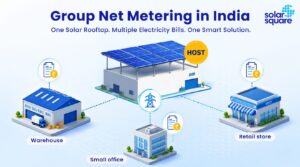
A net meter is the electricity meter used specifically for grid-connected rooftop solar systems. Unlike a standard meter that only tracks how much power you draw from the grid, a net meter is bidirectional; it records both the electricity you consume and the surplus solar power you export back to the grid. Your DISCOM bills you only for the net units consumed (import minus export), which is what allows rooftop solar owners to reduce or even zero out their electricity bills. Net meter installation is a mandatory step in the rooftop solar subsidy process under PM Surya Ghar.
Which Meter Is Used in Homes?
For most Indian households, a single-phase energy meter is the standard choice, since typical home electrical loads stay within its supported range. Larger homes with heavier loads, or homes with three-phase electrical connections, use a three-phase meter instead.
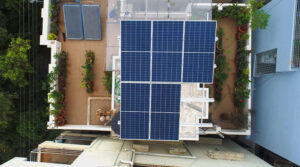
If you’ve installed or are planning rooftop solar, your home will additionally need a net meter alongside (or replacing) your existing consumption meter, since a standard single-phase or three-phase meter cannot account for solar power exported to the grid.
India’s Smart Meter Rollout: What’s Changing in 2026
Smart metering is being rolled out nationwide as part of India’s broader power-sector modernisation programme. Under the Central Electricity Authority (Installation and Operation of Meters) Regulations, consumers in areas with communication-network coverage are to be supplied with smart meters conforming to relevant Indian Standards, within timelines specified by the Central Government. The Revamped Distribution Sector Scheme (RDSS) is supporting large-scale smart-meter deployment across states and DISCOMs.
However, rollout is not uniform across the country. Installation timelines and availability vary by state and DISCOM, so consumers should check with their local distribution company before assuming that smart-meter service is already available in their area.
Sources: Central Electricity Authority (CEA), Central Electricity Authority (Installation and Operation of Meters) Regulations and 2026 Amendment Regulations.
Conclusion
Every type of electric meter is designed around a specific purpose, from simple household billing to industrial-scale monitoring to bidirectional solar tracking. Before choosing or upgrading a meter, consider your load requirements, the number of phases you need, and whether you’re planning to go solar, since that changes the meter type entirely.
If you’re switching to rooftop solar, getting your net meter installed correctly is one of the most important, and most delayed, steps in the process. SolarSquare handles net metering, DISCOM coordination, and subsidy applications end-to-end for its customers. Talk to SolarSquare about your rooftop solar installation.
Frequently Asked Questions
What’s the difference between a single-phase and three-phase electricity meter?
A single-phase meter uses one phase and a neutral wire and suits standard household loads. A three-phase meter uses three phase wires plus a neutral, runs independently, and handles significantly higher loads, making it standard for commercial and industrial use.
Do I need a different meter for rooftop solar?
Yes. Rooftop solar systems require a net meter, which records both grid consumption and solar power exported back to the grid, so you’re billed only for net units used.
Is a smart meter mandatory in India now?
Under the CEA’s 2026 amendment regulations, smart meters are mandatory for consumers in areas with communication network coverage, with rollout timelines set by the central government and implemented state-by-state.
What is the difference between an electromechanical and a digital electric meter?
Electromechanical meters use a rotating disc to measure consumption and are read manually off a dial. Digital meters use electronic sensors and a microprocessor, showing readings on an LCD/LED display with far greater accuracy, and many support remote, real-time data transmission.
How can I read my electricity meter at home?
Digital meters display your kWh reading directly on the screen; just note the number shown. Electromechanical meters show readings across rotating dials; read left to right, where each full rotation of a dial advances the next one by one digit.
Do I need to inform my DISCOM before installing solar and getting a net meter?
Yes, net meter installation requires DISCOM approval as part of the rooftop solar application process; it isn’t something you can install independently.