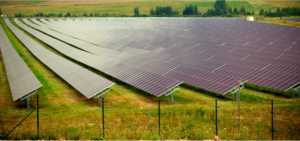


Choosing between PERC vs TOPCon vs HJT solar panels can directly affect how much electricity your rooftop solar system generates over its 25-year life. The difference may look small on paper, but over decades, it can add up to thousands of units of electricity.
- Mono PERC solar panels are usually the most affordable option.
- TOPCon solar panels offer higher efficiency and better long-term performance.
- HJT solar panels perform well in high temperatures but come at a very premium price, and their infrastructure is weak in India.
The highest-wattage or most expensive panel is not automatically the best choice. The right technology depends on your available roof space, local climate, budget, electricity needs, and expected return on investment.
For most Indian homes and businesses in 2026, TOPCon offers the best balance of efficiency, cost, and long-term generation. HJT, due to its heavy module size, is better suited to utility-scale projects. PERC can make sense when it is significantly cheaper and comes from a reliable solar panel manufacturer.
This guide compares HJT vs PERC vs TOPCon solar panels across efficiency, price, temperature performance, degradation, lifespan, and suitability to help you choose the right latest solar technology for your rooftop solar system.
PERC vs TOPCon vs HJT at a Glance
PERC, TOPCon, and HJT panels differ in efficiency, heat performance, degradation, price, and availability. TOPCon in particular is becoming more accessible in India, with domestic manufacturers such as Premier Energies offering TOPCon modules alongside established PERC options. The differences between the three technologies affect how much roof space you need, which panels are best for high heat in cities like Nagpur, and how much electricity they generate over their lifetime.
Here is a quick comparison:
| Comparison Factor | PERC | TOPCon | HJT |
| Full form | Passivated Emitter and Rear Cell | Tunnel Oxide Passivated Contact | Heterojunction Technology |
| Common wafer type | P-type | N-type | N-type |
| Module efficiency | Up to 22.5% for mono PERC panels | 25-26% | More than 26% |
| Temperature coefficient | -0.32% per °C | -0.29% per °C | -0.24% per °C |
| First-year degradation | ~2% | ~1% | ~1% |
| Annual degradation after year 1 | ~0.5% | ~0.4% | ~0.3% |
| Low-light performance | Good | Very good | Best |
| Availability in India | Widely available | Widely available and growing | Limited |
| Cost* |
|
| ~Rs. 28 to ~Rs. 32 per watt |
| Best suited for | Residential and utility-scale | Residential and utility-scale | Utility-scale projects due to the higher module weight |
| Main limitation | Higher degradation and lower efficiency than N-type technologies | Limited availability of G12R wafer types which deliver higher-wattage modules | Higher price and limited manufacturing and supply infrastructure in India |
*Please note: The per-watt solar panel price listed above is an indicative range and can change based on the manufacturer, module wattage, order size, location, and market conditions.
What Are PERC, TOPCon, and HJT Solar Panels?
PERC, TOPCon, and HJT are different solar cell technologies. However, all three commonly use monocrystalline silicon wafers.
- Monocrystalline describes the crystal structure of the silicon wafer.
- P-type or N-type describes how the silicon wafer is doped.
- PERC, TOPCon, and HJT describe how the cell layers and electrical contacts are designed.
What Is a Mono PERC Solar Panel?
A mono PERC solar panel is a module that uses monocrystalline silicon cells, usually built on a P-type wafer. PERC stands for Passivated Emitter and Rear Cell or Passivated Emitter and Rear Contact.
A passivation layer is added to the rear of the cell. The role of this layer is to:
- Reduce the loss of electrons inside the cell
- Reflect some unabsorbed sunlight into the silicon
- Help the cell generate more electricity than older conventional solar cells
Mono PERC became widely used after polycrystalline panels because it improved panel efficiency without increasing manufacturing costs. However, mono PERC panels have a higher temperature-related power loss and faster long-term degradation than newer N-type TOPCon and HJT panels.
What Is a TOPCon Solar Panel?
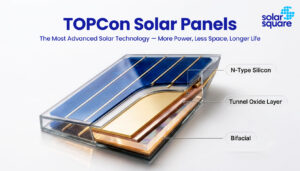
Most modern TOPCon solar panels use N-type monocrystalline silicon wafers. TOPCon stands for Tunnel Oxide Passivated Contact.
The cell contains:
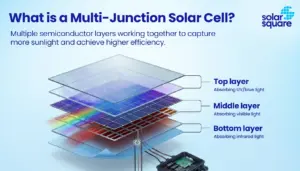
- An ultra-thin tunnel oxide layer
- A thin doped silicon contact layer
- An n-type monocrystalline silicon wafer
These layers reduce the electrical losses that occur when electrons move through the cell. As a result, TOPCon solar panels offer higher efficiency, lower degradation, and better performance in high temperatures than mono PERC panels.
What Is an HJT Solar Panel?
HJT stands for Heterojunction Technology. These panels usually use an N-type monocrystalline silicon wafer coated with thin layers of amorphous silicon on both sides.
The cell therefore combines two forms of silicon:
- Crystalline silicon forms the main wafer and absorbs sunlight.
- Amorphous silicon forms the thin outer layer that reduces electrical losses and improves surface passivation.
This structure gives HJT solar panels a low temperature coefficient, strong bifacial performance, and low long-term degradation.
However, HJT requires dedicated manufacturing equipment and a different production process from PERC and TOPCon. Their higher manufacturing cost and limited production capacity make HJT panels more expensive and less widely available in India.
Why Is the Solar Industry Moving Away from PERC?
The solar industry is gradually shifting from P-type PERC cells to N-type technologies such as TOPCon. The change is being driven by better performance, lower degradation, and stronger long-term output.
Here are the main reasons why PERC is slowly becoming obsolete:
- Lower light-induced degradation: P-type PERC cells are more vulnerable to boron-oxygen light-induced degradation (LID), which can reduce output during the early life of the panel. N-type cells are far less affected by this issue.
- Better long-term power retention: TOPCon and HJT panels degrade more slowly than PERC panels. This allows them to retain a higher share of their original rated power after 25 years.
- Higher efficiency: N-type technologies can convert more solar radiation into electricity. This helps generate more power from the same roof area.
- Better heat performance: TOPCon has a lower temperature coefficient than PERC. As a result, they lose less output when cell temperatures rise.
- More lifetime generation: Lower panel degradation rate helps N-type panels produce more units of electricity over the full life of the solar system.
PERC vs TOPCon vs HJT Performance Comparison
The differences between PERC, TOPCon, and HJT become clearer when you compare how they perform in real operating conditions. The following factors affect annual generation, roof-space requirements, and lifetime electricity output.
#1. Solar Panel Efficiency
Solar panel efficiency demonstrates how much sunlight a panel can convert into electricity within a given area.
- Mono PERC: The efficiency is up to 22.5%.
- TOPCon: It has an efficiency of 25-26%.
- HJT: The efficiency is more than 26%.
Higher efficiency matters most when roof space is limited because it lets you install more solar capacity in a smaller area.
#2. Performance in Indian Heat
Solar panels produce less power as their cell temperature rises. The temperature coefficient shows how quickly this output falls.
- Mono PERC: Around -0.32% per °C
- TOPCon: Around -0.29% per °C
- HJT: Around -0.24% per °C
HJT generally loses the least output in high temperatures. TOPCon performs better than PERC while remaining more affordable than HJT.
#3. Low-Light and Cloudy-Weather Performance
High-efficiency solar panels also generate electricity during mornings, evenings, cloudy weather, and the monsoon, when sunlight is weaker.
- Mono PERC: Performs well in strong sunlight but may produce less under low irradiance.
- TOPCon: Generally offers better low-light performance than PERC.
- HJT: Usually performs well in weak and diffused light.
The actual difference depends on the module design, location, weather, and inverter performance.
#4. Degradation and 25-Year Output
Degradation refers to the gradual reduction in a panel’s power output over time.
- Mono PERC: ~2% degradation in the first year, followed by ~0.5% annually.
- TOPCon: ~1% in the first year, followed by ~0.4% annually.
- HJT: ~1% in the first year, followed by ~0.3% annually.
HJT generally retains the highest share of its original output after 25 years, followed by TOPCon, and then PERC. Exact panel degradation rates should always be checked in the manufacturer’s performance warranty.
#5. Bifacial Generation
Bifacial solar panels can absorb direct sunlight from the front and reflected sunlight from the rear.
- TOPCon and HJT: They’re commonly available in bifacial designs and generally offer higher rear-side generation.
- Mono PERC: It’s available in bifacial formats, although its bifacial performance is usually lower.
Bifacial gains are highest on elevated structures and bright reflective surfaces. The benefit is limited when panels are installed close to a dark rooftop.
#6. Shade Performance
No solar cell technology can prevent the loss caused by shadows from trees, water tanks, parapet walls, or nearby buildings.
Shade performance depends more on:
- Panel layout and cell interconnection
- Bypass-diode design
- String configuration
- Inverter or power-optimizer selection
#7. Durability and Reliability
A solar panel must withstand heat, humidity, rain, wind, and repeated temperature changes for several decades.
- Mono PERC: It has a proven operating history but usually carries lower long-term power-retention warranties.
- TOPCon: It offers lower degradation and is now widely used in residential, commercial, and large utility-scale solar projects.
- HJT: It offers strong long-term output retention and excellent heat performance.
Many HJT modules use glass-glass construction, which can make them heavier. This may require a stronger mounting structure and makes them more suitable for utility-scale or specially designed commercial installations than residential installations at homes.
PERC vs TOPCon Cost in India in 2026 for Residential Rooftop Solar Systems
TOPCon panels cost slightly more than mono PERC panels, but the price gap has narrowed considerably.
Here are the indicative panel prices in India in 2026:
| TOPCon vs PERC Cost | Mono PERC Prices in 2026 | TOPCon Prices in India |
| DCR solar panels | ~Rs. 20 to ~Rs. 21 per watt | ~Rs. 21 to ~Rs. 24 per watt |
| Non-DCR solar panels | ~Rs. 14 to ~Rs. 16 per watt | ~Rs. 18 per watt |
Please note: The prices mentioned above are indicative, and not fixed. Actual prices may vary by manufacturer, module wattage, order size, location, and market conditions.
Why Mono PERC Panels Usually Cost Less?
Mono PERC panels are cheaper because of the following reasons:
- The manufacturing technology is mature.
- Production lines have operated at a large scale for years.
- P-type wafers generally cost less to produce.
However, the lower price comes with lower efficiency, higher heat-related losses, and faster degradation than TOPCon.
Is TOPCon Worth Paying More For?
For most residential and commercial rooftop solar systems, TOPCon technology is worth the additional cost because of:
- Higher efficiency
- Better performance in high temperatures
- Lower long-term degradation
- More lifetime electricity generation
The upfront difference is usually small compared with the total cost of a rooftop solar system. TOPCon, therefore, offers better long-term value for most homeowners.
TOPCon vs Mono PERC Solar Panels: Which Is Better?
The choice between TOPCon vs mono PERC depends mainly on upfront cost, roof space, and expected lifetime generation. Both technologies are available in India, but TOPCon delivers better long-term performance.
TOPCon Advantages Over Mono PERC
Here are the main advantages of TOPCon over mono PERC solar panels:
- They have a higher efficiency of 25-26% compared to just 22.5% efficiency in mono PERC panels.
- They have a lower temperature coefficient, resulting in better performance at high temperatures.
- They have a lower annual degradation rate, resulting in higher output throughout their life.
- They offer a stronger low-light performance and generate more electricity over their lifetime.
TOPCon’s N-type wafer is also less affected by the light-induced degradation commonly seen in P-type PERC cells.
Mono PERC Advantages over TOPCon
Mono PERC offers a slightly lower upfront price and a good value when roof space is not limited. However, TOPCon panels generate more power over the long run, resulting in more savings. As a result, their overall ROI is better than mono PERC panels.
TOPCon vs Mono PERC Verdict
For most businesses installing industrial rooftop solar in 2026 and homes, TOPCon is the better choice because it offers higher efficiency, lower degradation, and better performance in heat.
Mono PERC makes sense when it is available at a significantly lower price and comes from a reliable manufacturer with a strong product and performance warranty.
HJT vs TOPCon: Which Is Better?
Both HJT and TOPCon use N-type wafers and offer better performance than mono PERC. However, TOPCon is the better choice for most businesses and Indian homes installing rooftop solar because it delivers strong performance at a much lower cost.
Where is HJT Better Than TOPCon?
HJT performs well in high-temperature conditions, low-light conditions, and projects that prioritize long-term generation.
Many HJT modules also use heavier glass-glass construction. This makes them better suited for utility-scale projects, where stronger mounting structures can support the additional weight more easily.
Where is TOPCon Better Than HJT?
TOPCon offers a stronger balance of performance, price, and availability. It costs significantly less than HJT, is widely available from Indian manufacturers, offers higher efficiency than mono PERC, performs well in high temperatures, has a lower degradation than PERC, and is easier to source, replace, and service.
Simply put, TOPCon delivers performance close to HJT without the high price and limited availability.
HJT vs TOPCon Verdict
TOPCon is the clear winner for most Indian solar consumers in 2026. It has wider availability, better installer familiarity, and a more established supply and service network in India.
HJT, on the other hand, is harder and more expensive to manufacture because it requires dedicated production lines and more complex cell-processing steps. This keeps prices high and availability limited. Its heavier modules also make it better suited for selected utility-scale projects than residential rooftops.
PERC vs HJT: How Different Are They?
PERC and HJT differ significantly in performance, price, manufacturing, and suitability. HJT delivers better technical performance, while PERC remains more affordable and widely available.
Compared with mono PERC, HJT offers a higher module efficiency, lower power loss in high temperatures, slower annual degradation, better long-term power retention, and more generation from the same roof area.
HJT, therefore, produces more electricity over the system’s lifetime, especially in hot conditions and where roof space is limited.
- HJT is the better-performing technology, but its higher manufacturing cost, heavier construction, and limited availability prevent it from being the practical choice for most residential rooftops.
- Mono PERC, on the other hand, offers a lower upfront price and wider availability.
PERC, TOPCon, or HJT: Which Technology Is Best for India’s Specific Conditions?
For most Indian homes and businesses in 2026, TOPCon is the best solar technology to choose. It offers higher efficiency, better performance in heat, a lower degradation rate, and a stronger lifetime generation than mono PERC, without the high cost and limited availability of HJT.
Moreover, TOPCon is widely manufactured, easier to source, and supported by a stronger installation and service network. DCR TOPCon panels can also be used in subsidy-backed residential systems when they meet the applicable ALMM and scheme requirements.
SolarSquare designs complete rooftop solar systems using panels and components suited to your roof, electricity usage, and budget. Book a free solar consultation call with our solar experts to find the right solar system for your home or business.
FAQs
Does N-type automatically mean a longer-lasting panel?
In a way, yes. N-type cells are less vulnerable to light-induced degradation, so TOPCon and HJT panels generally retain their output better than P-type PERC panels. However, actual lifespan also depends on module construction, materials, manufacturing quality, installation, and warranty terms.
Is bifacial technology useful on residential rooftops?
It depends on how the panels are installed. Bifacial panels work best when they are raised above a light-colored surface that can reflect sunlight onto the rear side.
Are all TOPCon and HJT panels bifacial?
Most TOPCon and HJT panels are available as bifacial modules, especially glass-glass models used in commercial and utility-scale projects. Both technologies offer high rear-side efficiency. However, do not automatically assume they are bifacial. Always check the manufacturer’s datasheet for the words bifacial module, bifaciality factor, or rear-side power ratings.
What is a solar panel’s temperature coefficient?
The temperature coefficient shows how much power a solar panel loses when its cell temperature rises above 25°C.
For example, a temperature coefficient of -0.28% per °C means the panel loses 0.28% of its rated power for every degree above 25°C. A value closer to zero indicates better performance in hot conditions.
Which technology produces the most power per square metre?
HJT offers the highest efficiency (more than 26%), followed closely by TOPCon with an efficiency of 25-26%, while mono PERC has the lowest efficiency of up to 22.5%. However, the exact ranking depends on the specific module model.
Is cell efficiency the same as module efficiency?
No, they’re two different things.
- Cell efficiency measures how efficiently an individual solar cell converts sunlight into electricity.
- Module efficiency measures the complete panel, including all cells, electrical connections, glass, and frame.
Module efficiency is the relevant figure when calculating how much solar capacity can fit on your roof.
Is PERC technology obsolete in 2026?
Mono PERC panels are still used and can provide reliable generation when purchased from a trusted manufacturer. However, the industry is increasingly moving towards N-type TOPCon because it offers higher efficiency, better temperature performance, and lower degradation at a relatively small price premium.
Which solar panel technology offers the best ROI?
TOPCon offers the best balance for Indian rooftops in 2026. It provides better efficiency, heat performance, and long-term output than mono PERC without the high price and limited availability of HJT.
Can TOPCon panels be used under the PM Surya Ghar Muft Bijli Yojana?
Yes, the scheme does not restrict homeowners to a particular cell technology. A TOPCon panel can be used when the selected model and manufacturer meet the applicable domestic-content and ALMM requirements.
What specifications should you check before buying a solar panel?
Check module efficiency, temperature coefficient, first-year and annual degradation, the product and performance warranty periods, ALMM and DCR status if you want the subsidy, and whether the manufacturer has a service presence you can reach.