

 9 Reads
 9 mins


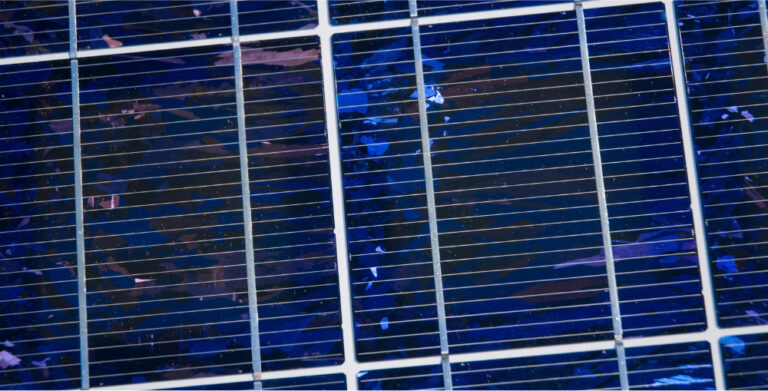
Over 85% of solar panels sold worldwide run on one material: crystalline silicon. A crystal lattice is a fixed, repeating pattern of atoms arranged in a solid structure. In crystalline silicon, silicon atoms lock into this exact pattern, and this is what lets silicon conduct electricity so efficiently once sunlight hits it.
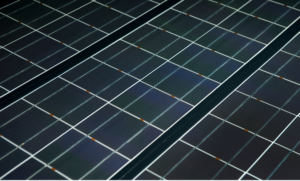
Crystalline silicon is the leading semiconducting material used in photovoltaic technology to manufacture solar cells. Crystalline silicon photovoltaic cells are typically used in commercial-scale solar panels, and they account for the overwhelming majority of the global PV cell market.
Crystalline silicon PV modules are built using crystalline silicon (c-Si) solar cells, developed through processes originally borrowed from the microelectronics industry. The PV solar panels are composed of these solar cells as part of a photovoltaic system to produce solar energy from sunlight. Crystalline silicon technologies are dominantly used in stand-alone and on-grid system installations.
To understand why this material has been at the top of the solar industry for many years, let us begin to explore this material in detail.
What Is Crystalline Silicon?
Silicon is one of the finest semiconductors that are utilised for manufacturing solar cells. It is used widely due to its optimum electrical, mechanical, thermal, optical, and environmental properties. It is also easily available on our planet.
Crystalline silicon is the crystalline form of silicon. It comes in two main forms, including monocrystalline silicon (mono-Si) and multicrystalline silicon (multi-Si). Monocrystalline silicon is made from a single, continuous crystal, and multicrystalline silicon is built from many small crystal fragments. Multicrystalline silicon is more commonly known as polycrystalline silicon.
A crystalline cell is made by arranging silicon atoms into a repeating three-dimensional arrangement, which is known as a crystal lattice. In this case, silicon atoms are bonded together in a fixed, predictable geometric pattern. In pure crystalline silicon, this takes the form of a diamond cubic lattice, where every silicon atom bonds with four neighbouring atoms in a stable, tetrahedral structure.
In simple terms, the more uniform and unbroken the crystal lattice, the more efficiently a solar cell converts sunlight into electricity.
How Is Crystalline Silicon Made?
Converting raw silicon into a usable solar-grade crystal involves an industrial process. The process starts with the reduction of high-grade quartz sand in an electric furnace, producing metallurgical-grade silicon. Then, this raw silicon goes through the purification process, also known as the Siemens process. It helps the silicon to reach the extremely high purity levels required for solar cell formation.
From here, the path splits depending on the type of crystalline silicon being produced:
- For monocrystalline silicon, the purified silicon is melted and then slowly drawn upward while rotating, a method known as the Czochralski process, forming a single, continuous cylindrical crystal called an ingot. This ingot is then sliced into thin wafers.
- For polycrystalline silicon, molten silicon is poured into a mould and allowed to cool and solidify into a block, forming multiple smaller crystal grains rather than one continuous structure. This block is then sawed into bars and sliced into wafers.
Each wafer is then treated with dopant materials. The most commonly used dopants are phosphorus and boron to create the electrical properties needed for a functioning solar cell.
Types of Crystalline Silicon Solar Cells and Their Efficiency
Crystalline silicon has an ordered crystal structure, and each atom has a pre-arranged position. The silicon solar cells are built from silicon wafers, which can be mono-crystalline or multi-crystalline silicon.
So, there are two main types of crystalline silicon used in photovoltaic solar cells –
- Mono-crystalline silicon is manufactured by slicing wafers from a high-purity single mass of crystal. These wafers usually have better material specifications. However, they are costly!
- Multi-crystalline silicon, aka Polycrystalline silicon, is manufactured by first sawing a silicon cast block into bars and cutting it into wafers. The production methodology used for Polycrystalline silicon is simpler. Therefore, it is less expensive compared to those used for single-crystal material. However, there remains the fact that the quality of single-crystalline material is superior to multi-crystalline material.
On efficiency, monocrystalline PV cells typically convert around 18% to 24% of sunlight into electricity, with the newest n-type technologies like TOPCon and heterojunction cells pushing past that range in premium panels. Polycrystalline cells generally fall in the 13% to 18% range, depending on manufacturing quality.
Advantages of Crystalline Silicon Solar Cells
Some major advantages of crystalline silicon solar cells are:
- Robust & Reliable: Deployment projects need to be reliable and productive. It aids in obtaining capital for such projects. Notably, a significant amount of information is available on the reliability and robustness of the crystalline silicon PV modules.
- The efficiency of Output: The commercially manufactured crystalline silicon cell offers higher efficiency as compared to other industry-level single-junction devices. Higher efficiency cuts down the cost of final installation, as a smaller quantity of cells is required to be installed for an estimated output.
- Sturdy & Long-Standing Material: Crystalline silicon cells facilitate a longer life of the modules, around 25+ years. Also, they are sturdy & withstand degradation over a long period.
- Abundant Availability: Concerning abundance, silicon is the predecessor of the most abundant element on this planet, which is Oxygen. This means that silicon is the second most abundant element.
Limitations of Crystalline Silicon
Crystalline silicon isn’t without its downsides. Here’s where it falls short:
- It requires genuinely expensive manufacturing technology to produce at the purity levels solar cells need.
- Growing and sawing crystalline silicon masses is an energy-intensive process, adding meaningfully to the overall production cost and footprint.
Explain the Use of Silicon in Crystalline Solar Cells
Silicon is a material that conducts no electricity on its own until specific impurities, or dopants, are added. Adding phosphorus creates n-type silicon, with extra free electrons available to move. On the other hand, adding boron creates p-type silicon, with “holes” where electrons are missing. When these two layers are placed together, they form a p-n junction, the actual working principle behind a solar cell.
When sunlight hits this junction, photons transfer energy to electrons in the silicon, knocking them loose and setting them in motion across the p-n junction. That movement of electrons generates an electric current, which then gets collected by metal contacts on the cell’s surface and channelled out as usable electricity.
Cost of Crystalline Silicon Solar Panels in 2026
Solar energy is a free and renewable source of energy. But harnessing solar energy via making use of conventional crystalline silicon cells is a bit costly.
Crystalline silicon is an expensive material in the solar energy industry because of its various prolonged manufacturing processes.
It is manufactured by the reduction of high-grade quartz sand in an electric furnace.
However, with technological advancements, low-cost silicon materials are now available. Also, subsidies are offered by the government on polycrystalline solar modules as a contribution to reducing the total cost.
You can check the table below for approximate panel prices per watt in India.
| Solar Cell Type | Efficiency | Approx. Panel Price in India (per watt) |
| Monocrystalline (Mono PERC) | Up to 22.5% |
|
| Polycrystalline | 13% to 18% | ~Rs. 500* for a small 5-watt panel to around Rs. 12,600-Rs. 18,900* for a 335W panel |
| Monocrystalline (TOPCon/N-type) | 25-26% |
|
*Disclaimer: Please note that the prices are subject to change. The panel prices mentioned above are indicative estimates based on publicly available market data as of 2026. The actual panel price depends on brand, panel wattage, market demand for the module, promotional offers provided by the manufacturer, etc. SolarSquare does not manufacture, sell, install, or endorse any polycrystalline solar panel.
Conclusion
Since the early 1950s, crystalline silicon solar cells have dominated the global photovoltaic market. Silicon is an abundant and non-toxic element available in the Earth’s crust.
Over the years in practice, crystalline silicon PV modules have exhibited their long-standing performance. Moreover, silicon solar cells are also expected to play a great role in the future market of solar photovoltaics.
Understanding the science behind crystalline silicon is one thing; choosing the right panel for your own roof is another. SolarSquare uses only BIS (Bureau of Indian Standards) and ALMM (Approved List of Models and Manufacturers)-certified monocrystalline panels, engineered for strong, dependable output across 25 years of Indian weather, and every installation is backed by a written savings guarantee.
Curious how much a properly engineered crystalline silicon system could save you? Book a free consultation with SolarSquare and get a custom solar estimate built specifically for your home.
Frequently Asked Questions
How productive are crystalline silicon solar panels?
Solar cells built from crystalline silicon offer a strong combination of high productivity, a long working life, and relatively low cost. These modules typically last 25 years or more, still producing over 80% of their original output at the end of that period. Even beyond 25 years, many continue operating at around 70% efficiency, with an annual degradation rate of roughly 0.7%. Set against constantly rising electricity tariffs, that gives a fairly clear picture of the real savings a solar system offers over its lifetime.
What’s the basic difference between crystalline silicon and amorphous solar panels?
Monocrystalline solar panels are built from single-crystal silicon, with atoms arranged in a precise, repeating crystal lattice. Amorphous solar panels, by contrast, use a non-crystalline form of silicon, applied as a thin film, with no such ordered lattice structure, which is part of why they typically run at lower efficiency.
Why is silicon used for making crystalline solar cells?
Crystalline silicon is favoured for solar cells because of its reliability, strong performance, and wide availability. Its specific semiconductor properties, particularly how well it forms a stable crystal lattice and supports a functioning p-n junction, make it exceptionally well-suited for photovoltaic use.
What are the different categories of silicon solar panels available today?
Silicon solar panels are generally classified into three categories: monocrystalline, polycrystalline, and amorphous (thin-film) panels, each differing in crystal structure, efficiency, and cost.
What exactly is a crystal lattice in a solar cell?
A crystal lattice is the repeating, orderly arrangement of silicon atoms that gives crystalline silicon its structure. In solar cells, a cleaner, more uniform lattice allows electrons to move more freely once energised by sunlight, which is directly why monocrystalline cells, with their single unbroken lattice, tend to be more efficient than polycrystalline cells, which contain multiple lattice boundaries.


 Previous Article
 13 min


![10 kW Solar Panel Price in India [With and Without a Subsidy]](https://cdn.solarsquare.in/blog/wp-content/uploads/2025/07/18165650/10-KW-solar-panel-300x167.webp)