
 14 Reads
 9 mins


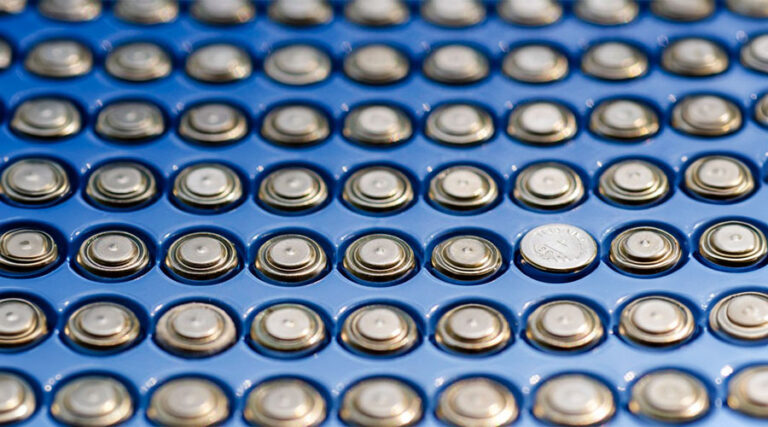
A single CR2032 coin cell can run a car key fob for anywhere from a year or two in a heavily used fob to several years, perhaps up to five, depending on the key and how often you use it. That staying power is why these tiny batteries are everywhere.
A button cell is a small, flat, round battery used to power compact electronics like watches, calculators, and remote controls. A coin cell battery is actually a specific type of button cell, usually lithium-based, smaller in length but wider in diameter. Both button cell and coin cell batteries work on a chemical reaction between two electrodes that generates the current and powers your device.
Most of these miniature batteries have a low self-discharge rate, meaning they hold their charge for a long time. That long shelf life and steady output make them a good fit for portable products that need to last.
In this guide, we’ll clear up the button cell vs. coin cell confusion, explain exactly how these circle batteries work, cover the different types available, and walk through real safety guidance backed by genuine government sources.
What Is a Button Cell?
A button cell is a small, flat, round battery designed to fit into compact devices, watches, hearing aids, calculators, and small toys. It’s called a “button” cell because of its shape, short and round, like a coat button.
Also called lithium-metal batteries in their lithium form, these are basic cells that use metallic lithium as an anode. They’re one of the smartest, most compact battery cells around. Button cells are inexpensive and ideal for powering small devices, LED projects, and more.
There are different technologies and chemistries used across button batteries. Some are lithium, others are alkaline. The nominal voltage of alkaline button batteries is 1.5V, while lithium coin batteries run at 3V.
Button Cell vs Coin Cell: What’s the Real Difference?
A coin cell is a type of button cell, not a separate category. The difference comes down to shape proportions: coin cells are thinner and wider, while other button cells tend to be a bit taller relative to their diameter. In everyday conversation, people use “button cell” and “coin cell” interchangeably, and honestly, most of the time it doesn’t matter. But technically, here’s the distinction:
| Feature | Button Cell (general) | Coin Cell (specific type) |
| Shape | Round, button-like | Round, thinner and wider than most button cells |
| Common chemistry | Alkaline, silver-oxide, zinc-air, lithium | Almost always lithium |
| Typical voltage | 1.5V (alkaline/silver-oxide) | 3V (lithium) |
| Common uses | Hearing aids, watches, small toys | Calculators, car key fobs, motherboards, LED lights |
How Does a Coin Battery Work?
A coin battery works on a chemical reaction between two electrodes, separated by an electrolyte, to push electrons through a connected circuit. This is the same basic principle as any battery, just built into a much smaller, flatter package.
A coin battery works similarly to AA and AAA batteries. Their circular body has two electrodes, a cathode and an anode, made of complementary metals. Usually, stainless steel forms the bottom body and the positive terminal.
The metallic top, insulated from the positive terminal, forms the negative terminal. Both terminals are separated by an electrolyte, which acts as a separator and controls the movement of ions that generate electric power.
When the battery discharges, or is in use, the cathode receives positively charged lithium ions, making it positively charged. This attracts electrons, which flow through the device’s circuit and power it for as long as it’s connected. The reverse happens when the cell is being charged.
To prevent short circuits and leakage, manufacturers use chemically stable materials throughout.
Types of Button and Coin Cell Batteries
Not all miniature batteries use the same chemistry. Here’s what’s actually inside them:
- Lithium (Li-MnO2): Lithium battery is the most common coin cell chemistry and runs at 3V. It is used in calculators, car remotes, and motherboards. Also, the lifespan of these batteries are good and stable output.
- Alkaline: Alkaline batteries run at 1.5V and are more affordable. These are commonly used in toys, small flashlights, and basic electronics.
- Silver-oxide: Silver-oxide batteries also run at 1.5V, but deliver a steadier voltage over their life. These are common in watches and precision instruments.
- Zinc-air: The zinc-air batteries need air exposure to activate and are mostly used in hearing aids. These are typically smaller and pose a lower choking risk than other button batteries.
Understanding Coin Cell Naming (Formats & Sizes)
Coin lithium cell batteries come in several sizes. Each cell has a specific coded name describing its size and chemistry. The International Standard IEC has specified an alphanumeric coding system for naming these cells.
Some examples that conform to the IEC standard are CR2032, LR1154, and SR516. Let’s take CR2032 to understand the nomenclature.
- The first letter indicates cell chemistry. ‘L’ is for alkaline cells, ‘C’ is for lithium coin cells.
- The second letter indicates cell shape. ‘R’ is round, ‘F’ is flat, ‘S’ is square, ‘P’ means “not round.”
- The three-to-four-digit reference number denotes size. In our example, ‘2032’ means the diameter is 20 mm, and the thickness is 3.2mm.
So a CR2032 cell is a round lithium cell with a 20mm diameter and 3.2mm thickness.
Features of a Button Cell Battery
Button batteries are an ideal power source for portable equipment and on-the-go gadgets, making daily use of many devices possible.
- They have a strong power-to-size ratio and a long working life, often lasting 7 to 10 years on the shelf.
- They’re durable and hold up well in tough weather conditions. They’re also not prone to leakage, explosion, or spontaneous combustion.
- As long as they aren’t soldered to a circuit board, they’re easy to assemble and remove.
- Low self-discharge means they hold their charge for a long time, even sitting unused. A single cell can run a wristwatch continuously for over a year.
What Are Coin Cell Batteries Used For?
Coin cell batteries power a wide range of small, everyday electronics, from wristwatches and calculators to car key fobs and medical devices like pacemakers.
As we increasingly use smaller, portable personal devices, we need batteries that fit conveniently inside them. Coin cell batteries are the popular choice for exactly this.
They keep time in wristwatches, and show up in calculators, remote controls, bank card readers, electronic games, digital scales, and car keys. They’re even used in small medical equipment like digital thermometers. For pacemakers, a single coin cell can provide an artificial heartbeat for 5 to 10 years.
Beyond that, coin batteries suit very small, low-power projects too, testing LEDs, powering electronic tealight candles, and disposable devices. Rechargeable batteries exist in different sizes too, though they generally hold less capacity than single-use cells.
How to Dispose of Button and Coin Cell Batteries in India
Button and coin batteries shouldn’t go into your regular household trash. In India, their disposal is governed by the Battery Waste Management Rules, 2022, notified by the Ministry of Environment, Forest and Climate Change, and enforced by the Central Pollution Control Board (CPCB).
Source: CPCB, Battery Waste Management Rules 2022, eprbattery.cpcb.gov.in
These rules apply to all battery types, regardless of chemistry, shape, or size, which includes button and coin cells. They follow the Extended Producer Responsibility (EPR) framework, meaning brands must fund recycling. Producers are responsible for collecting and recycling the batteries they sell, and consumers are expected to hand over used batteries through approved collection systems, not regular waste.
In practice, this means dropping off used button and coin cells at designated e-waste or battery collection points; many electronics retailers and battery manufacturers now offer these, rather than tossing them in the bin.
Conclusion
The button cell battery we rely on daily is designed to make our lives easier, powering portable devices and small gadgets with barely any bulk. As small electronics keep growing in popularity, these tiny batteries have only become more common.
Many coin cell batteries look nearly identical, often sharing the same diameter with just a slightly different thickness, so knowing your exact size code matters when buying a replacement. And now that you know the real safety and disposal guidance too, you’re better equipped to use, store, and get rid of them responsibly.
Small batteries like this power the tiny electronics in your daily life. Larger battery storage systems do something similar at home scale, storing solar energy generated during the day for use after dark. If you’re curious how that works, SolarSquare’s guide to solar battery storage is a good place to start.
Frequently Asked Questions
What are the safety precautions that should be taken for coin cell batteries?
A risk involved with using coin batteries includes accidental ingestion by children because of their small size and round, candy-like shape. Therefore, you must ensure that you store and dispose of these batteries at room temperature in an area inaccessible to children and pets.
What does the expiry date on the coin battery indicate?
The expiry date shows the duration after production for which the battery will function properly, as per the set industry standards. It varies according to the battery type. Notably, it takes around ten years for lithium coin batteries.
Who are the notable manufacturers of coin cell batteries?
Some of the major manufacturers include Renata, Panasonic, Duracell, Energizer, GP, and Varta. These brands are widely available across Indian electronics and battery retailers, and generally meet international quality and safety standards.
What is the difference between a button cell and a coin cell battery?
A coin cell is a specific type of button cell, thinner and wider, almost always lithium-based, running at 3V. Button cell is the broader term covering all small, round batteries, including alkaline and silver-oxide types used in watches and hearing aids.
What should I do if a button battery is swallowed?
You must seek emergency medical attention immediately. Do not wait for symptoms. The National Capital Poison Centre recommends giving honey to children over 12 months on the way to the hospital, only within 12 hours of ingestion, never as a substitute for medical care.
How should I dispose of used button or coin batteries in India?
Never throw them in regular household trash. Under India’s Battery Waste Management Rules, 2022, drop them off at an approved e-waste or battery collection point. Many electronics stores and manufacturers offer this, so they get recycled safely.


 Previous Article
 23 min