Solar photovoltaic energy converts sunlight into electricity for applications ranging from home rooftops and commercial buildings to industries, farms, utility-scale power plants, remote locations, public infrastructure, small devices, transport systems, and spacecraft. For homeowners, one of its most valuable applications is rooftop solar, which can reduce electricity bills by up to 90%.
Photovoltaic technology can serve such widely different electricity requirements because it is modular. Individual photovoltaic cells can be combined into modules, and multiple modules can form larger arrays capable of producing much more electricity.
This versatility has helped solar become a major part of India’s power story. In 2014, the country had just ~2.8 GW of installed solar capacity. By July 2026, that figure climbed to ~164.59 GW, an increase of ~58x.
This guide explains the major applications of solar photovoltaic energy, how photovoltaic electricity generation works, and the factors that affect its output.
What Are the Applications of Solar Photovoltaic Energy?
The primary application of solar photovoltaic energy is to generate electricity. Solar panels literally convert solar radiation into electricity for homes, businesses, industries, farms, utility-scale power plants, remote locations, and public infrastructure.
Photovoltaic (PV) technology can also power small devices, building-integrated systems, transport applications, and spacecraft.
PV technology can be scaled for different applications in the following way:
- A single PV cell produces a small amount of electricity
- Multiple cells form modules
- Multiple modules can be combined into solar arrays
- Solar arrays are capable of producing much higher output
Let’s explore all the applications of solar photovoltaic energy in detail.
#1. Residential Application of Solar Photovoltaic Energy
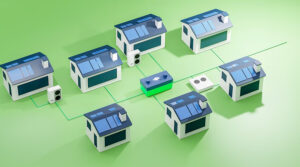
Homes are among the most common applications of photovoltaic solar energy. Rooftop solar electric panels for homes can generate electricity to power loads such as lights, fans, TVs, and air conditioners.
In a rooftop on-grid solar system, solar electricity can reduce the amount of grid electricity drawn during generation hours. Eligible surplus electricity may also be exported to the grid under the applicable net metering arrangement.
Battery energy storage systems can also be added where backup is required.
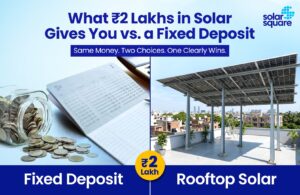
The result is up to 90% bill reduction for as long as the rooftop solar system lasts, which is around 25 years with proper installation and maintenance.
#2. Commercial Application of Photovoltaic Solar Energy
Commercial buildings can install commercial solar power systems to meet part of their electricity needs, using available roofs or other suitable installation spaces.
Commercial properties that commonly use solar PV include:
- Offices
- Hotels
- Hospitals
- Schools and colleges
- Shopping complexes
- Institutional buildings
Properties with significant daytime consumption can use much of the solar electricity while it is being generated.
#3. Industrial Application of Solar Photovoltaic Energy
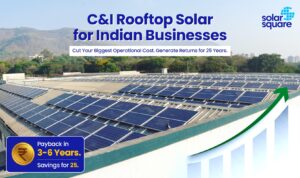
Factories, warehouses, manufacturing facilities, and industrial sheds can use photovoltaic systems to generate electricity for their operations.
A properly sized industrial rooftop solar system can lower electricity bills by up to 70%. The required capacity depends on factors such as electricity consumption, available installation area, and the extent to which the facility’s demand is intended to be met by solar.
#4. Utility-Scale Photovoltaic Electricity Generation
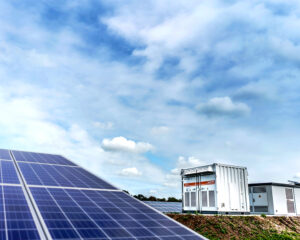
Photovoltaic technology can also be deployed in large solar power plants. Thousands of modules can be connected in arrays to generate electricity at the megawatt scale and supply it to the electricity grid.
India’s ground-mounted solar plants had a cumulative installed capacity of 122.57 GW as of 31 July 2026. This accounted for the largest share of the country’s total installed solar capacity of approximately 164.59 GW.
#5. Solar Photovoltaic Applications in Agriculture
Photovoltaic solar energy can supply electricity for agricultural applications, particularly irrigation and water pumping.
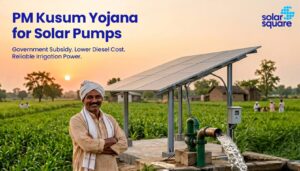
- Solar PV pumps can use electricity generated during daylight hours to pump water without depending on the conventional grid or diesel-powered pumping.
- In India, solar agricultural pumps and solarization of existing grid-connected pumps are covered under PM-KUSUM Yojana.
Other agricultural uses of solar PV include:
- Irrigation systems
- Water pumping
- Farm electricity requirements
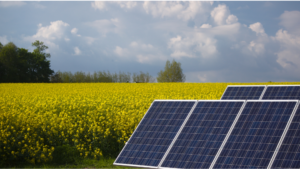
- Agrivoltaic projects where farming and solar generation share suitable land
#6. Remote and Off-Grid Applications of Solar Photovoltaic Energy
Photovoltaic systems can generate electricity in locations where extending the conventional grid is difficult or impractical.
They can be used for remote homes, communication equipment, monitoring systems, community facilities, and other standalone loads. Off-grid solar systems include battery storage to supply electricity after sunlight is unavailable.
#7. Public Infrastructure Application of Solar Photovoltaic Energy
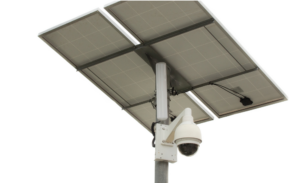
PV systems can provide electricity to small public infrastructure loads without requiring a large power installation.
Applications can include:
- Solar street lights
- Traffic and road signs
- Sensors and monitoring equipment
- Communication systems
- Parking equipment
The required panel and battery capacities depend on the equipment’s electricity consumption and operating hours.
#8. Building-Integrated Photovoltaic Application of Photovoltaic Energy
Building-integrated photovoltaics (BIPV) incorporate photovoltaic materials into parts of the building itself rather than mounting conventional modules separately on top of it.
Depending on the technology and building design, PV materials can be incorporated into roofs, facades, skylights, and glazing. These building components can therefore serve a structural or architectural purpose while also generating electricity.
#9. Transportation Application of Solar Photovoltaic Energy
Photovoltaic technology can support selected transportation applications. Solar panels may provide auxiliary electricity for specialized vehicles, boats, and other transport systems.
Solar PV can also generate electricity for external EV (electric vehicle) charging infrastructure. However, the limited surface area available on an ordinary passenger vehicle restricts how much electricity panels mounted directly on the vehicle can generate.
#10. Space and Satellite Applications of Solar Photovoltaic Energy
Photovoltaic cells are well suited to satellites and spacecraft because sunlight can be converted into electricity without carrying fuel for electricity generation.
High-efficiency photovoltaic technologies, such as multijunction cells, are particularly valuable for space applications, where available area and weight are important constraints.
#11. Small Devices and Standalone Applications
Photovoltaic cells can operate at a much smaller scale too.
Calculators, sensors, portable electronics, monitoring devices, and other low-power equipment can use small PV cells or modules. The same fundamental photovoltaic effect therefore works across systems with vastly different electricity requirements.
What Is Photovoltaic Solar Energy Exactly?
Photovoltaic solar energy is electricity produced when photovoltaic cells convert sunlight directly into electrical energy. These cells contain semiconductor materials that absorb light and generate an electrical current through the photovoltaic effect.
Photovoltaic solar energy is also commonly shortened to PV solar energy.
- The term photovoltaic refers to the conversion of light into electricity.
- A photovoltaic cell, also called a solar cell, is the basic device that performs this conversion.
Cells can then be combined into modules or panels, and multiple modules can be combined to form larger photovoltaic arrays.
Is Photovoltaic Energy the Same as Solar Energy?
Photovoltaic energy is a type of solar energy.
Simply put, solar energy is the broader term for energy obtained from sunlight. Photovoltaic systems use it to generate electricity directly, whereas solar thermal technologies capture solar radiation as heat.
What Is the Photovoltaic Effect?
The photovoltaic effect is the process by which certain semiconductor materials absorb light energy and generate an electric voltage and current. It is the physical principle that allows photovoltaic solar cells to convert sunlight directly into electricity.
Understanding this effect explains what happens inside a solar cell when it generates electricity.
How Does the Photovoltaic Effect Work?
The photovoltaic effect takes place in the following sequence:
- Sunlight reaches the semiconductor: Sunlight contains packets of energy called photons.
- The semiconductor absorbs light: Some of the incoming photons transfer their energy to the semiconductor material.
- Electrons gain energy: The absorbed energy allows electrons in the material to become mobile.
- Electrical charges are directed: The structure of the solar cell helps separate and collect the charges.
- Current flows through the circuit: Once an external circuit is connected, electrons can flow as electrical current.
Not every photon that reaches a solar cell generates electricity. Some light can be reflected, transmitted, or otherwise lost during the conversion process.
How Does Photovoltaic Electricity Generation Work?
Photovoltaic electricity generation begins with solar modules that produce DC electricity from sunlight. That direct current electricity then passes through the rest of the rooftop solar system, where it is converted to alternating current, managed, and delivered for end use.
- Solar modules produce DC (direct current) electricity: Each module combines multiple photovoltaic cells, and several modules can be connected to form a larger array.
- The inverter converts DC into AC: Most homes, businesses, and the grid use alternating current (AC) electricity. So, the inverter converts the DC output into usable AC power.
- Solar electricity supplies connected loads: The generated electricity can be used directly by the home, business, or facility while the system is producing power.
- Surplus electricity can be exported: In a grid-connected PV system, excess generation may be sent to the grid under the applicable metering arrangement.
- Electricity can also be stored: In systems with batteries, solar electricity can be stored for later use.
What Are the Types of Photovoltaic Solar Systems?
Photovoltaic solar systems are commonly configured as on-grid, off-grid or hybrid systems. Their main differences lie in how they interact with the electricity grid and whether they include battery storage.
- On-grid photovoltaic system: It remains connected to the electricity grid. Solar can supply loads during generation hours, while grid electricity is available when required. It does not require batteries. Read more in our guide to on-grid solar systems.
- Off-grid photovoltaic system: It operates independently of the grid, using batteries to store electricity and supply power when solar generation is unavailable. Read more in our detailed guide to off-grid solar electric systems.
- Hybrid photovoltaic system: It combines solar generation and battery storage while retaining grid connectivity. Read more about hybrid solar systems and how they work.
For a detailed comparison between the three, check out our blog on on-grid vs off-grid vs hybrid solar systems.
What Are the Main Components of a Photovoltaic Solar System?
A photovoltaic solar system includes PV modules that generate electricity and supporting equipment that mounts, converts, controls, and safely delivers that electricity. The exact components vary according to the type and design of the system.
Here are the key components:
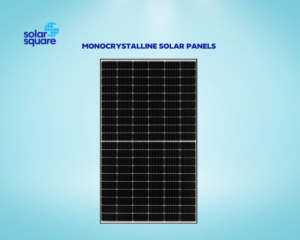
- Photovoltaic modules: They convert sunlight into DC electricity
- Solar inverter: It converts DC electricity into AC
- Mounting structure: It supports and secures the solar modules
- DC and AC cabling: Carries electricity through the system
- Protection equipment: Provides electrical isolation and protection
- Battery, where used: It stores electricity for later use
What Factors Affect Photovoltaic Electricity Generation?
Photovoltaic electricity generation depends on available sunlight, module characteristics, site conditions, and system losses. Two solar installations with the same rated capacity can therefore produce different amounts of electricity under different operating conditions.
The main factors that affect PV energy generation include:
- Solar irradiance: Higher solar energy reaching the modules increases potential generation.
- Panel orientation and tilt: The direction and angle of the modules affect how much solar radiation reaches them.
- Shading: Trees, buildings, and other obstructions can reduce electricity output.
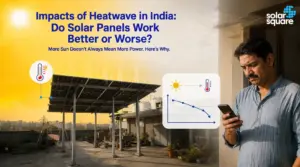
- Temperature: As the temperature of conventional solar cells rises, the reduction in voltage generally outweighs the small increase in current, reducing efficiency.
- Module efficiency: Higher-efficiency modules convert a greater proportion of incoming solar energy into electricity.
- Dust and soiling: Dirt on the module surface can reduce the light available to the cells.
- System losses: Inverter, wiring, and other losses reduce the usable electricity delivered by the complete system.
What Are the Advantages and Disadvantages of Photovoltaic Solar Energy?
Photovoltaic solar energy can generate electricity without consuming fuel during operation and can be deployed at scales ranging from small standalone devices to homes, industries, and utility power plants. Its main limitation is that electricity generation depends on available sunlight.
Here’s a snapshot of all the benefits and drawbacks of photovoltaic solar energy –
Pros of Solar Photovoltaic Energy
Here’s a snapshot of all the benefits of solar PV energy:
- Uses renewable solar energy to generate power
- Generates electricity without combustion at the point of generation
- Can be installed close to where electricity is consumed
- Can serve both grid-connected and remote locations
- Has no moving parts in the electricity-generating PV modules
Cons of Solar Photovoltaic Energy
Here’s a snapshot of all the drawbacks of solar PV energy:
- Clouds and low irradiance can reduce output
- PV panels do not generate solar electricity at night
- Shading can reduce generation
- Batteries add cost where storage is required
- Modules gradually lose some output as they age
Conclusion
The applications of solar photovoltaic energy now extend from homes and commercial buildings to industries, agriculture, remote systems, and large solar power plants. Despite their different scales, they all rely on the photovoltaic effect to convert sunlight directly into electricity.
For homes and commercial and industrial institutions, rooftop solar provides a practical way to generate electricity using available roof space and reduce dependence on grid power. If you are considering solar for your property, book a free consultation with SolarSquare to determine the system size that best suits your electricity requirements.
Frequently Asked Questions
What role does a semiconductor play in the solar photovoltaic effect?
The semiconductor is the material that allows a photovoltaic cell to convert light energy into electrical energy. Silicon is by far the most commonly used semiconductor material in solar cells. When sunlight is absorbed, electrons gain energy and can move through the semiconductor material. Electrical contacts then allow this current to be collected.
Is photovoltaic solar energy the same as solar thermal energy?
No. Photovoltaic solar energy converts sunlight directly into electricity through the photovoltaic effect. Solar thermal technology, on the other hand, captures solar energy as heat. PV is used for electricity generation, whereas solar thermal systems are used for applications such as water heating and other thermal processes.
What is the main application of solar photovoltaic technology?
The main application of solar photovoltaic technology is electricity generation. PV systems generate electricity for homes, commercial buildings, industries, utility-scale solar plants, farms, remote systems, public infrastructure, and small electronic devices.
What is photovoltaic electricity?
Photovoltaic electricity is electricity generated when photovoltaic cells convert sunlight directly into electrical energy. Solar cells initially produce DC electricity, which can then be converted into AC electricity by an inverter where required.
What is an example of photovoltaic solar energy?
A rooftop solar system is a common example of photovoltaic solar energy. Its PV panels absorb sunlight and produce DC electricity, which a solar inverter converts into AC electricity for use by household electrical loads.
Do photovoltaic panels produce AC or DC electricity?
Photovoltaic panels produce DC electricity. A solar inverter converts this output into AC power because homes, commercial buildings, and the utility grid generally operate on AC.
Can solar panels generate electricity on cloudy days?
Yes. Photovoltaic panels generate electricity even when sunlight is limited, such as on cloudy days. However, their output is generally lower because the solar irradiance reaching the cells is lower than under stronger sunlight.
Do photovoltaic systems generate electricity at night?
No. Photovoltaic cells require sunlight to generate solar electricity. So, the panels do not produce power at night. Depending on the system configuration, loads can instead use grid electricity or energy previously stored in a battery.
What semiconductor is commonly used in photovoltaic cells?
Silicon is the most commonly used semiconductor material in photovoltaic solar cells. Its semiconductor properties enable absorbed light energy to generate mobile electrical charges that can be collected to generate current.