

 6 Reads
 11 mins


The 50-watt solar panel price in India ranges from ~₹2,000* to ₹3,000* per panel in 2026, depending on the technology, brand, and manufacturer.
*Please note: The above-mentioned solar panel prices are indicative and not fixed. They’re based on standard market research.
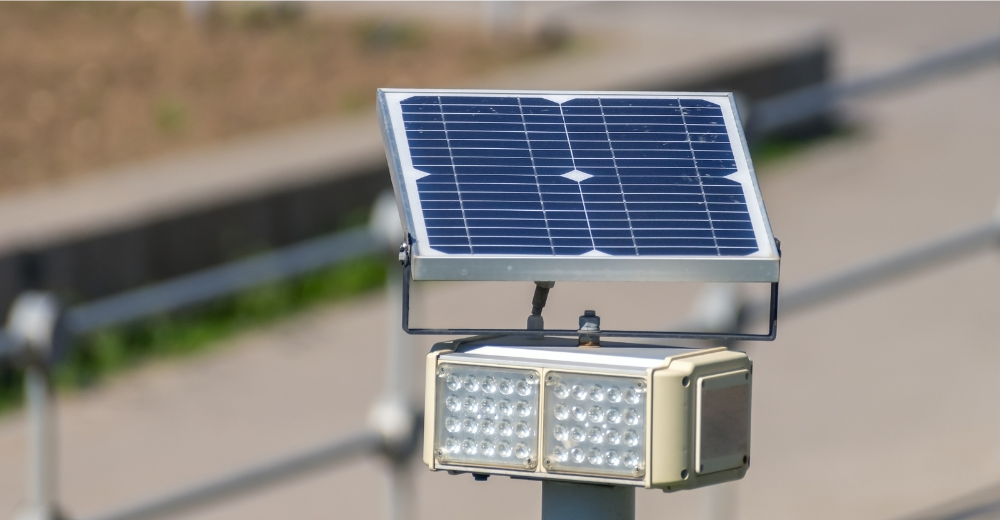
A 50-watt solar panel is designed for small electrical loads rather than powering an entire home. Its compact size makes it suitable for applications where electricity consumption is limited, such as portable equipment and small lighting systems.
This guide explains the 50-watt solar panel price in India, technologies, specifications, electricity output, battery charging, and practical applications in 2026.
What Is a 50-Watt Solar Panel?
A 50-watt solar panel is a photovoltaic module rated to produce a maximum of 50 watts (W) of direct current (DC) power under Standard Test Conditions (STC). Unlike the higher-wattage modules used in residential rooftop solar systems, it is primarily designed for smaller, low-power applications.
50W panels used in small solar setups can be connected to compatible batteries, solar charge controllers, and low-power electrical devices. However, the 50W rating represents the panel’s peak output under specified test conditions, not the power it continuously generates throughout the day.
Is a 50-Watt Solar Panel Actually a 12V Panel?
Yes, a 50-watt solar panel sold as a 12-volt solar panel is designed for a nominal 12V system, but its actual operating voltage is higher. For example, a 50W mono-PERC (Monocrystalline Passivated Emitter and Rear Cell) module can have a maximum power voltage of 20V and an open-circuit voltage of 22.5V.
The higher panel voltage is necessary because a 12V (volt) battery needs more than 12V to charge.
To understand the difference between a panel’s nominal voltage and its actual operating voltage, it’s important to know these three terms:
- Nominal voltage: 12V system classification.
- Vmp: The voltage at which the solar panel produces its maximum power.
- Voc: The voltage of the solar panel when no electrical load is connected.
Therefore, seeing around 18-20V from a nominal 12V 50-watt solar panel under suitable conditions is normal.
What Is the 50-Watt Solar Panel Price in India in 2026?
The 50-watt solar panel price in India is ~₹2,000* to ~₹3,000* per panel in 2026. Prices vary by cell technology, brand, warranty, build quality, and seller discounts.
*Please note: The above-mentioned solar panel prices are indicative and not fixed. They’re based on standard market research. The final 50-watt solar panel price can vary depending on panel type, brand, cell technology, market demand for the module, promotional offers by the manufacturer, etc. SolarSquare does not manufacture, sell, install, or endorse any 50-watt solar panel. We install rooftop solar panel systems for homes, housing societies, and commercial and industrial buildings using higher-wattage TOPCon (Tunnel Oxide Passivated Contact) and latest technology solar panels.
Since 50W panels serve a specialized, low-volume market, their cost per watt is generally higher than that of larger solar modules.
50-Watt Solar Panel Price by Technology
A polycrystalline panel is generally the lower-cost solar cell technology, followed by monocrystalline and more advanced mono technologies such as PERC. However, this hierarchy is not always visible in current 50W retail prices because the low-wattage market has limited stock, large seller discounts, and older inventory.
Here’s an indicative price range based on standard market research across multiple sellers:
| Panel Type | Indicative Price* |
| 50-watt polycrystalline solar panel price | ~₹2,000 to ~₹3,000 |
| 50-watt monocrystalline solar panel price | ~₹2,300 to ~₹2,900 |
| 50-watt mono-PERC solar panel price | ~₹2,400 to ~₹2,900 |
*Please note: The above-mentioned solar panel prices are indicative and not fixed. They’re based on standard market research. The final 50-watt solar panel price can vary depending on panel type, brand, cell technology, market demand for the module, promotional offers by the manufacturer, etc. SolarSquare does not manufacture, sell, install, or endorse any 50-watt solar panel. We install rooftop solar systems for housing societies, homes, and commercial and industrial buildings using high-wattage TOPCon and latest technology solar panels.
Why Can Two 50W Solar Panels Have Different Prices?
Two 50-watt solar panels can have the same rated output but different prices because wattage is only one specification. Cell technology, efficiency, construction quality, electrical components, certifications, and warranty can all affect the final cost.
Important factors include:
- Cell technology: Polycrystalline, monocrystalline, and mono-PERC panels use different cell architectures.
- Module efficiency: A more efficient module can produce the same rated power from a smaller surface area.
- Glass and frame: Tempered glass and stronger aluminium frames can improve durability.
- Junction box: Higher ingress-protection (IP) ratings improve resistance to dust and water.
- Connectors and cables: Some panels include cables and MC4 (Multi-Contact 4 mm) connectors.
- Warranty: Product and performance warranty periods vary.
- Certifications: Testing and certification requirements can affect manufacturing cost.
What Types of 50-Watt Solar Panels Are Available?
The Indian market still has polycrystalline, monocrystalline, and mono-PERC 50W panels in 2026. All three can provide 50W rated peak power, but their cell technology, module efficiency, dimensions, and prices differ.
- Polycrystalline: 50-watt polycrystalline solar panels remain available for small battery-based and off-grid applications. They are generally less efficient than modern mono technologies.
- Monocrystalline: A 50-watt monocrystalline solar panel uses single-crystal silicon cells. Current 50W examples can offer higher module efficiency and a compact size.
- Mono-PERC: These panels add a passivated rear layer to conventional mono cells to improve energy conversion. Current 50W mono-PERC modules are also available for small solar applications.
What Are the Specifications of a 50W Solar Panel?
The most important 50W solar panel specifications include a 50W maximum power rating, a nominal 12V system voltage, a Vmp of roughly 18V to 20V, and a current of around 2.5A to 2.7A. Exact values vary between manufacturers and technologies.
The table below uses an actual manufacturer’s technical datasheet for a 50W mono-PERC module.
| Specification | Reference Value |
| Maximum power (Pmax) | 50W |
| Nominal voltage | 12V |
| Voltage at maximum power (Vmp) | 20V |
| Current at maximum power (Imp) | 2.50A |
| Open-circuit voltage (Voc) | 22.5V |
| Short-circuit current (Isc) | 2.65A |
Please note: These values are an example of how a real 50-watt solar panel can be specified. Actual 50W solar panel specifications can change significantly with panel wattage, dimensions, solar cell technology, cell configuration, construction, temperature, irradiance, manufacturing design, and model. Always use the datasheet supplied with the exact panel you are buying for exact specifications.
How Many Amps Does a 50-Watt Solar Panel Produce?
A 50W nominal-12V solar panel can produce around 2.5A to 2.7A at its maximum power point, depending on its operating voltage.
For example, a 50W panel with a Vmp of 20V produces 2.5A at maximum power.
The calculation can be done using this formula: Current = Power ÷ Operating Voltage.
For a panel operating at 20V, 50W ÷ 20V = 2.5A.
However, simply calculating 50W ÷ 12V = 4.17A does not give the panel’s actual maximum-power current because 12V is its nominal system voltage, not its Vmp.
How Much Electricity Does a 50-Watt Solar Panel Produce?
A 50W solar panel can theoretically generate 250Wh, or 0.25kWh, with 5 peak sun hours. After applying an 80% generation factor for real-world losses, the estimated output becomes 200Wh, or 0.20 units of electricity per day.
The formula used is listed below:
Daily generation = Panel wattage × Peak sun hours × Generation factor
Let’s use the following example assumptions for calculation:
- Panel capacity = 50W
- Peak sun hours = 5
- Generation factor = 80%, or 0.80
Daily generation, in this case = 50W × 5 × 0.80 = 200Wh, or 0.20kWh
Please note: Peak sun hours are not the same as total daylight hours. They represent the day’s solar irradiation expressed as an equivalent number of hours at 1,000W/m².
What Affects the Output of a 50-Watt Solar Panel?
A 50W panel does not produce exactly the same amount of electricity every day. Its output changes due to the following factors:
- Solar irradiation and peak sun hours
- Shading
- Panel orientation and tilt
- Cell temperature
- Dust and dirt
- Clouds and weather
- Cable losses
- Charge-controller losses
- Age and degradation of the module
What Can a 50-Watt Solar Panel Run?
A 50W panel is suitable for small electrical loads such as LED lights, mobile charging, and low-wattage DC fans. What it can actually run depends on the device’s wattage, available sunlight, daily solar generation, and whether a battery stores energy for later use.
Here’s a list of appliances that a 50-watt solar panel can generally power:
- LED bulbs
- Mobile charger
- Laptop charger
- Wifi router
- Small DC fan
Can You Run Appliances Directly From a 50W Solar Panel?
Yes, you can run certain low-power direct current (DC) appliances directly from a 50W solar panel, provided their voltage and current requirements are compatible and a suitable voltage regulator is used. However, because solar output fluctuates with sunlight, the power supply may be unstable.
For more reliable use, the panel is usually connected to a charge controller and battery, which can then supply the DC load steadily.
If you want to run an AC appliance, you would need a small DC-to-AC inverter connected to the battery. However, given the limited output of a 50W panel, AC appliance use is very limited.
Can a 50-Watt Solar Panel Charge a 12V Battery?
Yes, a nominal 12V 50W panel can charge a 12V battery when connected through a compatible solar charge controller. Charging time depends on the battery’s Ah capacity, state of charge, available sunlight, panel output, and charging losses.
The charge controller regulates the current entering the battery and helps prevent adverse charging conditions.
Advantages and Limitations of a 50-Watt Solar Panel
A 50W solar panel is compact and useful for small loads, but its limited energy output makes it unsuitable for high-power appliances. Its strongest use cases are applications where portability, low power consumption, and small battery charging time matter more than total energy output.
Here are all the key advantages of a 50-watt solar panel:
- Compact and portable: Easy to carry and install where space is limited.
- Small battery charging: Can charge compatible low-capacity batteries using a suitable charge controller.
- Useful in remote locations: Suitable for camping, hiking, and other small off-grid applications.
- Supports low-power devices: Can power LED lights, small DC fans, and similar devices with suitable connections.
However, 50-watt solar panels also have the following limitations:
- Low electricity generation: Produces limited energy, even during sunny weather.
- Additional equipment required: Needs a compatible charge controller for safe battery charging.
- Unsuitable for heavy appliances: Cannot independently support high-power devices such as refrigerators or air conditioners.
- Limited AC compatibility: Requires an inverter to supply alternating current (AC) appliances.
Is a 50-Watt Solar Panel Enough for a Home?
No, a single 50W solar panel is far too small to meet normal household electricity consumption. It is designed for specific low-energy applications such as small lights, battery charging, solar fencing, camping equipment, and other small DC loads.
Even at an illustrative 200Wh of generation per day, the panel produces only about 0.2 units of electricity.
A household that needs solar for its regular electricity consumption requires a properly sized rooftop solar system based on monthly electricity use and peak load. A 50W module is not an alternative to such a system.
If your objective is to power regular household loads and reduce your electricity bill, a 50W panel is not the right product. SolarSquare can instead help you size a complete residential solar system according to your actual electricity consumption and available space. Book a free solar consultation call with our experts now.
Frequently Asked Questions
Is a government subsidy available on a 50-watt solar panel?
No, a standalone 50-watt solar panel does not qualify for a subsidy under the PM Surya Ghar Muft Bijli Yojana. The scheme provides subsidies for eligible residential grid-connected rooftop solar systems based on their total installed capacity, not for individual panels purchased for small off-grid applications.
How long will a 50W solar panel take to charge a battery?
A 50W solar panel can charge a small 12V battery, but the time depends on battery capacity and how discharged it is.
For a 12V 20Ah battery at 50% discharge:
Charging time = (12V × 20Ah × 50%) ÷ (50W × 80% efficiency) = 120Wh ÷ 40W = 3 peak sun hours.
So, under these assumptions, a 50W panel would take about 3 peak sun hours to replace 50% of the battery’s capacity.
Can a 50W solar panel run a fan?
A 50W panel can support a small DC fan that consumes around 15W to 30W when sufficient solar power is available. A conventional AC ceiling fan, however, may consume 50-75W or more. So, one 50W panel is insufficient for reliable operation.
Can a 50W solar panel run without a battery?
Yes, a 50W panel can operate a suitably matched DC load without a battery when sufficient sunlight is available, and the voltage is properly regulated.
What battery size can you use with a 50W solar panel?
A 12V 20Ah battery can be a suitable option for a 50W solar panel, depending on your electricity needs. This battery can store 240Wh (watt-hour) of electricity (12V × 20Ah). With 5 peak sun hours per day and an assumed 20% loss due to operating conditions, a 50W panel can generate ~200Wh of electricity daily (50W × 5 hours × 80%). This makes a 12V 20Ah (ampere-hour) battery a practical option for small solar applications, although actual charging depends on sunlight, battery type, and charging losses.


 Previous Article
 12 min